Author: Catherine Lemmer

Interested in the creation, use, management, and of information.

First Up: Motions on Severance & Conflict-of-Interest

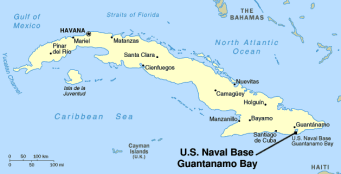
gitmo picI am en route via Chicago and Washington D.C. to Guantanamo Bay, Cuba for the first week of the 9/11 hearings.  The hearings are scheduled to start at 9:00 am on Monday, 9 February 2015. Judge Pohl has ordered that all five defendants must be present in court.

The first issue to be addressed during this session is reconsideration of Judge Pohl’s order of August 2014 (AE312) to sever Ramzi bin al Shibh’s case from the other four 9/11 defendants. Mr. in al Shibh’s case was severed as a result of the prosecution’s request for a competency hearing for him as well as the conflict-of-interest matter arising from FBI investigation into his defense team. If this sounds familiar, it should. These same motions were scheduled for hearing but not heard when the December 2014 hearings were cancelled over the female guard issue.

The resolution of the potential conflict-of-interest matter is a complex issue that has delayed the hearings for nearly a year. In 2014, the Military Commission concluded that there was no actual or potential conflict with respect to four of the five 9/11 defense teams. The Military Commission did conclude that there may be an actual or potential conflict with respect to the legal team representing Mr. bin al Shibh. In August, Judge Pohl ordered Independent Counsel for Mr. bin al Shibh to investigate and advise him. Lt Col Julie Pitvorek, USAF was assigned as Independent Counsel for Mr. bin al Shibh. LtCol Pitvorek will be present at the February hearings, as will Mr. Harrington and Lieutenant Commander (LCDR) Bogucki, Mr. bin al Shibh’s present counsel.

In April 2014 a Special Review Team consisting of Department of Justice prosecutors was appointed to investigate the FBI’s undisclosed interviews and investigations of certain members of the 9/11 defense teams. The creation of the Special Review Team was required because General Martins’ prosecution team can not investigate the defense teams. The Special Review Team functions as the prosecution with respect to the investigation of the defense teams and whether the FBI activity created a conflict-of-interest for the defense team.  The Special Review Team was in court at the preliminary hearings in June, August, and October on behalf of the prosecution. These prosecutors will be in court for the February hearings to represent the government for the three pleadings that will be heard by Judge Pohl related to these matters.  Should these matters be resolved, the parties will move on to the many other matters scheduled for argument in the following weeks.

The matters before the Military Commission are legally and factually complex. It makes it challenging for NGO Observers tasked with observing, analyzing, and reporting on whether the military commissions are open, transparent, and providing fair trials to the defendants.  It is important that we focus on our specific role in the process. The Guantanamo Bay Fair Trial Manual is a great tool to help us do so.

The matters scheduled on the docket include:

AE 312C Defense Response to Emergency Government Motion to Reconsider AE 302 Severance Order The order severing Mr. bin al Shibh is currently in abeyance (temporarily suspended). The judge may revoke the order, sever Mr. bin al Shibh, or continue to hold it in abeyance.)

AE 292RR Prosecution Special Review Team Motion for Reconsideration of AE 292QQ (Order) (Prosecution Special Review Team seeks to have Judge Pohl reconsider his decision that there may be a potential conflict within Mr. bin al Shibh’s defense counsel.)

AE 292VV Defense Motion to Compel Discovery Related to Interference with Defense Function by the United States.  (The defense asks Judge Pohl to compel the Prosecution’s Special Review Team to provide the evidence related to the FBI’s investigations of the defense teams. )

AE 292YY Defense Motion for Appropriate Relief-Disclosure by Military Judge Whether He has Acquired Information Relating to the Case from an Undisclosed Source and the Details of the Information (The defense asks Judge Pohl to disclose what information he has about the FBI investigation that has not been provided to the defense.)

AE152 Prosecution Motion for R.M.C. 909 Hearing (The prosecution asks the Commission to establish the competency of Ramzi bin al Shibh to stand trial.)

AE 254KK Prosecution Government Motion For an Expedited Litigation Schedule to Resolve AE 254Y (The prosecution requests oral argument relating to the issue of female guards in contact positions with defendants.)

AE 331 Military Commission Judge Trial Conduct Order (The military judge ordered the government to review the Protective Order regarding classified information and sealed pleadings in light of the release of the Torture Report.)

AE 008 Defense Motion to Dismiss for Defective Referral (The defense position is that the Convening Authority did not charge the defendants properly.)

AE 031 Defense Motion to Dismiss for Unlawful Influence (The defense position is that the President of the United States put pressure on the Convening Authority to bring the case against the defendants.)

AE 192 Defense Motion to Disqualify (The defense position is that the Legal Advisor to the Convening Authority unlawfully interfered with the professional judgment of the Chief Defense Counsel and Mr. al Hawsawi’s Learned  Counsel.)

AE 196 Defense Motion to Disqualify (The defense position is that the Chief of Operations for the Convening Authority unlawfully interfered with the professional judgment of the Chief Defense Counsel and Mr. al Hawsawi’s Learned Counsel.)

AE 254 Defense Emergency Defense Motion to Permit Attorney-Client Meetings (The defense position is that JTF-GTMO is interfering with attorney-client visits.)

AE 112 Defense Motion to Compel White House and DOJ policy on Rendition, Detention, and Interrogation Program (The defense seeks to compel discovery about the policies underlying the CIA rendition, detention, and interrogation program.)

AE 114 Defense Motion to Compel Information regarding Buildings in Which Defendants May Have Been Confined (The defense asks the prosecution to produce evidence about any facility where the defendants were held.)

AE 182 Defense Motion to Possess and Resume Use of a Microsoft-Enabled Laptop Computer (The defense asks that the defendants have access to standalone computers to work on their defenses.)

AE 183 Defense Motion for Telephonic Access for Effective Assistance of Counsel (The defense asks to be able to communicate by telephone with the defendants.)

AE 195 Defense Motion to Compel Production of Communications Between Government (The defense seeks information about government involvement with the movie Zero Dark and Filmmakers of Zero Dark Thirty.)

AE 206 Defense (Mohammed) Motion to Cease Daily Intrusive Searches of Living Quarters and Person (The defense wants the prison to use less intrusive means to search for physical contraband.)

AE 036E Prosecution Motion to Clarify Order AE036D (The prosecution asks the Judge to order that the prosecution has control over all witnesses, including remote testimony.)

AE 036G Defense Motion to Compel Discovery (The defense wants the Judge to compel discovery on government policy of producing witnesses.)

AE 036H Defense Motion to Compel Witnesses (The defense wants the Judge to compel witnesses on prosecution statements regarding costs of producing witnesses.)

AE 214 Defense Motion to Compel access to Government of Saudi Arabia. (The defense requests that the Military Commission compel the Secretary of Defense to facilitate communications between Mr. Hawsawi and Saudi Arabia.)

AE 119 Defense Motion to Dismiss and to Compel a Status Determination Pursuant to Article 5 of the Geneva Conventions (The defense asserts that there is a question as to the status of the defendants under Article 5 of the Geneva Conventions and charges should be dismissed.)

AE 164 Defense Motion to Stay all Review Under 10 U.S.C. § 949-4 and to Declare 10 U.S.C. §949p-4(c) and M.C.R.E. 505(f)(3) Unconstitutional and In Violation of UCMJ and Geneva Conventions (The defense argues that the Commission’s decision to permit trial counsel to substitute, summarize, withhold, or prevent access to classified information is unconstitutional.)

AE 018W Joint Defense Motion to Amend AE 018U Privileged Written Communications Order (The defense argues that interpretations of the provisions in the written communication order are restricting attorney-client communications and should be amended to protect the rights to effective assistance of counsel and to prepare and participate in own defense.)

AE 018BB Defense (WBA) Motion to Compel Paper Discovery in Accordance with Privileged Written Communications Order (The defense requests that the Commission order the government to provide a duplicate copy of all paper discovery materials releasable to Mr. bin ‘Attash.)

AE 018MM Defense Motion to Compel Reasonable Privilege Review Team Hours of Operation (The defense requests that the Commission order the Privilege Review Team (PRT) to maintain reasonable weekend hours at all times; or at a minimum, maintain weekend hours for processing materials immediately prior and to and following hearings, or when there are approved attorney-client visits.)

AE 161 Defense (AAA) Motion to Require the Government to Comply with MCRE 506 Regarding redaction of Unclassified Discovery (The defense argues the Commission should order the prosecution to produce the complete, unredacted copies of certain unclassified discovery documents under Military Commissions Rule of  Evidence 506.)

AE 190 Defense (AAA) Motion to Compel Production of Information Relating to Statements Made by Mr. al Baluchi or Potential Witnesses at a Detention Facility Classified Motion AE 191 Defense (AAA) Motion to Compel Production of Information  Classified Motion AE 194 Defense (AAA) Motion to Compel Discovery of Mr. al Baluchi’s Statements (The defense requests that the military judge compel production of all records of all statements made by Mr. al Baluchi in the government’s possession

(Catherine Lemmer, 9/11 Hearings, Guantanamo Bay February 9-13, 2015)
Stakeholder Rights – The Prosecution

I am scheduled to leave for Guantanamo Bay on February 7 to obusbaseserve the Guantanamo Bay military commission pre-trial proceedings in the case against the five 9/11 defendants. The flight is a little longer than necessary because the plane is prohibited from crossing Cuban air space. In addition to the NGO Observers, the plane to Guantanamo Bay will carry many of the other players, including the defense teams, prosecutors, media, and victim family members.
As an NGO Observer, it is my role to attend, observe, analyze, critique, and report back on the Guantanamo Bay proceedings to help ensure that the proceedings are fair and transparent for all of the stakeholders. The Guantanamo Bay Fair Trial Manual sets out the rights and interests of the many stakeholders: the defendants, prosecution, victims and their families, press, witnesses, Joint-Task Force-GTMO, U.S. citizens, international community, and NGO observers.

general martins
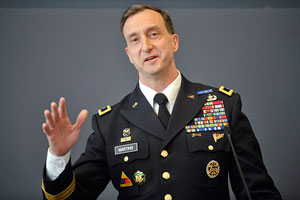
Brigadier General Mark Martins (Harvard University)

Since my December 2014 Guantanamo Bay mission I have given a good deal of thought to the rights of one stakeholder group in particular: the prosecution. I met Brigadier General Martins, the chief prosecutor, and some members of his team in December during the NGO observer briefing. During the briefing he was asked the “How did you get here question?” In his response he described his past military service, conversations with family, and his legal education and training.

At the conclusion of our meeting, I thanked him for taking on the role of chief prosecutor. Many might wonder why. The short answer is that the prosecutor represents the rights and interests of society as a whole. The guarantee of a fair and transparent trial is as dependent on the prosecution upholding its duty to all of the stakeholders as it is on the defense teams zealously working on behalf of their clients and the judges engaging in thoughtful and insightful legal analysis when rendering rulings.

Standard 1.1 of the National Prosecution Standards of the National District Attorney’s Association states that “the primary responsibility of a prosecutor is to seek justice, which can only be achieved by the representation and presentation of the truth.” Standard 3-1.2(c) of the ABA Standards for Criminal Justice further notes that it is the duty of the prosecutor to “seek justice, not merely to convict.”  10 USC §949(b) (2014) prohibits the coercion or influence of military commission prosecutors. As a stakeholder entitled to a fair trial the prosecution in fulfilling its duty to seek justice has the right to operate with sufficient resources, without judicial prejudice, and free from outside influence.

The duty to seek justice through the representation and presentation of the truth is not necessarily inconsistent with a military commission proceeding. General Martins has indicated that the prosecution is bringing only those charges it believes it can prove; and that no classified information will be used as evidence as it is important for all the stakeholders to be able to evaluate the merits of the evidence. In short, he has advocated for justice with an open and transparent proceeding. However, General Martins and his team are in the challenging position of bearing the burden of illegal and unethical actions by governmental units over which he has no authority (e.g., the FBI and CIA). It may not be possible to counter the taint of these actions on the military commission proceedings. It remains to be seen how he and his team will balance the consequences of these actions while upholding the duty to seek justice.

He is an equally delicate balance with respect to the families of the victims. General Martins often speaks of justice for the victims. The voice of the victims and their families is a strong and compelling voice and the jury (panel) when finally selected and sitting will undoubtedly empathize with it.  As the proceedings progress, those interested in a fair and open process will need to be attentive to ensure that the prosecution serves justice by remaining neutral to and independent of each individual stakeholder group.

(Catherine Lemmer, 9/11 Hearings, Guantanamo Bay, February 2015)

By the Numbers: An Observation on 9/11 Transparency

Saturday, February 7, will find me again in the departure lounge at Andrews Air Force Base awaiting my departure to Guantanamo Bay to observe the 9/11 hearings scheduled to take place the week of February 9.  The military commission made the 6-page amended docket available on January 26, 2015.  The docket lists over 30 motions; and notes that counsel should be prepared to argue any other motion for which the briefing schedule has concluded.

KSM II Docket February 2015


In an effort to prepare for the upcoming hearings, I went to the military commission website to review the relevant documents. Whenever I go to the case site I am reminded of the overwhelming complexity of these hearings. Here are just a few numbers I noted:

  • 2959 documents listed on the docket (269 webpages)
  • 55 documents filed in January 2015
    • 32 documents filed by the defense teams
    • 4 documents files by the prosecution
    • 19 documents filed by the commission

Of the 55 documents filed in January 2015, three are available for public review. One of these three is the amended docket.

Transparency is one key to making sure there are fair and open trials afforded to the defendants held at Guantanamo Bay. The inability to review court filings casts an interesting shadow on the goal of transparency.  Other key elements of fair and open trials are detailed in the Guantanamo Bay Fair Trial Manual that I will be taking and distributing to NGO Observers and other interested persons next week.

(Catherine Lemmer, 9/11 Hearings GTMO, February 2015)

Jurist Publishes Indiana McKinney Law Student’s Torture Article

JURIST Guest Columnist Clarence Leatherbury from Indiana University Robert H. McKinney School of Law discusses the debate over torture techniques and our nations security. Clarence published a piece for the JURIST since he is a participant in Professor Edward’s Military Commission Observation Project.

The JURIST (jurist.org) is a legal news and commentary publication run by Professor Bernard Hibbitts and professional and student staffers at the University of Pittsburgh School of Law. The original column can be seen at: http://jurist.org/dateline/2014/12/clarence-leatherbury-guantanamo-bay.php

(Catherine Lemmer)

Op-Ed: Torture is ineffective in getting information

The Indianapolis Star published Clarence Leatherbury’s  Op Ed: Torture is ineffective in getting information on 17 January 2015. Mr. Leatherbury is a third-year law student at IU Robert H. McKinney who traveled to Ft. Meade, Maryland to monitor U.S. Military Commission hearings in 2014.  Courtroom proceedings at Guantanamo Bay can be viewed by simultaneous secure videolink at the U.S. military base at Ft. Meade.

(Catherine Lemmer)

Guantanamo Memoir Published

G-Bay Diary Book CoverGuantanamo Diary, by Mohamedou Ould Slahi, was published today (20 January 2015) by Little Brown & Company. It is the first memoir to be written by a detainee who is still incarcerated at Guantánamo Bay. The author, who has not been charged, has been held at Guantánamo Bay since 2002.  The memoir details his journey from when he was seized in his home country of Mauritania, sent to a prison in Jordan, and eventually imprisoned in Guantánamo Bay. In 2010, a federal judge ordered his release, but the government appealed that decision.

See the transcript and hear the National Public Radio interview with  Mr. Slahi’s lawyer, Nancy Hollander, and book editor Larry Siems. Mr Siems is a writer and human rights activist. He is the author of The Torture Report: What the Documents Say About America’s Post-9/11 Torture Program.

(Posted by Catherine Lemmer)

Year End Update: More Guantanamo Detainees Released (Catherine Lemmer)

Keeping informed. 

Carol_Rosenberg,_by_Colonel_Bryan_Browles

Carol Rosenberg by Colonel Bryan Browles (from Wikipedia)

The most important thing I observed during my time at Guantanamo Bay is that the activities that occur there are far from the minds of most Americans. In my small opinion, this physical and virtual distance creates a situation ripe for abuse. On the flight home I sat across the aisle from Carol Rosenberg (Miami Herald) and plied her with questions. She is perhaps the best source of knowledge as she has been on the story since the arrival of the first detainees in 2002. During the NGO Observer Tour of the courtroom facilities, the Officer in Charge of the Office of Military Commissions, John Imhof, often looked to her for information.

I made a commitment to myself to stay informed. It shouldn’t take a lot of effort — I’ve started following Ms. Rosenberg’s twitter feed and set up an alert on my news feeds.

National Public Radio interviewed Ms. Rosenberg at 6:45 pm EST on December 31 regarding the release of an additional four detainees and the efforts to close Guantanamo Bay. As of this date, there are still 127 detainees, 59 of whom have been cleared for release. While the rest of the world prepared for year end celebrations, she maintained her vigilance on our behalf.

(Posted by Catherine Lemmer)

From the Guantanamo defense: “This is Not What America is About”

Not What America is About – Meeting with Defense Teams

This is Not What America is About” was the consistent theme of the nearly two-hour session NGO Observers had with defense teams for three of the 9/11 defendants: Mr. Mustafa Ahmed Al Hawsawi, Mr. Mubarak Bin ‘Attash, and Mr. Ramzi Bin Al Shibh. Held in the NGO Lounge, a one-window room carved out of metal hangar and filled with mis-matched 1980’s college dorm and office furniture, we listened as the legal teams told of FBI spying on privileged attorney-client meetings with the use of listening devices designed to look like smoke detectors, FBI attempts to use members of the legal teams as informants, Joint-Task Force seizure and review of attorney-client correspondence, CIA control of the courtroom that lead to monitoring of conversation at the defense tables (ironically the $12 million courtroom was designed to prevent this kind of activity), and trial delay tactics. In short, as James Harrington, Learned Counsel for Ramzi Bin Al Shibh, said,  “this is not what America is about.”

Judge Pohl

Judge Pohl

Questions and answers were traded with the defense teams about the Military Commission and the process itself. Unlike the established U.S. federal court system, the Military Commission is a new process and every issue is subject to briefing and arguments; and a ruling by Colonel Judge James L. Pohl. James Harrington described the situation as such, it is a “process set up for a particular goal, when rules don’t achieve [that] goal, the rules are changed.” Despite evidence that terrorists can successfully be tried in Federal courts (e.g.,  Sulieman Abu Ghaith, Osama bin Laden’s son-in-law) the Military Commission process appears at this point in time to be what we stuck with.

Defense Counsel Wearing Hijab

Learned Counsel Cheryl Bormann, who represents Mubarak Bin ‘Attash, also noted the disparate resources made available to the defense teams. For example, her team has not been assigned an investigator. Ms. Bormann wears a hijab during meetings with her client and court proceedings. She explained that she wears hijab to establish rapport with her client. There was a definite undercurrent of a difference of opinion among the defense teams as to whether the wearing of the hijab will create an unfavorable impact with the judge and jury (panel) when and if the 9/11 case ever gets to trial. (more…)

Last Hearing Option Cancelled – Listening to Both Sides: First Up the Prosecution

The NGO observers had a sliver of hope that we would see actual court proceedings when we learned on Sunday that Walter Ruiz, attorney for Mustafa al Hawsawi one of  9-11 detainees, had filed a motion for a hearing to obtain medical care for his client. The motion alleged that Mr. al Hawsawi was thrown to the ground and shackled on December 7 due to a misunderstanding as to whether he was to return to his cell or to the recreation area. However the Judge (Army Col. James L. Pohl) denied the request. The next hearings for the 9-11 detainees are docketed for February 9.

Given the lack of court proceedings, the NGO observers pushed for meetings with the defense and prosecution teams. The meeting were scheduled around the various 802 conferences and client meetings.

BG_Mark_Martins

Brigadier General Mark S. Martins

We met first with Brigadier General Mark S. Martins, the chief prosecutor, and three members of his team. Prior to the meeting we were provided with his 13 December 2014 prepared remarks. The prepared remarks addressed the release of the Torture Report. It was Brigadier General Martins’ opinion that the Torture Report will not disrupt or derail the Military Commission process. Rather, the release of previously classified information will speed discovery for the defense. He reiterated in his prepared remarks that the prosecution will not introduce as evidence statements obtained through torture.

Brigadier General Martins began the session by introducing his staff and referring us to his prepared comments. He noted that he would not discuss the female guard issue nor the FBI conflict-of-interest issue; the latter because he had walled himself off from this issue. He then went on to answer our questions and provide information.

As in his prepared remarks, Brigadier General Martins discussed the prosecutions’s intent not to use evidence obtained through torture. He noted that it is imperative that the people see the government’s case. This is not possible if the prosecution uses classified information. Ironically, his intent doesn’t seem to be shared by some other powers in the government — for example, those entities fighting the release of the remaining torture materials. (more…)

An illusion of transparency

 Camp X-Ray Experience

The cancellation of today’s hearings left the NGO observers at loose ends.  A few of us asked if we were permitted to visit Camp X-Ray. A van and driver were arranged and we headed out late morning for the 15-minute drive to the no-longer used facility.

There is a strange juxtaposition of life here on the base. On our way to Camp X-ray we drove through military family housing–many of the houses are decorated with festive Christmas decorations–and just as we made the last turn out of the neighborhood there was a woman walking her dog and another woman jogging while pushing children in a double stroller. We could have been in any middle class suburb in America!

Within minutes of the neighborhood we pulled over & viewed Camp X-Ray. 

GBay X ray

Camp X-Ray (detainees were held here from January to April 2002)

Camp X-Ray was the temporary detention facility at Guantanamo Bay. The first detainees arrived in January 2002. In April 2002 Camp X-Ray was closed and the detainees transferred to the permanent prison camp–Camp Delta.  It is estimated that Camp X-Ray housed 800 men and teens during its use. Carol Rosenberg (Miami Herald) reported that in 2009 the FBI photographed and documented the camp.  U.S. courts have ordered the preservation of Camp X-Ray facilities where detainees were held at the request of defense lawyers who want it kept intact as a crime scene.

Camp X-Ray, Guantanamo Bay

Camp X-Ray, Guantanamo Bay

Although media representatives and others have toured Camp X-Ray, we were only permitted to view it from the road. Similarly NGO observers are not given access to the detainee facilities and other facilities used by the military commission process. The government challenges the credibility of the NGO observers by limiting our access while demanding that we report that all is well here with the Military Commissions in Guantanamo Bay.


9-11 Hearings Halted Due to Female Guard Issue

DSC_0212-001 - Copy

9-11  Parties Court Seating Chart

I won’t be using this seating chart this morning.

Despite closed-door sessions with Judge Pohl on Sunday (14 December 2014), the prosecution and defense did not reach agreement on the female guard issue. A detainee is physically touched by the guards when moved from his cell; for example, for court appearances and attorney meetings. Woman constitute nearly 25% of the guard population at Camp 7 where the high level detainees are imprisoned and are integrated into the details. The detainees object on religious grounds to physical contact with women. If women are in the transfer detail, the detainees refuse to leave their cells; even if it means foregoing attorney meetings. If a detainee refuses to leave his cell, a forced cell extraction occurs (“FCE”). The FCE has been described as a tackle-and-shackle procedure.

All detainees were ordered to appear in court this morning which could have prompted FCEs. In order to avoid FCEs, Judge Pohl cancelled today’s hearings.

The NGO observers are awaiting a briefing from Chief Prosecutor Mark Martins later this afternoon. There is also the possibility of a briefing from the defense teams. I will post updates as soon as I have any news.

Addendum: The continued use of female guards despite the religious concerns of the detainees is perplexing. Other accommodations have been made for the detainees. For example, they are allowed to bring their prayer rugs into the courtroom; action in the courtroom stops to allow the detainees to pray; the direction of Mecca is marked on a wall in the courtroom; and dietary restrictions are taken into account when preparing their meals. Explanations as to why all male guard transfer teams are being used include the following (paraphrased): (i) the armed forces are an equal opportunity employer and women are being integrated; (ii) the judge does not manage or wish to manage the detainee facilities; (iii) 25% of the guard force here is women and it is not possible to take them out of the rotation.  More to come on this.

(Posted by Catherine Lemmer)

Guantanamo Bay – Arrival and Defense Counsel

Flight to Guantanamo

“What’s the movie on this flight?” One hardly expects that to be the first question one hears on a chartered Miami International Air flight bound for the Guantanamo Bay 9-11 hearings. One also doesn’t expect to engage in a humorous movie selection process with members of the defense teams, NGO observers, and a flight attendant – in the end, the “chick flick” was vetoed and “Dawn of the Planet of the Apes” went into the play slot.

G Bay 044

Tent 9A – My Home Sweet Home for the next few days.

The Saturday flight from Andrews Air Force Base and the ferry ride to the island were uneventful. I sat in the back of the plane with the media and other NGO observers.

Arrival

Upon arrival, the NGO observers were directed to our tents in Camp Justice, taken to get our base badges, and given a brief NGO orientation about the Guantanamo Naval Base.  What is easy to forget is that the Guantanamo Naval Base has been in existence and operating since 1898; it is only since 2002 that it has served as detention camp for alleged enemy combatants.

Defense Bar-B-Q — Meeting lawyers, press, and others. The week’s agenda.

On Saturday evening the NGO observers were invited to a BBQ by the defense team for Ammar al Baluchi.  Carol Rosenberg and members from the other defense teams attended as well.

James Connell, Learned Counsel for Mr. al Baluchi, gave a lengthy briefing on motions set to be heard Monday and Tuesday. In addition to the conflict of interest matters (see my earlier post), the issue of the use of female guards is occupying a fair amount of time. At issue is whether female guards should be able to physically touch the prisoners as they are being prepared for transfer from their cells. The prisoners object on religious grounds to being touched by the female guards. They have forgone meetings with their attorneys if female guards were part of the rotation that would move them from their cells to the meeting. (more…)

Andrews Air Force Base – Ready to Depart

Boarding Pass - Andrews to GTMO - Catherine Lemmer - 12 December 2014

My Boarding Pass for the Andrews to Guantanamo Bay flight.

Sunrise at Andrews Air Force Base

Arrived at 5:30 am and waited in the very dark parking lot at Andrews Air Force Base until our escort arrived and took us to the terminal. Stood in line, checked my bag, and got my ticket. It is a little surreal – there are a few military personnel and families awaiting transfers but most everyone in the departure lounge is headed to Guantanamo Bay – yet there are periodic announcements about what to do if there is unattended baggage and actions to take in the event of an active shooter situation.

Now just hanging out in the departures lounge and talking with a wide variety of people. I’ve chatted with a reporter from The Daily Beast, a local independent D.C. newspaper, and two reporters from Germany. I asked the two reporters from Germany what impact, if any, the release of the Torture Report had in Germany. It is safe to say that the reputation of the United States has suffered immensely, especially in Germany where the Torture Report follows closely on the NSA “listening” scandal.

Coffee & Guantanamo Bay Fair Trial Manual Distribution

I’ve met a few of the other NGO observers and now am off to find a coffee and introduce myself to others. We have got a few hours before departure!

High on my priority list is to distribute copies of our Guantanamo Bay Fair Trial Manual to the other NGO representatives. I hope to get good feedback from them as to how to improve the Manual for future Observers and others interested in exploring the issue of fair trials at Guantanamo Bay.

(Posted by Catherine Lemmer)

Preparing for Guantanamo Bay 9-11 Hearings

Our plane to Guantanamo Bay is scheduled to depart from Andrews Air Force Base on Saturday morning, 13 December 2014.

Our plane to Guantanamo Bay is scheduled to depart from Andrews Air Force Base on Saturday morning, 13 December 2014.

Panic like a 1st year law student or new law firm associate!

It is easy for an Guantanamo Bay fair trial NGO observer to experience the same sort of panic that a first year law firm associate experiences when thrown into a complex litigation matter. I’ve spent a fair bit of time over the last few days reading and re-reading the motions to be heard next week when I am in Guantanamo Bay. Despite my homework, I am not sure I fully comprehend the significance of many of the details.


Blog posts – to a fair trial – Guantanamo Bay Fair Trial Manual.

Generally, my blog posts during my Guantanamo Bay mission will not focus so much on the substance of the legal arguments related to the case. Instead, they will focus on right to a fair trial issues, as discussed in the Guantanamo Bay Fair Trial Manual. However, on the eve of my departure, I wanted to post on the defendants in the hearings next week, the pre-trial motions scheduled, and on the odd assortment of categories of lawyers expected to be present to represent the defendants and to represent the U.S.

The hearings for 15 – 16 December 2014

Five motions are scheduled to be heard during two days of hearings at Guantanamo Bay in the case against 5 alleged masterminds of the World Trade Center / Pentagon attacks on 9-11. All five defendants, Khalid Shaikh Mohammad, Walid Muhammad Salih Mubarak bin ‘Atash, Ramzi bin al Shibh, Ammar al Baluchi (aka Ali Abdul Aziz Ali), Mustafa Ahmed Adam al Hawsawi, and their legal defense teams are expected to be present for the hearings. Also expected to be present is Independent Counsel appointed for Mr. bin al Shibh.

The regular prosecutors in the case will likely not be in the courtroom during at least some of the hearings, but the U.S. will be represented by a “Special Review Team” that was called in to represent the U.S. next week because of conflict of interest issues related to due to allegations related to the FBI allegedly infiltrating defense teams on the case(more…)

Senate Torture Report on CIA’s Detention & Interrogation Program – Impact on Next Week’s 9-11 Hearings

The moment I saw the CNN feed with respect to the release of the 525-page Executive Summary of the Committee Study of the CIA’s Detention & Interrogation Program by the Senate Select Committee on Intelligence come across my monitor this morning I have been considering the impact of its contents on the upcoming December 15th and 16th 9-11 hearings at Guantanamo Bay I am scheduled to attend. Throughout the day I listened to reports and interviews of commentators and others. If there is any good news in this matter, it perhaps comes in the words of Senator Dianne Feinstein, chair of the Senate Select Committee on Intelligence, when in response to a question by CNN’s Wolf Blitzer she said: “I want the facts to be there so this never happens again.”

The Committee made 20 findings and conclusions; which are listed in the first 19 pages of the report:

  1. The CIA’s use of its enhanced interrogation techniques was not an effective means of acquiring intelligence or gaining cooperation from detainees.
  2. The CIA’s justification for the use of  its enhanced interrogation techniques rested on inaccurate claims of their effectiveness.
  3. The interrogations of CIA detainees were brutal and far worse than the CIA represented to policymakers and others.
  4. The conditions of confinement for CIA detainees were harsher than the CIA had represented to policymakers and others.
  5. The CIA repeatedly provided inaccurate information to the Department of Justice, impeding a proper legal analysis of the CIA’s Detention and Interrogation Program.
  6. The CIA has actively avoided or impeded congressional oversight of the program. Front Cover - CIA Detention & Interrogation - Senate Select Committee on Intelligence - Executive Summary - Released 9 December 2014 - Redacted
  7. The CIA impeded effective White House oversight and decision-making.
  8. The CIA’s operation and management of the program complicated, and in some cases impeded, the national security missions of other Executive Branch agencies.
  9. The CIA impeded oversight by the CIA’s Office of Inspector General.
  10. The CIA coordinated the release of classified information to the media, including inaccurate information concerning the effectiveness of the CIA’s enhanced interrogation techniques.
  11. The CIA was unprepared as it began operating its Detention and Interrogation Program more than six months after being granted detention authorities.
  12. The CIA’s management and operation of its Detention and Interrogation Program was deeply flawed throughout the program’s duration, particularly so in 2002 and early 2003.
  13. Two contract psychologists devised the CIA’s enhanced interrogation techniques and played a central role in the operation, assessments, and management of the CIA’s Detention and Interrogation Program. By 2005, the CIA had overwhelmingly outsourced operations related to the program.
  14. CIA detainees were subjected to coercive interrogation techniques that had not been approved by the Department of Justice or had not been authorized by CIA Headquarters.
  15. The CIA did not conduct a comprehensive or accurate accounting of the number of individuals it detained, and held individuals who did not meet the legal standard for detention. The CIA’s claims about the number of detainees held and subjected to its enhanced interrogation techniques were inaccurate.
  16. The CIA failed to adequately evaluate the effectiveness of its enhanced interrogation techniques.
  17. The CIA rarely reprimanded or held personnel accountable for serious and significant violations, inappropriate activities, and systemic and individual management failures.
  18. The CIA marginalized and ignored numerous internal critiques, criticisms, and objections concerning the operation and management of the CIA’s Detention and Interrogation Program.
  19. The CIA’s Detention and Interrogation Program was inherently unsustainable and had effectively ended by 2006 due to its unauthorized press disclosures, reduced cooperation from other nations, and legal and oversight concerns.
  20. The CIA’s Detention and Interrogation Program damaged the United States’ standing in the world, and resulted in other significant monetary and non-monetary costs.

In the Forward to the Committee Study, Senator Dianne Feinstein writes that it is her personal opinion that “CIA detainees were tortured . . . and that the conditions of confinement and the use of authorized and unauthorized interrogation and conditioning techniques were cruel, inhuman, and degrading.” She urges Americans to remember the context (those days following September 11th)  in which the CIA’s Detention and Interrogation Program was created; not as an excuse or rationale for the actions of the CIA, “but rather as a warning for the future.”  Senator Feinstein’s advice seems particularly appropriate with the growing threat of the Islamic State of Iraq and Syria (ISIL or ISIS) and its ongoing horrific and public treatment of those it deems to be its enemies.

I suspect that people at Guantanamo Bay will be discussing the Report when I am there next week. I will post on what I learn from the discussions. The full report is below:

[office src=”https://onedrive.live.com/embed?cid=4496F33CBC0BA017&resid=4496F33CBC0BA017%2123964&authkey=AKl5jI7aKcxD7Nk&em=2″ width=”576″ height=”388″]


(Posted by Catherine Lemmer)

Preparing for the 9-11 Guantanamo Bay Hearings

My work with the The Gitmo Observer

I have been involved with the U.S. Military Commission Observation Project (“MCOP”) (also known as The Gitmo Observer) since mid-spring 2014.  In my position as a law librarian at the Indiana University Robert H. McKinney School of Law I have worked on developing and maintaining The GITMO Observer site and providing research support for the Guantanamo Bay Fair Trial Observation Manual.  Thus I am honored and excited to have been selected to serve as an NGO observer at the upcoming military commission hearings on December 15 and 16 at Guantanamo Bay.

My work in South Africa

I begin assisting Professor George Edwards and the MCOP upon my return from South Africa in April 2014. I spent six months (September 2013 – April 2014) in Johannesburg as a Senior Fellow at the Legal Resources Centre of South Africa (LRC). The LRC is South Africa’s largest and oldest national public interest law organization. Established in 1979, the LRC lawyers challenged apartheid and played important roles in drafting the South African Constitution. In 1994, Nelson Mandela appointed LRC’s founder, Arthur Chaskalson, to serve as the first President of South Africa’s Constitutional Court. The LRC advances research and provides free legal services to the poor and vulnerable in the areas of land and housing rights, children’s rights and education, environmental justice, HIV/AIDS, health and social services, refugee matters, and women’s equality.

George Bizos 85th Birthday 010During my time with the LRC, I enjoyed many a brown bag lunch with George Bizos, an LRC lawyer. An internationally renowned South African human rights lawyer, George Bizos is credited with crafting the three words in Nelson Mandela’s statement during his 1964 treason trial which resulted in the imposition of life imprisonment rather than the death sentence. Upon learning that an American sat across the tea table from him the first time we met, George looked at me and said, “I have sympathy with his position but your President Obama has to shut down Guantanamo Bay.”  The topic of Guantanamo Bay would come up often during the six months I spent at the LRC and my knowledge of what was happening and why at Guantanamo Bay would prove woeful in comparison to that of George Bizos. The MCOP provided a fortuitous opportunity to learn more about the military commission process at Guantanamo Bay upon my return to the States.

The 9-11 case / Khalid Shaik Mohammed case that I will monitor next week

I will be observing hearings with respect to the five 9-11 defendants: Khalid Sheikh Mohammed, Walid Muhammad Salih Mubarak Bin ‘Attash, Ramzi Binalshibh, Ali Abdul Aziz Ali, and Mustafa Ahmed Adam al Hawsawi.

Earlier this week Professor Edwards was able to confirm that the hearings will involve matters of guard gender, the FBI probe/conflict of counsel, and the hearing schedule for 2015.

My preparation for the hearings

Even though I have been involved with the MCOP project, I had and still have lots of preparation to do. I’ve reread parts of the Guantanamo Bay Fair Trial Observation Manual to better understand my obligations to observe and analyze the proceedings. I am also reading the many documents related to this matter that are hosted on the U.S. Office of Military Commissions website. This is a complex case with five defendants and five separate defense teams.  As a result, I have also been reading biographical information on the Human Rights Watch and other sites to help me identify and keep separate each of the defendants. Later this week I am meeting with two other observers, Hattie Harmon and Chuck Dunlap, who have recently observed proceedings at Guantanamo Bay for advice and information.

Lecture by Gitmo Defense Counsel – Rick Kammen

I recently attended a lecture by Rick Kammen, the lead lawyer for al Nashiri  in the USS Cole case. His presentation focused on the many systemic problems of the Guantanamo Bay military commissions. What was readily apparent from his presentation is that Americans as a whole don’t pay much attention to the activities of the military commissions. In addition to its critically important work to ensure fair and transparent trials for all the stakeholders, MCOP is equally important in that it offers opportunities for many of us to become involved and expand awareness in others.

(Posted by Catherine Lemmer)