9-11 Case

Hearings Cancelled this Week

January 26 & 27 Guantanamo Hearings Cancelled

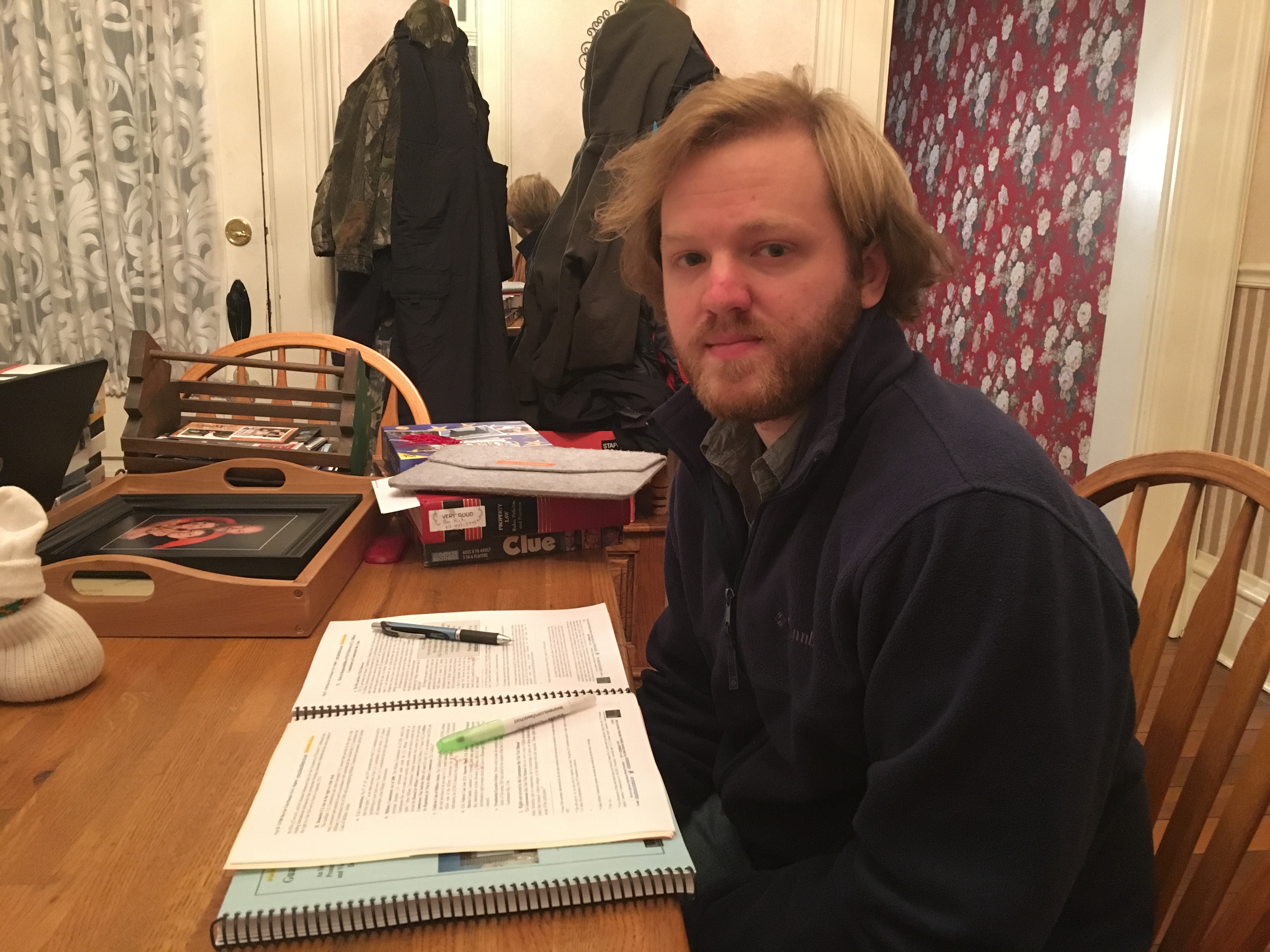
I am a first year law student at the Indiana University Robert H. McKinney School of Law, and I was set to travel to Ft. Meade Maryland this week to observe hearings via lifestream from Guantanamo Bay. The hearings scheduled for this week were for Hadi al Iraqi, who is alleged to, among other charges, have been involved in a series of attacks in Afghanistan and Pakistan around 2003 and 2004. The hearing postponement appears to have resulted from a motion for continuance filed by the defense. The defense filed two motions for continuance in January. Although neither the motions for continuance nor the responses to those motions have been made public, I suspect they are related to the hearings being cancelled this week. I feel a little disappointed that this week’s hearings were cancelled, although I must admit I was concerned that bad weather could cause problems with travel from Indianapolis to Ft. Meade.

I review the Guantanamo Bay Fair Trail Manuals in preparation for my observer mission.

I review the Guantanamo Bay Fair Trail Manuals in preparation for my observer mission.

A Rare Opportunity

Not many people have the opportunity to view the hearings of an alleged war criminal. Although the hearing for this week was cancelled, I hope that I will be able to attend one of the other hearings in the future. I understand that delays and postponements are inevitable, but hopefully these will not affect my future travel plans.

Eichmann Trial

A few years ago I read a book by Hannah Arendt entitled Eichmann in Jerusalem, in which Arendt describes the challenges associated with reporting on the trial of Adolf Eichmann who was tried for having a major role in the atrocities of the Holocaust. One of the specific challenges Arendt noted is a problem associated with holding a trial for someone who is generally believed to be guilty from the start. She questioned whether such a trial trial can have legitimacy, or if it is more of a show. As I go into this process, this issue does not concern me. I believe it is important to have a trial, especially in these instances. One concern is that most people likely believe that those held in Guantanamo Bay are guilty, based solely on the fact that they are being held there. Holding a trial is an essential part of ensuring that all stakeholders are treated fairly. My role as an observer is an essential part of this process. I take this role very seriously and will always strive to remain objective when reporting on the procedural process.

Final Thoughts

I remain optimistic about my observer mission, despite the first hearing I was set to view being cancelled. As I continue the semester I hope I can find time to attend another hearing, and ultimately hope to travel to Guantanamo Bay, Cuba, to see a hearing in person.

The Club No One Wants to Join

At the end of each week of the 9/11 hearings, there are a series of concluding media briefings at which the defense teams, the prosecution, and the families of the 9/11 victims speak to the members of the press who are present in Guantanamo Bay. This week the members of the media included representatives from news outlets, including among others, Associated Press, BreitBart News,  BuzzFeed, and Law DragonCarol Rosenberg of the Miami Herald was present as well and is the only reporter that has attended all of the Military Commission hearings. The NGO Observers are not allowed to attend these press briefings but are allowed to view them via a live stream in the NGO Office Lounge.

After Walter RuizJames Connell III, and David Nevin, defense attorneys, and Chief Prosecutor Brigadier General Mark Martins spoke, four of the Victims’ Family Members chose to speak to the media. It was apparent from their statements that each is on an individual journey.

Phyllis Rodriguez spoke first. Her 31-year-old son Greg died in the attacks on the World Trade Center. She started by saying she was a 9/11 victim’s family member and as such she was a member of a “club no one wants to join.” Phyllis then went on to say that she had always opposed the death penalty, but that her conviction had not been tested before 9/11.

Four days after the 9/11 attacks she and her husband Orlando Rodriguez wrote an open letter, “Not In Our Son’s Name,”calling on President Bush not to resort to a military retaliation against Afghanistan. The print version is here. As a result of the letter circulating on the internet along with several others by victims’ family members calling for non-violent solutions, they met others who held similar beliefs. From these connections, the non-profit September 11th Families for Peaceful Tomorrows was formed on February 14, 2002.

The organization’s mission is stated on its website as follows: “an organization founded by family members of those killed on September 11th who have united to turn our grief into action for peace. By developing and advocating nonviolent options and actions in the pursuit of justice, we hope to break the cycles of violence engendered by war and terrorism. Acknowledging our common experience with all people affected by violence throughout the world, we work to create a safer and more peaceful world for everyone.” (Peaceful Tomorrows website). The organization has received numerous awards, including a Nobel Peace Prize nomination in 2004.

In 2015 film maker Gayla Jamison produced and directed a documentary about the ongoing reconcilation work of Phyllis and Orlando Rodriguez. The film is entitled In Our Son’s Name.

DSC_0257

Phyllis Rodriguez and her daughter Julia. (Guantanamo Bay Ferry)

The press briefings are recorded and the video posted on the Military Commission site for public viewing. The December 11, 2015 briefing will be posted shortly.  The words and stories of all the Victims’ Family Members are powerful reminders of the importance of making sure that the defendants are afforded fair and just proceedings by the Military Commission.
DSC_0247

Sunrise at Guantanamo Bay, awaiting ferry to the base airport.

By: Catherine A. Lemmer, 9/11 Hearings, Guantanamo Bay, 11 December 2015.

9/11 Hearings In Morning Recess

The 9/11 Hearings are recessed this morning (Wednesday, December 9) because Mr. Mustafa al Hawsawi did not voluntarily waive his right to be present at the proceedings.

Mustafa_al-Hawsawi_2012

Mustafa al Hawsawi

Mr. al Hawsawi was forced to choose between attendance at today’s Military Commission hearings or a meeting with the International Committee of the Red Cross.

Under the Military Commission’s procedures in place here for the 9/11 proceedings, a defendant must attend the proceedings or voluntarily waive his right to attend.  If a defendant chooses not to attend, but does not do so voluntarily, the Joint Task Force must “force” the defendant to come to the proceedings.

Judge Pohl “sternly” advised the government that although he understands that there are “a lot of fingers in  the pie” and “no unity of command” it is not acceptable to have these kinds of easily avoidable delays.  The hearings are now in recess to permit Mr. al Hawsawi to attend his ICRC meeting this morning and then attend the hearings this afternoon.

In the afternoon we are set to pick up with the female guard issue.

By: Catherine A. Lemmer, 9 December 2015, 9/11 Hearings Guantanamo Bay

9/11 Hearings Set To Proceed

Professor Catherine Lemmer at Guantanamo Bay, Cuba

Professor Catherine Lemmer at Guantanamo Bay, Cuba, December 2015

There were no open hearings today, December 7, 2015, in the 9/11 case. The hearings were closed for a 505H hearing during which the prosecution, defense teams, and judge addressed a number of evidentiary issues.

One of the on-going matters the parties discussed today was the use of female guards in the detention camps. The inmates object to the use of female guards for religious reasons. The court heard, during the open session in October 2015, extensive testimony and evidence on this issue.  Despite that the court was in open session the transcript has been significantly redacted and is now labeled: “Unclassified For Public Use.” This means that the previously available information is now classified. For example, there is less than one page of transcript for the 11:16 AM to 12:28 PM session on October 30, 2015.

GITMO transcript

gitmo transcript 2

All the transcripts are available on the Military Commission site. The unofficial word is that the female guard issue will be continued in the February 2016 hearings. Judge Pohl will hear additional classified evidence at that time. Until such time, the interim order will remain in place that prohibits female guards from interacting with the defendants for purposes of “legal activities.”  For example, transporting the defendants to attorney meetings or to court.  It is an order limited to legal matters, therefore the female guards are not prohibited from interacting with the defendants in such instances as escorting them to the recreation area or for matters other than legal.

The unofficial word is that the Military Commission will conduct four days of hearings starting tomorrow morning. At that point Judge Pohl will engage in a colloquy with each defendant regarding his right to be present in the courtroom. This colloquy occurs each time the hearings are convened.

As the NGO Observers were not able to be in the courtroom, we visited the Navel Exchange (NEX) for supplies. There was a huge Christmas display in the entrance to the NEX; many of the units decorate a Christmas tree. The Christmas tree pictured above features two local wildlife — the iguana and the banana rat.

The NGO Observers were taken on a drive up on the windmill ridge. From there you could see the entire naval station. The JTF detention centers are on the other side of the island and off-limits to the NGO Observers.

By: Catherine A. Lemmer, 7 December 2015, 9/11 Hearings, Guantanamo Bay

Monday’s 9/11 Hearings Are Closed

At the end of today’s (Saturday) 802 conference, we were informed that there will be no open hearings on Monday, December 7, 2015.  The Defense teams, Prosecutor, and Judge will be conducting a 505H hearing to discuss evidentiary matters related to a number of motions. If Monday’s 505H hearing resolves some matters, we will start up on Tuesday with the female guard issue, the CIA interpreter on Mr. bin al Shibh’s team, and again the conflict of interest matters.
By:  Catherine A. Lemmer, 5 December 2015, 9/11 Hearings, Guantanamo Bay

Enroute to Guantanamo Bay for 9/11 Hearings

I arrived at Andrews Air Force Base in the dark and am all checked in. I got my ticket and had a chance to read the Andrews Gazette while waiting for the rest of the NGO Observers to arrive.

Andrews gazette

I’ve introduced myself to the other NGO Observers as they arrived and I’ve handed out the newest version of our Guantanamo Bay Fair Trial Manual. There are seven observers this time, representing law schools, human rights and other non-profit organizations, and the private bar. I look forward to sharing conversations and learning from them this week.

Andrews Air Force Lemmer

Professor Catherine Lemmer at Andrews Air Force Base     5 December 2015

The issues before the hearing this week are of great interest — classified information, the female guard issue, the CIA interpreter issue, and the continuing conflict-of-interest issues. I was at Guantanamo Bay for the February 2015 9/11 hearings when the CIA interpreter issue stopped the hearings. I am very interested to see how that issue will be advanced.  It will also be interesting to see if the recent move by the military to open all combat positions to women will have an impact on the discussion of the female guard issue.

The chatter in the departure lounge is that the week is shaping up to be very productive.  It is sure to be an interesting and informative week.

By:  Catherine A. Lemmer, 5 December 2015, 9/11 Hearings, Guantanamo Bay

Travel to Ft. Meade for Hearings on Alleged 9/11 Architect

Main Gate of Ft. Meade, where I am scheduled to attend hearings this coming week.

Main Gate of Ft. Meade, where I am scheduled to attend hearings this coming week.

In a few days, I will travel to Ft. Meade in Maryland to observe, analyze, and report on the upcoming hearings for Khalid Shaik Mohammad and 4 other alleged masterminds of the 9/11 attacks on the World Trade Center and the Pentagon. The U.S. Government has alleged that Mohammed was the “principal architect of the 9/11 attacks”, as reported by the 9/11 commission report. While at Ft. Meade, I will be viewing a secure live feed that links directly to  Guantanamo Bay, Cuba, where the defendants have been detained since at least 2006.

My role with the MCOP

I have been participating in the IU McKinney School of Law’s Military Commission Observation Project (MCOP) program for over a year now. I have had the opportunity to research on our Guantanamo Bay Fair Trial Manual which observers and others can use to help them ascertain whether the rights and interests of all stakeholders have been afforded to them. The Manual examines rights and interests not only of the defendants, but also of the prosecution,  victims and their families, the media, observers / monitors, and others.

I have also registered for multiple trips to Guantanamo Bay to view hearings live in the courtroom. However, all of those sets of hearings were cancelled in the days prior my departure. The repeated delays have given me a sense of the monumentally sluggish pace at which these trials move.

Who am I?

I am a 3L law student at IU McKinney, and am set to graduate in December 2015. Until recently I was a human rights intern with the Universal Rights Group, which is a Human Rights think tank in Geneva, Switzerland. My ongoing interest in the Guantanamo Bay is driven in large part by my passion for human rights work, combined with my ongoing interest in criminal law.

12191533_10156215877250436_7590503562374296296_n

Luke Purdy in front of the UN Building (Palais des Nations) in Geneva, Switzerland (Fall 2015).

Next week’s hearings

I am particularly excited about the fact that judge is scheduled to engage in a colloquy with the defendants on Monday morning the 7th, which will give me a chance to view and report on the spoken words of the accused.

I am also interested to hear evidence/testimony on the defendant’s request to prevent female guards from having direct contact with the defendant for religious reasons.

The hearings are scheduled to begin on Monday, December 7 and run until Friday the 11th. I will continue to blog about my observations at the base. I am expected to be joined at Ft. Meade by IU Affiliates Bob Masbaum (a J.D. graduate) and Professor George Edwards (founder of the Military Commission Observation Project). IU McKinney Professor Catherine Lemmer, who is an international librarian, is scheduled to travel to Guantanamo Bay this weekend to attend these 9/11 hearings live.

By: Luke Purdy, 3L, Indiana University Robert H. McKinney School of Law

9/11 Case August Pretrial Hearings Cancelled

Military tribunals for some accused of terrorist attacks on the United States are held at Camp Justice at Guantanamo Bay. (Photo by Catherine Lemmer, IU McKinney School of Law)

Military tribunals for some accused of terrorist attacks on the United States are held at Camp Justice at Guantanamo Bay. (Photo by Catherine Lemmer, IU McKinney School of Law)

The pretrial hearing scheduled to take place from the 24th of August through the 4th of September has been cancelled. According to the docketing order for the now cancelled hearing, the court was to hear argument pertaining to 36 different motions. The consideration of the motions was contingent on the outcome of motion AE 292, Emergency Joint Defense Motion to Abate Proceedings and Inquire into Existence of Conflict of Interest Burdening Counsel’s Representation of Accused, and that issue remains unresolved per Miami Herald reporter Carol Rosenburg.

Two representatives (Luke Purdy and myself, Matthew Kubal) of the Military Commission Observation Project and the Program in International Human Rights Law at Indiana University Robert H. McKinney School of Law were scheduled to attend the hearings at Guantanamo Bay as observers.

Human Rights Commission Addresses Guantanamo Secrecy

Building of the Inter-American Commission on Human Rights (Organization of American States), Washington, DC

Building of the Inter-American Commission on Human Rights (Organization of American States), Washington, DC

Lawyers for 9-11 Guantanamo Bay defendants issued this media alert Monday, 16 March 2015:

FOR IMMEDIATE RELEASE

Media Contact: James Connell (703) 588-0407 / (703) 623-8410

WASHINGTON, DC-Today, the Inter-American Commission on Human Rights will hear from attorneys for Guantanamo prisoners at 2:00 pm Eastern time.  Attorneys for Ammar al Baluchi and Mustafa al Hawsawi will address the impact of secrecy on the military commissions and ongoing detention.

“A state crime cannot be a state secret,” said James Connell, civilian attorney for al Baluchi.  “The secrecy at Guantanamo prevents accountability for torture and interferes with the administration of justice.”

The Inter-American Commission on Human Rights (Organization of American States).

Building of the Inter-American Commission on Human Rights (Organization of American States), Washington, DC

The hearing will include testimony from Special Rapporteur on Torture Juan Mendez, Dr. Stephen Xenakis, and Melina Milazzo of the Center for Victims of Torture.

The IACHR hearing is available streaming at http://www.livestream.com/oasenglish.

###

Guantanamo NGO Observers from IU McKinney Law School Featured in Indiana Lawyer

Military tribunals for some accused of terrorist attacks on the United States are held at Camp Justice at Guantanamo Bay. (Photo by Catherine Lemmer, IU McKinney School of Law)

Military tribunals for some accused of terrorist attacks on the United States are held at Camp Justice at Guantanamo Bay. (Photo by Catherine Lemmer, IU McKinney School of Law)

The Indiana Lawyer published the following article by Marilyn Odendahl on 25 February 2015. Text and photos are in the original article.

IU McKinney Gitmo Observers Illuminate Murky Proceedings in Gitmo Trials

by. Marilyn Odendahl (25 February 2015)

      The U.S. Military Commission Observation Project overseen by Indiana University Robert H. McKinney School of Law is continuing to send individuals to watch and report on the accused terrorists’ trials being held at Guantanamo Bay. Blog posts and articles from the observers chronicle the glacial pace of the proceedings, the unexpected courtroom twists and the nagging constitutional questions.

Professor George Edwards

Professor George Edwards

The project regularly sends faculty, students and alumni to either Guantanamo Bay or Fort Meade in Maryland to observe the tribunals. Professor George Edwards, founder and director of the project, explained the work of the observers is not to address the political issues or comment on the substance of the military commissions.

“We’re interested in seeking to assess whether the stakeholders are receiving the rights and interests that are afforded to them,” Edwards said. “(Those rights) include the right to a fair hearing, the right to an independent tribunal, the right to trial without undue delay.”

He pointed out the observers also are looking at the stakes that the victims of the terrorists attacks and their families have in the proceedings. What about their rights to have access to the trials, to make statements, to confront and to have closure?

Professor Catherine Lemmer

Professor Catherine Lemmer

IU McKinney librarian Catherine Lemmer, who Edwards described as instrumental in helping to build the observation program, heard some victims’ voices when she traveled to Guantanamo Bay for the hearings of the alleged co-conspirators of the Sept. 11, 2001, attacks.

One man said he was attending the proceedings to remind the judge and attorneys that planes had flown into the twin towers of the World Trade Center and the Pentagon. A mother of a fallen firefighter said she was struggling to hang on to her opposition to the death penalty, but she believed the trials had to be fair because the United States would be judged by how it handles the detainees.

The project drew praise from panelists who participated in a recent forum at the law school examining the tribunals. Hosted by the Indiana International & Comparative Law Review, the symposium brought together legal scholars from IU McKinney and around the country to discuss whether the end is coming for Guantanamo Bay or if the practice of international criminal law has reached a turning point.

An IU McKinney symposium examined trials at Guantanamo Bay. Panelists included (from left): Richard Kammen, Kammen & Moudy; Shahram Dana, The John Marshall Law School; George Edwards, IU McKinney; and Paul Babcock, editor-in-chief of the Indiana International & Comparative Law Review. Chris Jenks of Southern Methodist University Dedman School of Law participated via video link. (Photo by Dave Jaynes, courtesy of IU McKinney Law)

An IU McKinney symposium examined trials at Guantanamo Bay. Panelists included (from left): Richard Kammen, Kammen & Moudy; Shahram Dana, The John Marshall Law School; George Edwards, IU McKinney; and Paul Babcock, editor-in-chief of the Indiana International & Comparative Law Review. Chris Jenks of Southern Methodist University Dedman School of Law participated via video link. (Photo by Dave Jaynes, courtesy of IU McKinney Law)

Two participants – Shahram Dana, associate professor at The John Marshall Law School and Chris Jenks, assistant professor at Southern Methodist University Dedman School of Law – on the second panel discussion both noted IU McKinney’s effort in documenting the proceedings at Guantanamo Bay is shining a light on America’s response to terrorism and will be an invaluable resource for history.

Lemmer advocates for the proceedings to be shown on C-SPAN. The American public should see for themselves, she said, so they form their own opinions. By seeing what is happening in that courtroom, she said it is easy to realize how things could go wrong.

“The role of the attorneys, our role (as citizens) is to hold fast to the Constitution when really bad things happen and everybody wants to step over it,” Lemmer said. “Ultimately, the price we pay for not doing it right is incredible. This is our Constitution and it is getting overwhelmed, which should not happen.”

Lemmer took her first trip to Guantanamo Bay in December 2014. However, the proceedings were derailed by the ongoing revelations that the Federal Bureau of Investigation may have infiltrated the defense teams. The FBI is accused of listening to defense attorneys’ meetings with their clients and reviewing their correspondence as well as attempting to turn legal team members into informants.

When she returned in early February 2015, the FBI conflict-of-interest issue was still being argued. Then unexpectedly, Ramzi Bin al-Shibh, one of the defendants in the courtroom, said he recognized his interpreter as someone he encountered during the period he was held at one of the Central Intelligence Agency’s secret prisons. Another defendant told his attorney he also remembered the interpreter from the black site.

“It became very surreal,” she said.

To Indianapolis defense attorney Richard Kammen, the confusion and conundrums that swirl around Guantanamo Bay could be resolved by moving the proceedings to federal court. Kammen, lead counsel for USS Cole bombing suspect Abd al-Rahmin al-Nashiri, pointed to the hearings of accused Boston Marathon bomber Dzhokhar Tsarnaev as an example that U.S. courts can handle high-profile terrorism cases.

“There’re so many more moving parts down there than there would be in federal court, so things just get more messed up,” he said.

Currently, Kammen and his defense team are tangling with the federal government to release the details of the treatment of al-Nashiri while he was kept in a black site. The release of the CIA Torture Report publicly confirmed that the defendant had been physically, psychologically and sexually tortured, but Kammen said the defense still needs details of what was done and when.

Professor Tom Wilson

Professor Tom Wilson

IU McKinney professor Lloyd “Tom” Wilson is scheduled to observe the al-Nashiri proceedings during his first trip to Guantanamo Bay. The task of watching and relaying what is happening will be difficult, he said, because he will be seeing just a snapshot of a long, complex and secretive process.

Wilson was careful in his preparation for the trip, not wanting to form any preconceived ideas or prejudices before he arrived in the courtroom. He is going out of a sense of civic duty and to understand the situation better than he does now.

Still, the proceedings are not easy to comprehend and continue to spark debate many miles away from the detention camp.

As part of his remarks during the IU McKinney symposium, Kammen described Guantanamo Bay as a “law-free zone.”

Co-panelist Jenks countered that characterization, arguing traditional rules governing the treatment of prisoners of war have been upended by terrorism. In previous conflicts, nation states battled each other but now the United States is fighting against groups that are unconnected with any organized government or country. Even so, he continued, the detainees at Guantanamo Bay have a right to counsel and are being given a trial.

Kammen responded that even if his client is acquitted, he will not be released.

“That,” Kammen said, “is a law-free zone.”

_______

The original Indiana Lawyer article can be found here:  http://www.theindianalawyer.com/iu-mckinney-gitmo-observers-illuminate-murky-proceedings-in-gitmo-trials/PARAMS/article/36436
9/11 Commissions Halted Due to Unlawful Influence

Today, February 25, 2015, Chief Judge Colonel James Pohl, U.S. Army, ordered a halt to the case against the 9/11 defendants at Guantanamo Bay with his finding that Department of Defense officials tried to unlawfully influence the military commissions judiciary.  You can read today’s ruling here on the Gitmo Observer. Judge Pohl ordered “abatement” of the case until the rule change is rescinded by the proper authority. The prosecution has five days to appeal the new order, if it chooses to do so.

Judge Pohl ruled that the actions by the Deputy Secretary of Defense, acting upon the recommendations of the Convening Authority, constitute at least the appearance of an unlawful attempt to pressure the military judge to accelerate the pace of litigation and an improper attempt to usurp judicial discretion, thereby compromising the independence of the military judge.

The ruling arises out of the December 9, 2014 memorandum of Major General Vaughn Ary, U.S.M.C. (Ret.), the “Convening Authority” in charge of the military commissions at Guantanamo, to Deputy Secretary of Defense Robert Work asking him to require military commission judges to relocate to Guantanamo Bay “to accelerate the pace of litigation.”  On January 7, 2015, the Deputy Secretary of Defense issued the rule change requested by the Major General Ary.

On January 30, defendants in the 9/11 case filed a motion to dismiss the case for unlawful influence over the military judiciary. Judge Pohl ruled on their motion today.

9/11 Hearings Misc Motions Heard

On Wednesday, February 11,  Judge Pohl called for the parties to suggest motions that could be heard outside of the 292 conflict-of-interest matter and the prior CIA black site interpreter matter (350). There was an aura that the 9/11 hearings were on life support as the prosecution and defense struggled to put motions on the table that could be argued during the remainder of this week. Mr. Walter Ruiz, Learned Counsel, proposed a number of motions that deal only with his client, Mustafa al-Hawsawi.

This morning he called to order the Military Commission to hear arguments on a variety of outstanding motions. Defendant Mr. al Baluchi chose not to attend the hearings today. As a result, the first few minutes of the proceedings dealt with an Officer of the Judge Advocate General Corp’s office testifying that he had informed Mr. al Baluchi of his rights to attend and to obtain his waiver. Typically when this happens the prosecution files a “submission of alias” because the testifying officer does not provide his name on the witness stand. Learned Counsel for Mr. al Baluchi, James Connell, noted on the record that the prosecution had not made such admission this morning.

David Nevin, Learned Counsel for Khalid Shaikh Mohammed, again went on the record to make an on the record motion (and to indicate that he will be filing a written motion) to halt all proceedings until such time as the matter of the former CIA black site interpreter issue is resolved.  Again, he was overruled.

Today’s activity focused on motions focused by Mustafa al-Hawsawi.  Mr. Walter Ruiz, Learned Counsel, argued the following motions:

  • AE192 & AE196 Motion to Seek to Disqualify Legal Adviser, Office of the Military Commission Due to the Unlawful Interference with the Professional Judgment of the Chief Defense Counsel and Detailed Learned Military Counsel. Mr. Ruiz requested that Judge Pohl go forward with an analysis of the underlying facts and law because these circumstances are representative of an instance of unlawful influence in the proceedings. The issue of unlawful influence does not resolve itself simply because those involved have left the Office of the Military Commission. Ms. Bohrmann, Learned Counsel, for Mr. Walid bin Attash, similarly urged Judge Pohl to undertake the analysis and make a ruling.
  • AE332 & AE340 Motions to compel discovery of Mr. Hawsawi’s medical records and access to medical personnel who treat Mr. Hawsawi. Mr. Ruiz requested access to medical records and medical personnel in order to judge the standard of care his client is receiving and also to help Mr. Hawsawi make medical decisions. His health has showed signs of deterioration. The prosecution challenged these motions by arguing that the medical issues are arising out of a December 2014 incident in which Mr. Hawsawi was injured while in detainment. The prosecution also stated that his medical records, which were classified, are being declassified and delivered to the defense on a rolling basis.
  •  AE303 Motions addressing conditions of confinement. Mr. Ruiz argued that the circumstances of confinement at Guantanamo Bay violate humanitarian law. He did note that there has been one change. For example, Mr. Hawsawi did not have any access to his family from 2003 through most of 2014.  In October 2014 a process was put in place to allow the defendants to record messages that will be delivered to their families. In January 2015 a process was put in place to enable the defendants to Skype with their families. His overall focus was that quality of life will equal quality of defense and that the United States has a legal duty to abide by the law. The prosecution urged Judge Pohl to stay out of the detention role and noted that the Geneva Convention does not apply to these defendants because they are “alien unprivileged enemy belligerents.”
  • AE214 & AE214A Motion to Compel Mr. Hawsawi Access to the Government of Saudi Arabia in Compliance with United States Law and Motion to Compel Prosecution to Produce Un-redacted Copies of Correspondence etc. Pertaining to Requests by Saudi Arabia to Meet With Its Citizens Held in Guantanamo Bay Mr. Ruiz urged Judge Pohl to order this discovery so that Mr. Hawsawi would have access to officials of his home state, Saudi Arabia.

At the conclusion of lengthy oral arguments, Judge Pohl asked if there was any further outstanding matters.  Again David Nevin renewed his concern that the legal proceedings were continuing in light of the 292 and 350 matters.

James Harrington, Learned Counsel for Ramzi bin al Shibh, brought up what he called a “simmering problem.” He stated that the manner in which the defendants are handcuffed/shackled has changed and that as a result the defendants are experiencing injuries.  Mr. Harrington noted that the defendants are not attending attorney-client meetings rather than suffer the injury. He asked Judge Pohl to ask the prosecution to look into the matter and see if the issue can be corrected.

The proceedings concluded with James Connell, Learned Counsel, asking Judge Pohl to issue an subpoena or other relief to provide the defense access to the former CIA black site interpreter.  Judge Pohl declined to do so and asked for a written motion.

Camp Justice Guantanamo Bay, Cuba December 2014

(Catherine Lemmer, 9/11 Hearings, Guantanamo Bay, February 9-13, 2015)


40 Seconds is a Long Time & Other GTMO Musings

Monday, February 9, was my first observation experience in the Guantanamo Bay courtroom. It is difficult to describe because I am prohibited from writing much of what I would like to say about the activities in the courtroom. It is a highly controlled area. A sign informs observers that among other things, sketching and even doodling, are prohibited in the gallery. After seeing the courtroom activity, I believe even more so that the courtroom proceedings should be broadcast live on C-SPAN or other network.

Observers, along with the media, are seated in a four-row gallery behind a glass window. Upon entering the gallery you are given an assigned seat number. Media representatives, along with the court sketch artist, are assigned to the front row. Media may also watch the courtroom action on a direct feed to their office/lounge. This allows them to send immediate updates. There is a special gallery section for the family members of 9/11 victims. A curtain can be drawn to protect the victim family members from view of others in the event there is a need for privacy.

The defendants are able to see into the gallery; and at one point Khalid Sheihk Mohammed looked back and acknowledged one of his pro bono attorneys who was present in the gallery.

The gallery is on a 40-second delay. It is amazing how long 40 seconds feels! The time delay gets a bit weird when the “all rise” is given when Judge Pohl leaves and the gallery is still processing the last minute of the activity. I was standing and still scribbling notes as I watched the monitor.

There are a lot of actions that seem unnecessarily proscribed at Guantanamo Bay.  For example, the NGO Observer office/lounge is in the old airport hangar, as is the media’s office/lounge. However, we enter our NGO Observer office/lounge from a door on the outside of the building and can’t go into the hangar. During General Martins’ press briefing, the NGO Observers could not go into the hangar and watch.  We had to stay in our office/lounge and watch it via a live link.

DSCN0945 NGO Observers Media


Similarly the NGO Observers had to watch the defense team press briefing in our NGO Observer lounge/office. The feed to the NGO Observer lounge/office was terminated at the end of the hour, even though the press asked the defense teams if they would continue with the briefing. The NGO Observers later learned that the questions and answers continued for some time after the feed was terminated.

After the startling allegations against the newly assigned interpreter by Ramzi bin al Shibh, one NGO observer remarked “you just can’t make this stuff up!” That about sums up the process here at Guantanamo Bay.

 (Catherine Lemmer, 9/11 Hearings, Guantanamo Bay, February 9-13, 2015)

Still Awaiting A 9/11 Update

On Monday, February 9, Judge Pohl recessed the 9/11 hearings to permit General Martins’ prosecution team and the defense teams to investigate the allegations made by the 9/11 defendant, Ramzi bin al Shibh, that he recognized the new interpreter assigned to his defense team as a worker at a CIA black site. Interestingly, his statement naming the individual and directly making reference to a CIA black site was not censored by the Courtroom Security Officer. As a result, the unofficial transcript first posted to the Military Commissions site included the interpreter’s name. Later in the afternoon a redacted unofficial transcript was posted. A number of the NGO Observers felt that the inclusion of the interpreter’s name in a public document was unwise.

General Martins asked for time to discover the facts and file “papers.”  Defense teams asked that the filings be adversarial (ie., available to the defense) rather than ex parte. In addition, defense teams asked that the interpreter be made available for interviews.

There has been a good deal of going and coming of lawyers at the courtroom.  However, no news is leaking out to the NGO Observers. It is now 6:30 pm on Tuesday and the docket does not specifically reflect any filings by the prosecution or the defense on this matter. The prosecution did file an “Unclassified Notice of  Classified Filing” earlier today. The document is not available for public review.

Although there is much speculation as to whether the 9/11 hearings will move forward, there is no news as of this time.

(Catherine Lemmer, 9/11 Hearings, Guantanamo Bay)

9/11 Hearings Halted

The 9/11 hearings at Guantanamo Bay were recessed until 9:00 am Wednesday, February 11 to give the defense and prosecution teams to investigate the defense team interpreter accused of being a CIA black site worker.

Today’s action started with a request by retiring Navy Lieutenant Commander Kevin Bogucki to resign from the defense team for Ramzi bin al Shibh.  When asked if he accepted Major Elena Wichner as new counsel, Mr. bin al Shibh stated that he could not trust the defense team interpreter sitting next to him because he recognized him as CIA black site worker that was involved in the CIA Rendition, Detention and Interrogation program.  Cheryl Bohrmann, Learned Counsel for Walid bin Attash, stated her client had informed her of the same just minutes before.

Ironically the interpreter alleged to be a CIA black site worker replaced the individual dismissed from Mr. bin al Shibh’s team who was found to be the FBI infiltrator.

After a brief recess to bring in General Martin’s prosecution team, Judge Pohl asked the prosecution and defense for a “way forward.”  General Martin’s asked for time to investigate and make filings. David Nevin, Learned Counsel for Khalid Sheikh Mohammad, requested that the Military Commission require the dismissed interpreter be held on the island and made available for interviews with the defense.

Cheryl Bohrmann inquired of Judge Pohl if General Martins’ prosecution team was the best option for the investigation of what might again be the government’s infiltration of the defense teams. She noted that her client, Mr. bin Attash, was “visibly shaken” and suggested the the Special Review Team already in place to investigate the FBI conflict-of-interest matter should be used.

Judge Pohl chose to rely on the prosecution and indicated that he didn’t intend that this matter would go through the usual three-week briefing schedule. The hearings are recessed until Wednesday, February 11.

(Catherine Lemmer, 9/11 Hearings, Guantanamo Bay, February 9-13, 2015)

9/11 Hearings in Recess

The 9/11 hearings are in recess because defendant Ramzi bin al Shibh alleged in the courtroom that the interpreter at his defense table had been at a CIA black site. Defense counsel for Walid bin Attash, Cheryl Borhmann, then indicated that her client had informed her of the same.  Court is in recess until 10:30 am.  General Martins’ prosecution team has been called to court to deal with the issue.  His team was not in court because the Special Review Team was representing the government on the FBI conflict of interest matter.

(Catherine Lemmer, 9/11 Hearings, Guantanamo Bay, February 9-13, 2015)

Gitmo Observer Provides NGO Observer Resource Centre

The remaining copies of the Guantanamo Bay Fair Trial Manual and other resources and supplies are set up in the NGO Observer lounge and ready for use by the NGO Observers.

DSCN0936

Gitmo Observer NGO Resource Centre

This trip has nine NGO Observers.  The NGO Observers represent the law schools of Duke University, Seton Hall, and Georgetown University. The other NGO Observers represent Amnesty International, National Institute for Military Justice, New York City Bar Association, Judicial Watch, and Pacific Council on International Policy.  Everyone has been uniformly impressed by the Guantanamo Bay Fair Trial Manual. Hopefully we will get some good feedback!

Earlier today the prosecutor provided the updated 9/11 court filings on cds. They also provided two dvd/cd drives for those NGO Observers whose laptops no longer have dvd/cd drives!  Technology sure has a way of complicating things on days.

 (Catherine Lemmer, Guantanamo Bay, 9/11 hearings, February 9-13, 2015)     

Sunrise Over Andrews Air Force Base

The sun is on the horizon and the departure lounge at Andrews Air Force Base has  started to fill up.  The wall outlets are in demand; and the wifi is slowing down. sunrise 2

The nine NGO Observers are all here as we are the first to check-in. I have already distributed copies of the Guantanamo Bay Fair Trial Manual — everyone is most appreciative! One NGO Observer had already downloaded it from the link I sent in yesterday’s introductory email.

As soon as I finish this post I am off to continue conversatiodepart 2n with some of the defense lawyers and members of the media.

(Catherine Lemmer, 9/11 Hearings, Guantanamo Bay, February 9-13, 2015)