Professor George Edwards

Guantanamo NGO Observers from IU McKinney Law School Featured in Indiana Lawyer

Military tribunals for some accused of terrorist attacks on the United States are held at Camp Justice at Guantanamo Bay. (Photo by Catherine Lemmer, IU McKinney School of Law)

Military tribunals for some accused of terrorist attacks on the United States are held at Camp Justice at Guantanamo Bay. (Photo by Catherine Lemmer, IU McKinney School of Law)

The Indiana Lawyer published the following article by Marilyn Odendahl on 25 February 2015. Text and photos are in the original article.

IU McKinney Gitmo Observers Illuminate Murky Proceedings in Gitmo Trials

by. Marilyn Odendahl (25 February 2015)

      The U.S. Military Commission Observation Project overseen by Indiana University Robert H. McKinney School of Law is continuing to send individuals to watch and report on the accused terrorists’ trials being held at Guantanamo Bay. Blog posts and articles from the observers chronicle the glacial pace of the proceedings, the unexpected courtroom twists and the nagging constitutional questions.
Professor George Edwards

Professor George Edwards

The project regularly sends faculty, students and alumni to either Guantanamo Bay or Fort Meade in Maryland to observe the tribunals. Professor George Edwards, founder and director of the project, explained the work of the observers is not to address the political issues or comment on the substance of the military commissions.

“We’re interested in seeking to assess whether the stakeholders are receiving the rights and interests that are afforded to them,” Edwards said. “(Those rights) include the right to a fair hearing, the right to an independent tribunal, the right to trial without undue delay.”

He pointed out the observers also are looking at the stakes that the victims of the terrorists attacks and their families have in the proceedings. What about their rights to have access to the trials, to make statements, to confront and to have closure?

Professor Catherine Lemmer

Professor Catherine Lemmer

IU McKinney librarian Catherine Lemmer, who Edwards described as instrumental in helping to build the observation program, heard some victims’ voices when she traveled to Guantanamo Bay for the hearings of the alleged co-conspirators of the Sept. 11, 2001, attacks.

One man said he was attending the proceedings to remind the judge and attorneys that planes had flown into the twin towers of the World Trade Center and the Pentagon. A mother of a fallen firefighter said she was struggling to hang on to her opposition to the death penalty, but she believed the trials had to be fair because the United States would be judged by how it handles the detainees.

The project drew praise from panelists who participated in a recent forum at the law school examining the tribunals. Hosted by the Indiana International & Comparative Law Review, the symposium brought together legal scholars from IU McKinney and around the country to discuss whether the end is coming for Guantanamo Bay or if the practice of international criminal law has reached a turning point.

An IU McKinney symposium examined trials at Guantanamo Bay. Panelists included (from left): Richard Kammen, Kammen & Moudy; Shahram Dana, The John Marshall Law School; George Edwards, IU McKinney; and Paul Babcock, editor-in-chief of the Indiana International & Comparative Law Review. Chris Jenks of Southern Methodist University Dedman School of Law participated via video link. (Photo by Dave Jaynes, courtesy of IU McKinney Law)

An IU McKinney symposium examined trials at Guantanamo Bay. Panelists included (from left): Richard Kammen, Kammen & Moudy; Shahram Dana, The John Marshall Law School; George Edwards, IU McKinney; and Paul Babcock, editor-in-chief of the Indiana International & Comparative Law Review. Chris Jenks of Southern Methodist University Dedman School of Law participated via video link. (Photo by Dave Jaynes, courtesy of IU McKinney Law)

Two participants – Shahram Dana, associate professor at The John Marshall Law School and Chris Jenks, assistant professor at Southern Methodist University Dedman School of Law – on the second panel discussion both noted IU McKinney’s effort in documenting the proceedings at Guantanamo Bay is shining a light on America’s response to terrorism and will be an invaluable resource for history.

Lemmer advocates for the proceedings to be shown on C-SPAN. The American public should see for themselves, she said, so they form their own opinions. By seeing what is happening in that courtroom, she said it is easy to realize how things could go wrong.

“The role of the attorneys, our role (as citizens) is to hold fast to the Constitution when really bad things happen and everybody wants to step over it,” Lemmer said. “Ultimately, the price we pay for not doing it right is incredible. This is our Constitution and it is getting overwhelmed, which should not happen.”

Lemmer took her first trip to Guantanamo Bay in December 2014. However, the proceedings were derailed by the ongoing revelations that the Federal Bureau of Investigation may have infiltrated the defense teams. The FBI is accused of listening to defense attorneys’ meetings with their clients and reviewing their correspondence as well as attempting to turn legal team members into informants.

When she returned in early February 2015, the FBI conflict-of-interest issue was still being argued. Then unexpectedly, Ramzi Bin al-Shibh, one of the defendants in the courtroom, said he recognized his interpreter as someone he encountered during the period he was held at one of the Central Intelligence Agency’s secret prisons. Another defendant told his attorney he also remembered the interpreter from the black site.

“It became very surreal,” she said.

To Indianapolis defense attorney Richard Kammen, the confusion and conundrums that swirl around Guantanamo Bay could be resolved by moving the proceedings to federal court. Kammen, lead counsel for USS Cole bombing suspect Abd al-Rahmin al-Nashiri, pointed to the hearings of accused Boston Marathon bomber Dzhokhar Tsarnaev as an example that U.S. courts can handle high-profile terrorism cases.

“There’re so many more moving parts down there than there would be in federal court, so things just get more messed up,” he said.

Currently, Kammen and his defense team are tangling with the federal government to release the details of the treatment of al-Nashiri while he was kept in a black site. The release of the CIA Torture Report publicly confirmed that the defendant had been physically, psychologically and sexually tortured, but Kammen said the defense still needs details of what was done and when.

Professor Tom Wilson

Professor Tom Wilson

IU McKinney professor Lloyd “Tom” Wilson is scheduled to observe the al-Nashiri proceedings during his first trip to Guantanamo Bay. The task of watching and relaying what is happening will be difficult, he said, because he will be seeing just a snapshot of a long, complex and secretive process.

Wilson was careful in his preparation for the trip, not wanting to form any preconceived ideas or prejudices before he arrived in the courtroom. He is going out of a sense of civic duty and to understand the situation better than he does now.

Still, the proceedings are not easy to comprehend and continue to spark debate many miles away from the detention camp.

As part of his remarks during the IU McKinney symposium, Kammen described Guantanamo Bay as a “law-free zone.”

Co-panelist Jenks countered that characterization, arguing traditional rules governing the treatment of prisoners of war have been upended by terrorism. In previous conflicts, nation states battled each other but now the United States is fighting against groups that are unconnected with any organized government or country. Even so, he continued, the detainees at Guantanamo Bay have a right to counsel and are being given a trial.

Kammen responded that even if his client is acquitted, he will not be released.

“That,” Kammen said, “is a law-free zone.”

_______

The original Indiana Lawyer article can be found here:  http://www.theindianalawyer.com/iu-mckinney-gitmo-observers-illuminate-murky-proceedings-in-gitmo-trials/PARAMS/article/36436
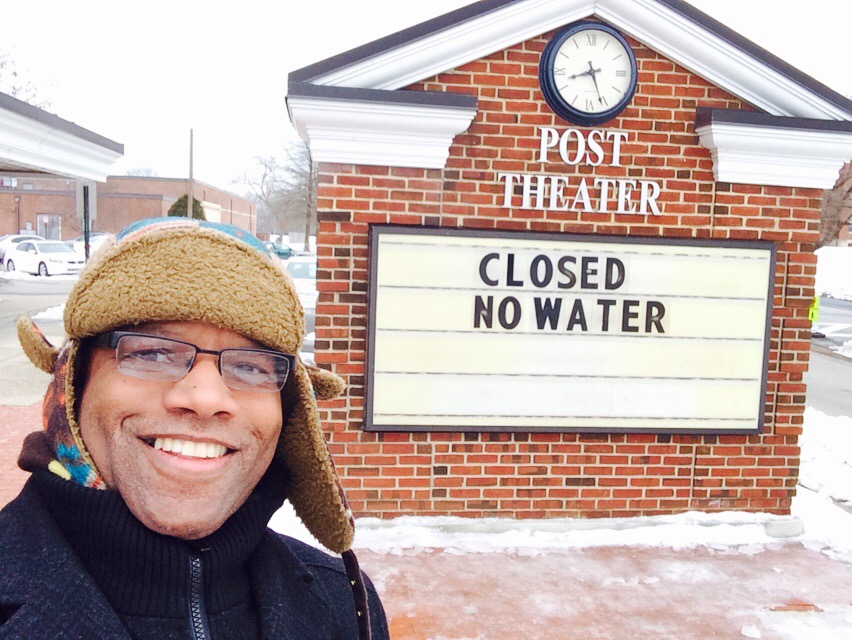
My Morning at Guantanamo Bay Hearings at Ft. Meade

In front of the Post Theater at Ft. Meade.

In front of the Post Theater at Ft. Meade.

I am up early this Monday morning for my first visit this year back to Ft. Meade, Maryland to monitor Guantanamo Bay, Cuba hearings in the U.S. Military Commissions case against al Nashiri. He is the alleged mastermind of the U.S.S. Cole suicide bombing in 2000 that killed 17 U.S. sailors.

What, Guantanamo Bay proceedings in Maryland?

Yes. The Pentagon runs a secure videolink direct from the Guantanamo Bay courtroom to select viewing sites in the U.S. where press, NGO Observers, victims and their families, and others may view the proceedings. The only site in the U.S. at which NGO Observers and members of the public may see what’s happening in the courtroom is at Ft. Meade, Maryland, about 35 miles outside of Washington, DC.

It’s kind of like watching a Court TV show, except that the viewing venue at Ft. Meade is an actual live theater, where they screen first run movies on a huge commercial theater-sized screen, and host live plays, lectures and other activities on a stage. Its concession stand sells buttered popcorn, Milk Duds and Skittles, and fountain drinks. This week’s feature film is Selma, screened in the evenings after the Guantanamo courtroom goes dark.

Courtroom sketch of al Nashiri by artist Janet Hamlin. Today in court he was wearing a similar casual white short sleeve shirt. His hair appeared to be a little longer than in this sketch, but it appeared equally as kempt.

Sketch of al Nashiri from a previous court session. Today in court he wore a similar casual white short sleeve shirt. His hair appeared to be a little longer than in this sketch, but it appeared equally as kempt. (Sketch by Janet Hamlin)

Al Nashiri’s February 2015 hearings

The al Nashiri case is in the pre-trial hearing stage. Every month or two they schedule two weeks of court time in which defense and prosecution lawyers argue about logistical, substantive, or technical issues to be resolved before the actual trial begins. For the February 2015 hearings, the lawyers are arguing whether the prosecution must provide the defendant certain information, whether al Nashiri will face the death penalty, and the relevance of the U.S. Senate’s 2014 Torture Report.

But before they reach those issues, they are arguing over whether certain Pentagon officials are exercising “unlawful influence” over the al Nashiri judge, who like other Guantanamo Bay judges was ordered permanently to relocate to Guantanamo Bay and surrender all non-Guantanamo judicial responsibilities, as these changes purportedly would help speed up the trials. U.S. law clearly provides that judges are to be in control over their trials, including the speed at which their trial proceed, and outside U.S. government officials are not meant to intervene.

I won’t know what will happen in today’s hearings until 1:00 p.m., since the morning session, which was scheduled to begin at 9:00, is closed to NGO Observers. I have over four hours of out-of-court time to catch up on reading al Nashiri court documents, blog writing, and working on the Guantanamo Bay Fair Trial Manual.

Driving to Ft. Meade

Getting to Ft. Meade is not easy.

I woke up this morning before 6:00, and took a taxi from my downtown DC hotel to Washington National Airport, where I rented a car to drive to Ft. Meade. The taxi ride to the airport was historically scenic, passing the Watergate, the Washington Monument, and Arlington Cemetery.

Driving from the airport to Ft. Meade was slow, not because of rush hour, but because much of the 35 miles to the base is on narrow, two lane roads with many stop lights. I will try another route back to DC this afternoon. Perhaps it was a GPS problem?  It might be an advantage driving into DC when most of the traffic is driving out at the end of the day. All said, it was a pretty uneventful trip, which took about an hour from airport to the Ft. Meade Visitor’s Entrance.

Photo courtesy of CNN

Photo courtesy of CNN

Arriving at Ft. Meade

I remembered from last time I was here where the Ft. Meade Visitor’s Entrance is, off of Reese Road, and pulled up to the base security checkpoint. But I’d forgotten about the separate vehicle inspection line, just to the right before base security. So I had to make a quick U-turn, adding 30 seconds to my journey. The vehicle inspector asked me a few questions about my Indiana drivers license, my rental car  contract, and whether I was a member of the press. He was easily convinced that I was a credentialed NGO Observer, and very generously gave me a Ft. Meade color map, on which he traced lines to the Post Theater, where I am now.

I arrived here just before 8:30 a.m., took a couple of selfies in front of the Post Theater sign, and then bumped into Bev, who is a Department of Defense contractor who I believe supervises this viewing site. She announced to me that court was commencing at 9:00 a.m., but that the morning session would be closed to NGO Observers. They close the proceedings when they are discussing classified information that NGO Observers, victims and their families, press, and others are not permitted to hear. So, none of us can be in the courtroom or on a video-link, whether we are in Guantanamo Bay or Ft. Meade.

I wondered why those of us at Ft. Meade were not warned in advance that the unclassified, open proceedings would not commence until early afternoon. At the very least, none of us would have had to wake at the crack of dawn, only to hurry up and wait all day. (As it turns out, two people in the Observation room received notification last night at 10:00 that the open session would start at 1:00 p.m., and they arrived at the Post Theater at 12:45, well-rested after a good night’s sleep and a 50 mile drive.)

So, what do I do for the next four hours from 9:00 – 1:00 waiting for the open hearing? I could drive back to Washington, and come back this afternoon. But that would be a wasted time.

So, of course, I immediately thought that this would be a great time to catch up on Gitmo Observer blog writing, to review court documents in the al Nashiri case, and to brush up on the Guantanamo Bay Fair Trial Manual.

Drug sniffing dog Axa and her handler

Drug sniffing dog Axa and her handler at Post Theater today, after finding all the drugs planted by the MPs.

Canine Patrol

A little while after I entered the Post Theater, a group of Military Police (MP) Canine Patrol staff came in, asking whether the Guantanamo Bay hearings were on. I told them that the hearings were closed until 1:00 p.m., and that there would be no live broadcast until then. In fact the screen was showing the morning news, with stories about al Shabaab and threats to U.S. shopping malls and the weather.

The MPs said that they wanted to do some training with some of their dogs.

The next hour or so was extremely interesting, watching 5 different dogs successfully sniff out planted explosives and illegal drugs that the MPs planted in different parts of the theater.

The first dog, a black lab, was an explosives expert. She found three different satchels of explosive powder and other incendiary material, hidden inside a trash can, underneath a movie theater seat, and high above the arch of a doorway. All in record time. After each find the shiny, fine-coated lab received an award, a tug and tussle with a “kong”, which is a plastic toy attached to a colorful twisted heavy rope.

The next two explosive expert dogs performed equally as well, quickly finding all the planted explosives and receiving well-deserved treats.

Then came Axa, the first of two drug-sniffing dogs. She was a small dog, with a rugged black and grey fluffy coat. The

Fram - A drug sniffing dog and his handler.

Fram – A drug sniffing dog and his handler this morning, after the 9-year old canine gracefully located all of the drugs planted by the MPs.

MPs had hidden the drugs on the opposite side of the theatre from the explosives.  Axa’s handler gently waved her open palm towards the trash can next to the door leading from the lobby into the theater, and Axa did not react.  The handler repeated the hand gesture, called a presentation (the hand wave gesture), this time towards the door frame. Axa stood on her hind legs and leaned against the door frame, circled around beneath the frame, stood up again, and excitedly sat on her hind legs. Axa found the 5 grams of marijuana hidden in the frame above the door. She was rewarded with a yelp by the handler who tossed Axa a kong for finding the pot.

Axa then found cocaine in a trash can in front of the theater, and ecstasy underneath a seat in about row 8. Axa is only 2 years of age and has been working as a canine sniff dog only since October 2014. Well done.

Finally, Fram, the senior sniffer, was brought into the theater.

Fram was 9 years of age, lived his first 7 years in Germany, and arrived at Ft. Meade only 2 years ago. He was seasoned, he knew the drill, and he was very good at what he does.

Today Fram earned his kongs, and hugs from his handler who said “I’m going to adopt Fram when he retires”. Several other handlers chimed in “No you’re not! I’m going to adopt him”! So, we’ll see who ends of with a handsome, smart and talented dog who even at the ripe old age of nine did not look like he was anywhere near retirement.

Dog Handlers are gone — What Next?

The dog handlers have left, and I’m back to full concentration on my work (despite interruptions by a person stopping in to ask for directions to a base office, a guy coming in to turn on the bathrooms’ water which had been turned off over the weekend to prevent frozen pipes during the snow storm, and a guy changing lightbulbs above the concession stand.

My next post will have more substance and will report on my al Nashiri motion-review and my Guantanamo Bay Fair Trial Manual work.

(George Edwards, Ft. Meade, 23 February 2015)

Preparing for Guantanamo Bay 9-11 Hearings

Our plane to Guantanamo Bay is scheduled to depart from Andrews Air Force Base on Saturday morning, 13 December 2014.

Our plane to Guantanamo Bay is scheduled to depart from Andrews Air Force Base on Saturday morning, 13 December 2014.

Panic like a 1st year law student or new law firm associate!

It is easy for an Guantanamo Bay fair trial NGO observer to experience the same sort of panic that a first year law firm associate experiences when thrown into a complex litigation matter. I’ve spent a fair bit of time over the last few days reading and re-reading the motions to be heard next week when I am in Guantanamo Bay. Despite my homework, I am not sure I fully comprehend the significance of many of the details.


Blog posts – to a fair trial – Guantanamo Bay Fair Trial Manual.

Generally, my blog posts during my Guantanamo Bay mission will not focus so much on the substance of the legal arguments related to the case. Instead, they will focus on right to a fair trial issues, as discussed in the Guantanamo Bay Fair Trial Manual. However, on the eve of my departure, I wanted to post on the defendants in the hearings next week, the pre-trial motions scheduled, and on the odd assortment of categories of lawyers expected to be present to represent the defendants and to represent the U.S.

The hearings for 15 – 16 December 2014

Five motions are scheduled to be heard during two days of hearings at Guantanamo Bay in the case against 5 alleged masterminds of the World Trade Center / Pentagon attacks on 9-11. All five defendants, Khalid Shaikh Mohammad, Walid Muhammad Salih Mubarak bin ‘Atash, Ramzi bin al Shibh, Ammar al Baluchi (aka Ali Abdul Aziz Ali), Mustafa Ahmed Adam al Hawsawi, and their legal defense teams are expected to be present for the hearings. Also expected to be present is Independent Counsel appointed for Mr. bin al Shibh.

The regular prosecutors in the case will likely not be in the courtroom during at least some of the hearings, but the U.S. will be represented by a “Special Review Team” that was called in to represent the U.S. next week because of conflict of interest issues related to due to allegations related to the FBI allegedly infiltrating defense teams on the case(more…)

Wrapping up the week of al Nashiri GTMO hearings – Charles Dunlap

IMG_1436

Watching the press conference from the NGO lounge. Note the picture is of the GTMO courtroom that was used for the hearings.

Press Conference

After the hearings were over for the week in the al Nashiri case (4 – 7 November 2014), the prosecution and the defense teams held a brief press conference with the four media representatives who were with us at GTMO for the week.

Victims and Victims’ Families

During the press conference, the victims and their families had an opportunity to also speak to the media.  When the victims and their families spoke it was a reminder of what this trial is all about and the 17 people that died on the USS Cole and the 39 wounded.  During the hearings it is easy to get caught up in the “legal arguments” and the various details and tactics and lose sight of why we are here.  For me, hearing the victims and their families at the press conference really made me re-focus on them and their experiences.  In addition to the overall suffering that they have been through, the main point that they expressed was their frustration with the slowness of this process and their desire for there to be an end to this and to see justice done.

Last Days Events

IMG_1566

NGO’s gather for a farewell cookout and a chance to reflect on the weeks events.

On the last days of the trip, we had an opportunity to do several things.

Time with Defense Team – Rick Kammen and defense lawyers

The NGOs spent an hour and a half with Rick Kammen and the defense team.  They were extremely generous with their time and were able to answer many questions about the hearings we had observed.

Again, some of the overall themes from that meeting were similar to others; the incredibly difficult logistics and the high costs that result; the complicated issues associated with the case which are compounded with the issue of classified information; and also how politics at the highest levels impacts the trials.  Speaking specifically to this last point, Rick talked about a time when the former leader of Yemen was in the United States to receive medical care and the defense team tried to depose him.  The US State Department denied it due to their policy of not wanting to impose on foreign leaders in the US who are here for medical treatment.

Visit to Camp X-Ray

The NGOs also had an opportunity to visit Camp X-Ray, which is the outdoor detention facility where they held the detainees when they first arrived.  We were not able to take photos of the site but we were able to see it.  It is abandoned now but there is a federal court order in place to preserve it as evidence in some of these proceedings.  Camp X-Ray was only used to house the detainees for a few months when they first arrived on the base because they didn’t have any other facilities to house them in at the time.  Within a few months they were moved to more permanent structures indoors.

Radio GITMO

Another place NGOs were able to visit and tour was radio GTMO.  The base has a radio station that broadcasts 3 channels on the base.  They have an arrangement with Cuba so the signal is not broadcast into mainland Cuba.  The radio station has one of the largest collections of vinyl records in the world with many being extremely rare and limited editions.  The stations still plays the records on the air.  One unfortunate fact is that due to the licensing rights from the record companies, if the records are taken out of circulation they must be sent back to the record companies where they would be destroyed.  It’s crazy to think that some of these one of a kind records made especially for the military would be lost forever and destroyed but that is what is required due to the licensing rights.

Some of the one of a kind vinyl albums that Radio GITMO still plays

Some of the one of a kind vinyl albums that Radio GITMO still plays

IMG_1447

One of the last few stops was to the abandoned lighthouse on the edge of the base.  One of the interesting things was the collection of old boats that was in the area which were used by people who fled Cuba or other areas to try and immigrate to the United States.

The abandoned lighthouse with some of the old boats that people used to defect to the base.

The abandoned lighthouse with some of the old boats that people used to defect to the base.

Conclusion

I want to thank Professor George Edwards and the Indiana University McKinney School of Law for allowing me to participate in this incredible experience.  It is something I will remember forever and a trip that has given me so much information.  There are so many things that I was not able to include in this blog but that I will try and address in other forums since one of the goals of the NGO program is for those that witness the process to tell others.

My First Afternoon at Guantanamo Bay (Jeff Papa)

Jeff Papa - At Camp Justice - GTMO - 14 September 2014

“Camp Justice” is the name of the barracks-like Tent City where NGOs are housed at Guantanamo Bay. Immediately to my left, out of the camera’s view, is the court house complex.

  Andrews Air Force Base – Early Sunday Morning

The military instructed us to arrive at Andrews Air Force Base no later than 0630 this morning for our 10 am flight to Guantanamo Bay, Cuba.

There was some confusion since the address given for the Andrews Visitor Center was apparently wrong. Several of the nine Non-Governmental Organization (NGO) representatives traveling with us arrived at the Andrews main gate, and got turned back. One of our escorts arrived at 6:30 and transported us to the air terminal on the base.

Flying to Guantanamo

As those familiar with the GTMO process know, the planes to Guantanamo contain many different categories of participants, including the presiding officers, defense counsel, prosecution, victims’ family members, NGO representatives, and the media. Today was no different. We met several of these people, including Carol Rosenburg of the Miami Herald who routinely covers GITMO proceedings (she mentioned Indiana’s own Justice Steve David, who served here previously).

The flight to Guantanamo was a little over three hours. The weather on arrival was perfect – blue sky and temperatures in the 80s.

This is my bed for the next few days at Guantanamo Bay. They keep the tents very cold to discourage insects, banana rats and iguanas.

This is my bed for the next few days at Guantanamo Bay. They keep the tents very cold to discourage bugs, banana rats and iguanas.

We took a ferry from the airfield across the bay to the main base area and were escorted to our quarters – barracks-like tents kept ice cold to discourage bugs, banana rats and iguanas from intruding.

No more WiFi.

Unfortunately, a change in access now prevents non-military persons (like the NGOs) from accessing WiFi in the area where our tents are. No mainland U.S. wireless carriers function here. We also have no access to Cuban carriers.

We received photo identification badges that give us access to the courtroom. We then visited the Navy Exchange store for supplies. Still no WiFi was available.

We finally found a restaurant with extremely slow WiFi some distance away – but too slow to upload or download much more than email (thus no photos with this posting, at least not today).

front cover - Guantanamo Bay Fair Trial Checklist

Front cover of Guantanamo Bay Fair Trial Checklist. It has been well-received at Guantanamo Bay.

 Sunday Afternoon Business

Prosecution and defense counsel met with the judge this afternoon to review the schedule for this week’s hearing. It is rumored that tomorrow’s hearing may start late as defense counsel is transitioning and the accused, Hadi al Iraqi, has not yet met the incoming counsel.

Guantanamo Bay Fair Trial Checklist a “Must Have”

The newest draft of the Guantanamo Bay Fair Trial Checklist prepared by Professor George Edwards and his law students at the Indiana University McKinney School of Law has been well-received by the other NGO representatives (a very diverse group). I believe the Checklist is quickly becoming the “must have” guide for NGOs observing GITMO proceedings.

NB:  Update just in… Hearings will not begin until 1300 hours tomorrow (Monday afternoon, instead of 9:00 in the morning as scheduled). And a few photos made it through the slow internet connection.

Jeff Papa - Camp Justice Sign - long one -- GTMO -- 14 September 2014

Another view of the front of Camp Justice.


Preparing to Travel to Guantanamo Bay (Jeff Papa)

front cover - Guantanamo Bay Fair Trial ChecklistIntroduction

I am scheduled to travel to Guantanamo Bay, Cuba for pre-trial hearings beginning Monday, 15 September 2014. I have reviewed many documents related to the case I will monitor – against alleged senior al Qaeda in Iraq official named Hadi al Iraqi, who is said to have been a liaison with the Taliban. Hadi al Iraqi’s charge sheet is posted here on the Gitmo Observer website, where other basic Military Commission documents can be found.

My role is as an “NGO Observer”, sent to monitor the proceedings and determine for myself whether, based on the law and my observations of facts, I believe that stakeholders are receiving a fair trial. My most important tool for preparing for this mission is the newly launched Guantanamo Bay Fair Trial Checklist, which provides a framework for me to conduct monitoring.

The Guantanamo Bay Fair Trial Checklist

I have read and re-read the Guantanamo Bay Fair Trial Checklist, which is an innovative document created by Professor George Edwards, the Founding Director of the Program in International Human Rights Law (PIHRL) of the Indiana University McKinney School of Law. Edwards is also the founder of The Gitmo Observer – also known as the U.S. Military Commission Observation Project (MCOP) of the PIHRL.

Volume I of the Checklist identifies a list of right for stakeholders during pre-trial hearings. While this document will be further developed by PIHRL students at the McKinney Law School, the current version includes a comprehensive list of rights for victims, victim’s families, the accused, the prosecution, the press, and witnesses. The Checklist is very easy to use, and should be utilized by any observer of commission proceedings, whether they want to quickly learn basic facts or want to study in great detail a particular hearing.

The Checklist contains sources of domestic U.S. and international law for reference, and provides easy to understand, but comprehensive, checklists for each possible right, as well as general background information. If you review available background information about a particular hearing you will monitor, and then reading through this Checklist step by step, you will gain a very deep understanding of the issues involved, as well as the likely legal arguments, strengths and weaknesses of each party’s position.

An Objective / Neutral Source

The Checklist provides an objective, neutral framework for analyzing the commission proceedings. The Checklist will become the standard document for those new to commission observation, as well as for seasoned experts.

Checklist Volume 1

Volume I of the Checklist  covers pre-trial hearing stage issues, as that is the current stage of the most Guantanamo Bay proceedings today. But many of the Checklist considerations are entirely relevant to other phases (pre-hearing, trial & judgment, and post-trial/post-judgment). Future Volumes of the Checklist are planned to cover these remaining phases in a comprehensive manner.

In the 2014 summer, I traveled to Ft. Meade, Maryland to observe a different Military Commission hearing. I did not have the benefit of the Checklist , which had not yet been created. I read many documents for the earlier proceeding. I wish I had had the Checklist then. In preparing for my hearings at Guantanamo Bay next week, I appreciate that the Checklist is well-organized and clarifies the issues in my mind, and provides a very logical flow regarding what issues are likely to arise in a particular proceeding.

This Checklist  will become the standard for reviewing commission proceedings. Following the Checklist through its stages is easy to follow, and ensures that all issues are covered. The references to source law and rights within the document is also extremely helpful.

The full name of the Checklist  is  the Guantanamo Bay Fair Trial Checklist for U.S. Military Commission Participants and Observers: A Guide for Assessing Human Rights Protections for the Prosecution and the Defense, Victims and Victims’ Families, Witnesses, the Press, NGO Observers, and Other Military Commission Stakeholders.

A copy of the current draft of this excellent resource can be found at http://gitmoobserver.com/2014/08/12/guantanamo-bay-fair-trial-checklist-launches/

Gitmo NGO Observers With Chief Prosecutor General Mark Martins

Chief Prosecutor Gerneral Mark Martins and NGO Observers - GTMO - 16 June 2014

Left to right: Professor Andrew Clapham, Mr. Jason Aldrich (Judicial Watch), Mr. Mark Sorsaia, Professor George Edwards (Founder, The Gitmo Observer), Brigadier General Mark Martins (Military Commissions Chief Prosecutor), Ms. Kate Rocco (Cravath, Swaine & Moore), Mr. Evan Matheney, Lt. Col. Dru Brenner-Beck (Ret.), Dr. Jerry Green.

Guantanamo Bay Military Commissions Chief Prosecutor Brigadier General Mark Martins met with 8 NGO Observers who traveled to Guantanamo Bay for hearings in the 9-11 case and for the arraignment in the case against Abd al Hadi al-Iraqi. These proceedings occurred at Gitmo during the week of 16 – 20 June 2014. At the meeting with the NGOs, General Martins discussed a wide range of issues related to the Military Commissions, including the range of charges brought against various accused, the suitability of these cases being tried at Guantanamo Bay (more…)

Hearing Motions 16 – 17 June–By Megan Alvarez

After receiving the documents corresponding to the hearings for the week of June 15th, I was anxious to review them. I sat down this morning to look over them, and now, I am ready and excited about next week.

The hearing next week is about FBI contact with a Defense Security Officer (DSO officer) and whether it creates a conflict of interest for defense counsel. Regardless of how the judge decides to proceed in this matter, it is concerning to me that the government seems to be uninterested in the way its actions are perceived or the effects they may cause. This contact could lead (more…)

Hoosiers play integral roles in historic military commissions

gitmo-coin-15col - 4 June 2014

Indiana Justice Steven David holds a challenge coin he helped design while working at Guantanamo Bay as chief defense counsel. (IL Photo/ Marilyn Odendahl)

[This article is by Marilyn Odendahl and originally appeared on 4 June 2914 in The Indiana Lawyer at this link)]

The words Indianapolis attorney Richard Kammen used to describe the trials taking place at Guantanamo Bay are jarring – “legally grotesque situation,” “huge stain on American justice,” “secret expedient rigged justice.”

Then he noted the situation of alleged terrorists being put on trial for acts of terrorism and murder is not black and white. There is (more…)

IU McKinney students observe trial proceedings at Guantanamo Bay

The USS Cole after it was attacked by suicide bombers in October 2000 in Yemen. (Photo courtesy of United States Marine Corps)

The USS Cole after it was attacked by suicide bombers in October 2000 in Yemen. (Photo courtesy of United States Marine Corps)

(This article by Marilyn Odendahl was originally published on 4 June 2014 in The Indiana Lawyer at this link) Sitting in a hotel room, preparing to watch a video cast of a hearing with Abd al-Rahim al-Nashiri, one of the alleged masterminds behind the bombing of the USS Cole, Whitney Coffin considered the process of using military commissions to try suspected terrorists. “Before I actually see the hearing, my pre-impression is this is the best way to do it,” Coffin, a 2014 graduate of Indiana University Robert H. McKinney School of Law, said. “Some push to put this in federal courts, but what state is (more…)

Training to Monitor Trials at Guantanamo Bay

MCOP - Pre-Departure - 11 April 2014 - Classroom shot

IU McKinney Law Affiliates During Briefing to Monitor Guantanamo Bay trials. Some in the photo are members of Professor Edwards’ Spring 2014 International Law class that studied the international law aspects of the 9-11 attacks, other crimes, and jurisdiction to try such crimes.

Guantanamo Bay Briefing

This photo is the of  first group of Indiana University McKinney Law School Affiliates to be part of a Pre-Departure Briefing for monitoring US Military Commission hearings.

The Pentagon awarded IU McKinney’s Program in International Human Rights Law (PIHRL) special “NGO Observer Status” permitting the PIHRL (pronounced “Pearl”) to send IU McKinney Affiliates (students, faculty, staff and graduates) to monitor hearings at Guantanamo Bay, Cuba or at Ft. Meade, Maryland. The training of this first group took place in Indianapolis at the law school on Friday, 11 April 2014.

MCOP Briefing Book; Geneva Conventions

The MCOP Briefing Book — About 2000 pages on Military Commission law and practice. Participants were also provided copies of the 1949 Geneva Conventions and the Protocols Additional.

In the picture are four IU Affiliates who traveled to Ft. Meade in April for hearings in the 9-11 World Trade Center bombing case and the 2000 U.S.S. Cole bombing case. Also pictured are two IU Affiliates who traveled to Guantanamo Bay for hearings in both those cases in April.

Mr. Rick Kammen (center of photo with jeans and light top), who is a lawyer for defendant al Nashiri in the USS Cole Case, lectured on the history of U.S. Military Commissions, substantive and procedural law related to the Guantanamo Bay Military Commissions, litigation strategies, and the logistical difficulties associated with trying cases at a base on an island, away from the Mainland U.S.

Those pictured whose mission was to Ft. Meade are Jeffrey Kerner, Jeff Papa, and Hattie Harman.

Judge Pat Riley (Indiana Court of Appeals) is pictured behing Rick Kammen’s right shoulder.

Professor George Edwards (PIHRL Founding Director & MCOP Founding Director) appears at the far right of the photo.

Absent from the photo above are Jeff Meding (who was in Washington DC for his flight from Andrews Air Force Base to GTMO the next day) and Luke Bielawski, who went to Ft. Meade. Luke is in the photo below.

Briefing Book

Left to right: Luke Bielawski (Ft. Meade – USS Cole), Jeffrey Werner (Ft. Meade – 9-11), George Edwards (Ft. Meade – USS Cole; Guantanamo Bay – US v. David Hicks), Judge Patricia Riley (Guantanamo Bay – USS Cole), Jeff Papa (Ft. Meade – USS Cole) & Hattie Harman (Ft. Meade – 9-11). Absent is Jeff Meding (Guantanamo Bay – 9-11, who was en route to Andrews Air Force Base for his flight to GTMO)

Left to right: Luke Bielawski (Ft. Meade,  USS Cole), Jeffrey Werner (Ft. Meade, 9-11), George Edwards (Ft. Meade, USS Cole; Guantanamo Bay, US v David Hicks), Judge Patricia Riley (Guantanamo Bay, USS Cole), Jeff Papa (Ft. Meade, USS Cole) & Hattie Harman (Ft. Meade, 9-11). Absent is Jeff Meding (Guantanamo Bay, 9-11, who was en route to Andrews for his GTMO flight)

The  Pre-Departure Briefing Book of the MCOP was compiled by Mr. Jeff Meding, Ms. Qifan Wang, Ms. Kristin Brockett, and Professor George Edwards. For each cycle of hearings, a Supplementary Briefing Book will be prepared and distributed to all participants. A copy of our Briefing Book is now permanently housed in the NGO Observer Compound at Guantanamo Bay for subsequent McKinney Affiliates and others to use on their Missions to GTMO for hearings or trials.

Pre-Departure – Jeff Papa – Going to Ft. Meade for USS Cole Hearings

Going to Ft. Meade — USS Cole Case

I will be attending the Guantanamo Bay hearings that are being simultaneously broadcast from GTMO to at Ft. Meade, Maryland next Tuesday and Wednesday. I know very little about the details of these proceedings, other than many I learned from media reports and from good general information I learned from Andrew Northern in my National Security Law course.
Pre-Departure Briefing
Last Friday, we had the opportunity to participate in a Pre-Departure Mission before we set out for our respective sites, Guantanamo Bay for some, and for other like myself, Ft. Meade, Maryland.

We were fortunate to have as our primary Briefing Mr. Rick Kammen, who is an Indianapolis attorney, who is the death penalty counsel in the USS Cole case, which happens to be the case I will be monitorin.

Mr. Kammen described in a very compelling fashion over the course of a few hours the point of view of the defense team and many of the difficulties encountered. He also provided a great basis for critical thinking about the process, pro and con.

This opportunity was extremely valuable, and together with the very extensive briefing book prepared by Professor Edwards’ Program in International Human Rights Law (PIHRL), I believe I will have an outstanding basis from which to begin viewing and thinking about the proceedings next week.

_______