Uncategorized

Indiana University Students Travel to Guantanamo Bay Despite Trump Administration Cuba Travel Warning

U.S. Department of State travel warning for Cuba

On 29 September 2017, the United States Department of State issued an advisory that “warns U.S. citizens not to travel to Cuba”. Indiana University prohibits its students from traveling to countries for which the State Department has issued such travel warnings, unless IU grants an exemption.Screen Shot 2017-10-12 at 11.19.36 PM

On Tuesday, 4 October 2017, the IU Office of (OSAC) granted an exemption thus permitting IU students to travel to Guantanamo Bay, Cuba to continue to participate in the Military Commission Observation Project (MCOP) of the IU McKinney School of Law’s Program in International Human Rights Law.

Why the Cuba Travel Warning?

The State Department warning stated that in recent months, “numerous U.S. Embassy Havana employees have been targeted in specific attacks. These employees have suffered significant injuries as a consequence of these attacks. Affected individuals have exhibited a range of physical symptoms including ear complaints and hearing loss, dizziness, headache, fatigue, cognitive issues, and difficulty sleeping.”

The warning noted that neither the U.S. nor Cuban government has “identified the responsible party, but the Government of Cuba is responsible for taking all appropriate steps to prevent attacks on our diplomatic personnel and U.S. citizens in Cuba. Because our personnel’s safety is at risk, and we are unable to identify the source of the attacks, we believe U.S. citizens may also be at risk and warn them not to travel to Cuba.”

The warning noted that “[a]ttacks have occurred in U.S. diplomatic residences and hotels frequented by U.S. citizens.”

The warning further noted that on September 29, the U.S. “ordered the departure of nonemergency U.S. government employees and their family members to protect the safety of our personnel.”

Indiana University travel ban and exemption

The Indiana University Overseas Study Advisory Council (OSAC) must approve international activity, such as the law student Guantanamo travel, and monitors such programs. OSAC “supports the Standards of Good Practice of the Forum on Education Abroad” and “endeavors to use” those standards “as a guideline when creating, monitoring and evaluating IU programs”.resources-trident

When a travel advisory is issued for a country, OSAC requires IU student travel to cease to that country, unless OSAC grants an exemption.

The Cuba travel warning was issued on the 29th of September. On 3 and 4 October the Guantanamo project submitted to OSAC a 4-page document explaining the Guantanamo program, mentioning the distance between Havana (where the referred to medical issues were said to have happened) and Guantanamo Bay, that fact that IU students traveling to Guantanamo are confined to the U.S. military base there and have no access to the rest of Cuba, and that the U.S. Embassy in Kingston, Jamaica handles consular matters for Guantanamo Bay, and not the U.S. Embassy in Havana, followed by an 86-page supporting document. OSAC granted the exemption on Tuesday, 3 October 2017, clearing the way for IU McKinney School of Law students to travel to Guantanamo Bay, Cuba later this month.

Upcoming IU McKinney law student travel to Guantanamo Bay

 The next student scheduled to travel to Guantanamo Bay in the IU McKinney program is Ms. Sheila Willard, a third-year law student, who is scheduled for a Guantanamo mission from 14 October 2017 to 21 October 2017 to monitor pre-trial hearings in the case against the 5 alleged masterminds of the 9/11 attack on the World Trade Center and the Pentagon. The five defendants face the death penalty for a series of war crimes associated with the attack that killed almost 3,000 people on 9/11.

At Guantanamo bay, Ms. Willard will be seated in the rear of the courtroom in the observation gallery, along with other monitors, media, and victims and family members of victims of the 9/11 attacks. She will be joined by representatives from various other NGOs from around the country to observe the hearings.

Ms. Willard traveled to Guantanamo Bay once before, to monitor the case against Hadi al Iraqi, an alleged high-ranking member of Al Qaeda. She also traveled to Ft. Meade, Maryland, where she monitored the case of the 5 alleged masterminds, in the case against Khalid Shaikh Mohammed, et al., viewing the proceedings via CCTV from the Guantanamo Bay courtroom.

OSAC Requirements for travel to Guantanamo Bay

Any IU McKinney Affiliate (student, faculty, staff member, graduate) wishing to travel to Guantanamo Bay, Cuba as a representative the Military Commission Observation Project is required to sign an exemption document that among other things contains a liability waiver. All MCOP monitors are also required to have insurance (e.g., covering health / accidents), which his offered to students through the Office of International Affairs, is already provided for faculty and staff, and is easily obtainable for graduates who may not have such insurance already.

Screen Shot 2017-10-12 at 11.18.29 PM

Military Commission Observation Project at IU McKinney

 On 28 February 2014, the Pentagon granted NGO observer status to the Indiana University Program in International Human Rights (PIHRL). Since then, PIHRL created the Military Commission Observation Project (MCOP), which nominates potential observers from an interested pool of students, faculty/staff, alumni, and affiliates to travel to Guantanamo Bay, Cuba or Ft. Meade, Maryland to observe in the high-profile cases against detainees that are charged with terrorism-related offenses.

MCOP representatives may travel to Guantanamo Bay, Cuba to attend, observe, analyze, critique, and publish materials on the hearings. Travel may also be to the Ft. Meade, Maryland military base where the same Guantanamo Bay hearings may be viewed via secure video-link.

Interested in traveling to Guantanamo Bay, Cuba or to Ft. Meade, Maryland?

As mentioned, travel through the Guantanamo project is available to faculty, staff, students and graduates of the IU McKinney School of Law. Information about registration for possible travel can be found here [though dates for the last quarter of 2017 and the first half of 2018 may not yet be posted on the website].

More information about the project can be found at www.GitmoObserver.com.

Read the Gitmo Observer blog to prepare for your observation

IU affiliates who are nominated for and travel to Guantanamo or Ft. Meade to observe the hearings contribute to the Gitmo Observer blog. Affiliates post at the time of nomination and Pentagon confirmation, preparation, once the affiliate begins the process of traveling to Guantanamo, once at Guantanamo and throughout the hearings, and finally upon return to the U.S. after observation. The blog posts contain varied information that may be valuable to any person preparing to travel to Guantanamo or Ft. Meade to observe the hearings.

Guantanamo Bay Fair Trial Manual and the Know Before You Go guide for future observers

The MCOP project has made available to observers our Guantanamo Bay Fair Trial Manual, a series of manuals that will help you in better preparing for your observation. Here are some insights into what you will find in the manuals:

  • what the right to a fair trial is and how a fair trial should look
  • how to assess whether a fair trial is being afforded to all Guantanamo stakeholders
  • roles & responsibilities of independent Observers sent to monitor Guantanamo hearings
  • background info on Guantanamo the military commissions
  • a schematic of the courtroom (so you can know who is who)
  • and a 76 page “Know Before You Go To Guantanamo” insert that will tell you what to expect on your flight to Cuba, the ferry ride across Guantanamo Bay from the landing strip to your Quonset Hut accommodations, base security, food (which can be quite good!), beach, boating, and of course the courtroom, the hearings, and briefings by the prosecution and defense.

The McKinney affiliate scheduled for each the hearing will be responsible to email to all of the Pentagon-approved observers a PDF version of the Know Before You Go To Guantanamo guide prior to departure from the U.S. All observers are encouraged to read the guide as the authors are experienced in Guantanamo and Ft. Meade observation and everything that is involved in making it a fully beneficial experience to all parties involved.

Please let us know if you have any suggestions for improving our Excerpts, our full Guantanamo Bay Fair Trial Manual (over 500 pages in 2 volumes) and our Know Before You Go To Guantanamo Guide (76 pages). Please send inquiries or thoughts to GitmoObserver@yahoo.com.

For more information, please write to gtmo@indiana.edu or gitmo@indiana.edu.


Sheila Willard (J.D. Candidate, ’18)

NGO Monitor, U.S. Military Commission Observation Project (MCOP)

Program in International Human Rights Law

Indiana University McKinney School of Law

Hurricane Irma — Cancelled Guantanamo Bay, Cuba Military Commission Hearings?

A military flight is scheduled to depart for Guantanamo Bay, Cuba, tomorrow, Tuesday, 6 September 2027, ferrying dozens of legal professionals and others to a pre-sentencing hearing for Mr. al Darbi, who pleaded guilty to charges related to a tanker bombed off Yemen’s coast in 2002.

But Hurricane Irma appears to be barreling towards Cuba, making travel to the remote war court precarious, jeopardizing the Thursday to Friday hearings.

Tuesday image of Hurricane Irma’s trajectory — with Cuba in her sights

My role as legal monitor

I am scheduled to be on that plane tomorrow from Andrews Air Force Base to Guantanamo.

I am an independent legal monitor, invited to observe hearings pursuant to the Pentagon’s stated desire for Guantanamo Bay transparency. I examine rights and interests of all categories of Guantanamo Bay stakeholders, including rights and interests of the defendants, the prosecution, victims and their families, media, the public, the prison guard force, and others. On these missions I am typically joined by other monitors representing human rights and other  non-governmental organizations (NGOs).

No cancellation notice

As of 1:00 p.m. on Tuesday, 5 September 2016, we have received no official notification of any flight or hearing cancellation.

Of course we know that the Office of Military Commisions has their hands full sorting out logistics for this week’s scheduled pre-trial hearings, but also hearings for the next three weeks. They handle matters such as the flights for everyone who travels to Guantanamo, multiple categories of travel and security paperwork, accommodations on the ground at Guantanamo, local transportation, and escorts. And when hearings are cancelled, arrangements for all the above also need to be cancelled–and then rescheduled.

Should we proceed to Andrews at the crack of dawn tomorrow for the scheduled flight? Or skip it, even if it is going forward, given Irma? When will Mr. al Darbi’s pre-sentencing hearing occur? 

Stay tuned!

Mr. al Darbi, of Saudi Arabia, whose pre-sentencing hearing is scheduled for Guantanamo Bay for 7-9 September 2017

Guantanamo Bay August 2017 Hearings in the 9/11 Case – My Observations

I traveled to Guantanamo Bay, Cuba to monitor the 21 – 25 August 2017 hearings in the U.S. Military Commission case against the 5 alleged masterminds of the 9/11 attacks on the World Trade Center and Pentagon.

I represented the IU McKinney Military Commission Observation Project (MCOP) of the Program in International Human Rights Law (PIHRL).  My role was to observe the proceedings and provide independent, impartial, and accurate accounts of the proceedings.  Below I describe the week of hearings and activities that I and my fellow NGO’s participated in.

Monday 8/21 – Full Day of Hearings

NGOs at Camp Justice

NGO’s representing Indiana University, the ABA, The NYC Bar Association, and the Pacific Council on International Policy at Camp Justice, Guantanamo Bay, Cuba prior to military commission hearings August 21, 2017. 

Courtroom Setting & Preliminary Matters

The three other NGO’s that I was traveling with, myself, and our monitors entered the courtroom for our first day of hearings Monday morning at 8:30 for a 9:00 start time.  During our meeting with Mr. Connell, Learned Counsel for Mr. al Baluchi, on Sunday, he told us that this is the 25th set of hearings that he has participated in while representing their Mr. al Baluchi.  During this preliminary time before the hearings convened officially, while I was sitting in the observation area attached to the courtroom, I had a few observations about the surroundings and the logistics  as people entered and prepared for the hearings to begin.  On his way into the courtroom Gen. Martins individually greeted and shook the hands of the victims’ family members who were in the in gallery.

In the courtroom itself with two guards on either side of each defendant, each of the five detainees were brought in one at a time and escorted to their places at their respective counsel’s tables.  The detainees were unshackled and dressed in what we were told was traditional afghan clothing.  It appeared that all of the female civilian defense team members were wearing headscarves and modest clothing covering everything but their hands in deference to their client’s religious beliefs, while none of the female military personnel on the defense, prosecution, or guard detail seemed to dress any differently than they otherwise would (i.e. traditional western business attire and military uniforms).

When the judge entered the room all of the people in the courtroom and the viewing gallery stood except the detainees.  During the proceedings, the security force inside the courtroom consisted of approximately 19 military guards, three of which were female, who sat in chairs on the side of the courtroom closest to the detainees.  During the proceedings the guards rotated in and out of the courtroom periodically in pairs, presumably to provide a break for the guards during the proceedings.

Judge Pohl

Judge Pohl

Gen Martins

General Martins, Chief Prosecution Counsel

Judge Pohl initially addressed each of the accused and asked them each individually if they understood that they had a right to attend the hearings but that they could decline to attend as well.  They all indicated that they understood this with a simple “Yes” stated in English.  Mr. bin Attash spoke to the judge about his ongoing objections to his lead counsel Ms. Bormann which has been an ongoing issue for Mr. bin Attash.  I learned later during my conversation with Gen. Baker, Chief Defense Counsel, that his objection is based on a difference of opinion on trial strategy and not based on her gender.  The NGO’s learned that Ms. Bormann has asked the Judge on several occasions to step down as Mr. bin Attash’s counsel but the judge has denied the request.

Ms. Bormann

Photo provided by the Miami Herald of the Learned Counselors for the five 9/11 Defendants, from Left: David Nevin for Khalid Sheik Mohammed; Cheryl Bormann for Walid bin Attash; James Harrington for Ramzi bin al Shibh; James G. Connell III for Ammar al Baluchi; Walter Ruiz for Mustafa al Hawsawi.  

The final preliminary matter that was discussed was brought up by the attorneys for Mr. al Hawsawi.  They informed the judge that all their computers lost power that morning and as a result they were unable to access all of their documents for the hearings.  The judge informed the parties that during the morning session he would attempt to address those matters that did not involve the al Hawasawi team, and would address those issues pertaining to Mr. al Hawasawi later when hopefully the power would be restored to their computers.

Motions Addressed

Once the preliminary matters were addressed, the court turned to the list of motions on the docket for the day.  There were several motions that were handled relatively quickly which are summarized as follows:

Preliminary Discussion on 502 – Issues of personal jurisdiction

Several of the parties stated that more discovery is necessary so they were not taking part in this motion today.

Mr. Al Baluchi’s team stated that they are awaiting some clarification from the classification review process of the documents they intend to use regarding their classification level.  Specifically, 5 of their 11 documents submitted have different classification markings than they are currently authorized to see.

This particular issue brings up one unique situation in this case that has 5 different defendants.  With this one specific motion, several of the Defense teams had differing litigation strategies from each other team.  This shows how differing strategies may impact each of the individual defendants differently.

Noises & Vibrations

The next motion to be addressed was brought by Mr. bin al Shibh’s team.  Their client has complained for some time that he has ongoing issues about various noises and vibrations bothering him in the detention facility.  His attorneys stated that when he complains about it to the guards he is disciplined, and that those disciplinary penalties have escalated under the current camp commander.  Mr. bin al Shibh’s counsel told the court that these issues have interfered with their attorney client relationship and that they are seeking relief from the judge who has issued a prior order directing any noises and vibrations directed at Mr. Bin Al Shibh by the government to cease.  The attorneys argued that these orders have been routinely ignored and that they suggest the judge consider abating the proceedings until there is a resolution.

Transport Van Pictures

Mr. al Baluchi’s team had a motion to use pictures that they had taken of the prisoner transportation vans admitted into evidence but they were marked FOUO (For Official Use Only) in the classification review process.  This means that their client is not permitted to see the photos due to the various security features on the vans.  This issue was resolved with an agreement that the defendant’s team could use the photos in their case but they would not be publicly displayed or displayed to the defendant.

Hearing on Motion to Suppress Statement & Issue Protective Order

The main issue for the day’s proceedings that was argued at some length concerned a written statement from the 5 detainees outlining their response to the charges against them.  The defendant Mr. al Hawsawi’s counsel claims that the document is overly prejudicial to their client and should be suppressed from evidence. This document was filed during a time when 2 out of the 5 defendants arguably had counsel in place and 3 were proceeding pro se.

The prosecution made several arguments in response to this motion.  First, the document has been publicly posted on the internet and on the Military Commission website since 2009.  Second, the statement was not coerced and was voluntarily submitted by the defendants in order to show their pride in the 9/11 attacks and to plead guilty and confess to their crimes.  In addition, the judge at the time ordered it released publicly and no one or counsel objected at the time of its public release.  The session ended that afternoon with counsel for Mr. aL Hawsawi stating that they planned to present their response at the next public court date.

Meeting with General Martins

After the hearings concluded on Monday, our group of NGO’s had the opportunity to meet with General Mark Martins, Chief Prosecutor for the Military Commissions.

NGO's with Gen Martins

NGO’s meeting with General Mark Martins, Guantanamo Bay, Cuba

General Martins spent over an hour talking with us and answering our questions.  After giving us some general background about the Military Commissions process, how it differs from a traditional Article 3 Court, and also from a traditional court martial process, we talked about some specific issues.  General Martins addressed some of the unique situations that arise by having the proceedings at Guantanamo Bay.

During the meeting we discussed that the base was established originally as a law of war camp and some of the facilities used have been re-purposed to accommodate the current proceedings but weren’t originally designed for that purpose.  For example, the defense issue of listening devices in the rooms where they meet with their clients was discussed.  We discussed the fact that these rooms were originally built and have been used for multiple purposes, including detainee interrogation and interviews where the use of video and audio monitoring is often employed.

Tuesday 8/22 – Closed Hearings

Today the hearings were closed to the NGO’s and the public since they were discussing classified information, but we had the opportunity to meet with Gen. Baker, Chief Defense Counsel.  Gen. Baker is the 7th Chief Defense Counsel since the Military Commissions process began after 9/11.

Gen Baker

General Baker, Chief Defense Counsel, Military Commissions 

General Baker started our meeting by giving us some background about his position.  He said that as of 2012 there were 12 GSA (General Service Administration) positions on the defense teams, and now there are 96 authorized positions although not all are currently filled.  He also outlined his general staffing guidelines for trying to have 23 personnel for each death penalty case, 19 for each non-death penalty case and 6 personnel dealing with sentencing issues.

Gen. Baker also indicated that his role was not to represent any defendants but to assist all of the various defense teams assigned to each particular detainee.  Typically, the defense teams have common interests and needs but occasionally there are different needs that may actually be in opposition to each other as was recently demonstrated by the testimony of one of the defendants (Mr. al Darbi) against another defendant (Mr. al Iraqi) neither of which are not involved with the KSM 9/11 case that we were there to monitor.

We also spent some time talking to General Baker about the anticipated timeline and the appeals process after the trials are actually done.  General Baker indicated that historically there is an 80% reversal rate on capital cases in Military Commission proceedings.  General Baker indicated several unique challenges that he said have posed significant challenges to this process; 1) The issue of torture has infected the process, 2) The issue of classified information and how to deal with it while also maintaining a fair process, and 3) The generally challenging logistics of having these proceedings at Guantanamo Bay, Cuba.


Camp X Ray

Picture of Camp X-Ray, the now abandoned open air facility that was originally used to house the initial detainees at the base. 

Hill

Chuck Dunlap and Justin Bingham in front of the Marine facility at Guantanamo Bay. Cuba

Wednesday 8/23 – No Hearings

There were no hearings today so we took the opportunity to visit a variety of places on the base including Radio GITMO, Camp X-Ray (the original site detainees were placed in open air facilities), and Marine Hill.  We also took the opportunity to get in a work out at the base gym (which is a fairly new, very nice facility) and especially enjoyed the showers which were several steps up from the showers in the latrine tents at Camp Justice.  We also went to Windmill beach and the NEX to buy more supplies.

Radio GITMO

A collection of the rare and extensive record collection at Radio GITMO


leadership-pics.jpg

A display showing the military chain of command inside the Marine Hill facility 


Thursday 8/24 – Full Day of Hearings

On Thursday, the hearings began at 9:00 AM with 4 of the 5 detainees present.  Mr. al Hawsawi was not present.  After discussions with the guards by counsel for Mr. Hawsawi in the courtroom under oath from the witness stand, Mr. Ruiz addressed the court about a letter that was hand delivered to him from his client that morning.  Mr. Ruiz stated that his client declined to attend the hearing due to being subjected to jarring and rough transportation rides in the van that brought him to the courtroom.  Mr. Ruiz stated that based on this, the detainee did not voluntarily waive his right to be present, at which point the judge recessed the proceedings until Mr. al Hawsawi could be brought to the courtroom.

Defense Argument of Islamic Response Statement

The proceedings were reconvened at 10:59 with all 5 of the detainees present.  The judge initially addressed Mr. Hawsawi and told him that in the future there would only be two options regarding attending the hearings; 1) sign an unconditional waiver to attend for the session or 2) attend in person and do not waive their right to be present.

The Court then moved to have the Defense address the issue of the defendants’ previous statement that the prosecution argued on Monday should be admitted .  Mr. Ruiz argued several points to show why “The Islamic Response to the Government’s Nine Accusations” document should not be part of the court record.  Specifically Mr. Ruiz cited the following points; 1) It is undisputed that 2 of the 5 defendants were represented by counsel at the time and therefore the individual detainees represented by counsel could not submit documents to the court on their own; 2)  The status of the case at the time was still an active case even though it was continued; 3) The statements by the defendants were not voluntary; 4) The statement was not actually signed by the parties; 5) a curative instruction by the judge is not adequate to protect the defendant from the prejudicial value of the statement.

The prosecution responded that the statement was not a pleading seeking relief but was a confession and the judge was not required to stop the defendants from making such a statement.  After both parties presented their arguments to the court, the Judge indicated that he would take the issue under advisement and issue a decision at a later time.

Issue of Disabling Audio in Attorney Client Meeting Rooms

The next issue the court addressed concerned the disabling of all audio recording in the attorney client meeting rooms in the detention facility on Guantanamo Bay.  The Court had previously entered an order prohibiting all audio recording in the client meeting rooms, and that order was still in effect.  The defense counsel indicated that in another case there had been an incident of recording devices found in the client meeting rooms and they wanted the court to reiterate its order and to also allow the defense teams to verify that audio recording was not occurring.  The prosecution and defense agreed to work together to try and satisfy the defense teams’ concerns.  It was also noted that for security reasons the guards are allowed to monitor the meeting rooms via video but without any audio.  The court then recessed at 1:15 until after lunch.

Issue of Preservation of Black Sites as Evidence

During the break, the NGO’s went to the Commissary for lunch. The court reconvened at 2:15. After a few minutes addressing the issue of listening devices in the client meeting rooms, the court moved to address the issue of preservation of the black sites as evidence.  The issue was raised by the Defense teams that the Court permitted the destruction of the Black Sites which the Defense teams wanted to visit and document in order to possibly submit mitigation evidence but which had been “decommissioned,” or destroyed as the defense states.

Mr. Nevin, Counsel for KSM and Mr. Connell, counsel for Mr. al Baluchi, took turns asking the judge questions in a voir dire process about his role in the original order to preserve the black sites where the defendants were held and then the process where the judge entered another order allowing the sites to be decommissioned without the defense counsel receiving a copy of the order in a timely fashion.  After the defense counsel asked the judge questions about what happened during this process and what the judge knew of the sequence of events, the defense rested and the court shifted to a different topic with the substance of the black site issue scheduled to be argued in Friday’s session.

Prosecution’s Proposed Scheduling Order

The next issue to be addressed was a discussion of the prosecution’s proposed scheduling order for moving the proceedings forward.  The government said that new resources (not a new courtroom) should be in place by Nov. 2018 , enabling two simultaneous trials/hearings to take place sharing the current courtroom.  Specifically, they proposed a 4/3-day rotation with one trial having 4 days on and 3 off and the other trial having 4 off and 3 on.  The judge said that the 9/11 case due to its size would not operate concurrently with another one.  Also, they could only do 1 death penalty case and one non-death penalty case at the same time and not 2 death penalty cases.

Until the improvements are completed in 2018, the prosecution recommended that the judges coordinate the schedules so they could maximize the use of the courtroom.  Also, the Government confirmed that they are not contemplating adding a new courtroom due to the “lack of political will” of the Pentagon to spend the money required.  There was a lengthy discussion about how feasible & logistically realistic it would be to build another courtroom.  The judge postponed this conversation until October when they are scheduled to reconvene for the next round of scheduled hearings.  One other option that was presented was to try to set up a SCIF (Secure facility) in the Washington DC area to do the 505 H and 806 hearings (Classified sessions) so they don’t have to go to GITMO for those.

Threat Assessment Documents

The next topic for today was on a discovery request from Mr. al Hawsawi’s team.   They argued that some documents related to a threat assessment of al Hawsawi were not produced by the Prosecution that the defense team wanted.  The prosecution is exerting a Deliberative Process Privilege which the judge will consider and rule on later after arguments.

End of the day

At the end of the day, the judge laid out several motions to be considered on Friday with a morning open session followed by a closed classified session.  At about 4:30 the judge allowed the defendants to pray in the courtroom before they were transported back to their detention cells.

Friday 8/25 – Morning Hearings

Court convened at 9:00 AM with none of the defendants present.  After confirming with the guards and defense counsel that all of the defendants had voluntarily waived their presence in the courtroom by having the guards testify in court, and a few other preliminary matters, the court turned to several issues: (a) the defense motion to disqualify the judge and the prosecution; (b) abate the proceedings due to the destruction of the black sites were the defendants were held; (c) and the inability to adequately obtain exculpatory evidence by the defense.

Argument to recuse Judge, Prosecution & Abate Proceedings due to Destruction of Black Sites

Mr. Niven and Mr. Connell lawyers for Khalid Sheik Mohammed and Ammar al Baluchi respectively,  argued that the exculpatory evidence at the black sites was destroyed without any notice to the defense teams, the substitute videos are not sufficient substitutions, and since this is a death penalty case, the only solution is to abate the proceedings and remove the judge and prosecution team.  The defense argues that a video recording that the court had made of the site is not adequate since it does not capture things like temperature, vibrations, lines of sight, sounds, humidity, and experts can’t see it in person.  Since this is a crucial part of the mitigation of the proposed death sentence, there is no other remedy but to abate the proceedings.

Mr. Niven & Mr. Connell argued that the government’s bad faith has been persuasive in this case and then laid out a time line of events, as follows:

1) Aug. 2012 – Defendants initially asked the court to order preservation of the black sites so they could inspect them and obtain mitigation evidense;

2) Dec. 2013 – The black sites are ordered preserved by the judge;

3) June 2014 – The judge after ex parte communication with the prosecution issues an order saying it is OK to “decommission” (aka destroy) the black sites (Order 52EE) but the redacted order does not get distributed to the defense attorneys at the time for unknown reasons

4) July 2014 – The Prosecution tells the judge that they will send the defense counsel a redacted order regarding destruction of the black sites

5) January 2015 – Defense counsel notice the order in the order book and contact the court to determine what it is since they never received a copy of it.

5) February 2016 – The defense counsel first receives the redacted order 52 EE issued in 2013 permitting the government to decommission the black sites

Mr. Swann, counsel for the Prosecution responds to the defendants’ motion by arguing that there is no basis for disqualification of the judge or the prosecution.  Mr. Swann argues that if there was an improper order by the judge that it is grounds for appeal not recusal.  In addition, the Classified Information Protection Act (CIPA) is the core issue here.  Specifically, the preservation of an alternative as was done in this case with the video has been consistently approved.  In addition the precedents that the defense relies on focus on evidence that was destroyed without a court order unlike this case.

Press Conferences and Final Dinner

After the court sessions were over, our group of NGO’s headed to the trailer next to the media room to watch the press conferences from the prosecution, the defense counsel and also the victims families.  After that, we had our final dinner together as a group at the Bay View restaurant.

PC TV

Mr. Connell, Counsel for Ammar al Baluchi, during the press conference, Guantanamo Bay, Cuba


PC Screen

Video feed prior to the Press Conference at Guantanamo Bay, Cuba 


Dinner

Group of NGO’s and Convening Authority representatives at Bay View restaurant, Guantanamo Bay. Cuba.

Saturday 8/26 – Travel back to Joint Base Andrews

Boat

Picture from the ferry boat of the boat used by Judge Pohl and his staff to cross Guantanamo Bay to the air terminal.

Saturday was our travel day back to Joint Base Andrews and we had to turn in our security badges, clean out our tents and make our way to the area to check our bags for the trip back.  After loading onto the ferry for the trip across the bay we boarded the plane at 10:00 and after 3 ½ hours we were back in the United States.


Charles R. Dunlap, J.D.

Member, Military Commission Observation Project

Program in International Human Rights Law

Indiana University McKinney School of Law

Travel Day to Guantanamo Bay to Monitor U.S. Military Commissions in the 9/11 Case  (August 19, 2017-August 26, 2017)

This is my second trip to observe the military commission hearings at Guantanamo Bay, Cuba as part of the Military Commission Observation Project (MCOP) of the Program in International Human Rights Law (PIHRL) of the Indiana University McKinney School of Law.  My role is to observe the proceedings and provide an independent, impartial, and accurate account of the proceedings.

I left Indianapolis Friday afternoon August 18 and drove for 9 hours to joint base Andrews, where the charter plane to Guantanamo Bay, Cuba was scheduled to depart at 09:00 on Saturday morning August 19. I was told to arrive at the Andrews Visitor Center by 06:00 and meet the escort from the convening authority who would fly with us.  Upon my arrival at the visitors center, one of our escorts vouched for me at the front gate guard station so I could drive onto the base to the terminal.  I followed our escort to the terminal where I met the other 3 Non Governmental Organization representatives (NGO’s) who are traveling to Guantanamo Bay for the KSM / 9/11 hearings with me.  There were representatives from the American Bar Association, the New York City Bar Association, and the Pacific Council on International Policy.

NGOs

NGO’s traveling to Guantanamo Bay 8/19/2017, at the family waiting room at Joint Base Andrews.  From Left to Right, Neysa Alsina, Victor King, Justin Bingham, Chuck Dunlap 


I handed out copies of the Guantanamo Bay Fair Trial Manual and the Know Before You Go: Guantanamo Bay (which were produced by the MCOP and are routinely distributed to other NGO’s traveling to Guantanamo Bay for the military commission hearings) books at the terminal for them to have as resources during our trip.

What to Expect

“Know Before You Go To Guantanamo Bay” publication produced by MCOP as a guide for those attending Military Commission Hearings

After an uneventful 3 ½ hour flight we arrived at about 1:00 in the afternoon in Guantanamo Bay.  Upon landing we were the last group to exit the plane since we were seated in the very rear of the aircraft.  We entered the main hanger and were processed through initial security procedures which consisted of a review of our travel orders issued by the Pentagon, our passports, and the other documents we had completed in order to travel to Guantanamo Bay.

After clearing through the initial security process in the hanger, we entered the terminal next to the hanger where I briefly got to say hello to Tyler Smith who was traveling back on the same plane we arrived on after observing the Abd al Hadi al Iraqi hearings the prior week.  Since we were the last ones to be processed through security, we had to hurry up and get loaded up onto the vans that were waiting to take us to the waiting ferry.  The ferry is a large military transport boat boat that can hold hundreds of people and also vehicles to cross the bay from the airport to the other side where the military commission hearings are held.

Aline10

The military ferry that we traveled on to cross Guantanamo Bay from the air terminal side to the Military Commissions side.

Dolphin

Photo of a dolphin taken from the ferry as we crossed Guantanamo Bay from the air terminal to the other side where the military commission hearings are held.


After traveling across the bay on the ferry we collected our luggage and got settled into our tents.  After that, we went to get our security badges which took place within the secured area of the courtroom compound at camp justice.  After that we made a trip to the Navy Exchange (NEX) to stock up on supplies for our week’s stay. The NEX is essentially like a Super-Walmart with food, clothing and general merchandise.

Tent

The accommodations that NGO’s receive during our stay at Guantanamo Bay, Cuba 


Camp Justice

An exterior photo of the tent compound at Camp Justice that the NGO’s stay in while attending the Military Commission Hearings

Later in the evening the 4 of us (NGO’s) were invited to attend a BBQ hosted by representatives from the Al Baluchi defense team.  In addition to the Al Baluchi defense team, several other members of other detainee defense teams were also present.  During this time we had the opportunity to talk with some of the defense attorneys about what to expect during the week ahead and how they expected the various issues on the docketing order to be addressed.  We learned that the defense teams anticipated a full day of public hearings on Monday followed by a closed session (closed to the public) on Tuesday due to the discussion of classified information, a public hearing day on Wednesday, and most likely closed sessions on Thursday and possibly Friday.  The members of the defense teams stressed that this tentative schedule is subject to change depending on how the hearings proceed day to day, but if the schedule stays as has been predicted by the defense teams, we should have some down time during the day so we may have opportunities to visit some other parts of the base including Camp X-Ray, Marine Hill and radio GITMO.

While we don’t know our full schedule for tomorrow yet, we have been told that at some point we will also have an opportunity to meet with the prosecution team as well and discuss the proceedings from their perspective.

Charles R. Dunlap, J.D.

Member, Military Commission Observation Project

Program in International Human Rights Law

Indiana University McKinney School of Law


Public Denied Guantanamo Bay Hearing Broadcast at Ft. Meade, Maryland

mcop_observer-group-pic-commissary

Observers from Indiana at Ft. Meade monitoring a Guantanamo Bay Military Commission hearing. Observers were permitted to see / hear the video / audio feed from the Guantanamo courtroom. (file photo)

Public observers at Ft. Meade, Maryland were banned today from watching satellite broadcasts of a hearing being conducted in the Guantanamo Bay courtroom, even though public observers physically at Guantanamo were permitted to view the same hearing.

Pentagon pledge of open and transparent hearings

For many years U.S. Military Commissions have been held at Guantanamo Bay, Cuba, to try individuals charged with war crimes. The Pentagon has stated that these criminal proceedings should be open and transparent, and that to facilitate transparency the Pentagon permits a small number of Observers to travel to Guantanamo to monitor hearings. Observers typically represent human rights or advocacy groups, or academic programs. Observers serve as eyes and ears for the general public, who do not have the opportunity to travel to Guantanamo Bay to witness hearings.

Guantanamo_courtroom_gallery - with guard

The Guantanamo Bay Military Commission Courtroom, viewed from the spectator gallery. (file photo)

Observers sit in an enclosed spectator gallery in the rear of the Guantanamo courtroom, separated from the lawyers, prosecutors and defendants by a double-paned glass. Observers can see what is going on in the courtroom, and hear what is said.

The Pentagon also permits Observers to view Guantanamo proceedings by close-circuit television (CCTV) in a secure facility at Ft. Meade, Maryland. Observers at Ft. Meade can see what the cameras are pointing at in the Guantanamo courtroom, and hear what he Observers at Guantanamo hear.

Today, in what appears to be the first time, Observers were permitted to be present in the Guantanamo courtroom spectator gallery and monitor proceedings live, but Observers were not permitted to view those same proceedings by CCTV at Ft. Meade.

Thus, NGOs in the U.S. were effectively banned from monitoring today’s proceeding.

Why the ban?

It is unclear why Observers in the U.S. were banned from monitoring the hearings by CCTV at Ft. Meade today, while Observers could view the hearings live at Guantanamo.

Lawyers for the prosecution and defense apparently argued yesterday and over the weekend about the Ft. Meade ban. But, at least some of those arguments were held behind closed doors, with no Observer being permitted to hear.  Though motion papers were filed related to the ban, those documents are subject to a security review and are not releasable to the public until after 14 days, and may not be released even then.

There are 5 Observers at Guantanamo this week, and they were able to hear some arguments about the Ft. Meade ban. Indeed, they were in the courtroom able to witness today’s hearings – the same hearings from which the Fort Meade Observers were banned.

Again, it is unclear what the convincing argument is that Observers can watch today’s proceedings live in the Guantanamo courtroom, but other Observers cannot watch today’s proceedings by CCTV at Ft. Meade.

My Ft. Meade experiences today

I arrived at Ft. Meade well before the scheduled start time of today’s hearing. The staff member who oversees the Ft. Meade viewing room was there, the lights were on in the room, and the miniature lockers were in place in the rear of the viewing room so Observers could store their cell phones which can’t be used during the CCTV broadcasts.

The minutes ticked away, and soon I learned that an official message had been received that the hearings would not be broadcast to Ft. Meade today, and that was by order.

Nevertheless, I waited to see if  the hearing would open, with an announcement of closure made, before the transmission stopped.

Also, was there still a chance that the hearing would be transmitted in full? Just as an order is made, an order can be reversed.

In today’s case, the initial order regarding this week’s hearings was that Observers could monitor at Guantanamo Bay and at Ft. Meade. A subsequent order reversed the portion of the former order that permitted transmission to Ft. Meade. That reversal prohibited the transmission to Ft. Meade. That reversal could very well have been, and could still be, reversed, and transmission could have occurred today. It appears that it would only take a flip of a switch to begin transmitting from Guantanamo to Ft. Meade, and that such transmissions could be started at any point.

I continued to wait. The large video screen in front of the viewing room stayed dark and blank.

The person at Ft. Meade who oversees the technical side of the transmission sits in a different room of the same building where the viewing room is. I checked with that person, and was informed that there was no sign that the transmission would commence.

I left about 90 minutes into the hearing, with the screen still dark and blank, witnessing none of today’s testimony.

Options?

Yesterday I discussed in a blog post what my options were for being able to observe today’s hearings, particularly since I (and other Observers) chose not to travel to Guantanamo Bay this week in part because we were initially permitted to observe at Ft. Meade. We were informed 4 days ago (Friday) that NGOs would be banned from viewing the hearings at Ft. Meade. By then it was too late to catch the Sunday flight to Guantanamo Bay to view the hearings in person, sitting in the spectator gallery, along with the 5 Observers who are there. There are 14 seats reserved for Observers in the Guantanamo courtroom, so they had room for 9 more Observers this week.

Had I known last week what I know today, I definitely would have requested travel to Guantanamo Bay for this week’s hearings.

I am scheduled to deliver in Australia early next week, and I could have delivered (and still could deliver) that lecture by video rather than in person, freeing me to be at Guantanamo Bay for this entire week. Indeed, if I could go to Guantanamo tonight or tomorrow for the remainder of this week’s hearings that are not being transmitted to Ft. Meade, I would do so and deliver the Australia lecture by video.

Perhaps the Military Commission will permit Observers who were banned from viewing this week’s proceeding at Ft. Meade to view the videotape? The videotape cannot be classified, because if it were, then the 5 Observers at Guantanamo this week would not have been permitted to be in the courtroom for the hearing.

If the reason for the Ft. Meade ban was security associated with transmitting it stateside – maybe the possibility of interception / hacking – then I and other interested Observers could watch the videotape in a secure room at the Pentagon, or in a secure facility when we are next at Guantanamo Bay – and even possibly watch the video in the courtroom itself.

Also, if any victims and family members of victims (VFMs) are interested in watching the video, maybe they will be permitted to do so as well. Several FVMs were present in the Guantanamo courtroom for today’s hearings, but VFMs were denied the opportunity to observe today’s hearing at Ft. Meade, just as Observers were denied the opportunity to observe. Indeed, any member of the general public, aside from Observers, were similarly denied the opportunity to observe at Ft. Meade, though members of the general public are entitled to observe at Ft. Meade, as are Observers, VFMs, and media.

George Edwards


Prohibited from observing Guantanamo Bay hearing at stateside CCTV viewing facility

ft-meadeI was scheduled to travel to Ft. Meade, Maryland, the week of Monday, 14 August 2017 to monitor pre-trial hearings in the Guantanamo Bay U.S. Military Commission case against an alleged high-level al Qaeda member. The hearings were to be broadcast via-closed circuit television (CCTV) from Cuba to the Ft. Meade army base, where I have monitored hearings in all the active Guantanamo Bay cases. The U.S. government has stated that Guantanamo Bay (a/k/a Gitmo) proceedings should be open and transparent, and that CCTV broadcasts to Ft. Meade promote openness and transparency.

Now, unexpectedly, it is unclear whether the CCTV will operate this week, and whether I and others will be able to observe this week’s proceedings at Ft. Meade.

Camp JusticeI was informed that the military judge in charge of the case has reversed an earlier ruling, and has now prohibited this week’s proceedings from being broadcast to Ft. Meade. His new ruling apparently permits 5 monitors who traveled to Guantanamo this weekend to observe / monitor the hearings while sitting in the spectator section of the Guantanamo courtroom. However, monitors such as myself who planned to observe from Ft. Meade are effectively banned from observing this week’s proceedings.

In addition, presumably members of other stakeholder groups – such as victims and their families (VFMs), media, and the public at large — are likewise banned from observing this week’s proceedings at Ft. Meade. And, again, the only observers permitted to monitor are those who happened to be on the plane to Guantanamo Bay this weekend.

What are this week’s hearings about?

The defendant in this week’s case is Mr. Hadi al Iraqi (Mr. Nashwan al Tamir), who is an alleged high-level member of al Qaeda who allegedly perpetrated war crimes. This week’s hearings are out of the ordinary in that they would not consist primarily of prosecution and defense lawyers arguing about a range of issues that are typically resolved pre-trial. Instead, this week would consist of testimony by a different Guantanamo detainee, Mr. al Darbi, who pleaded guilty and is cooperating with the government as a witness against Hadi. Ordinarily, a government witness would testify at the actual trial, and not during the pre-trial hearing stage. However, al Darbi is set to be repatriated to his home country soon, and is not expected to be available to testify live during the trial. This week’s testimony is in part a stated attempt to “preserve” al Darbi’s testimony (in the form of a deposition), which could be introduced against Hadi at trial.

My interests in this week’s hearings

I am a professor of international law, and founded the Guantanamo Bay U.S. Military Commission Observation Project / Gitmo Observer at Indiana University McKinney School of Law. (www.GitmoObserver.com) The Pentagon granted our Project status that permits us, as a non-governmental organization (NGO), to send observers / monitors to Guantanamo Bay and Ft. Meade to observe / monitor hearings.

Our Indiana Project is a independent and objective. We are not aligned with any side or party associated with the military commissions.

Among other things, we have developed the Guantanamo Bay Fair Trial Manual,* which independently and objectively examines rights and interests of all categories of Gitmo stakeholders, not just the rights of the defendants. The Manual explores rights and interests, under international and U.S. law, of the following stakeholder groups: defendants (as mentioned), the prosecution, victims and their families, media, witnesses, the Court and its employees, the Guantanamo Bay guard force, other detainees, NGO observers, and others.

Many of our Indiana observers have traveled to Ft. Meade and Guantanamo Bay to monitor hearings. We publish, among other things, blog posts on http://www.GitmoObserver.com.

 The judge’s earlier ruling – Yes, NGOs can view at Ft. Meade this week.

The judge in the Hadi case initially ruled that the taking of al Darbi’s testimony, in the form of a deposition, would be open to the public. For purposes of this blog post, that meant at least two things:

  • NGO representatives would be permitted to fly to Guantanamo Bay, Cuba to be present in the courtroom’s spectator gallery so they can observe / monitor the deposition live; and
  • NGO representatives, and other members of the public, would be permitted to travel to Ft. Meade, Maryland where they could observe / monitor the deposition via close circuit television.

NGOs being permitted to observe at both Gitmo and Ft. Meade has been standard for hearings for years.

The Judge’s most recent ruling – NGOs are prohibited from observing at Ft. Meade this week

This past week, word circulated that the judge had issued an order prohibiting NGOs (and presumably prohibiting other stakeholders) from viewing the al Darbi deposition via CCTV at Ft. Meade. Apparently NGOs who traveled to Guantanamo this weekend could still observe the deposition live in the courtroom.

I have not actually seen the judge’s ruling, as his rulings, like all filed pre-trial hearing motion papers, are not ordinarily released to the public until the papers undergo a security check, a process that takes at least 14 days. However, word of the ban reached me and others.

Options for me to observe / monitor the hearings this coming week?

I had the opportunity to apply for an NGO observer slot to travel to Guantanamo Bay to monitor the hearings live this week from a seat in the courtroom’s spectator gallery. But, I decided not to apply in part because I believed I would be able to observe this week’s hearings at Ft. Meade.

Had I known that the judge would reverse his ruling and ban NGOs from observing the hearings at Ft. Meade this week, would I have applied for an observer slot to travel to Gitmo for the deposition? Most probably yes.

Though I had a law lecture scheduled in Australia for the week following the Hadi hearings, I would have sought harder to figure out a way to get to Gitmo for the deposition and still arrive in Australia for my lecture. I had figured out that I could do both – fly to Gitmo and fly to Australia, and that would have been my preferred course. But, again, I decided that I could observe at Ft. Meade this time and avoid scheduling issues.

When I learned that the judge prohibited CCTV feed at Guantanamo this week, I thought about how I could get to Gitmo this weekend. It turned out to be an unsurmountable challenge, because, for example, timing was short for the paperwork that needed to be completed before Gitmo travel.

My plans for the al Darbi hearing / deposition

At the moment, I plan to travel to Ft. Meade on Monday morning, 14 August 2017. Though I have been informed that the feed has been cut to Ft. Meade for Monday, the possibility exists that the judge will change his mind and re-open the hearings at Ft. Meade, making it possible for me, other NGO representatives, and other stakeholders to observe / monitor there – again, if the judge orders the CCTV to go forward for Ft. Meade and if any of us is able physically to be present at Ft. Meade this week.

George Edwards


* The full title of the Manual is “Guantanamo Bay Fair Trial Manual for U.S. Military Commissions: An Independent & Objective Guide for Assessing Human Rights Protections and Interests of the Prosecution, the Defense, Victims & Victims’ Families, Witnesses, the Press, the Court, JTF-GTMO Detention Personnel, Other Detainees, NGO Observers and Other Military Commission Stakeholders


Returning to Guantanamo for a 2nd Time; August 19-26 Hearings in United States v. Khalid Sheikh Mohammed, et al.

KSM in Court

Artist Rendering of Khalid Sheikh Mohammed during Military Commission proceedings at Guantanamo Bay, Cuba

I have been involved with the Indiana University McKinney School of Law’s Military Commission Observation Project since 2014.  During my time with the project I have observed hearings at Ft. Meade, Maryland and also at Guantanamo Bay, Cuba in both the Khalid Sheikh Mohammed – 9/11 proceedings as well as the Abd al-Rahim Hussein Muhammed Abdu Al-Nashiri – USS Cole case.  I look forward to returning to Guantanamo Bay after 3 years.

In New York City

Coincidentally, I am currently in New York City attending the American Bar Association meetings and plan to visit the National 9/11 Memorial site tomorrow.

September-Eleven-Memorial-Plaza-NY-01

National 9/11 Memorial, New York City

Guantanamo Hearings Resume After Judge Ordered Halt in Proceedings

IRAQ ABU GHRAIB TRIAL
An artists view of United States Army Chief Circuit Judge Col. James L. Pohl (AP Photo/HO/Cpl. Annette Kyriakides)

As I prepare to attend the hearings and review various materials in order to bring myself fully up to date on the current issues in this case, one issue has garnered a lot of attention in the press.  According to the Miami Herald, last month the judge in the case, Army Col. James L. Pohl, suspended all hearings due to a conflict with the base commander regarding sequestration of judges and judicial staff during transit to GTMO, specifically on the boat transportation across the bay at the base in Cuba.  The article stated that the judge was concerned when a separate boat for the judicial staff was recently discontinued by the base commander.  This change would have required the judge and his staff to be in close proximity to members of the prosecution, defense, media, family members and NGO’s during the trip across the bay from the airport to the portion of the base that houses the military commission facilities at Camp Justice.  As a result, according to the article, the judge felt that this could negatively affect the integrity of the proceedings and the independence of the trial judiciary or raise that perception.  Earlier this month an arrangement was reached to once again provide separate boat transportation to the judicial staff once they arrive at GITMO and the hearings are set to resume the week of the 19th.  This is another example of the unique circumstances and situations that are involved with the location of the Military Commissions.

Camp Justice

Camp Justice, Guantanamo Bay, Cuba.

Charles R. Dunlap, J.D.

Member, Military Commission Observation Project

Program in International Human Rights Law

Indiana University McKinney School of Law

Guantanamo Photo Exhibition at Indiana Law – The Unreported Side of Gitmo


Aline Fagundes and Andy Klein - Atrium - April 2017 -- Photo Exhibit

 Dean Andy Klein and Judge Aline Fagundes in front of the Guantanamo Photo Exhibition that was created by Judge Fagundes.

Indiana law students, faculty, staff and graduates have a long history with Guantanamo Bay. Much of their work relates to the U.S. Military Commissions – a military tribunal – created by Congress in 2006 to try detainees for alleged conduct associated with war.


The students, from Indiana University McKinney School of Law, are holding a photo Exhibition that highlights aspects of Guantanamo that do not focus on their legal work on important cases like that of alleged masterminds of the 9-11 attack on the World Trade Center and Pentagon.

The Exhibition focuses on Guantanamo as a tropical island outpost that “holds a rare natural beauty in the Caribbean Sea”.

Guantanamo is a “place globally associated with stories of terrorism, torture and lengthy detention without charge”, but it has another side to it that is rarely reported, the students note.

The Exhibition comprises photos of nature at the U.S. Naval Station Guantanamo Bay, Cuba (also called “Gitmo”).

Brilliant sunrises and sunsets, sand covered beaches with lapping waves, iguanas, and vultures appear in vividly vibrant, large-scale photographs, clear and sharp.

Indiana McKinney’s Guantanamo involvement.

Indiana McKinney law students, faculty, staff and graduates have been associated with Gitmo for most of the 15 years since the first detainees arrived there in January 2002.  Their Gitmo roles have included law student researcher, expert witness, media representative, chief defense counsel, prosecutor, detention camp legal advisor, detention center guard, Defense Department public affairs representative, and fair trial observer.

Today’s Exhibition explores Gitmo through the eyes of McKinney students who traveled to GTMO as fair trial observers.

The Department of Defense grants “NGO observer status” to Non-Governmental Organizations such as McKinney’s Program in International Human Rights Law, for the stated purpose of promoting transparency at the Commissions. The McKinney human rights program then formed the MCOP – Military Commissions Observation Project. The MCOP sends McKinney faculty, staff, students and graduates to Gitmo Bay to attend, observe, analyze, critique, and publish materials on the hearings. They are fair trial observers.

Exhibition details

edwards and fagundes -- ft meade - helicopter -- 11 March 2017

Judge Fagundes and Professor Edwards at Ft. Meade, Maryland

The Exhibition, sponsored by the law school’s Program in International Human Rights Law  (PIHRL) & Master of Laws Association (MLA), is titled “Guantanamo Bay, Cuba, Through the Eyes of Indiana University McKinney School of Law Observers”.

edwards and fagundes -- Pentagon -- 21 March 2017

Judge Fagundes & Professor Edwards at the Pentagon.

The Exhibition is in the Law School Atrium, 530 West New York St., Indianapolis, IN  46208. It runs from 20 April to 15 May 2017, from the end of classes, through the exam period, until the graduation ceremonies.

The Exhibition was created and organized by Judge Aline Doral Stefani Fagundes, LL.M. candidate, MLA President. Judge Fagundes traveled to Gitmo twice, and traveled to the Pentagon and to Ft. Meade, Maryland for other Guantanamo Bay – related hearings.


The students noted that the Exhibition would not have been possible without the help of the McKinney Graduate Programs, the Office of External Affairs, and the Office of Students Affairs.

Learn more at www.GitmoObserver.com

Some photos from the Exhibition appear below.


U.S.-Educated Detainee Asks U.S. Board To Release Him From Guantanamo


GTMO -- sarifulla paracha -- at age 67 -- with smile

Mr. Parahca two years ago at age 67

This morning, in a dark, locked, secure Pentagon conference room, I attended a hearing in which Guantanamo’s oldest detainee, 69-year-old Mr. Saifullah Paracha, asked the U.S. government to set him free. I was joined by Judge Aline Fagundes, who is a Master of Laws (LL.M.) student at Indiana University McKinney School of Law, and several other carefully screened civilian monitors.


The hearing was held pursuant to a 2011 Executive Order issued by President Barack Obama that provides detainees periodic reviews to determine if the detainees are a threat to U.S. national security. If the Periodic Review Board (PRB) finds that the detainee is a threat, he remains detained. If he is found not to be a threat, he may be repatriated to his home country or resettled in a third country.

Mr. Paracha argued for his release. The government alleged that Mr. Paracha was a “businessman and facilitator on behalf of al-Qa’ida senior leaders and operational planners”.

The PRB is expected to render a decision in Mr. Paracha’s case in about a month.

Today’s hearing – Who? Where?

Today at the Pentagon we had 6 observers from non-governmental organizations (NGOs) and the media. Two of us were from the Guantanamo Bay project I founded at Indiana University McKinney School of Law (GitmoObserver.com). Our project sponsors Indiana Affiliates to travel to hearings at Guantanamo, the Pentagon, and Ft. Meade, Maryland.

We were met by 2 military and one civilian escort in the Pentagon’s Visitor Center, and escorted to a conference room where we talked amongst ourselves and listened to the Military History Channel, waiting for the hearing to commence.

Others present for the hearing included members of the “Board” itself that conducts the PRBs, and that consisted of one representative each from the Departments of Defense, State and Homeland Security; the Joint Chiefs of Staff; and the Office of the Director of National Intelligence. These individuals were not with us at the Pentagon, but were at a separate, undisclosed location in the DC area. It is believed that also present for the hearing, also at one or more undisclosed locations, were the Legal Advisor to the Board, the Case Administrator, a Hearing Clerk, and a Security Officer.

The detainee – Mr. Paracha – was present, by close circuit TV.

Mr. Paracha was joined by a “personal representative”, who is a military official dressed in uniform, who has been spending time with the Mr. Paracha and helping him present his case. The personal representative is not a lawyer or other sort of legal professional, and communications between Mr. Paracha and his personal representative are not protected by attorney client or similar privilege.

 The hearing begins

 The hearing was scheduled to begin at 9:00 a.m., but what appears to have been a technical glitch resulted in a delay. Some of us were concerned, since at the last PRB we attended the audio feed was great from Guantanamo Bay but there was no visual feed so the screen was blank. Today’s visual feed was blurry, but at least we could see the Guantanamo hearing room and its occupants, unlike at the last PRB.

GTMO -- sarifulla paracha -- at age 62

Mr. Paracha

At 9:14 a.m., a picture appeared on the almost ceiling-height screen.


In our dimly lit conference room, we saw on the screen the dimly lit Guantanamo room where the detainee sat at the end of a rectangular table, facing the camera, with a stack of papers in front of him. They were in one of Guantanamo’s trailer-like, austere, rooms that had plain walls, floor, and table.

In contrast to the bland surroundings, the hearing room had high back office chairs, that looked like high-quality leather chairs one might see in a law associate’s office.  Aside from air conditioner units, seemingly from the 80s, hanging window-height on the wall behind Mr. Paracha’s head, there was nothing else on the walls.

On the table in front of Mr. Paracha’s seat was a table-top name plate that said in large, bold, all capital letters “DETAINEE”.

Mr. Paracha wore a white top, with somewhat short sleeves that appeared bunched at the elbows. His attire was clearly not a detainee “uniform”. Through the blur it appeared as though he had a white beard and a bald head.

The personal representative sat at the table on Mr. Paracha’s right, perpendicular to him, and not directly next to him.

The hearing began with a male, off-camera voice announcing that the hearing was commencing, mentioning some hearing rules, identifying who was present – boiler point.

Next came a female voice, again off camera. This voice read the Government’s Unclassified Statement, as follows:

Saifullah Paracha (PK-1094) was a Pakistan-based businessman and facilitator on behalf of al-Qa’ida senior leaders and operational planners. He met Usama Bin Ladin in 1999 or 2000 and later worked with external operations chief Khalid Shaykh Muhammad (KU-10024) to facilitate financial transactions and propaganda. Since his arrival at Guantanamo, Paracha has been very compliant with the detention staff and has espoused moderate views and acceptance of Western norms. Although there is no indication that he is in communication with extremists outside Guantanamo, Paracha’s extensive extremist business contacts that he established before his detention could provide him opportunities to reengage upon release should he choose to use them. 

Mr. Paracha appeared to be paying close attention to whichever person happened to be speaking at the time – one of the off-camera narrators or his personal representative. The hearing was conducted in English, as a voice in the background stated that Mr. Paracha had waived his right to an interpretation of the hearing in another language of his choice.

While the personal representative spoke, Mr. Paracha would from time to time glance at her. At other times he appeared focused on the papers in front of him, appearing to follow along in English, flipping pages as the script was being read. At times he would place his left open palm firmly on the stack of papers, as though holding them down from a breeze.

The hearing ended at 9:19 — just 5 minutes after it began. This was the shortest PRB I have attended. They typically begin at 9:00 and run no longer than 30 minutes.

No private counsel of Mr. Parach attended today’s PRB, and no statement was read by any private counsel for Mr. Paracha’s today. That was one reason that the PRB was shorter than usual. It is unclear why private counsel did not appear today.  A statement by the private counsel Mr. David H. Remes had been posted on the Perriodic Review Board website here. But, that statement was the same statement submitted under Mr. Remes for Mr. Paracha’s file review PRB in 2016. That statement ended with this sentence:

For these reasons, I respectfully encourage the Board to convene a full review and hope that it will conclude that Mr. Paracha’s continued detention is unwarranted.

David H. Remes

Approved for Public Release
UNCLASSIFIED

That statement asked the Board to convene a “full review”, and today’s hearing was the “full review” requested. If Mr. Remes submitted a private counsel statement for today’s hearing, that statement was not posted on the PRB website (as of tonight — 8:55 p.m., Tuesday, 21 March 2017), and was not read at today’s hearing. What was posted online under Mr. Remese name was from last year.

Mr. Paracha’s background

Mr. Paracha, who is 69 years of age, is a former Pakistan-based businessman. He lived in the U.S. for about 15 years until the mid-1980s and went to college in the U.S.

Uzair Paracha

Uzair Paracha, Mr. Paraha’s son, is serving a 30 year sentence in a U.S. federal prison on terrorism-related convitions.

The U.S. alleges that Mr. Paracha worked with high level members of al Qaeda, including Osama bin Laden. Mr. Paracha denies this. Mr. Paracha’s eldest son, Uzair Paracha, who was convicted in a U.S. federal court on charges related to terrorism, is serving a 30-year sentence.


Mr. Paracha was arrested in 2003 after arriving on a flight in Bangkok, Thailand, where he said he was going for business. He was sent to a prison camp in Europe for about 10 months, then sent to Guantanamo.

Mr. Paracha’s health has not been great, both before he arrived at Guantanamo in 2004 and while there. He has heart problems (including at least 2 heart attacks) and diabetes.

The hearing – a Periodic Review Board – PRB

Today’s hearing is called a Periodic Review Board (PRB),  and was pursuant to a 7 March 2011 Executive Order (number 13567) which has required most detainees to have a “periodic review” of their detention status.

The PRB process is a “discretionary administrative interagency process to review whether continued detention of particular individuals held at Guantanamo remains necessary to protect against a continuing significant threat to the security of the United States.”   Per the Executive Order, PRBs are not intended to ascertain the legality of a prisoner’s detention. To the contrary, it has been stated, it decides whether continued detention is warranted given “important” interests.

Each detainee receives an “initial PRB” at which they have the option of appearing in their own behalf. If they are not released, every 6 months they have a “file review,” at which they are not entitled to appear, with decisions made based on their file. Per the Executive Order, every 3 years after that they have a “full review”, at which the detainee may again appear on his own behalf.

Paracha’s 3 PRB hearings — summary

Mr. Paracha had an “initial PRB” on 8 March 2016 and a “file PRB review” on 27 September 2016. The hearing on Tuesday will be his “full PRB”.

The Periodic Review Board, by consensus, determined that continued law of war detention of the detainee remains necessary to protect against a continuing significant threat to the security of the United States. In making this determination, the Board considered the detainee’s past involvement in terrorist activities, including contacts and activities with Usama Bin Laden, Kahlid Shaykh Muhammad and other senior al-Qaeda members, facilitating financial transactions and travel, and developing media for al-Qaeda. The Board further noted the detainee’s refusal to take responsibility for his involvement with al-Qaeda, his inability and refusal to distinguish between legitimate and nefarious business contacts, his indifference toward the impact of his prior actions, and his lack of a plan to prevent exposure to avenues of reengagement.

  • File Review. Paracha had a PRB file review on 27 September 2016, and on 12 October 2016 the Board concluded:

MEMORANDUM FOR THE RECORD

SUBJECT: Periodic Review Board File Review – Saifullah Abdullah Paracha (PK-I 094)

On 28 September 2016, the PRB conducted a file review for Saifullah Abdullah Paracha (PK- l 094) in accordance with Executive Order (E.O.) 13567, “Periodic Review of Individuals detained at Guantanamo Bay Naval Station Pursuant to the Authorization for Use of Military Force.”  The PRB previously conducted a full review of the detainee and on 7 April 2016 determined that continued detention was necessary to protect against a continuing significant threat to the security of the United States.  After reviewing relevant new information related to the detainee as well as information considered during the full review, the Board, by consensus, determined that a significant question is raised as to Whether the detainee’s continued detention is warranted and therefore an additional full review should be conducted in accordance with section 3(c) of E.O. 13567.

  • Full Review. It was Mr. Paracha’s full review that was held today. It should be noted that PRBs do not assess the defendant’s guilt or innocence, and are not criminal proceedings. A determination will be made as to whether the detainee is a threat to the U.S. He is hoping that the U.S. will repatriate him to Pakistan or send him to a 3rd country – outside the U.S.

 The Board will likely publish a decision on this full review in a month or so.

More on this hearing?

The initial part of the PRB was unclassified, and that is the portion of the PRB that Judge Fagundes, the other monitors and I observed. During that portion of the PRB, we were sitting in a secure Pentagon viewing room watching Mr. Paracha and his personal representative live from Guantanamo Bay.

PRBs v. Military Commissions

Military commission are criminal proceedings that are geared towards determining whether defendants are guilty of offenses that are charged. Generally, the outcome of a military commission would be that the defendant is found guilty of the charges or the defendant is acquitted of the charges. Military commissions operate pursuant to the Military Commission Act of 2009, a federal statute.

PRBs are administrative proceedings that seek to determine whether a detainee is a threat to the national security of the U.S. The outcome of a PRB is that a detainee is considered a threat and will thus remain at Guantanamo Bay, or is not considered a threat and can be placed on a list for possible repatriation to his home country or resettlement in a third country. PRBs operate pursuant to an Executive Order issued in 2011.

Military commissions examine what the detainee alleged did in the past – his prior conduct – and assess the legality of that conduct. PRBs can be said to focus more on the detainee’s future conduct – whether the detainee is likely to engage in unlawful or otherwise threatening or harmful behavior if he is released.


edwards and fagundes -- Pentagon -- 21 March 2017

Professor George Edwards & Judge Aline Fagundes at the Pentagon before the Periodic Review Board (PRB) held on 21 Marh 2017

Judge Fagundes’ observations


Judge Fagundes is the first student from Indiana University McKinney School of Law to participate in all three types of hearings our Indiana Guantanamo Bay Military Commission Observation Project / Gitmo Observer may send affiliates to observe:

  • She traveled to Guantanamo Bay, Cuba to monitor U.S. Military Commissions live, in the courtroom.
  • She traveled to Ft. Meade, Maryland, to monitor U.S. Military Commissions via a secure videolink from Guantanamo.
  • She traveled to the Pentagon to monitor Guantanamo Bay Periodic Review Board (PRB).

Judge Fagundes is researching and writing a paper that focuses on international law requirements for transparency in the U.S. Military Commission system. She has described some of her experiences on this blog – www.GitmoObserver.com.

George Edwards

Founder, Periodic Review Board (PRB) Project

Guantanamo Bay, Cuba U.S. Military Commission Observation Project (MCOP)

Program in International Human Rights Law (PIHRL)

Indiana University McKinney School of Law

_______

Traveling to the Pentagon to hear Guantanamo’s Oldest Detainee Seek Release


GTMO -- sarifulla paracha -- at age 67 -- with smile

Mr. Saifullah Paracha

On Tuesday Guantanamo’s oldest detainee, Mr. Saifullah Paracha, will likely plead at a hearing that he is not a threat to U.S. national security. He will ask to be repatriated to his homeland of Pakistan or resettled in a 3rd country.


During the parole-like hearing, Mr. Paracha will be located in a small, bare trailer at Guantanamo. The proceeding will be videocast live to a small Pentagon room where I plan to watch it with a handful of other carefully screened observers, including two of my Indiana law students (Judge Aline Fagundes and another Master of Laws student).

Mr. Paracha, who is 69 years of age, is a former Pakistan-based businessman. He lived in the U.S. for about 15 years until the mid-1980s and went to college in the U.S.

Uzair Paracha

Mr. Uzair Paracha, Mr. Paracha’s son, who is serving a 40 year U.S. terrorism sentence

The U.S. alleges that Mr. Paracha worked with high level members of al Qaeda, including Osama bin Laden. Mr. Paracha denies this. Mr. Paracha’s eldest son, Uzair Paracha, who was convicted in a U.S. federal court on charges related to terrorism, is serving a 30-year sentence.


Mr. Paracha was arrested in 2003 after arriving on a flight in Bangkok, Thailand, where he said he was going for business. He was sent to a prison camp in Europe for about 10 months, then sent to Guantanamo.

Mr. Paracha’s health has not been great, both before he arrived at Guantanamo in 2004 and while there. He has heart problems (including at least 2 heart attacks) and diabetes.

The hearing – a Periodic Review Board – PRB

This hearing at which Mr. Paracha  will argue is called a Periodic Review Board (PRB),  and will be conducted pursuant to a 7 March 2011 Executive Order (number 13567) which has required most detainees to have a “periodic review” of their detention status.

The PRB process is a “discretionary administrative interagency process to review whether continued detention of particular individuals held at Guantanamo remains necessary to protect against a continuing significant threat to the security of the United States.”   Per the Executive Order, PRBs are not intended to ascertain the legality of a prisoner’s detention. To the contrary, it has been stated, it decides whether continued detention is warranted given “important” interests.

Each detainee receives an “initial PRB” at which they have the option of appearing in their own behalf. If they are not released, every 6 months they have a “file review,” at which they are not entitled to appear, with decisions made based on their file. Per the Executive Order, every 3 years after that they have a “full review”, at which the detainee may again appear on his own behalf.

Paracha’s 3 PRB hearings

Mr. Paracha had an “initial PRB” on 8 March 2016 and a “file PRB review” on 27 September 2016. The hearing on Tuesday will be his “full PRB”.

The Periodic Review Board, by consensus, determined that continued law of war detention of the detainee remains necessary to protect against a continuing significant threat to the security of the United States. In making this determination, the Board considered the detainee’s past involvement in terrorist activities, including contacts and activities with Usama Bin Laden, Kahlid Shaykh Muhammad and other senior al-Qaeda members, facilitating financial transactions and travel, and developing media for al-Qaeda. The Board further noted the detainee’s refusal to take responsibility for his involvement with al-Qaeda, his inability and refusal to distinguish between legitimate and nefarious business contacts, his indifference toward the impact of his prior actions, and his lack of a plan to prevent exposure to avenues of reengagement.

  • File Review. Paracha had a PRB file review on 27 September 2016, and on 12 October 2016 the Board concluded:

MEMORANDUM FOR THE RECORD

SUBJECT: Periodic Review Board File Review – Saifullah Abdullah Paracha (PK-I 094)

On 28 September 2016, the PRB conducted a file review for Saifullah Abdullah Paracha (PK- l 094) in accordance with Executive Order (E.O.) 13567, “Periodic Review of Individuals detained at Guantanamo Bay Naval Station Pursuant to the Authorization for Use of Military Force.”  The PRB previously conducted a full review of the detainee and on 7 April 2016 determined that continued detention was necessary to protect against a continuing significant threat to the security of the United States.  After reviewing relevant new information related to the detainee as well as information considered during the full review, the Board, by consensus, determined that a significant question is raised as to Whether the detainee’s continued detention is warranted and therefore an additional full review should be conducted in accordance with section 3(c) of E.O. 13567.

  • Full Review. It is Paracha’s full review that is scheduled for this Tuesday. It should be noted that PRBs do not assess the defendant’s guilt or innocence, and are not criminal proceedings. A determination will be made as to whether the detainee is a threat to the U.S. He is hoping that the U.S. will repatriate him to Pakistan or send him to a 3rd country – outside the U.S.

 The Board will likely publish a decision on this full review in a month or so.

Below is more information about what Tuesday’s full PRB may be like.


podium

Judge Aline Fagundes, a Master of Laws (LL.M. student at Indiana) is expected to attend Mr. Paracha’s PRB at the Pentagon. She was at the Pentagon earlier this month for a different PRB.

What will Paracha’s PRB be like on Tuesday?


  • Who will be present?

 I suspect that other representatives of Non-Governmental Organizations (NGOs) (including 2 students from Indiana University McKinney School of Law) will be present with me at the Pentagon on Tuesday, and possibly some media. This is the third PRB to be held under the Trump Administration.

Others present for the hearing will include members of the “Board” itself that conducts the PRBs, and that consisted of one representative each from the Departments of Defense, State and Homeland Security; the Joint Chiefs of Staff; and the Office of the Director of National Intelligence. Presumably each of those representatives will watch remotely in his or her office in the DC area. Also likely to be present for the hearing are the Legal Advisor to the Board; the Case Administrator; a Hearing Clerk; and a Security Officer, though it is not clear where these individuals would be located at Guantanamo Bay or elsewhere.

Who will make statements made at the PRB?

1.  First, U.S. military official will read an “Unclassified Statement”. The statement for Tuesday is already posted online, and is as follows:

Saifullah Paracha (PK-1094) was a Pakistan-based businessman and facilitator on behalf of al-Qa’ida senior leaders and operational planners. He met Usama Bin Ladin in 1999 or 2000 and later worked with external operations chief Khalid Shaykh Muhammad (KU-10024) to facilitate financial transactions and propaganda. Since his arrival at Guantanamo, Paracha has been very compliant with the detention staff and has espoused moderate views and acceptance of Western norms. Although there is no indication that he is in communication with extremists outside Guantanamo, Paracha’s extensive extremist business contacts that he established before his detention could provide him opportunities to reengage upon release should he choose to use them. 

2.  Mr. Paracha’s Pentagon-appointed personal representative may make a statement. The text of this statement has not yet been posted online.

3.  Mr. Paracha’s private counsel may make a statement. The text of this statement has not yet been posted online.

 More on this hearing?

The initial part of the PRB will be unclassified, and that is the portion of the PRB my students and I will observe. During that portion of the PRB, I will be sitting in a secure Pentagon viewing room watching the hearing live, which will be happening at Guantanamo Bay.

It is possible that the Pentagon will post a statement by Mr. Paracha and the other statements mentioned above (statement by his Pentagon-appointed personal representative and by his private counsel). If these are posted on the PRB website, I will plan to post them on this blog later.

PRBs v. Military Commissions

Military commission are criminal proceedings that are geared towards determining whether defendants are guilty of offenses that are charged. Generally, the outcome of a military commission would be that the defendant is found guilty of the charges or the defendant is acquitted of the charges. Military commissions operate pursuant to the Military Commission Act of 2009, a federal statute.

PRBs are administrative proceedings that seek to determine whether a detainee is a threat to the national security of the U.S. The outcome of a PRB is that a detainee is considered a threat and will thus remain at Guantanamo Bay, or is not considered a threat and can be placed on a list for possible repatriation to his home country or resettlement in a third country. PRBs operate pursuant to an Executive Order issued in 2011.

Military commissions examine what the detainee alleged did in the past – his prior conduct – and assess the legality of that conduct. PRBs can be said to focus more on the detainee’s future conduct – whether the detainee is likely to engage in unlawful or otherwise threatening or harmful behavior if he is released.

Conclusion

So far as we can tell, Paracha’s PRB is still scheduled to go forward on Tuesday. That is, the Pentagon has not notified us that it will not go forward. If it does go forward, it seems likely that Mr. Paracha will attend, as there has been no suggestion that he will miss his first full review.

Please watch this space for an update post-PRB.

George Edwards

Founder, Periodic Review Board (PRB) Project

Guantanamo Bay, Cuba U.S. Military Commission Observation Project (MCOP)

Program in International Human Rights Law (PIHRL)

Indiana University McKinney School of Law

_______


Know Before You Go To Guantanamo Bay Guide – Updated

Today we posted the newest version of our Know Before You Go To Guantanamo Bay GuideIt contains 90 pages of information to help you prepare for a trip to this remote Cuban military outpost, including information about the U.S. war crimes trials being held there.

Want to learn intricacies on gaining permission to travel to Guantanamo? What about information about Guantanamo Bay accommodations, restaurants, recreation, sites?

The Guide contains up-to-date information, including about the U.S. Naval Base’s newest restaurant, called Tropical Cabana, that is “Inspired by Cuba, Jamaica & the Philippines in a Relaxed Island Atmosphere”.

It also now contains information / photos of artwork done by one of the courtroom guards – animal figures made of glass collected from Glass Beach.

Safe travels!

For a copy of the Know Before You Go to Guantanamo Bay Guide click this link. Or access the Guide below:

[office src=”https://onedrive.live.com/embed?cid=AA02978A4AC8C787&resid=AA02978A4AC8C787%21183&authkey=AE8Nh00qTy3_mzw&em=2″ width=”876″ height=”688″]

Indiana Law School Affiliates Travel to Monitor Guantanamo Bay War Crimes Hearings

img_7049

Mr. al Nashiri

For two weeks this month, Guantanamo Bay war crimes hearings have been held in the case against Mr. Abd al Rahim al Nashiri, who is alleged to have masterminded the 2000 bombing of the U.S.S. Cole off the coast of Yemen, killing 17 U.S. sailors and wounding dozens more.

Representatives of Indiana University McKinney School of Law have monitored these hearings, live in the Guantanamo Bay courtroom, and remotely by CCTV at a secure facility in Ft. Meade, Maryland.

In addition to monitoring military commissions, Indiana affiliates also monitor Guantanamo Bay Periodic Review Board hearings (PRBs), that occur live at Guantanamo Bay but are broadcast live by CCTV into a secure room at the Pentagon. The PRBs are separate and distinct from the military commissions.

All Indiana monitors carry out the 5-part mission of Indiana McKinney’s Military Commission Observation Project, to: (a) attend; (c) observer; (c) analyze; (d) critique; and (e) report on the substance and the form of the legal proceedings.

All Indiana monitors contribute to research and writing of the Guantanamo Bay Fair Trial Manual, which is an independent and objective guide on rights and interests of all Guantanamo Bay stakeholders, and not just the rights and interests of the defendants. The Manual examines rights and interests of the prosecution, the victims and victims’ families, the media, the public, detainees who are not charged, witnesses, the military detention center guards, and others.

Indiana monitors also contribute to the Know Before You Go to Guantanamo Bay Guide guide, which offers travelers to Guantanamo insights into what to expect there. Also, Indiana monitors contribute to the blog, resource database, and other components of our Gitmo Observer website – www.GitmoObserver.com (and our twitter feed — @GitmoObserver).

Indiana monitors who travel to Ft. Meade, the Pentagon and Guantanamo Bay carry out their responsibilities independently and objectively.

Indiana Observers at Guantanamo

img_9159

Judge Fagundes at Andrews Air Force Base in 2016 on her first of 2 trips to Guantanamo Bay.

On Saturday, 4 March 2017, Judge Aline Fagundes, who is a Master of Laws (LL.M.) student at Indiana, flew on a U.S. military flight from Andrews Air Force Base to Guantanamo Bay, Cuba to monitor a week of al Nashiri hearings. At Guantanamo Bay, she witnessed the proceedings while seated in Guantanamo’s courtroom, in a gallery behind a double-paned glass wall that separated her and other observers from the lawyers, the judge, and the defendant. This was the second trip to Guantanamo Bay for Judge Fagundes, who traveled there in 2016 to monitor hearings in the 9/11 case against the 5 alleged masterminds of the attacks on the World Trade Center and Pentagon.


DSC05378

Mr. Tex Boonjue, 2nd from left, with other human rights monitors at Andrews on Saturday, 11 March 2017, waiting for their flight to Guantanamo.

A week after she arrived, another military flight from Andrews touched down at Guantanamo, carrying Mr. Tex Boonjue, a 3rd year Indiana J.D. student. Mr. Boonjue and Judge Fagundes met briefly at the Guantanamo Air Terminal, where the baton was passed for the second week this month of on-site monitoring.  This interchange at Guantanamo marked the first time since 2003 – when Indiana McKinney affiliates fist became involved with Guantanamo – that Indiana has had 2 representatives on the ground at Guantanamo at the same time. On of the dozens of trips, Indiana has only had one representative on the island at a time.

The plane that carried Mr. Boonjue to Guantanamo picked up Judge Fagundes and brought her back to Andrews. Judge Fagundes spent the weekend in the DC area, then traveled to Ft. Meade, Maryland to witness, via CCTV, continued hearings in the al Nashiri case.


tex and aline at gtmo -- 11 March 2017

Mr. Tex Boonjue & Judge Aline Fagundes meet at the Guantanamo Bay Air Terminal, 11 March 2017. Fagundes was boarding the plane that had just brought Boonjue from Andrews Air Force Base

Both Mr. Boonjue and Judge Fagundes have published multiple blog entries on www.GitmoObserver.com. You can read about some of Judge Fagundes’ experiences here and about some of Mr. Boonjue’s experiences here.

Indiana Observers at Ft. Meade

Early Monday morning, 13 March 2017, Judge Fagundes arrived at the Ft. Meade Army Base in Maryland, where the Guantanamo Bay hearings are broadcast via satellite to a secure viewing room.

Upon her pre-dawn arrival, she stopped at the Ft. Meade Visitors Center, where she was able to collect a badge that granted her access to the base. She traveled about a mile onto the base to the McGill Training Center, where the Office of Military Commissions has organized a live feed from the Guantanamo Bay courtroom.

At Ft. Meade’s McGill facility, Judge Fagundes saw the Guantanamo Bay courtroom from a different perspective. While at Guantanamo, she witnessed the proceedings from the gallery, which is at the back of the courtroom, offering a view of the entire courtroom at all times. She was able to see the judge, the prosecution, the defense counsel, the defendant, the security officers in military uniform, and court staff. She could also see occupants of the viewing gallery, including other observers, media, Guantanamo Base residents who are able to sit in when seats are available, and victims and victims’ families (VFMs) (except when VFMs choose to close a curtain that separates the VFM section of the gallery from others in the gallery).

At Ft. Meade, she could only see what was broadcast from Cuba, through a courtroom camera that would point at the person currently speaking. When the judge spoke, a camera pointed at him and that was broadcast live. When the prosecutor spoke, a different camera pointed at him, and that was broadcast live. Cameras pointed at the defense counsel, the defendant, and the witnesses would come alive and broadcast when those people spoke.

When viewing proceedings at Ft. Meade, it is impossible get a clear sense of the scope of the proceedings, or the courtroom / gallery dynamics, as one can do when in they are observing live at Guantanamo.

At Ft. Meade, observers cannot witness any visual or oral reactions by VFMs, the defendant, or anyone else, unless a camera pointing towards them is activated. These cameras are only activated when an actual participant in the courtroom is speaking officially. The cameras would not necessarily point towards a defendant who was speaking out of turn, a VFM who might be reacting, or others on site who could clearly be heard / seen by any observer physically in the courtroom gallery.

edwards and fagundes -- ft meade - helicopter -- 11 March 2017

Fagundes & Edwards at the Ft. Meade Museum

At Ft. Meade, Judge Fagundes was met by Professor George Edwards, who is the founding faculty director of Indiana’s Guantanamo project.


Judge Fagundes and Professor Edwards viewed the hearings at Ft. Meade, while Mr. Boonjue viewed the hearings while in gallery in the back of the Guantanamo Bay Courtroom.

 Upcoming Indiana participants at Guantanamo Bay and Ft. Meade

bp-pic

Mr. Brent Pierce

On Saturday, 18 March, Mr. Brent Pierce, an Indiana McKinney J.D. graduate, is scheduled to travel to Guantanamo Bay. He is likely to be on the ground there for a few minutes with Mr. Boonjue, who is due to return to Andrews on the plane that carries Mr. Pierce from Andrews.


Mr. Pierce is scheduled to monitor the case against the five alleged masterminds of the 9/11 attack on the World Trade Center and Pentagon.  That case has five defendants, including Khalid Shaik Mohammad. These five defendants, like Mr. al Nashiri in the U.S.S. Cole case, face the death penalty.

On Monday the 20th, when Mr. Pierce is in the Guantanamo gallery for the 9/11 hearings, Professor Edwards is scheduled to be back at Ft. Meade with another Indiana McKinney LL.M. student, who will join in monitoring the 9/11 case via CCTV.

You can read Mr. Pierce’s initial blog post here.

Substance of the al Nashiri Hearings

USS Cole Map of Ship & Devastation

A Cole bombing news article schematic. This schematic was not proffered as evidence. Photos of the ship were proffered.

The testimony on the Monday morning that Professor Edwards and Judge Fagundes were at Ft. Meade (and Mr. Boonjue was in the Guantanamo courtroom gallery) focused on pre-admitting into evidence items that the FBI recovered from the U.S.S. Cole in the days after the ship was attacked. These items included photographs of the ship, harbor where the ship was attacked, the road leading to the harbor, and the beach front where debris from the attack was washed ashore. Among the debris on the shore depicted in the photographic evidence was an uninflated Cole lifeboat and a Cole baseball cap. Also


A baseball cap like the one in the photograph the prosecution entered as evidence in the case against al Nashiri. A similar cap was found on the beach near the USS Cole bomb site.

admitted into evidence were fiberglass fragments that are alleged to be part of the suicide boat that attacked the Cole, debris found on Cole’s deck following the bombing, photographs of the gaping hole in the side of the Cole where the attack boat hit, and photographs of devastation inside the attacked ship.

At Ft. Meade and in the Guantanamo Gallery, observers could see some of the exhibits, including those that were projected onto the screen by a device like an overhead projector.  When exhibits were presented, at Guantanamo, observers could see and hear reactions / non-reactions by the defendant, VFMs, media, other observers, and others in the courtroom. At Ft. Meade, observers could see and hear only what came through the television monitor / speakers.

khalid-shaik-mohammad

Khalid Shaik Mohammed

Substance of the upcoming 9/11 hearings

It is unclear what will be on the agenda for the 9/11 hearings. The military judge in that case has released a docketing order, and participants know the list of pre-trial motions scheduled. But experience has demonstrated that not all motions on the order are necessarily heard during a hearing week, and at times matters not listed on the order are raised.

Periodic Review Hearings (PRB)

On Tuesday, 21 March 2017, Professor Edwards, Judge Fagundes, and another LL.M. student are scheduled to travel to the Pentagon to monitor the PRB hearing of Saifullah Paracha, from Pakistan, who at 69 years of age is the oldest detainee currently being held at Guantanamo Bay. He is alleged to have associated with members of al Qaida.

GTMO -- sarifulla paracha -- at age 67 -- with smile

Mr. Saifullah Paracha

PRBs and military commissions differ.


Military commission are criminal proceedings that are geared towards determining whether defendants are guilty of offenses that are charged. Generally, the outcome of a military commission would be that the defendant is found guilty of the charges or the defendant is acquitted of the charges. Military commissions operate pursuant to the Military Commission Act of 2009, a federal statute.

PRBs are administrative proceedings that seek to determine whether a detainee is a threat to the national security of the U.S. The outcome of a PRB is that a detainee is considered a threat and will thus remain at Guantanamo Bay, or is not considered a threat and can be placed on a list for possible repatriation to his home country or resettlement in a third country. PRBs operate pursuant to an Executive Order issued in 2011.


aldarbi

Mr. al Darbi

9/11 Hearings for the last week of March 2017; al Darbi hearings for the first week of April.


During the final week of March, Professor Edwards is scheduled to travel to Guantanamo Bay for the 2nd week of hearings in the 9/11 case. Mr. Brent Pierce and Professor Edwards will likely meet briefly at the Guantanamo Bay airport, to pass the baton for the final week of March hearings.

Currently, hearings are scheduled at Guantanamo Bay for the first week of April in the case of Mr. al Darbi, who is alleged to have conspired with Mr. al Nashiri in planning a failed attack on the U.S.S. Sullivan the year before the U.S.S. Cole bombing. Professor Edwards is scheduled to return to Guantanamo Bay for this hearings. Rumor has it that the April al Darbi hearings will be cancelled. Another round of al Darbi hearings is scheduled for May 2017.

joanna-leblanc-graduation-photo

Ms. Johanna Leblanc

Military commission hearings in the case against Mr. Hadi al Iraqi (a/k/a/ Nashwan al Tamir), an alleged high level member of al Qaida Iraq and liaison with the Taliban, scheduled for earlier in March 2017, were cancelled. The Indiana McKinney monitor who was scheduled to travel to Guantanamo Bay for the Hadi hearings — Ms. Johanna Leblanc — will be scheduled for a subsequent monitoring mission. Ms. Leblanc’s initial blog post on her cancelled Hadi al iraqi hearing mission can be found on www.GitmoObserver.com  here.


Conclusion

Though each Indiana monitor has his / her personal perspective and opinions, Indiana monitors act independently and objectively in researching and drafting our Guantanamo Bay Fair Trial Manual and other materials that examine rights and interests of Guantanamo Bay stakeholders. The materials that Indiana has prepared are being used by many who have an interest in what happens (or what does not happen) at Guantanamo Bay. Though persons traveling to Guantanamo may have a particular interest in our Know Before You Go to Guantanamo Bay Guide, there is strong interest in our substantive publications as well.

Indiana monitors contribute to the transparency that the Pentagon has stated that it seeks with the military commissions. Indiana monitors also benefit, whether they travel to Ft. Meade, to Guantanamo Bay, or both.

If you are an Indiana McKinney affiliate – student, faculty, staff or graduate – please check our law school web page here for information on how you might participation in our Guantanamo project.

Anyone interested in our work can check our blog / website / resource database at www.GitmoObserver.com.

George Edwards

Founding Faculty Member, Military Commission Observation Project

Program in International Human Rights Law

Indiana University McKinney School of Law
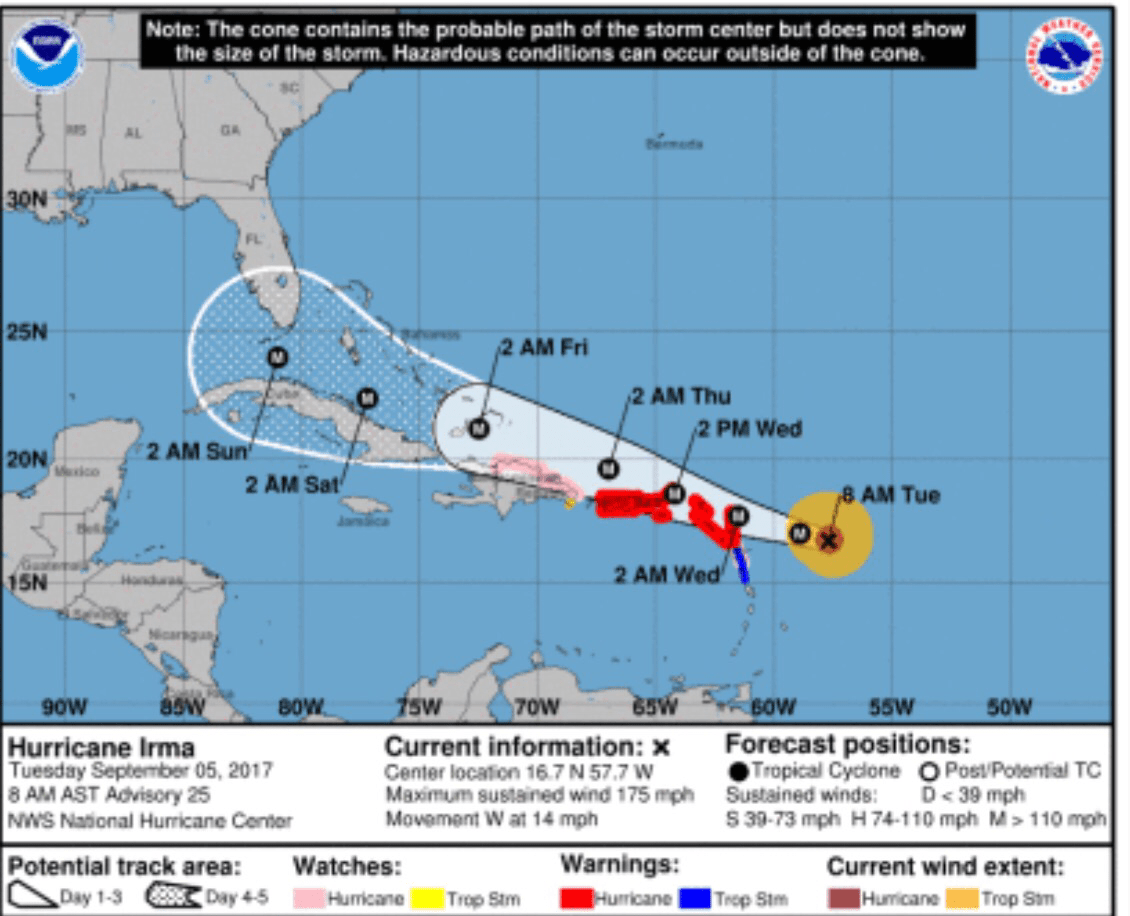
I’m Scheduled To Fly To Guantanamo Bay Today

Showtime – Andrews Air Force Base to Guantanamo Bay

I am scheduled to travel to Guantanamo Bay today to monitor hearings in the case of al Nashiri, who is the alleged mastermind of the 2000 U.S.S. Cole bombing off the coast of Yemen that killed and wounded dozens of U.S. sailors. I am representing the Military Commission Observation Project of Indiana University McKinney School of Law, where I am a student. I am looking forward to carrying out my observer / monitor responsibilities, which include to attend, observe, analyze, critique and report on the military commissions that have charged several men with perpetrating war crimes.

DSC05378.JPG

Arrival at Andrews Air Force Base

Most of the military commission flights to Guantanamo Bay depart from Andrews Air Force Base (AAFB).

Last night I stayed at a nearby Holiday Inn, and took a (taxi?) to the Andrews Visitor Center at 7:00 AM, where I met two other NGO representatives — Carol and Michelle – who were scheduled to join me on the trip to Guantanamo.

A government representative (Tony) picked us up around 7:30 AM and drove us to the Andrews terminal, where we met the rest of the NGO reps.

After we passed through security and I obtained my boarding pass, I handed all the NGO reps who were present a copy of the Know Before You Go To Guantanamo guide and the Guantanamo Bay Fair Trial Manual excerpts. These documents were produced by the Indiana McKinney Military Commission Observation Project (Gitmo Observer). I received many thanks for providing such helpful documents.

While waiting to board, we saw Vice President Mike Pence board what looked like Air Force One, but was actually Air Force Two. There were several security personnel around him, including secret service agents and military. An hour after Pence departed, we boarded a bus that took us to the commercial plane (Atlas Air) bound for Guantanamo.

DSC05375.JPG

I am now on the plane about an hour away from arrival. I am looking forward for what’s in store to come.


Tex Boonjue, J.D. Candidate

Military Commission Observation Project

Program in International Human Rights Law

Indiana University McKinney School of Law

I’m Flying to Guantanamo Bay, Cuba tomorrow for U.S. Military Commission Hearings

I’m Flying to Guantanamo Bay, Cuba tomorrow for U.S. Military Commission Hearings

When I enrolled at Indiana University McKinney School of Law almost 3 years ago, I learned that the school had a program that focused on Guantanamo Bay, Cuba. After my first year, I participated in that program – the Military Commissions Observation Project (MCOP) — and I observed a pre-trial hearing in the case against Hadi al Iraqi, who is an alleged high level al Qaeda member who and liaison with the Taliban. I viewed the Hadi hearing at the Ft. Meade, Maryland army base via secure satellite transmission live from Guantanamo Bay. This was my first time observing a military commission, not to mention a Guantanamo Bay hearing of such a magnitude. Also I did legal research for the Guantanamo Bay Fair Trial Manual, which observers and others are using to help them determine whether rights are afforded to individuals and groups related to Guantanamo.

Tomorrow (Saturday, 11 March 2017) I am scheduled to fly from Andrews Air Force Base to Guantanamo Bay, where I will be monitoring the military commission case against al Nashiri, who is alleged to have masterminded the 2000 suicide bombing of the U.S.S. Cole, off the coast of Yemen, killing 17 U.S. sailors and wounding dozens more. Rather than view the hearings via CCTV at a military base in Maryland, I am expecting to view the hearings while sitting in the galley of the actual courtroom at Guantanamo Bay. I am representing the Indiana McKinney School of Law’s MCOP (also known as the Gitmo Observer). Hearings are set to begin Monday, 13 March 2017.

Travel to DC – Friday, 10 March 2017

10:00 – 11:30:  I woke up today feeling slightly better than I felt yesterday. I had hoped to fully recover from whatever it is that I have before departing for DC and beginning my mission to Guantanamo Bay. Nonetheless, I am still fully functional and very excited for what’s set to come these next 8 days.

DSC05362.JPG

12:00 – 16:00: The hour and a half flight from Indianapolis to DC was as smooth as ever. Passing through security was a breeze. I won the armrest war. My bags were one of the first few down the conveyor belt.

16:00 – 18:30: After learning that my Verizon phone would not work in Guantanamo Bay and that I would need my own SIM card to communicate with the MCOP director while there, I searched for the nearest T-Mobile store on my phone and hopped onto the DC metro green line headed towards Gallery Place Station (in an area known as Chinatown). I ran into some slight issues at the T-Mobile store when trying to obtain a pre-paid SIM card. The employee must have been new because he said that the $50, 2GB talk/text, pre-paid SIM card that I had sought use in Guantanamo Bay did not exist. However, after some back and forth, a few calls to customer service, and a brief chat with his coworkers, we discovered that there was indeed a $50 pre-paid SIM card available for purchase ($66 total, $10 for the SIM + Tax). Our Project Director, Professor George Edwards, published in Know Before You Go To Guantanamo Bay that T-Mobile began operating at Guantanamo last summer. In one of my blog posts from Guantanamo I will report on how well the T-Mobile sim card works.

19:30 – 22:00: After obtaining the SIM card, I hopped back onto the green line and headed towards Branch Avenue. I am comfortably familiar with this line as I had taken it practically every day during my 2015 summer law internship with the Navy JAG Corp, when I worked at the Washington Navy Yard.

I got to my hotel – the Holiday Inn near Andrews Air Force Base – checked into my room, and unloaded my luggage. I then read additional parts of the Know Before You Go To Guantanamo guide while I had dinner (which I had brought with me from Indianapolis). Afterwards, I introduced myself via email to the 9 other NGO representatives who will be observing the hearings, and attached a copy of the Guantanamo Bay Fair Trial Manual, and the Know Before You Go To Guantanamo guide so that they could reference these materials before, during and after the hearings.

I learned that one of the observers scheduled to attend will not join us on the flight from Andrews tomorrow, which means that there will be at most 8 other NGO representatives will join me at the hearings.

DSC05360.JPG

Reading the “Know Before You Go” Guide in my hotel room the night before departure

22:00 – 22:30.  I believe this trip to Guantanamo Bay will be a unique, informative and rewarding experience. I anticipate having much more to write about once set foot on the Guantanamo Bay Naval Station.

Tex Boonjue, J.D. Candidate

Military Commission Observation Project

Program in International Human Rights Law

Indiana University McKinney School of Law

I’m heading back to Guantanamo Bay to Observe hearings

I am at Andrews Air Force Base now waiting to board a military flight to take me to Guantanamo Bay, Cuba to monitor U.S. Military Commissions in the case against al Nashiri, who is alleged to have masterminded the 2000 suicide bombing of the U.S.S. Cole off the coast of Yemen killing 17 U.S. sailors and wounding dozens more.

For the second time, I was nominated to represent the MCOP – the Military Commission Observation Project of the Indiana University McKinney School of Law’s Program in International Human Rights Law.

My first trip to Guantanamo Bay was in October of 2016 and my experience can be found in this www.GitmoObserver.com blog post, clicking here.  There was also a 4-page article by Larissa Roso published in the Brazilian newspaper Zero Hora (see photo in this blog).

fullsizerender-jpg

The defendants

As mentioned, this time I will attend a pre-trial hearing in the case against al Nashiri, who faces the death penalty for his alleged participation in the suicide attack against the USS Cole .

640px-uss_cole_ddg-67_departs

USS Cole being towed

From public sources I have gathered the following information about al Nashiri:

Abd al-Rahim al-Nashiri. He was arrested in Dubai in 2002, was held for 4 years in CIA black sites and was taken to Guantanamo Bay Detention Camp. He was first charged at Guantanamo in 2008. The charges were dropped in February 2009 and reinstated in 2011, and now, six years later, the proceeding remains at the pre-trial stage.

al Nashiri

On my first visit, I attended the pre-trial hearings in the case against Khalid Shaik Mohammad and 4 other allged masterminds of the 9/11 attack on the World Trade Center and the Pentagon. It will be interesting to compare the 9/11 hearings to what I expect to witness at the al Nashiri hearings.

Why go to Guantanamo again?

I am a Master of Laws (LL.M.) student at Indiana University McKinney School of Law, and my second trip to Guantanamo Bay is part of my in-field research about transparency under the Military Commissions. My research is being supervised by , Professor George Edwards, who is Founding Director of  Indiana’s Military  Commission Observation Project.

I remember, as a first-islander (this is how people in Guantanamo Bay call those who are on the island for the first time), I felt like not even blinking my eyes, afraid of missing any detail from which I could learn something.

This time, of course, it will not be different. My eyes will be wide open. My initial focus was to fulfill goals of our MCOP project – to attend, observe, analyze, critique and report on the Military Commissions. I did that on my first visit, and I will do that on this visit as well.

But this time  my attention will be focused specifically on transparency.

The whole process of my involvement, since I was nominated to be an observer, represents a rich source for research on Military Commission transparency for NGOs. The several steps to comply with the requirements presented by the Pentagon, the limited information NGOs can access, the location of the hearings, the restrictions and overwhelming rules while in the island, the fact that rules seem constantly to change for NGOs (with some rules being different now than they were when I went to Guantanamo in October), the limited areas at Guantanamo where NGOs can circulate, visit or take pictures – those are just a few examples of things that I am thinking about in the context of transparency. Of course, the cases before the Military Commissions are related to national security, and deserve special care. This research will try to understand what international and U.S. domestic law require regarding transparency of the U.S. Military Commissions for NGOs, recognizing that a balance must take into account national security as well as NGO exposure and access to information. Do the Military Commissions comply with international and U.S. law regarding transparency when it comes to NGO observers?

At Andrews Air Force Base

I am now at the Joint Base Andrews, and the sun is about to rise on this chilly Sunday. Our chartered flight – a Delta Airlines – is scheduled to depart at 8am. The NGOs were scheduled to arrive arrive at Andrews at 5 a.m., 3 hours in advance, to check-in for the flight.

img_3178

At this time there are 10 NGOs representatives from different organizations scheduled to travel with us. On my first trip, we had 12 NGOs observers. Each authorized organization can indicate and send only one representative at the time, even if there are places available. So, if we in fact only have 10, then there are 3 or 4 empty seats that could have been filled by NGO representatives. I know that there are many observers from Indiana and other organizations available to fill those seats, and I wonder why those spots are empty.

Facetune.jpg

NGOs waiting at the AMC’s Children Area, also called Family Lounge.

The flight time is about 3 hours 15 minutes, and we are expected to arrive at Guantanamo Bay around lunch time.

I am looking forward to gathering as much information as possible on this trip, and I hope to learn from as many participants as possible, including other NGOs observers, media, the defense team, the prosecution, escorts, etc.

Soon I will be sharing more information here on this blog. Also I will be tweeting @alinedoral.

Stay tuned.

Aline Fagundes, Master of Laws (LL.M.) student

NGO Monitor, U.S. Military Commission Observation Project (MCOP)

Program in International Human Rights Law

Indiana University McKinney School of Law 

My Monitoring Trip to Guantanamo Bay, Cuba Cancelled

cancelledThe Pentagon approved my nomination to travel to Guantanamo Bay, Cuba to monitor the case against Hadi al Iraqi, and alleged high level member of al Qaeda who was purportedly a liaison with the Taliban. As a representative of the Indiana University McKinney School of Law’s Military Commission Observation Project, my job was to attend, observe, analyze, critique and report on Hadi al Iraqi’s hearings. My hearing dates were scheduled for 26 February to 3 March 2017.

I recently received an e-mail from Professor George Edwards (founder of IU McKinney’s Guantanamo Project) indicating that the Pentagon had cancelled Hadi al Iraqi’s hearings for that week. I felt somewhat disappointed because I was really looking forward to attending the hearing and further contributing to IU McKinney’s Guantanamo Bay work.

Prior to the cancellation, I could not stop talking about it with friends and former classmates. I even called my younger sister and she had no idea why I was interested in attending such hearing. I talked her ears off about who the defendants were and the crimes they had been accused of. I tried to share with her about international crimes, criminal justice, the rule of law, and the importance of transparency in proceedings such as this. I understand that those selected to monitor such proceedings play a very important role in human rights for all stakeholders in these military commission proceedings.

I remain hopeful that I will be able to monitor hearings of other defendants in March, either at Ft. Meade or Guantanamo Bay.

Johanna Leblanc, J.D., Indiana University McKinney School of Law

Observer, Guantanamo Bay, Cuba, Military Commission Observation Project

Program in International Human Rights Law

Indiana University McKinney School of Law


Nominated to Travel to Guantanamo Bay, Cuba to Monitor Hearings Against Hadi al Iraqi

joanna-leblanc-graduation-photoIn 2016, I received my doctor of jurisprudence (J.D.) from Indiana University McKinney School of Law, where I studied international human rights law and was active in many human rights and civil rights projects, in the U.S. and overseas.

Now, I am part of the law school’s Military Commission Observation Project (MCOP), which was founded by Professor George Edwards. The MCOP, among other things, sends students, faculty, staff and graduates to Guantanamo Bay, Cuba to serve as observers or monitors for military commissions that were created to try alleged perpetrators of war crimes.

As a monitor, it is my job to (a) attend; (b) observe; (c) analyze; (d) critique; and (e) report on military commission war crimes hearings at Guantanamo Bay.

I have many reasons for wanting to travel to Guantanamo Bay for live hearings, or to travel to Ft. Meade, Maryland where the hearings are simultaneously broadcast via CCTV from Guantanamo to a secure facility on the Ft. Meade army base. I will talk more about those reasons in my next blog post.

For now, I am focusing on the hearings I am scheduled to attend on 26 February to 3 March 2 017 – against a man named Hadi al Iraqi (or Nashwan al Tamir).

hadi-al-iraqi

Hadi al Iraqi

Hadi al Iraqi is a 51- or 52-year-old Iraqi citizen. He was taken into custody in late 2006, spent some time in Central Intelligence Agency custody, and was transferred to Guantanamo in April of 2007. He is considered a high-valued detainees (HVD), and is accused of, among other things, cross-border attacks against US and coalition troops from 2002 to 2004.

More on my background

I was born in Port-au-Prince, Haiti. I moved to the United States at the age of ten (10). In addition to my J.D. from IU McKinney, I also hold a master’s degree in public administration from Florida A&M University (FAMU) and a bachelor’s degree in political science from Bethune Cookman University.

During law school, I was a part of the Program in International Human Rights Law (PIHRL) which was founded by Professor George Edwards.  Through this program I was able to travel to South East Asia, Southern Africa, and Western Africa where I worked on access to legal justice, child marriage/women’s rights, and electoral reforms. With my exposure through our world renowned human rights program at IU-McKinney, I further developed an interest in international laws and politics. In particular, I am interested in how international law and politics help shape domestic and international policies regarding immigration, trade, and other aspects of relationships between countries.

I look forward to contributing to the work of the MCOP, specifically the Guantanamo Bay Fair Trial Manual that the project has been working on.

Johanna Leblanc, J.D., Indiana University McKinney School of Law

Observer, Guantanamo Bay, Cuba, Military Commission Observation Project

Program in International Human Rights Law

Indiana University McKinney School of Law

Turned Away from Guantanamo Bay Hearing Held at Pentagon

I was nominated to travel to the Pentagon to monitor a Guantanamo Bay Periodic Review Board hearing for a detainee who was asking the U.S. to release him from Guantanamo.

The PRB – Periodic Review Board – is a discretionary administrative procedure held in Guantanamo Bay and transmitted via a secure link to the Pentagon. PRBs analyze whether the detainee will remain in Guantanamo, will be transferred to a third country to resettlement, or will be repatriated to its original country. PRBs do not address the legality of any individual’s detention, but attempt to assess whether the detainee is a threat to the national security of the United States.

podium

I was nominated to monitor this PRB by the Periodic Review Board Project of Indiana University McKinney School of Law’s Program in International Human Rights Law. This is similar to the way I was nominated to monitor military commission hearings at Guantanamo Bay, Cuba, where I traveled last year and posted about on this blog here, and on twitter.

I understand that the Pentagon is interested in Guantanamo Bay military commission hearings and PRBs being transparent, so they permit observers / monitors to be present.

pentagon

The Pentagon

I flew from Indianapolis to Washington, D.C. on 8 February 2017, in anticipation of an early trip to the Pentagon the next day for the PRB. I stayed at a hotel near the Pentagon.

On the morning of 9 February  2017, at about 7:30, a hotel van dropped me off at the Pentagon, where I went to the Visitor Center. There I walked through a maze as I entered the Pentagon, and went through a security system that seemed more intricate than at an airport. After, I entered the Visitor Center waiting room, where I saw representatives from other non-governmental organizations and members of the press who were also waiting to be escorted to the PRB.

When the escorts came to take everyone to the PRB room, I learned that my name was not on the list. I was not among the cleared NGOs! It was noted that they apparently did not receive my form within the deadline. I immediately called the McKinney director of the program who also immediately forwarded to me e-mail copies of messages to the Pentagon requesting my clearance. We had about 10 minutes to try to solve the issue. Unfortunately, it was not resolved and I could not benefit from the Pentagon’s last-minute clearance procedure even though I could show my completed, signed, required PRB Ground Rules form. I was not allowed to attend the PRB that day.

So, I was left behind.

not-cleared


It was very disappointing. The sole purpose of my flight to DC – for fewer than 24 hours – was to attend and monitor the PRB on behalf of our law school’s project. I flew from Indianapolis to DC one evening, was at the Pentagon early the next morning, and was due to fly back to Indianapolis in the afternoon of the same day.

Well, what is done, is done.

And, my trip was not wasted!

Two weeks before, when I knew I was going to be in the Pentagon, I requested a tour. The tours can be requested at this link at least 14 days in advance and not more than 90 days away from of the visit.

tour

My escort during the tour. To be admitted in this position, he had to memorize, word by word, 33 pages of the information presented during the visit.

The guided Pentagon visit is very basic but interesting. We passed through areas that did not look like what I imagined the Pentagon would look like at all. For instance, we started in a theater with a brief explanation of the rules. No photographs were allowed during the tour, of course. After that, we crossed an area similar a mall, with all sorts of storefronts like for candy, clothes, flowers, ceramics, shoe repair, leather accessories, candles, a bank, Starbucks and fast food such as McDonald’s, Subway, and Burger King. Everything to serve the population of 26,000 people. The visit also included the Pentagon Memorial Quilts. After the 9-11 attack in 2001, people from all over the country sent quilts to pay tribute to the victims.

Why quilts? Jeannie Ammerman led the September 11 Quilt Memorial Project, an idea given by Drunell Levinson, an eyewitness who felt a strong desire to do something helpful but was uncertain how to proceed. As a fabric artist and quilter, she was not qualified to help with rescue and recovery efforts, and blood donation centers were already crowded with volunteers. Thus, she came up with the idea of gathering quilts, as a symbol of a communal activity.


<> on June 28, 2011 in Arlington, Virginia.

This photo is from the internet.We are not allowed to take pictures or use any device during the Pentagon tour.

After my Pentagon tour and my lunch, the hotel shuttle too me back to the hotel to pick up my luggage and then to the airport for my return flight to Indianapolis. The shuttle driver shared with me his story of life. Living in the U.S. for ten years already, originally from Ethiopia, after two degrees (one from Nairobi), he is pursuing a Ph.D. in Business and Economics, with a United Nations Scholarship, as a political exile. Nice story to end a day of frustration.

What’s next?

Another PRB is scheduled for a different detainee on 28 February 2017. When asked, I declined a nomination to attend since I have a conflict and cannot attend. I hope to be nominated for a future PRB, as I would very much like to gain the experience of this different type of Guantanamo Bay proceeding. PRBs involve detainees who are not charged with crimes, and who are asking to be released. The PRB non-criminal proceedings are different from U.S. Military Commission proceedings, which are criminal proceedings, and the question is whether the detainee is guilty of a crime. In PRBs, there is no question about criminality, just about whether the person in question is a national security threat.

Aside from PRBs, I am now scheduled to return to Guantanamo Bay, Cuba to monitor regular U.S. Military Commission hearings in the criminal case against al Nashiri from 4 to 11 March 2017, and am scheduled to travel to Ft. Meade, Maryland on Monday, 13 March 2017 for hearings in that same case – simultaneously broadcast from the same courtroom I will have monitored from live the preceding week. Mr. al Nashiri is the alleged mastermind of the 2000 suicide bomb attack on the U.S.S. Cole off the coast of Yemen that killed and wounded dozens of U.S. sailors.


Aline Fagundes (LL.M. Candidate, ’17)

NGO Monitor, U.S. Military Commission Observation Project (MCOP)

Program in International Human Rights Law

Indiana University McKinney School of Law