Gitmo Observer

9/11 Commissions Halted Due to Unlawful Influence

Today, February 25, 2015, Chief Judge Colonel James Pohl, U.S. Army, ordered a halt to the case against the 9/11 defendants at Guantanamo Bay with his finding that Department of Defense officials tried to unlawfully influence the military commissions judiciary.  You can read today’s ruling here on the Gitmo Observer. Judge Pohl ordered “abatement” of the case until the rule change is rescinded by the proper authority. The prosecution has five days to appeal the new order, if it chooses to do so.

Judge Pohl ruled that the actions by the Deputy Secretary of Defense, acting upon the recommendations of the Convening Authority, constitute at least the appearance of an unlawful attempt to pressure the military judge to accelerate the pace of litigation and an improper attempt to usurp judicial discretion, thereby compromising the independence of the military judge.

The ruling arises out of the December 9, 2014 memorandum of Major General Vaughn Ary, U.S.M.C. (Ret.), the “Convening Authority” in charge of the military commissions at Guantanamo, to Deputy Secretary of Defense Robert Work asking him to require military commission judges to relocate to Guantanamo Bay “to accelerate the pace of litigation.”  On January 7, 2015, the Deputy Secretary of Defense issued the rule change requested by the Major General Ary.

On January 30, defendants in the 9/11 case filed a motion to dismiss the case for unlawful influence over the military judiciary. Judge Pohl ruled on their motion today.

My Morning at Guantanamo Bay Hearings at Ft. Meade

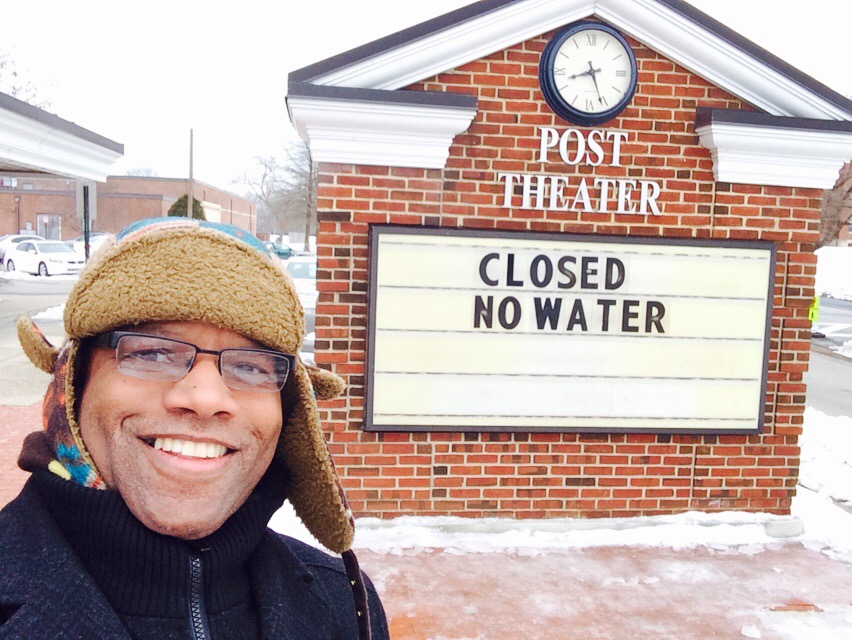
In front of the Post Theater at Ft. Meade.

In front of the Post Theater at Ft. Meade.

I am up early this Monday morning for my first visit this year back to Ft. Meade, Maryland to monitor Guantanamo Bay, Cuba hearings in the U.S. Military Commissions case against al Nashiri. He is the alleged mastermind of the U.S.S. Cole suicide bombing in 2000 that killed 17 U.S. sailors.

What, Guantanamo Bay proceedings in Maryland?

Yes. The Pentagon runs a secure videolink direct from the Guantanamo Bay courtroom to select viewing sites in the U.S. where press, NGO Observers, victims and their families, and others may view the proceedings. The only site in the U.S. at which NGO Observers and members of the public may see what’s happening in the courtroom is at Ft. Meade, Maryland, about 35 miles outside of Washington, DC.

It’s kind of like watching a Court TV show, except that the viewing venue at Ft. Meade is an actual live theater, where they screen first run movies on a huge commercial theater-sized screen, and host live plays, lectures and other activities on a stage. Its concession stand sells buttered popcorn, Milk Duds and Skittles, and fountain drinks. This week’s feature film is Selma, screened in the evenings after the Guantanamo courtroom goes dark.

Courtroom sketch of al Nashiri by artist Janet Hamlin. Today in court he was wearing a similar casual white short sleeve shirt. His hair appeared to be a little longer than in this sketch, but it appeared equally as kempt.

Sketch of al Nashiri from a previous court session. Today in court he wore a similar casual white short sleeve shirt. His hair appeared to be a little longer than in this sketch, but it appeared equally as kempt. (Sketch by Janet Hamlin)

Al Nashiri’s February 2015 hearings

The al Nashiri case is in the pre-trial hearing stage. Every month or two they schedule two weeks of court time in which defense and prosecution lawyers argue about logistical, substantive, or technical issues to be resolved before the actual trial begins. For the February 2015 hearings, the lawyers are arguing whether the prosecution must provide the defendant certain information, whether al Nashiri will face the death penalty, and the relevance of the U.S. Senate’s 2014 Torture Report.

But before they reach those issues, they are arguing over whether certain Pentagon officials are exercising “unlawful influence” over the al Nashiri judge, who like other Guantanamo Bay judges was ordered permanently to relocate to Guantanamo Bay and surrender all non-Guantanamo judicial responsibilities, as these changes purportedly would help speed up the trials. U.S. law clearly provides that judges are to be in control over their trials, including the speed at which their trial proceed, and outside U.S. government officials are not meant to intervene.

I won’t know what will happen in today’s hearings until 1:00 p.m., since the morning session, which was scheduled to begin at 9:00, is closed to NGO Observers. I have over four hours of out-of-court time to catch up on reading al Nashiri court documents, blog writing, and working on the Guantanamo Bay Fair Trial Manual.

Driving to Ft. Meade

Getting to Ft. Meade is not easy.

I woke up this morning before 6:00, and took a taxi from my downtown DC hotel to Washington National Airport, where I rented a car to drive to Ft. Meade. The taxi ride to the airport was historically scenic, passing the Watergate, the Washington Monument, and Arlington Cemetery.

Driving from the airport to Ft. Meade was slow, not because of rush hour, but because much of the 35 miles to the base is on narrow, two lane roads with many stop lights. I will try another route back to DC this afternoon. Perhaps it was a GPS problem?  It might be an advantage driving into DC when most of the traffic is driving out at the end of the day. All said, it was a pretty uneventful trip, which took about an hour from airport to the Ft. Meade Visitor’s Entrance.

Photo courtesy of CNN

Photo courtesy of CNN

Arriving at Ft. Meade

I remembered from last time I was here where the Ft. Meade Visitor’s Entrance is, off of Reese Road, and pulled up to the base security checkpoint. But I’d forgotten about the separate vehicle inspection line, just to the right before base security. So I had to make a quick U-turn, adding 30 seconds to my journey. The vehicle inspector asked me a few questions about my Indiana drivers license, my rental car  contract, and whether I was a member of the press. He was easily convinced that I was a credentialed NGO Observer, and very generously gave me a Ft. Meade color map, on which he traced lines to the Post Theater, where I am now.

I arrived here just before 8:30 a.m., took a couple of selfies in front of the Post Theater sign, and then bumped into Bev, who is a Department of Defense contractor who I believe supervises this viewing site. She announced to me that court was commencing at 9:00 a.m., but that the morning session would be closed to NGO Observers. They close the proceedings when they are discussing classified information that NGO Observers, victims and their families, press, and others are not permitted to hear. So, none of us can be in the courtroom or on a video-link, whether we are in Guantanamo Bay or Ft. Meade.

I wondered why those of us at Ft. Meade were not warned in advance that the unclassified, open proceedings would not commence until early afternoon. At the very least, none of us would have had to wake at the crack of dawn, only to hurry up and wait all day. (As it turns out, two people in the Observation room received notification last night at 10:00 that the open session would start at 1:00 p.m., and they arrived at the Post Theater at 12:45, well-rested after a good night’s sleep and a 50 mile drive.)

So, what do I do for the next four hours from 9:00 – 1:00 waiting for the open hearing? I could drive back to Washington, and come back this afternoon. But that would be a wasted time.

So, of course, I immediately thought that this would be a great time to catch up on Gitmo Observer blog writing, to review court documents in the al Nashiri case, and to brush up on the Guantanamo Bay Fair Trial Manual.

Drug sniffing dog Axa and her handler

Drug sniffing dog Axa and her handler at Post Theater today, after finding all the drugs planted by the MPs.

Canine Patrol

A little while after I entered the Post Theater, a group of Military Police (MP) Canine Patrol staff came in, asking whether the Guantanamo Bay hearings were on. I told them that the hearings were closed until 1:00 p.m., and that there would be no live broadcast until then. In fact the screen was showing the morning news, with stories about al Shabaab and threats to U.S. shopping malls and the weather.

The MPs said that they wanted to do some training with some of their dogs.

The next hour or so was extremely interesting, watching 5 different dogs successfully sniff out planted explosives and illegal drugs that the MPs planted in different parts of the theater.

The first dog, a black lab, was an explosives expert. She found three different satchels of explosive powder and other incendiary material, hidden inside a trash can, underneath a movie theater seat, and high above the arch of a doorway. All in record time. After each find the shiny, fine-coated lab received an award, a tug and tussle with a “kong”, which is a plastic toy attached to a colorful twisted heavy rope.

The next two explosive expert dogs performed equally as well, quickly finding all the planted explosives and receiving well-deserved treats.

Then came Axa, the first of two drug-sniffing dogs. She was a small dog, with a rugged black and grey fluffy coat. The

Fram - A drug sniffing dog and his handler.

Fram – A drug sniffing dog and his handler this morning, after the 9-year old canine gracefully located all of the drugs planted by the MPs.

MPs had hidden the drugs on the opposite side of the theatre from the explosives.  Axa’s handler gently waved her open palm towards the trash can next to the door leading from the lobby into the theater, and Axa did not react.  The handler repeated the hand gesture, called a presentation (the hand wave gesture), this time towards the door frame. Axa stood on her hind legs and leaned against the door frame, circled around beneath the frame, stood up again, and excitedly sat on her hind legs. Axa found the 5 grams of marijuana hidden in the frame above the door. She was rewarded with a yelp by the handler who tossed Axa a kong for finding the pot.

Axa then found cocaine in a trash can in front of the theater, and ecstasy underneath a seat in about row 8. Axa is only 2 years of age and has been working as a canine sniff dog only since October 2014. Well done.

Finally, Fram, the senior sniffer, was brought into the theater.

Fram was 9 years of age, lived his first 7 years in Germany, and arrived at Ft. Meade only 2 years ago. He was seasoned, he knew the drill, and he was very good at what he does.

Today Fram earned his kongs, and hugs from his handler who said “I’m going to adopt Fram when he retires”. Several other handlers chimed in “No you’re not! I’m going to adopt him”! So, we’ll see who ends of with a handsome, smart and talented dog who even at the ripe old age of nine did not look like he was anywhere near retirement.

Dog Handlers are gone — What Next?

The dog handlers have left, and I’m back to full concentration on my work (despite interruptions by a person stopping in to ask for directions to a base office, a guy coming in to turn on the bathrooms’ water which had been turned off over the weekend to prevent frozen pipes during the snow storm, and a guy changing lightbulbs above the concession stand.

My next post will have more substance and will report on my al Nashiri motion-review and my Guantanamo Bay Fair Trial Manual work.

(George Edwards, Ft. Meade, 23 February 2015)
Thoughts on My 23-27 March Mission to Guantanamo Bay

Abd al Hadi al-Iraqi

Abd al Hadi al-Iraqi

During the last full week of March 2015, I will travel to Guantanamo Bay (GTMO), Cuba as a member of the Military Commission Observation Project (MCOP) at the Indiana University Robert H. McKinney School of Law. It’s an honor to have been selected. I will observe military commission proceedings for Abd al Hadi-al Iraqi, who arrived from CIA custody to GTMO in 2007.


In 2013, the United States government charged him with denying quarter, attacking protected property, using treachery or perfidy, and attempted use of treachery or perfidy in a series of attacks in Afghanistan and Pakistan between about 2003 and 2004, and conspiracy to commit law of war offenses.

General Preparation for the Project and my Guantanamo Bay travel

Whirlwind is a term I have seen associated with the process of becoming a fair trial observer as a part of the Military Commission Observation Project (MCOP). I didn’t really have any previously determined thoughts on GTMO that were fully fleshed out by thorough law school level research. Prior to conducting research, I think my level of knowledge was comparable to that of the average American. Though, maybe slightly than more than average, given that I have known several members of the military who served there.

Nevertheless, I have begun the process of researching and learning as much as possible about the project itself, the circumstances surrounding the operation of GTMO and military commissions, and the specific case I will observe. Absent a background in international law, the Guantanamo Fair Trial Manual has been a great resource in becoming familiar with the various sources of law that are implicated in the military commission system.

In addition, I’ve had to explore my thoughts and feelings about what the overarching principles of justice really mean as applied to GTMO. As is with any person, my life experiences have shaped my perspectives on the ethical components of domestic and global issues.

My Indiana McKinney Law School Career

Despite my penchant for world travel, becoming a member of MCOP is admittedly my first law school experience dealing with any area of international law. During my second year of law school I worked as a part-time law clerk for the Marion County Public Defender Agency. Following that, I volunteered with the Neighborhood Christian Legal Clinic’s Expungement Help Desk, where I informed members of the community about Indiana’s expungement law. In July 2014, I began working full-time for the Indiana Bureau of Motor Vehicles, and next month I will begin as a part-time law clerk for the Indiana State Personnel Department. This semester I have been fortunate enough to extern for Justice Steven H. David of the Indiana Supreme Court. From July 2007 to August 2008, Justice David (at the time Colonel David) was the Chief Defense Counsel for the Military Commissions at Guantanamo Bay.

My Military Service

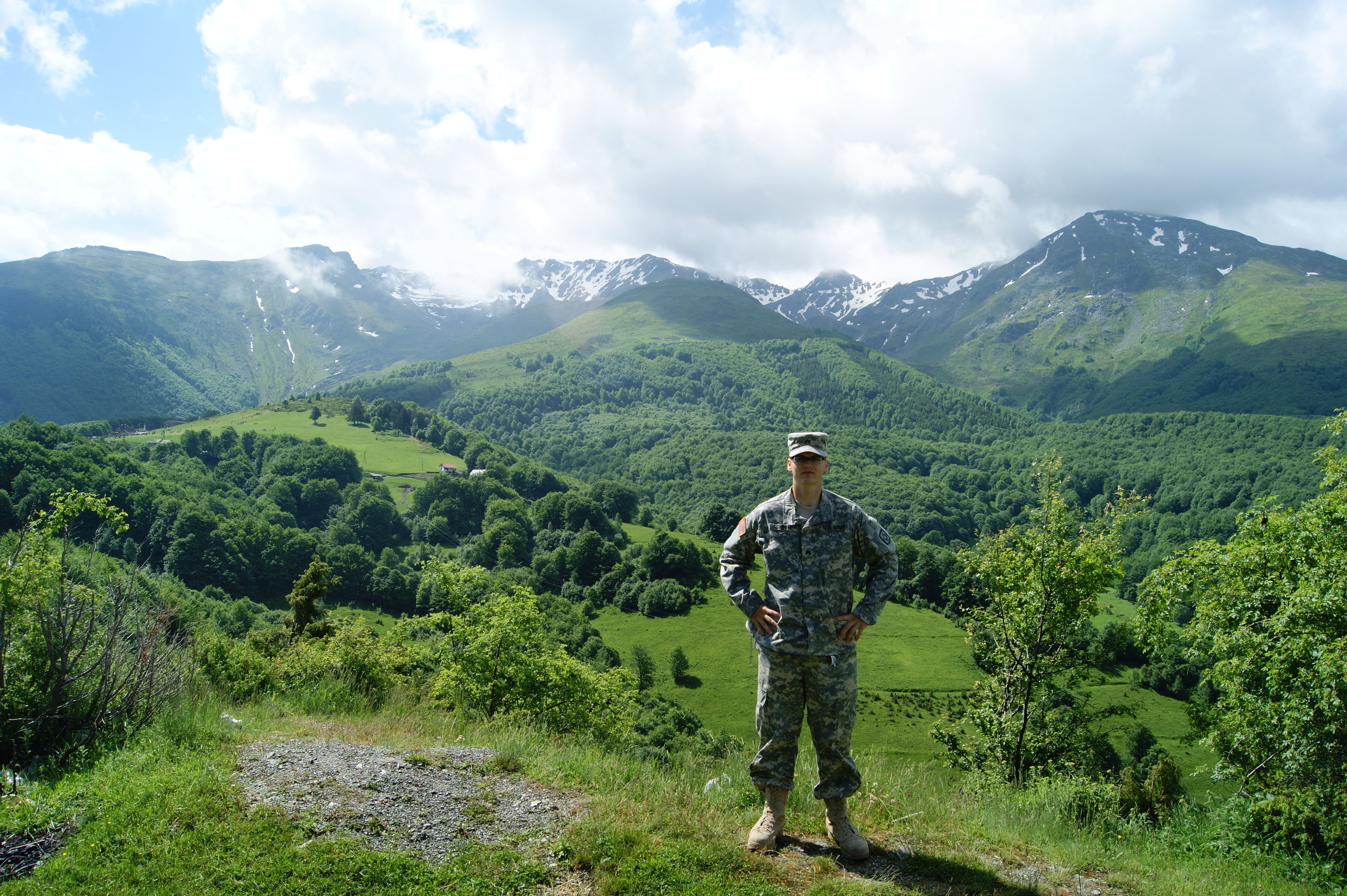
As a member of the Army National Guard for over 10 years, I deployed once in 2011 to Kosovo as a part of Kosovo Force (KFOR) 14. KFOR has been a part of the larger multinational presence in Kosovo since 1999.

Myself in the Shar Mountains National Park in southern Kosovo in 2011.

In addition, I have personally participated in the military funeral honors ceremonies for 323 veterans, a handful of which have been Iraq and Afghanistan war casualties. In no way does this fuel personal anger or hatred towards the detainees held in GTMO. Those servicemen were honored for their sacrifices for democracy that implores fairness in the service of justice. On the contrary, it is all the more reason for me to ensure I am doing everything within my power to help the MCOP fulfill its missions (attend, observe, analyze, critique, and report).

As stated in the Guantanamo Bay Fair Trial Manual, “NGO Observers are the eyes and ears of the outside world as to what happens at Guantanamo Bay. NGO Observers have a unique responsibility to share their experiences, insights and conclusions with the outside world. NGOs should not bow to pressure. What happens at Guantanamo Bay should not stay at Guantanamo Bay.”

As a part of that mission, I have been tasked with expanding the portion of the Guantanamo Fair Trial Manual covering the rights and interests of the men and women in Joint Task Force Guantanamo (JFT-GTMO).

Guantanamo Bay Conviction of Australian David Hicks Overturned

David Hicks after learning that his Guantanamo Bay conviction was overturned on 18 February 2015. (From  Sky Sydney news.)

David Hicks after learning that his Guantanamo Bay conviction was overturned on 18 February 2015. (Sky Sydney / The Guardian.)

A U.S. military appellate court overturned Australian David Hicks’ 2007 Guantanamo Bay conviction on charges of “material support for terrorism”. On 18 February 2014, the U.S. Court of Military Commission Review ruled that the crime Hicks was convicted of did not exist as a matter of law before 2006. The alleged criminal acts occurred in or before 2001, before “material support for terrorism” was criminalized. A copy of the court’s ruling is below in full text or here:  Hicks v. United States (CMCR 2015).

David Hicks' Defense Team returns to Andrews Air Force Base after his conviction in March 2007 for material support for terrorism. His conviction was overturned on 18 February 2015.  Left to right – Professor Tim McCormack (Australian Expert Witness), Professor George Edwards (U.S. Expert Witness), Major Michael “Dan” Mori (Hicks’ Detailed Military Counsel), (Sarah Finnin, Australian civilian volunteer), Rebecca Snyder (Military Counsel Detailed as Civilian Counsel), Mick Griffith (Australian Civilian Counsel), Sergeant Rios (Team Assistant), Dave McCleod (Australian Civilian Defense Counsel).

Hicks’ Defense Team at Andrews Air Force Base after his conviction for material support for terrorism, which was overturned on 18 February 2015. Left to right – Professor Tim McCormack (Australian Expert Witness), Professor George Edwards (U.S. Expert Witness), Major Michael “Dan” Mori (Hicks’ Detailed Military Counsel), (Sarah Finnin, Australian civilian volunteer), Rebecca Snyder (Military Counsel Detailed as Civilian Counsel), Mick Griffith (Australian Civilian Counsel), Sergeant Rios (Team Assistant), Dave McCleod (Australian Civilian Defense Counsel).

Professor George Edwards and his students from the Indiana University McKinney School of Law provided pro bono legal research for Hicks’ defense team from 2004 until Hicks’ 2007 guilty plea. Professor Edwards was also tendered as an expert witness on the Hicks case, along with Professor Cherif Bassiouni, Professor Tim McCormack, and the late Judge Antonio Cassese. The Military Commission prohibited the experts from testifying live, and in lieu of live testimony, the experts provided affidavits. Professor Edwards’ two affidavits were on the right to a fair trial under international humanitarian law (the law of war / law of armed conflict), international criminal law, and international human rights law.

During Hicks’ 2007 guilty plea, Professor Edwards (from the U.S.) and Professor McCormick (from Australia) were in the Guantanamo Bay courtroom, and are believed to be the first expert witnesses permitted to travel to Guantanamo Bay for a U.S. Military Commission.

Hicks was sentenced to 7 years in prison, with most suspended. He remained at Guantanamo for two months after pleading guilty, and then after 5 ½ years at the remote island prison was returned to Australia, where he spent an additional 7 months in prison before being released.

George Edwards, Tim McCormack & David McCleod on Airplane to GTMO - March 2007

Expert witnesses George Edwards and Tim McCormack, and  Hicks’ civilian attorney David McCleod on a U.S. military aircraft from Andrews Air Force Base Airplane to Guantanamo Bay, Cuba for David Hicks’ U.S. Military Commission & guilty plea. (March 2007)

According to Military Commission spokesperson Myles Caggins, the U.S. government will not appeal the appellate court’s ruling.

Hicks’ military lawyer for his initial Guantanamo Bay proceedings, Lt. Col. Michael Dan Mori (ret.) (then Major Mori) was not available for comment. He is pictured above with the Hicks defense team as they arrived back at Andrews Air Force Base after the March 2007 guilty plea. Pictured also in this post are Professor George Edwards (Indiana University McKinney School of Law) and Professor Tim McCormack (University of Melbourne Faculty of Law), on a military aircraft traveling from Andrews Air Force Base outside Washington, DC to Guantanamo Bay, Cuba for the U.S. Military Commission proceeding during which Hicks pleaded guilty in March 2007. Seated next to them is David McCleod, an Australian lawyer who served as Hicks’ civilian defense counsel.

A copy of the court’s ruling is here:  Hicks v. United States, 13-004 Decision (Feb 18 2015) – US Court of Military Commission Review

[office src=”https://onedrive.live.com/embed?cid=AA02978A4AC8C787&resid=AA02978A4AC8C787%21106&authkey=AAzuj-HDR0u6hCg&em=2″ width=”876″ height=”688″]

A copy of the Indiana University’s Guantanamo Bay Fair Trial Manual can be found here

Gitmo Observer Provides NGO Observer Resource Centre

The remaining copies of the Guantanamo Bay Fair Trial Manual and other resources and supplies are set up in the NGO Observer lounge and ready for use by the NGO Observers.

DSCN0936

Gitmo Observer NGO Resource Centre

This trip has nine NGO Observers.  The NGO Observers represent the law schools of Duke University, Seton Hall, and Georgetown University. The other NGO Observers represent Amnesty International, National Institute for Military Justice, New York City Bar Association, Judicial Watch, and Pacific Council on International Policy.  Everyone has been uniformly impressed by the Guantanamo Bay Fair Trial Manual. Hopefully we will get some good feedback!

Earlier today the prosecutor provided the updated 9/11 court filings on cds. They also provided two dvd/cd drives for those NGO Observers whose laptops no longer have dvd/cd drives!  Technology sure has a way of complicating things on days.

 (Catherine Lemmer, Guantanamo Bay, 9/11 hearings, February 9-13, 2015)     

First Up: Motions on Severance & Conflict-of-Interest

gitmo picI am en route via Chicago and Washington D.C. to Guantanamo Bay, Cuba for the first week of the 9/11 hearings.  The hearings are scheduled to start at 9:00 am on Monday, 9 February 2015. Judge Pohl has ordered that all five defendants must be present in court.

The first issue to be addressed during this session is reconsideration of Judge Pohl’s order of August 2014 (AE312) to sever Ramzi bin al Shibh’s case from the other four 9/11 defendants. Mr. in al Shibh’s case was severed as a result of the prosecution’s request for a competency hearing for him as well as the conflict-of-interest matter arising from FBI investigation into his defense team. If this sounds familiar, it should. These same motions were scheduled for hearing but not heard when the December 2014 hearings were cancelled over the female guard issue.

The resolution of the potential conflict-of-interest matter is a complex issue that has delayed the hearings for nearly a year. In 2014, the Military Commission concluded that there was no actual or potential conflict with respect to four of the five 9/11 defense teams. The Military Commission did conclude that there may be an actual or potential conflict with respect to the legal team representing Mr. bin al Shibh. In August, Judge Pohl ordered Independent Counsel for Mr. bin al Shibh to investigate and advise him. Lt Col Julie Pitvorek, USAF was assigned as Independent Counsel for Mr. bin al Shibh. LtCol Pitvorek will be present at the February hearings, as will Mr. Harrington and Lieutenant Commander (LCDR) Bogucki, Mr. bin al Shibh’s present counsel.

In April 2014 a Special Review Team consisting of Department of Justice prosecutors was appointed to investigate the FBI’s undisclosed interviews and investigations of certain members of the 9/11 defense teams. The creation of the Special Review Team was required because General Martins’ prosecution team can not investigate the defense teams. The Special Review Team functions as the prosecution with respect to the investigation of the defense teams and whether the FBI activity created a conflict-of-interest for the defense team.  The Special Review Team was in court at the preliminary hearings in June, August, and October on behalf of the prosecution. These prosecutors will be in court for the February hearings to represent the government for the three pleadings that will be heard by Judge Pohl related to these matters.  Should these matters be resolved, the parties will move on to the many other matters scheduled for argument in the following weeks.

The matters before the Military Commission are legally and factually complex. It makes it challenging for NGO Observers tasked with observing, analyzing, and reporting on whether the military commissions are open, transparent, and providing fair trials to the defendants.  It is important that we focus on our specific role in the process. The Guantanamo Bay Fair Trial Manual is a great tool to help us do so.

The matters scheduled on the docket include:

AE 312C Defense Response to Emergency Government Motion to Reconsider AE 302 Severance Order The order severing Mr. bin al Shibh is currently in abeyance (temporarily suspended). The judge may revoke the order, sever Mr. bin al Shibh, or continue to hold it in abeyance.)

AE 292RR Prosecution Special Review Team Motion for Reconsideration of AE 292QQ (Order) (Prosecution Special Review Team seeks to have Judge Pohl reconsider his decision that there may be a potential conflict within Mr. bin al Shibh’s defense counsel.)

AE 292VV Defense Motion to Compel Discovery Related to Interference with Defense Function by the United States.  (The defense asks Judge Pohl to compel the Prosecution’s Special Review Team to provide the evidence related to the FBI’s investigations of the defense teams. )

AE 292YY Defense Motion for Appropriate Relief-Disclosure by Military Judge Whether He has Acquired Information Relating to the Case from an Undisclosed Source and the Details of the Information (The defense asks Judge Pohl to disclose what information he has about the FBI investigation that has not been provided to the defense.)

AE152 Prosecution Motion for R.M.C. 909 Hearing (The prosecution asks the Commission to establish the competency of Ramzi bin al Shibh to stand trial.)

AE 254KK Prosecution Government Motion For an Expedited Litigation Schedule to Resolve AE 254Y (The prosecution requests oral argument relating to the issue of female guards in contact positions with defendants.)

AE 331 Military Commission Judge Trial Conduct Order (The military judge ordered the government to review the Protective Order regarding classified information and sealed pleadings in light of the release of the Torture Report.)

AE 008 Defense Motion to Dismiss for Defective Referral (The defense position is that the Convening Authority did not charge the defendants properly.)

AE 031 Defense Motion to Dismiss for Unlawful Influence (The defense position is that the President of the United States put pressure on the Convening Authority to bring the case against the defendants.)

AE 192 Defense Motion to Disqualify (The defense position is that the Legal Advisor to the Convening Authority unlawfully interfered with the professional judgment of the Chief Defense Counsel and Mr. al Hawsawi’s Learned  Counsel.)

AE 196 Defense Motion to Disqualify (The defense position is that the Chief of Operations for the Convening Authority unlawfully interfered with the professional judgment of the Chief Defense Counsel and Mr. al Hawsawi’s Learned Counsel.)

AE 254 Defense Emergency Defense Motion to Permit Attorney-Client Meetings (The defense position is that JTF-GTMO is interfering with attorney-client visits.)

AE 112 Defense Motion to Compel White House and DOJ policy on Rendition, Detention, and Interrogation Program (The defense seeks to compel discovery about the policies underlying the CIA rendition, detention, and interrogation program.)

AE 114 Defense Motion to Compel Information regarding Buildings in Which Defendants May Have Been Confined (The defense asks the prosecution to produce evidence about any facility where the defendants were held.)

AE 182 Defense Motion to Possess and Resume Use of a Microsoft-Enabled Laptop Computer (The defense asks that the defendants have access to standalone computers to work on their defenses.)

AE 183 Defense Motion for Telephonic Access for Effective Assistance of Counsel (The defense asks to be able to communicate by telephone with the defendants.)

AE 195 Defense Motion to Compel Production of Communications Between Government (The defense seeks information about government involvement with the movie Zero Dark and Filmmakers of Zero Dark Thirty.)

AE 206 Defense (Mohammed) Motion to Cease Daily Intrusive Searches of Living Quarters and Person (The defense wants the prison to use less intrusive means to search for physical contraband.)

AE 036E Prosecution Motion to Clarify Order AE036D (The prosecution asks the Judge to order that the prosecution has control over all witnesses, including remote testimony.)

AE 036G Defense Motion to Compel Discovery (The defense wants the Judge to compel discovery on government policy of producing witnesses.)

AE 036H Defense Motion to Compel Witnesses (The defense wants the Judge to compel witnesses on prosecution statements regarding costs of producing witnesses.)

AE 214 Defense Motion to Compel access to Government of Saudi Arabia. (The defense requests that the Military Commission compel the Secretary of Defense to facilitate communications between Mr. Hawsawi and Saudi Arabia.)

AE 119 Defense Motion to Dismiss and to Compel a Status Determination Pursuant to Article 5 of the Geneva Conventions (The defense asserts that there is a question as to the status of the defendants under Article 5 of the Geneva Conventions and charges should be dismissed.)

AE 164 Defense Motion to Stay all Review Under 10 U.S.C. § 949-4 and to Declare 10 U.S.C. §949p-4(c) and M.C.R.E. 505(f)(3) Unconstitutional and In Violation of UCMJ and Geneva Conventions (The defense argues that the Commission’s decision to permit trial counsel to substitute, summarize, withhold, or prevent access to classified information is unconstitutional.)

AE 018W Joint Defense Motion to Amend AE 018U Privileged Written Communications Order (The defense argues that interpretations of the provisions in the written communication order are restricting attorney-client communications and should be amended to protect the rights to effective assistance of counsel and to prepare and participate in own defense.)

AE 018BB Defense (WBA) Motion to Compel Paper Discovery in Accordance with Privileged Written Communications Order (The defense requests that the Commission order the government to provide a duplicate copy of all paper discovery materials releasable to Mr. bin ‘Attash.)

AE 018MM Defense Motion to Compel Reasonable Privilege Review Team Hours of Operation (The defense requests that the Commission order the Privilege Review Team (PRT) to maintain reasonable weekend hours at all times; or at a minimum, maintain weekend hours for processing materials immediately prior and to and following hearings, or when there are approved attorney-client visits.)

AE 161 Defense (AAA) Motion to Require the Government to Comply with MCRE 506 Regarding redaction of Unclassified Discovery (The defense argues the Commission should order the prosecution to produce the complete, unredacted copies of certain unclassified discovery documents under Military Commissions Rule of  Evidence 506.)

AE 190 Defense (AAA) Motion to Compel Production of Information Relating to Statements Made by Mr. al Baluchi or Potential Witnesses at a Detention Facility Classified Motion AE 191 Defense (AAA) Motion to Compel Production of Information  Classified Motion AE 194 Defense (AAA) Motion to Compel Discovery of Mr. al Baluchi’s Statements (The defense requests that the military judge compel production of all records of all statements made by Mr. al Baluchi in the government’s possession

(Catherine Lemmer, 9/11 Hearings, Guantanamo Bay February 9-13, 2015)

Three Indiana McKinney Law Professors Travel to Guantanamo Bay, Cuba

Professor Lemmer to return to Guantanamo Bay to monitor the 9/11 case against Khalid Shaik Mohammad and 4 co-defendants

IU McKinney Professor Lemmer to return to Guantanamo Bay to monitor the 9/11 case against Khalid Shaik Mohammad and 4 co-defendants

Indiana University McKinney School of Law will send three law professors to Guantanamo Bay, Cuba to monitor U.S. Military Commission hearings in February 2015. They represent the law school’s Military Commission Observation Project, also known as the Gitmo Observer, that was selected by the Pentagon to observe, analyze and report on war crimes trials at the Guantanamo Bay Naval Station.

Professors Edwards & Lemmer – The 9/11 case

Professors George Edwards and Professor Lemmer will monitor pre-trial hearings in the case against five alleged masterminds of the 9/11 airplane attacks on the World Trade Center and the Pentagon. The lead 9/11 case defendant is Khalid Shaik Mohammad (KSM).

Professor George Edwards on a US Military C-17 flight from Andrews Air Force Base to Guantanamo Bay, Cuba (June 2014)

Professor George Edwards on a US Military C-17 flight from Andrews Air Force Base to Guantanamo Bay, Cuba (June 2014)

Professors Edwards, who is founding director of Gitmo Observer, said “The IU McKinney School of Law is fortunate that we can help promote transparency at the Guantanamo Bay war crimes trials, and that we can observe, analyze and form conclusions about whether Guantanamo Bay stakeholders are being afforded all rights to which they are entitled. In the Guantanamo Bay Fair Trial Manual we are publishing, we examine rights of the defendants, as well as rights of victims and their families, rights of the prosecution, rights of witnesses, rights of the U.S. military personnel who provide Guantanamo Bay security, and rights and interests of all other stakeholders”.


Professor Edwards is scheduled to return to Guantanamo Bay from 14 – 21 February 2015. Professor Edwards’ first visit to Guantanamo Bay was in 2007, when he was an expert witness in the case against Australian David Hicks, who at Guantanamo Bay became the first person since World War II to be convicted by a U.S. Military Commission.

Professor Lemmer, who is a lawyer and international librarian, has played instrumental roles in the development of the Gitmo Observer. She is scheduled to travel to Guantanamo Bay for 9 -13 February hearings. She was at Guantanamo Bay in December 2014 for hearings in that same case. Professor Lemmer has been library liaison to the Gitmo Observer, and a key developer of the Gitmo Observer website, briefing materials, and project policies. She has also undertaken to help develop the NGO Observer Library, which will be a functioning resource center for NGO Observers to use while they are on missions to Guantanamo Bay to monitor hearings.

Professor Wilson — The USS Cole / al Nashiri case

Professor Wilson is scheduled for Guantanamo Bay travel to monitor the USS al Nashiri case.

Professor Wilson is scheduled for Guantanamo Bay travel to monitor the USS al Nashiri case.

Professor Wilson, is scheduled to travel to Guantanamo Bay during the week of 23 – 27 February 2015 to monitor the case against al Nashiri, who is alleged to have masterminded the 2000 suicide attack against the USS Cole, a U.S. Naval ship that was docked off the coast of Yemen, and that killed and wounded numerous U.S. sailors.

Professor Wilson, in preparing for his first mission, will be posting his preliminary observations on the Gitmo Observer blog very soon!

Are you interested in travel to Ft. Meade or Guantanamo Bay?

Indian McKinney School of Law students, faculty, staff and graduates are eligible to be considered for travel to Ft. Meade and Guantanamo Bay through the Gitmo Observer. Registration forms are available on our website.

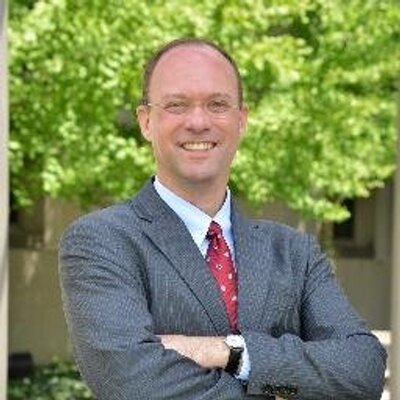
Dean Andy Klein - in front of building

In 2014, Dean Andy Klein was scheduled to travel to Ft. Meade, Maryland to observe Guantanamo Bay courtroom proceedings simultaneously video-cast by secure link. The hearings were cancelled, and Dean Klein is expected to reschedule in the near future.

IU McKinney Law School Dean Andy Klein is expected to travel to Ft. Meade, Maryland to monitor military commission trials during the Spring 2015

(Post by by George Edwards)

Preparing for Guantanamo Bay 9-11 Hearings

Our plane to Guantanamo Bay is scheduled to depart from Andrews Air Force Base on Saturday morning, 13 December 2014.

Our plane to Guantanamo Bay is scheduled to depart from Andrews Air Force Base on Saturday morning, 13 December 2014.

Panic like a 1st year law student or new law firm associate!

It is easy for an Guantanamo Bay fair trial NGO observer to experience the same sort of panic that a first year law firm associate experiences when thrown into a complex litigation matter. I’ve spent a fair bit of time over the last few days reading and re-reading the motions to be heard next week when I am in Guantanamo Bay. Despite my homework, I am not sure I fully comprehend the significance of many of the details.


Blog posts – to a fair trial – Guantanamo Bay Fair Trial Manual.

Generally, my blog posts during my Guantanamo Bay mission will not focus so much on the substance of the legal arguments related to the case. Instead, they will focus on right to a fair trial issues, as discussed in the Guantanamo Bay Fair Trial Manual. However, on the eve of my departure, I wanted to post on the defendants in the hearings next week, the pre-trial motions scheduled, and on the odd assortment of categories of lawyers expected to be present to represent the defendants and to represent the U.S.

The hearings for 15 – 16 December 2014

Five motions are scheduled to be heard during two days of hearings at Guantanamo Bay in the case against 5 alleged masterminds of the World Trade Center / Pentagon attacks on 9-11. All five defendants, Khalid Shaikh Mohammad, Walid Muhammad Salih Mubarak bin ‘Atash, Ramzi bin al Shibh, Ammar al Baluchi (aka Ali Abdul Aziz Ali), Mustafa Ahmed Adam al Hawsawi, and their legal defense teams are expected to be present for the hearings. Also expected to be present is Independent Counsel appointed for Mr. bin al Shibh.

The regular prosecutors in the case will likely not be in the courtroom during at least some of the hearings, but the U.S. will be represented by a “Special Review Team” that was called in to represent the U.S. next week because of conflict of interest issues related to due to allegations related to the FBI allegedly infiltrating defense teams on the case(more…)

CIA Detention & Interrogation Report Released – Details Torture of GTMO Prisoners

Today the Senate released the Executive Summary of its report that details torture of Guantanamo Bay prisoners, many of whom were held in secret prisons spread around the globe and subjected to treatment deemed “harsh” and “brutal” and that rises to the level of torture.

The report is titled the “Committee Study of the Central Intelligence Agency’s Detention and Interrogation Program,” and resulted from a 5-year study conducted by the U.S. Senate’s Select Committee on Intelligence.

The 525-page Executive Summary, which is heavily redacted, can be found here: CIA Detention & Interrogation Senate Report – 9 December 2014

[office src=”https://onedrive.live.com/embed?cid=4496F33CBC0BA017&resid=4496F33CBC0BA017%2123964&authkey=AKl5jI7aKcxD7Nk&em=2″ width=”576″ height=”388″]

Minutes after the Executive Summary was released, defense counsel in the 9-11 case, that is pending at Guantanamo Bay, circulated an e-mail that stated “The government has excluded from the report the identities of the torturers, the locations of the torture, and many other facts no doubt contained in the remaining 6,125 pages of the report.”

Indiana Law Affiliate Traveling to GTMO this weekend

Ms. Catherine Lemmer, an international librarian at the Indiana University McKinney School of Law, is scheduled to travel to Guantanamo Bay, Cuba this weekend for hearings in the 9-11 case. Ms. Lemmer, who has been instrumental in the Guantanamo Bay Fair Trial Manual and in building the The Gitmo Observer website and blog, will be posting her impressions of the “Torture Report” soon.

17 November Hadi al-Iraqi Hearings at Guantanamo Bay – Hattie Harman

Hattie Harman - at GTMO - Camp Justice - 17 June 2014 - IMG_1097

Hattie Harman at Camp Justice, Guantanamo Bay, Cuba.

This morning proceedings commenced in the pre-trial hearings in the government’s case against accused war criminal Hadi al-Iraqi.  Hadi is charged in a non-capital case with several crimes arising out of his alleged involvement as an al-Qaeda commander in Afghanistan.

Courtroom Facility/Personnel and Rights Implications

Hadi entered the courtroom unassisted and unrestrained and greeted his counsel in what appeared to be a congenial, even warm, exchange.  At Hadi’s defense table sat Hadi, his interpreter, and two military defense counsel.  Hadi was escorted by three uniformed (in fatigues) guards.  These guards sat within 12 feet of Hadi through the entirety of the proceedings.  There were from two to four other guards in the courtroom during the proceedings.  A fellow observer who had worked on the  UN International Criminal Tribunal for the former Yugoslavia (ICTY) case of Radovan Karadžić (an alleged genocidaire) told me that there was not near the security presence around the defendant in that case as there was in the Hadi al Iraqi case. [Eds. The Guantanamo Bay Fair Trial Manual addresses security personnel in the court and the issue of a defendant’s presumption of innocence.*]

I watched the proceedings from an observation gallery at the rear of the courtroom which was separate from the main courtroom, but allowed clear visual observation of the entire courtroom through thick glass windows.   Audio speakers in the observation gallery conveyed the sound of the proceedings to the observers, with a 40-second delay to allow for censorship of any unintentionally disclosed classified information in the courtroom.  No such censorship occurred today.   But we thirteen NGO observers were “joined” in the gallery by six uniformed military security persons.

Courtroom Proceedings and Rights Implications

Today’s hearing focused on three defense motions.  These motions implicated issues of

  1. Whether the executive branch or the DoD exerted any “unlawful command influence” regarding the timing of the referral of charges against Hadi.  Curiously, in the view of the defense, Hadi was charged on the Monday after the Friday, May 31, 2014 media coverage of the release of Bowe Bergdahl in exchange for five Guantanamo detainees.
  2. Whether Hadi’s charging document properly included numerous “common allegations” preceding the charges themselves.  These allegations, the defense argues, are simply another mechanism to try to get unproven “facts” before the Commission (MCA equivalent of a jury) before the commencement of proceedings which could prejudice Hadi’s right to be presumed innocent until proven guilty.
  3. Whether Hadi is entitled to a status determination pursuant to Article 5 of the 3rd Geneva Convention as to whether he is actually an “unlawful enemy belligerent” to whom the MCA applies.  If Hadi were determined to be a POW rather an unlawful enemy belligerent, the MCA would not provide personal jurisdiction over him, which in theory would mean he would have to be tried in a different tribunal which presumably would afford him more expansive procedural rights.

[Eds.] *The Guantanamo Bay Fair Trial Manual identifies the right to be presumed innocent as a fundamental right that should be afforded to all criminal defendants at Guantanamo Bay and elsewhere. The Guantanamo Bay Fair Trial Manual suggests that when assessing whether the defendant is being afforded a fair trial, NGO observers might consider whether, among other things, the level security personnel surrounding the defendant might be more in line with a presumption of guilt rather than a presumption of innocence.]

Departure for Guantanamo Bay Naval Station (GTMO) – Hattie Harman

NGOs with the Fair Trial Manual

NGO Observers studying the Guantanamo Bay Fair Trial Manual. At Andrews Air Force Base waiting for our flight to Guantanamo Bay.

I flew from Indianapolis to Washington National Airport yesterday afternoon, in preparation for this morning’s departure to GTMO. Through the gracious hospitality of old friends, I had a lovely place to stay for the night and was driven to the Andrews Air Force Base Visitor’s Center at 5:30 A.M. Non-governmental organizations (NGOs) such as the Gitmo Observer (of Indiana University McKinney School of Law) tend to have very meager budgets, thus most ­– if not all – of our representatives’ travel expenses are borne by the individual observer. I must thank Spike Bradford, Jill Keesbury, and their son Angus for picking me up at National Airport, putting me up for the night, and driving me to Andrews at the crack of dawn. They are true friends indeed.

Pre-departure Discussions

In addition, my hosts provided very stimulating pre-trip conversation. Spike works for the D.C. area-based Pretrial Justice Institute, a nonprofit organization promoting safe, fair, and effective pretrial practices nationwide.

As the proceedings I will be observing this week at GTMO – those of Abd al Hadi al-Iraqi – are in the early pretrial stages, Spike offered me some perspective for comparison to U.S. domestic criminal courts. To me, the most stark comparison was between the different lengths of pretrial detention. In typical domestic United States criminal jurisdictions, the accused must be charged with a crime within 48-72 hours of arrest or detention, and then has the right (which he or she may choose to waive) to be brought to trial within a particular time limit.  See, e.g., Ind. Rule Crim. Procedure 4(B) (affording accused the right to move for a trial within 70 days). In addition, the U.S. Constitution guarantees the right of the accused “to be informed of the nature and cause of the accusation” and importantly provides that “the accused shall enjoy the right to a speedy and public trial.” U.S. Const. amd. VI (emphasis added). The accused al Qaeda commander Hadi al Iraqi, whose proceedings I will observe next week, was first brought to GTMO in 2007 after being held by the CIA. Hadi was first charged with a crime in 2013.

Andrews Air Force Base

Arrival at Andrews

Arrival at Andrews

When I arrvied this morning at Andrews Air Force Base, I met several other NGO observers who will be attending this week’s hearings. One, a representative of the American Bar Association Criminal Justice Section, was already familiar with the work of The Gitmo Observer. I distributed copies of the Guantanamo Bay Fair Trial Manual to the NGOs and it was well received. Many other passengers continue to arrive at the Andrews terminal and are checking in for today’s flight, which is scheduled to depart for GTMO at 10:00 a.m.

Headed to Gitmo – Chuck Dunlap

Chuck Dunlap's Boarding Pass - Andrews Air Force Base to GTMO - 3 November 2014

Chuck Dunlap’s Boarding Pass for his flight from Andrews Air Force Base to GTMO – 3 November 2014

Chuck Dunlap arrived at Andrews Air Force Base around 6:00 on the morning of Monday, 3 November 2014 for his flight to Guantanamo Bay, Cuba to monitor the U.S. Military Commission hearings in the case of al Nashiri, an alleged mastermind of the 2000 suicide bombing of the U.S.S. Cole off the coast of Yemen.

Mr. Dunlap had difficulty posting a post this morning, so we are re-posting his Andrews’ photos. He will post again upon his arrival at GTMO later today.

Chuck Dunlap's Plane - AAFB to GTMO

At Andrews Air Force Base. This is the chartered plane that will take Chuck Dunlap from Andrews to GTMO today.

This morning, Mr. Dunlap reported “We had a brief delay waiting for VP Biden’s plane to leave.” So, they were expected to arrive at Guantanamo Bay later than expected.

Upcoming Trip to Guantanamo Bay for Al Nashiri hearings (Luke Purdy)

On the right, the hole in the side of the U.S.S. Cole that al Nashiri (left) is accused to have planned the bombing of. The U.S. ship was docked in a port in Yemen during the October 2000 attack that killed 17 U.S. sailors and wounded over 30.

On the right, the hole in the side of the U.S.S. Cole that al Nashiri (left) is accused to have planned the bombing of. The U.S. ship was docked in a port in Yemen during the October 2000 attack that killed 17 U.S. sailors and wounded over 30.

During the first week of October 2014, I plan to travel to Guantanamo Bay, Cuba as a representative of the U.S. Military Commission Observation Project (MCOP), which is also known as the Gitmo Observer. While at GTMO, I plan to observe military proceedings in a capital case against Abd al-Rahim al Nashiri, whom the United States Government has accused of planning the bombing of the USS Cole in October 2000, which resulted in the deaths of 17 U.S. sailors.

The U.S. Military Commission Observation Project (MCOP or Gitmo Observer) was established by the IU McKinney Program in International Human Rights Law. MCOP was granted “NGO Observer Status” by the Pentagon in 2014. This means that MCOP representatives may travel to Guantanamo Bay (or view a secure video link at Fort Meade in Maryland) to observe trial procedures at GTMO that are otherwise inaccessible to the public.

As an NGO Observer, MCOP seeks to ensure that fair trial rights are afforded to all stakeholders in the observed proceedings. These stakeholders include the defendant(s), victims and family members of, and the prosecution. Representatives of MCOP will observe, document, critique, and analyze these proceedings with the help of a Fair Trials Manual and Checklist, which can be accessed here.

Photo of me taken during the 2014 summer in Pago Pago, American Samoa, during my IU McKinney Law International Human Rights Law internsip.

Photo of me taken during the 2014 summer in Pago Pago, American Samoa, during my IU McKinney Law International Human Rights Law internsip.

My Interest in the Guantanamo Bay Military Commissions

My interest in MCOP emerged from a variety of sources, including an overseas international human rights internship, classes in law school, and a growing desire to get more international human rights work experience, specifically in the context of military tribunals. (more…)

Hadi al Iraqi Hearing commences at GTMO – Jeff Papa

Jeff Papa at Camp Justice, holding Indiana folder.

Jeff Papa at Camp Justice, holding folder with an Indiana logo.

Jeff Papa reported that the Hadi al Iraqi hearing commenced today at 1330 (Monday, 15 September 2014). Due to erratic internet connections, he could not send in his commentary on the hearing. He was able to send this photo. He promises more later.

My First Afternoon at Guantanamo Bay (Jeff Papa)

Jeff Papa - At Camp Justice - GTMO - 14 September 2014

“Camp Justice” is the name of the barracks-like Tent City where NGOs are housed at Guantanamo Bay. Immediately to my left, out of the camera’s view, is the court house complex.

  Andrews Air Force Base – Early Sunday Morning

The military instructed us to arrive at Andrews Air Force Base no later than 0630 this morning for our 10 am flight to Guantanamo Bay, Cuba.

There was some confusion since the address given for the Andrews Visitor Center was apparently wrong. Several of the nine Non-Governmental Organization (NGO) representatives traveling with us arrived at the Andrews main gate, and got turned back. One of our escorts arrived at 6:30 and transported us to the air terminal on the base.

Flying to Guantanamo

As those familiar with the GTMO process know, the planes to Guantanamo contain many different categories of participants, including the presiding officers, defense counsel, prosecution, victims’ family members, NGO representatives, and the media. Today was no different. We met several of these people, including Carol Rosenburg of the Miami Herald who routinely covers GITMO proceedings (she mentioned Indiana’s own Justice Steve David, who served here previously).

The flight to Guantanamo was a little over three hours. The weather on arrival was perfect – blue sky and temperatures in the 80s.

This is my bed for the next few days at Guantanamo Bay. They keep the tents very cold to discourage insects, banana rats and iguanas.

This is my bed for the next few days at Guantanamo Bay. They keep the tents very cold to discourage bugs, banana rats and iguanas.

We took a ferry from the airfield across the bay to the main base area and were escorted to our quarters – barracks-like tents kept ice cold to discourage bugs, banana rats and iguanas from intruding.

No more WiFi.

Unfortunately, a change in access now prevents non-military persons (like the NGOs) from accessing WiFi in the area where our tents are. No mainland U.S. wireless carriers function here. We also have no access to Cuban carriers.

We received photo identification badges that give us access to the courtroom. We then visited the Navy Exchange store for supplies. Still no WiFi was available.

We finally found a restaurant with extremely slow WiFi some distance away – but too slow to upload or download much more than email (thus no photos with this posting, at least not today).

front cover - Guantanamo Bay Fair Trial Checklist

Front cover of Guantanamo Bay Fair Trial Checklist. It has been well-received at Guantanamo Bay.

 Sunday Afternoon Business

Prosecution and defense counsel met with the judge this afternoon to review the schedule for this week’s hearing. It is rumored that tomorrow’s hearing may start late as defense counsel is transitioning and the accused, Hadi al Iraqi, has not yet met the incoming counsel.

Guantanamo Bay Fair Trial Checklist a “Must Have”

The newest draft of the Guantanamo Bay Fair Trial Checklist prepared by Professor George Edwards and his law students at the Indiana University McKinney School of Law has been well-received by the other NGO representatives (a very diverse group). I believe the Checklist is quickly becoming the “must have” guide for NGOs observing GITMO proceedings.

NB:  Update just in… Hearings will not begin until 1300 hours tomorrow (Monday afternoon, instead of 9:00 in the morning as scheduled). And a few photos made it through the slow internet connection.

Jeff Papa - Camp Justice Sign - long one -- GTMO -- 14 September 2014

Another view of the front of Camp Justice.


Preparing to Travel to Guantanamo Bay (Jeff Papa)

front cover - Guantanamo Bay Fair Trial ChecklistIntroduction

I am scheduled to travel to Guantanamo Bay, Cuba for pre-trial hearings beginning Monday, 15 September 2014. I have reviewed many documents related to the case I will monitor – against alleged senior al Qaeda in Iraq official named Hadi al Iraqi, who is said to have been a liaison with the Taliban. Hadi al Iraqi’s charge sheet is posted here on the Gitmo Observer website, where other basic Military Commission documents can be found.

My role is as an “NGO Observer”, sent to monitor the proceedings and determine for myself whether, based on the law and my observations of facts, I believe that stakeholders are receiving a fair trial. My most important tool for preparing for this mission is the newly launched Guantanamo Bay Fair Trial Checklist, which provides a framework for me to conduct monitoring.

The Guantanamo Bay Fair Trial Checklist

I have read and re-read the Guantanamo Bay Fair Trial Checklist, which is an innovative document created by Professor George Edwards, the Founding Director of the Program in International Human Rights Law (PIHRL) of the Indiana University McKinney School of Law. Edwards is also the founder of The Gitmo Observer – also known as the U.S. Military Commission Observation Project (MCOP) of the PIHRL.

Volume I of the Checklist identifies a list of right for stakeholders during pre-trial hearings. While this document will be further developed by PIHRL students at the McKinney Law School, the current version includes a comprehensive list of rights for victims, victim’s families, the accused, the prosecution, the press, and witnesses. The Checklist is very easy to use, and should be utilized by any observer of commission proceedings, whether they want to quickly learn basic facts or want to study in great detail a particular hearing.

The Checklist contains sources of domestic U.S. and international law for reference, and provides easy to understand, but comprehensive, checklists for each possible right, as well as general background information. If you review available background information about a particular hearing you will monitor, and then reading through this Checklist step by step, you will gain a very deep understanding of the issues involved, as well as the likely legal arguments, strengths and weaknesses of each party’s position.

An Objective / Neutral Source

The Checklist provides an objective, neutral framework for analyzing the commission proceedings. The Checklist will become the standard document for those new to commission observation, as well as for seasoned experts.

Checklist Volume 1

Volume I of the Checklist  covers pre-trial hearing stage issues, as that is the current stage of the most Guantanamo Bay proceedings today. But many of the Checklist considerations are entirely relevant to other phases (pre-hearing, trial & judgment, and post-trial/post-judgment). Future Volumes of the Checklist are planned to cover these remaining phases in a comprehensive manner.

In the 2014 summer, I traveled to Ft. Meade, Maryland to observe a different Military Commission hearing. I did not have the benefit of the Checklist , which had not yet been created. I read many documents for the earlier proceeding. I wish I had had the Checklist then. In preparing for my hearings at Guantanamo Bay next week, I appreciate that the Checklist is well-organized and clarifies the issues in my mind, and provides a very logical flow regarding what issues are likely to arise in a particular proceeding.

This Checklist  will become the standard for reviewing commission proceedings. Following the Checklist through its stages is easy to follow, and ensures that all issues are covered. The references to source law and rights within the document is also extremely helpful.

The full name of the Checklist  is  the Guantanamo Bay Fair Trial Checklist for U.S. Military Commission Participants and Observers: A Guide for Assessing Human Rights Protections for the Prosecution and the Defense, Victims and Victims’ Families, Witnesses, the Press, NGO Observers, and Other Military Commission Stakeholders.

A copy of the current draft of this excellent resource can be found at http://gitmoobserver.com/2014/08/12/guantanamo-bay-fair-trial-checklist-launches/

Guantanamo Bay Fair Trial Checklist Launched

The Gitmo Observer has launched a Guantanamo Bay Fair Trial Checklist to help guide those interested in Guantanamo Bay Military Commission pre-trial hearings and trials. It can be used by anyone who seeks to ascertain whether fair trial rights are being afforded to all Military Commission stakeholders, including the defense and prosecution, victims and victims’ families, witnesses, the press, and Non-Governmental Organization (NGO) Observers.

NGO representatives who travel to Guantanamo Bay, Cuba to monitor military commissions may find the Guantanamo Bay Fair Trial Checklist to be a particularly useful tool, as they carry out the remits of their sending organizations.

Professor George Edwards of Indiana University McKinney School of Law founded The Gitmo Observer, and is the principal author of the Guantanamo Bay Fair Trial Checklist.

Professor Edwards said “I hope the Fair Trial Checklist provides a framework for NGO Observers and others who are assessing whether the Guantanamo Bay system meets international and U.S. standards for a fair trial. The Checklist identifies binding rules of international and U.S. law, and presents a series of questions that observers might consider in their fair trial analysis”.

The Guantanamo Bay Fair Trial Checklist was launched on 12 August 2014, from Expeditionary Legal Complex at Guantanamo Bay, Cuba, where Professor Edwards is monitoring pre-trial hearings in the case against Khalid Shaik Mohammed and other alleged masterminds of the September 2001 attacks on the World Trade Center and the Pentagon.

A limited number of copies of the GGuantanamo Bay Fair Trial Checklist are available for distribution in the Guantanamo Bay NGO Internet Lounge. Copies are available for download below at this link:

Click here — Guantanamo Bay Fair Trial Checklist


_______