Uncategorized

Gitmo NGO Observers With Chief Prosecutor General Mark Martins

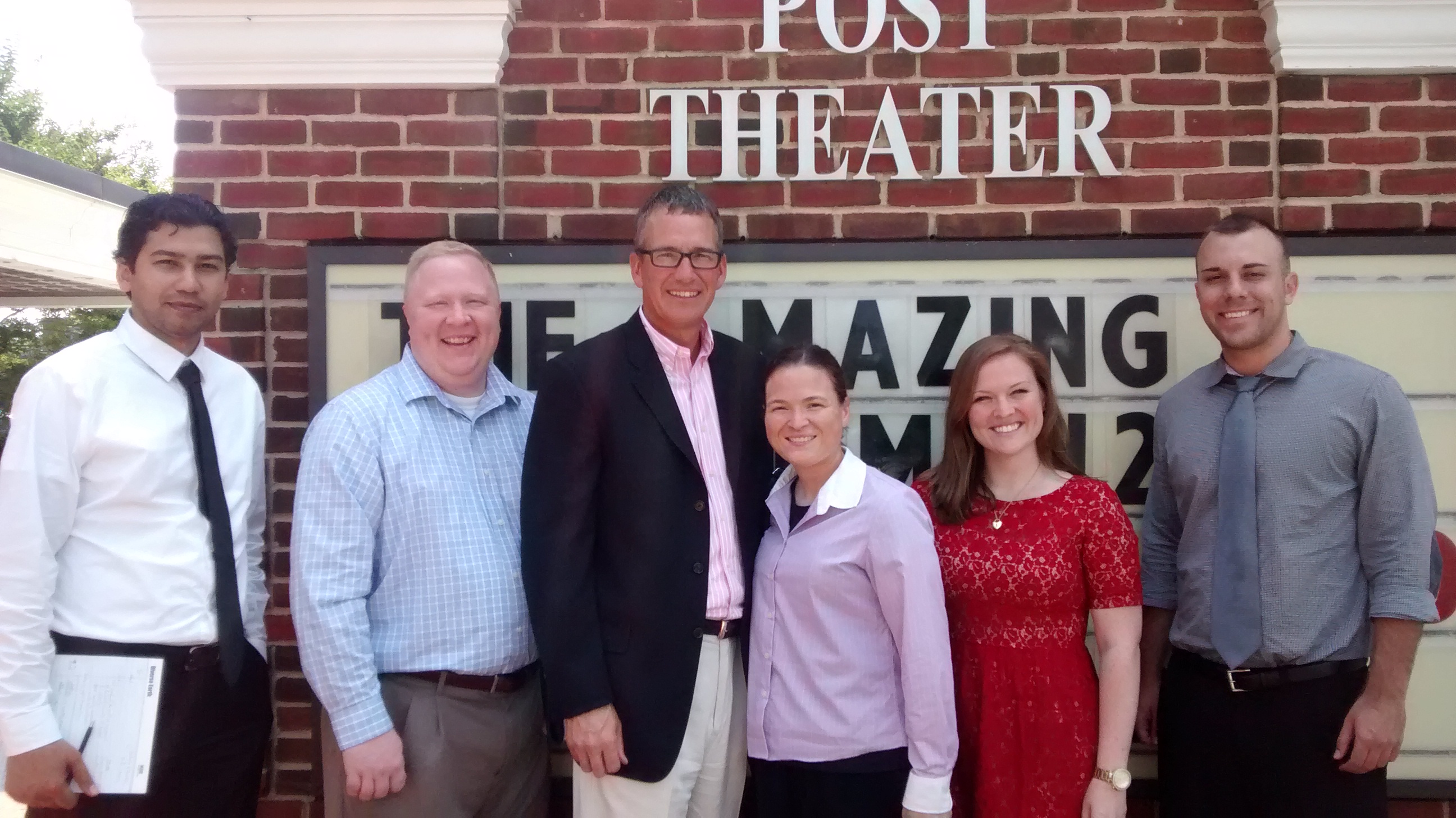
Chief Prosecutor Gerneral Mark Martins and NGO Observers - GTMO - 16 June 2014

Left to right: Professor Andrew Clapham, Mr. Jason Aldrich (Judicial Watch), Mr. Mark Sorsaia, Professor George Edwards (Founder, The Gitmo Observer), Brigadier General Mark Martins (Military Commissions Chief Prosecutor), Ms. Kate Rocco (Cravath, Swaine & Moore), Mr. Evan Matheney, Lt. Col. Dru Brenner-Beck (Ret.), Dr. Jerry Green.

Guantanamo Bay Military Commissions Chief Prosecutor Brigadier General Mark Martins met with 8 NGO Observers who traveled to Guantanamo Bay for hearings in the 9-11 case and for the arraignment in the case against Abd al Hadi al-Iraqi. These proceedings occurred at Gitmo during the week of 16 – 20 June 2014. At the meeting with the NGOs, General Martins discussed a wide range of issues related to the Military Commissions, including the range of charges brought against various accused, the suitability of these cases being tried at Guantanamo Bay (more…)

Gitmo Hearings – View From Ft. Meade – Clarence Leatherbury – 16 June 2014

Introduction

Before I went to Fort Meade to view the trial, I watched several interviews on Youtube which discussed Guantanamo Bay issues. I want to share with everyone reading this blog two of the interviews, because the topics they discussed are extremely relevant to the June 16th hearing concerning the alleged architects of the 2001 attack on the World Trade Center & Pentagon.

Tom Woods Show Interview

First I want to talk about an interview I heard on the Tom Woods Show between historian and author Thomas Woods and Justin Raimondo of Antiwar.com. The interview took place on June 12, 2014. Mr. Raimondo stated that a large portion of the detainees at Guantanamo Bay were not terrorist. He stated that the U.S. military would pay Afghanistan farmers and peasants large amounts of cash to capture and turn in potential terrorist to (more…)

9-11Hearing of 16 June 2014–My Impressions–By Megan Alvarez

Initial Impressions

Today I observed hearings in the 9/11 case of KSM and 4 other defendants. Before I go into detail about the day, I want to mention my overall impression, which is one of shock and dismay. Given the arguments today, I can only say that I feel like this whole process seems like a sham, like the government is putting the defendants through the process to give the impression that they are being given a just trial. However, there is far too much happening behind the scenes that indicates that there are serious issues regarding the government’s behavior throughout the proceedings and in the handling of these defendants. It was shocking and disappointing. The victims’ families, this country, and the defendants deserve justice. I’m unsure whether this process is providing (more…)

MCOP Representatives at Ft. Meade

Salam Almarhoon, Chuck Dunlap, Tim Button, Megan Alvarez, Kristi McMains, and Clarence Letherbury

Salam Almarhoon, Chuck Dunlap, Tim Button, Megan Alvarez, Kristi McMains, and Clarence Letherbury

Arrival at Guantanamo Bay — G. Edwards

Image

The first afternoon at Guantanamo Bay (Saturday) was of great interest. It was busy with administrative formalities and orientation. More to come later.

But here’s a photo of me on the Air Force C-17 aircraft en route to Guantanamo Bay.

(The person sitting behind me to my left with his face turned is Ben Fox, Chief of Bureau for AP in the Caribbean.)

At Andrews Air Force Base

Professor Andrew Clapham, Mr. Evan Methaney & Professor George Edwards, waiting for the flight to board the flight to Guantánamo Bay. Note the The Gitmo Observer Briefing Book, which has been a big hit!

20140614-074008-27608609.jpg

Professor Clapham & Professor Edwards

20140614-074007-27607407.jpg

Professor Edwards & Mr. Matheney.

20140614-074008-27608081.jpg

Edwards with Briefing Book.

En route to Andrews Air Force Base–G. Edwards

It’s barely 4:30 a.m. and I’m leaving my Washington, DC hotel bound for my flight to Guantanamo Bay. I’m expected to be at Andrews Air Force Base by 5:40 a.m.

The taxi just cruised past the White House…and there’s the Washington Monument. These landmarks call to mind the concepts of human rights, the rule of law, and in the case of Guantanamo Bay, the right to a fair trial.

I have been entrusted, along with other GTMO monitors, to try to ascertain whether all Guantanamo Bay stakeholder rights are being afforded to them. The accused have the right to a fair trial, and so to does the prosecution. Families of the victims also have the right to a fair trial.

I will report in later. Photos are forthcoming.

Hearing Motions 16 – 17 June–By Megan Alvarez

After receiving the documents corresponding to the hearings for the week of June 15th, I was anxious to review them. I sat down this morning to look over them, and now, I am ready and excited about next week.

The hearing next week is about FBI contact with a Defense Security Officer (DSO officer) and whether it creates a conflict of interest for defense counsel. Regardless of how the judge decides to proceed in this matter, it is concerning to me that the government seems to be uninterested in the way its actions are perceived or the effects they may cause. This contact could lead (more…)

My Upcoming Ft. Meade Observation – Week of 15 June 2014 – By Megan Alvarez

Introduction

As this is my first post, allow me to introduce myself. My name is Megan Alvarez, a 2009 graduate of the IU McKinney law school. I am now an immigration attorney and program director of the Paralegal Studies program at Ivy Tech Community College in Evansville. I was very fortunate to take part in many opportunities that were offered through the Program in International Human Rights Law during my time in school.

I am now honored to be a part of this project. I will be traveling to Ft. Meade to observe hearings during the week of June 15.

Specifically, I will be observing hearings in the cases against Khalid Shaikh Mohammed (KSM) and Abd al Hadi. KSM is the alleged mastermind of the 9/11 attacks. Abd al Hadi is an alleged senior member of al-Qaeda, who (more…)

Hoosiers play integral roles in historic military commissions

gitmo-coin-15col - 4 June 2014

Indiana Justice Steven David holds a challenge coin he helped design while working at Guantanamo Bay as chief defense counsel. (IL Photo/ Marilyn Odendahl)

[This article is by Marilyn Odendahl and originally appeared on 4 June 2914 in The Indiana Lawyer at this link)]

The words Indianapolis attorney Richard Kammen used to describe the trials taking place at Guantanamo Bay are jarring – “legally grotesque situation,” “huge stain on American justice,” “secret expedient rigged justice.”

Then he noted the situation of alleged terrorists being put on trial for acts of terrorism and murder is not black and white. There is (more…)

IU McKinney students observe trial proceedings at Guantanamo Bay

The USS Cole after it was attacked by suicide bombers in October 2000 in Yemen. (Photo courtesy of United States Marine Corps)

The USS Cole after it was attacked by suicide bombers in October 2000 in Yemen. (Photo courtesy of United States Marine Corps)

(This article by Marilyn Odendahl was originally published on 4 June 2014 in The Indiana Lawyer at this link) Sitting in a hotel room, preparing to watch a video cast of a hearing with Abd al-Rahim al-Nashiri, one of the alleged masterminds behind the bombing of the USS Cole, Whitney Coffin considered the process of using military commissions to try suspected terrorists. “Before I actually see the hearing, my pre-impression is this is the best way to do it,” Coffin, a 2014 graduate of Indiana University Robert H. McKinney School of Law, said. “Some push to put this in federal courts, but what state is (more…)

GTMO charges Abd al Hadi – Arraignment Set for 18 June 2014

Abd al Hadi is alleged to have been the al Qaeda leader in the Bamiyan, Afghanistan region and to led al Qaeda forces to assist the Taliban in destroying the Bamiyan Buddhas. Before and after photos. Abd al Hadi is alleged to have been the al Qaeda leader in the Bamiyan, Afghanistan region and to have led al Qaeda forces to assist the Taliban in destroying the Bamiyan Buddhas. Before and after photos.

Abd al Hadi is alleged to have been the al Qaeda leader in the Bamiyan, Afghanistan region and to have led al Qaeda forces to assist the Taliban in destroying the Bamiyan Buddhas. Before and after photos.

On 2 June 2014, the Military Commission Convening Authority authorized the prosecution of Abd al Hadi Iraqi, an alleged senior member of al Qaeda. The charge sheet alleges that from 1996 to 2006, Abd al Hadi and others engaged in terrorism, attacked civilians, employed poison or similar weapons, murdered protected persons, and committed other crimes.

Abd al Hadi allegedly paid an award for the assassination of United Nations personnel, provided funding for suicide attacks, and served as al Qaeda liaison to al Qaeda in Iraq.

He is charged with leading an al Qaeda team that helped the Taliban destroy the Buddha statues of Bamiyan, Afghanistan.

Abd al Hadi Court Documents

The Charge Sheet in the Abd al Hadi case can be found here:  Charge Sheet.

The Arraignment Order for the 18 June 2014 proceeding can be found here:  Arraignment Order.

Other Court Documents can be found here: Court Docket – Abd al Hadi

Arraignment — Eligibility for IU McKinney Affiliates to view the Arraignment live

Abd al Hadi is scheduled to be arraigned on Wednesday, 18 June 2014 at Guantanamo Bay, Cuba.

The Military Commission Observation Project (MCOP) is expected to be represented at the Guantanamo Bay arraignment by Professor George Edwards, who will be at Guantanamo Bay that week for hearings in the 9-11 case.

MCOP representatives scheduled to be at Ft. Meade for simultaneous secure CCTV of the arraignment include Megan Alvarez, Sukrat Baber, Whitney Coffin, Chuck Dunlap and Kristi McMains.

Other IU McKinney Law School Affiliates interested in monitoring the arraignment at Ft. Meade may visit this link and submit a statement of interest.

Congressman Lee Hamilton on Guantanamo Bay – (By G. Edwards)

Discussions with the Congressman
Yesterday I had the honor to meet with Lee Hamilton, former Congressman from Indiana and Co-Chair of the 9-11 Commission. We talked about a range of issues, most notably Guantanamo Bay and the work being done by the Military Commission Observation Project of Indiana University McKinney School of Law.

Congressman Hamilton (center), Chuck Dunlap (right) and me at Indiana University's Center on Congress, directed by Congressman Hamilton

Congressman Hamilton (center), Chuck Dunlap (right) and me (left) at Indiana University’s Center on Congress, directed by Congressman Hamilton

Our meeting, that was arranged by Mr. Chuck Dunlap of the Indiana Bar Foundation, happened to take place four days after the U.S. swapped five Guantanamo Bay prisoners for Bowe Bergdahl, a U.S. soldier who had been held captive by the Taliban for five years. It was also the day after the Pentagon announced that charges were being formalized in a Guantanamo Bay case against another accused, Abd al Hadi al Iraqi, a former CIA prisoner who is alleged to have been a high-ranking al Qaeda arrived at Guantánamo in 2007 who allegedly killed Canadians and U.S. soldiers.

Due Process and Fairness
Echoed throughout our hour-long discussion with Congressman Hamilton were the concepts of due process and fairness. I concluded that Congressman Hamilton believes that fairness and due process should guide the U.S. Government through every step of the Guantanamo Bay Military Commissions. Not only should the Military Commissions be fair, but also the proceedings should appear to be fair. Due process should be provided to all. Transparency is critically important. Furthermore, I concluded that he believes that independent monitors like our MCOP participants should approach their jobs with open minds, and should be prepared to report not only any deficiencies spotted within the Commissions, but also to report any commendable aspects of the Commissions.

Right to a Fair Trial

I shared with the Congressman my belief that regarding the Military Commissions, all stakeholders have the right to a fair trial. The accused are stakeholders, and they have the right to a fair trial. The prosecution, which represents we the people, are stakeholders, and they have the right to a fair trial. The victims and the families of the victims are also stakeholders and they have the right to a fair trial.

Military Commission Observation Project participants have an obligation to monitor the proceedings, and to ascertain based on the law and the facts whether we believe all stakeholders are being provided with their fair trial rights. That is, we as monitors draw conclusions as to whether we believe the proceedings are complying with U.S. and international law, or whether the proceedings are not complying with U.S. and international law.

Decades of Wisdom and Experience
It was a delight to hear Congressman Hamilton share stories from his law practice days (including when Indiana had “paupers’ attorneys”), his many years in Congress, and his Co-Chairmanship of the 9-11 Commission. I look forward to visiting with Congressman Hamilton again, perhaps after my next visit to Guantanamo Bay, which is scheduled for the week of 16 – 20 June 2014. I am scheduled to monitor hearings in the case of Khalid Shaik Mohammad and others accused of masterminding the 9-11 attacks on the World Trade Center and Pentagon, and to monitor the arraignment of Abd al Hadi al Iraqi, the latest Guantanamo prisoner to be approved for trial.

Reading Transcript v. Observing al-Nashiri Hearing 28 May 2014 – Whitney Coffin

Arrival after hearings closed to Observers!

I arrived at Ft. Meade last Wednesday afternoon, and was therefore, unable to attend the only day of the al-Nashiri USS Cole hearing open to the NGO observers last week. The Judge decided to hold the rest of the hearings for the week in closed session.

Although I am disappointed that I was unable to observe the hearing, I am more than obliged to provide my thoughts on the hearing after reading the transcripts. I have now had the opportunity to read the three separate transcripts covering the al-Nashiri hearing as well as the perspectives of two student observers who (more…)

Detour from USS Cole – Official Tour of Ft. Meade – Kristi McMains – 29 May 2014

What to do at Ft. Meade when Observers are barred from hearings?

The Judge in the al Nashiri case determined that hearings for the remainder of the week were to be classified. NGO Observers, like those of us representing the IU McKinney Military Commission Observation Project,  are not permitted to monitor classified hearings.

After receiving word that the hearings were done for the week for us, I scrambled to catch a flight back to Indianapolis on Thursday (what would have been the second day of hearings for this week). I was hopeful that my (more…)

Final Days at GTMO – 30 – 31 May 2014

IMG_0252

James Zender, IU McKinney Law School JD graduate, at Guantanamo Bay in May 2014.

On the final two days of scheduled hearing days at Guantanamo Bay, the hearings either ended early or were deemed classified. The NGO Observers were excluded from classified hearings. Thus, we had lots of time to explore Guantanamo Bay.

What to do at GTMO when there are no hearings?

With significant down time when we can’t monitor hearings, there were still a number of ways for us to fill our time in Guantanamo.

The Morale, Welfare, and Recreation (MWR) wing of the military has a heavy presence and their mission is to ensure military members have relaxing and appropriate non-work related activities to maintain somewhat of a normalized life experience in such a secluded location. They have an outdoor movie theater that plays brand new movies most evenings. They provide cook out facilities at the beach. There is a golf course and dive shop. With time to kill, we were able to take our pick on how we wanted to pass our time.

Radio Gitmo

Our first stop was Radio Gitmo, which is in charge of the airwaves on base. They host three radio stations and sell a popular Fidel Castro bobble head. After a tour of the facilities (I had never been in a radio station before) we got to see the back room where they still maintain a huge collection of vinyls. Our guide noted it was the largest vinyl collection in the military and they still regularly play them on the air.

Image

The vinyl collection at Radio GITMO

Camp X-Ray – A familiar site

On our way back from Radio Gitmo, we drove past the infamous Camp X-Ray site. This camp was the very first one to hold detainees after 9-11 until Camp Delta was built. After the transfer to Camp Delta, the military wished to raze Camp X-Ray, but a US court ordered it preserved as evidence. We were not allowed to take picture of it, but there are pictures you can find online from those authorized to take them. Its current condition is one of (more…)

Power Session Part II – 28 May 2014 (al Nashiri-view from GTMO)

As the NGO group broke down the morning’s activities over Subway sandwiches, we were all surprised they got through three of the motions that morning. As we looked over the docket, we guessed that two more would be done that afternoon, and things would likely wrap up by Thursday. One motion in particular (AE 120D) was rumored to possibly take a whole day to argue. We expected a much slower pace in the afternoon. Not only were we dead wrong, but I think things could have gone even quicker.

Will al Nashiri come to court this afternoon?

As I took my lucky number 23 assigned seat, I was curious if al Nashiri was going to opt to show up for the afternoon session. At the outset of any round of hearings, he must be present for the judge to explain to him his right to be present, or not be present. Earlier, we got to hear him speak, in Arabic, that he understood that right. According to some of the observers who have been to a number of these hearings, the defendants will often opt out of coming back after the first mandatory session.

Within 3 minutes of sitting down, al Nashiri was escorted in and he took his place at the defense table.

As with the morning session, he spun around in his chair and casually looked across the gallery. As his gaze swept across the room we were in, I felt our eyes meet, for a passing moment. There appeared to be no ill will or flames of evil in his glance, just curiosity. After he made a similar check in the morning, I asked our escort if we were behind a one-way mirror. The answer was a resounding no, but he noted that the glass was sound proof. Judge Pohl entered shortly after our arrival and he quickly got things underway.

Motion AE 267B

The first motion of the afternoon was AE 267B, where the defense was moving to allow the defendant the option to choose whether he wanted a trial by a single judge or a trial by jury. I found this motion flawed on so many levels, and as the defense made their arguments, I found myself trying to reason why they would want this option. It was frustrating to me that I could not concentrate, because the Navy officer making the argument had the best form and delivery out of any of the eight various people who gave arguments. But substantively, I just could not grasp the logic of the motion or his points. The crux of their issue was with the fact that military commission trials have a jury of “members”, all of who are officers (typically higher ranking ones) in the armed forces. The convening authority selects a pool and they are sent down for voir dire. The defense argued this inherently built in unacceptable levels of bias, noting that nearly all the officers would be, like the Navy lawyer himself, a young commissioned officer when the Cole bombing happened. He noted that many of them may have known people on board or shaped strong opinions about the defendant at the time. The judge questioned whether the decision to opt out of a jury trial would come before or after voir dire. I was so caught up still trying to figure out why this motion was being made, I forgot to note the defendant’s answer. What really hung me up was that the whole point of voir dire and each parties’ ability to strike members is to eliminate bias. Claiming other measures needed to be taken seemed to short circuit this control for bias. Furthermore, a single person, instead of a group of twelve, would seem to be much more capable of bias. Finally, I could not even begin to understand why in a capital case, when a unanimous decision of all twelve members is required for the death penalty, the defense would even want the option of reducing that number of votes to one. “They must have a very high opinion of Judge Pohl,” I remembered thinking as the prosecution prepared to make their argument. I was eager to hear their side of the motion. At the conclusion of their argument, everything became completely clear. This motion was nothing more than a defense tactic to attempt to trip up the court and make the whole proceedings invalid. The MCA section 949m specifically states that a jury trial must be given. Furthermore, it notes a death penalty cannot be instituted except by unanimous consent of a twelve member jury. If the judge gives the defense the ability to opt out of this, it would directly contravene the statutory authority and Congress’ explicit intent, thus opening it up for an appeal and invalidation of the trial. Furthermore, the commission’s authority over cases has (according to the prosecution) five necessary parts, including a trial by jury. Allowing the defendant to opt out of a jury would undermine and invalidate the commission’s jurisdiction over the case. After the prosecution finished its argument, which was succinct and well articulated, it became clear to me that this was a defensive tactic to get the proceedings thrown out on a technicality later down the line. Regardless of where you stand on the validity of the commission to try the accused, I am happy the prosecution snuffed this trick out and will likely succeed in averting a technical dismissal. Nothing would be more annoying and a deterrent to some level of justice than the success of such a move. I am very glad we had two prosecutors with us on this trip, because afterwards I was asking them about such tactics. They confirmed that in their long years of experience, they have seen many, nearly identical, ploys made by defense teams. Since the prosecution was rather brief and did not even give a reply argument, Jude Pohl was able to move quickly to the next motion.

Motion AE 270

The next item was AE 270, which dealt with the defense’s request for remedies for the failure of the prosecution to give it evidence. This motion was pretty short, and along with the one that followed it, appeared to be the most easy, simple issues on the docket. They were the ones I was hoping to get at the outset to get me warmed up. The defense was concerned by the fact that certain evidence was produced to them recently that should have been produced earlier. A previous document (AE 045) gave notice to the court that all pertinent evidence was turned over to the defense. However, more evidence was recently found and the defense sought remedies to prove to the prosecution the court would not tolerate the dragging of its feet in releasing material. In perhaps a slight break in neutrality, Judge Pohl asked “And what remedy would you have me give you?” I definitely caught a sign of frustration in his voice. The defense did not seem to have a specific remedy in mind, or at least her answer was so convoluted I could not decipher it, but after this question, the defense council appeared to lose her place and stumbled to get back on track. The prosecution appeared to uncover another common defense tactic, and its arguments mirrored such a sentiment. As he noted, the prosecution has a continuing duty to find and produce discoverable material, and one cannot simply claim anything produced after a certain date is a violation. A continuing duty necessarily means they will be producing things all the time. However, this situation is certainly more unique than most, and while I am not sure the judge should issue remedies here, a regularly filed motion similar to this one may be a positive thing for the process. There is no doubt the various branches of the government are not in sync with what is happening here in GTMO. Some parts are actively against it and failing to cooperate. Some parts are trying to subversively control it. One part, the prosecution, is trying to make it happen. With the prosecution being pulled by so many different strings, it is certainly important to “hold their feet to the fire” as the defense said, to show that this court will not be toyed with or manipulated. While I would be shocked if the defense prevails on this motion, given the historical nature of the proceedings and prime setting for government conspiracy, this sort of motion is a healthy part of the process of justice.

Motion AE 272

Motion AE 272 served as the penultimate motion in this round of hearings. It was the only motion that was actually uncontested. The defense noted how the FBI had approached and caused members of the defense team in the 9-11 hearings to sign non-disclosure agreements, which represents possible illegal contact and possible conflict of interest problems. Supposedly, such contacts have also been made in this case, and the defense is seeking to have the court compel any defense team members to tell their team, or the court, if they have been contacted. The prosecution had almost no argument and agreed that such an order should be made. Furthermore, he was going to look into the possibility that such contact would represent a conflict of interest.

Motion AE 120D — The “big daddy” (request for reconsideration of AE 120C)

As the last motion came to quick resolution, all my fellow observers and I stared at the docket we were given. This leaves only AE 120D, the rumored big daddy of all the motions to be heard. Surely, the judge was not going to try to start it so late into the afternoon. But, without hesitation, he called the prosecution forward to address its motion.

General Martin — What were the underlying issues?

For the first time at the hearing, General Martin proceeded to the podium. He looked very impressive with his salt and pepper hair, very calming demeanor and speech pattern, and massive display of colors, medals, and badges on his uniform. His motion was a simple request for reconsideration of the judge’s previous order on AE 120C. At the outset of his argument, he asked to display things on the monitors, the only person to do so in the hearing. I was even more intrigued. What followed, was nothing short of a disappointment.

For the better part of the argument, I failed to grasp the underlying issues and what specifically he was looking to have done. It was made even more frustrating because his reputation is one of a very smart man, but his argument was either too smart for me, or fatally disjointed. Once the defense came up, I began to form a much better view of the issues. The order the prosecution was seeking to have reconsidered compelled the it to turn over, in discovery, information on the CIA’s RDI (Rendition, Detention, Interrogation) program. The prosecution argued that the order was too vague at parts in order to properly comply with it. Furthermore, it argued that a change in facts results in a need for the judge to reconsider the motion under the new set of facts.

The facts the prosecution relied on is the ability of the defense to now be able to show the defendant documents about events that happened to him. I think this basically means they are allowed to show him photos or documents related to his confinement or torture.

The defense countered that procedurally, in order to properly grant a motion to reconsider, there must be a change in facts or law from when the order was given. Here, they argue, no such law or fact is given. No new law was given, but the prosecution did mention in passing the fact that the defense has the ability to show things to the defendant. However, it seemed like this was not actually a new fact, and therefore, this motion fails on procedural grounds. Even if it was valid, the defense made an interesting point that part of the reason they needed (and he thinks they were given) access to the RDI program material was that they could not be effective counsel, as required by law, without it.

Stripping away the material now, would mean they could not make an effective defense. After a very long-winded argument and reply, I ultimately think the defense will prevail on this motion. Discussing this motion afterwards with my colleagues, I noted my disappointment in the General’s argument. However, they noted something I had not considered in that he had a terrible argument to begin with (they noted the apparent procedural flaw), and this can certainly reflect on how the argument is given. One person noted he was the one who likely gave this argument because his status might lend extra weight to the issue.

End of the hearing for Observers.

At almost exactly 4:30pm on the first day, our experience in the courtroom came to a close. We all could not believe it was over. We thought there were many occasions when the judge would end the arguments for the day, but he kept powering through, taking only a 15 minute recess in the middle. Despite our expectations of a longer hearing, things could have been even shorter. One of the most distinct differences I noticed in the commission proceedings compared to regular courts was the lack of a timing mechanism. There were no green-yellow-red lights or countdown timer. Attorney’s were given free rein to talk as long as they wish, which is never a good thing I would think. Ultimately, that proved true only in the final motion, where the defense seemed to massively overstate, restate, and reiterate points. We all laughed afterwards that there were at least four or five times we thought he was going to end it, only to ramble on about something else.

Judge Pohl – Strategies?

One of our escorts made a very good point noting that he thinks Judge Pohl recognizes the historical nature of this proceeding, and the fact that it is likely to be appealed until the cows come home. He thinks the compilation of as complete of a record as possible can only serve to help such situations. Through this lens, I can certainly agree. However, after reviewing all the attorneys’ arguments in my mind, I noted how the lack of a time limit appeared to hurt them because on at least three separate occasions, I noted that the attorney was very redundant. Ultimately, I think the lack of some time limit makes for much more disorganized and loose arguments. Having a time limit allows you to focus on what’s important and organize it in a way that effectively makes those points. After watching a day of hearings, my immediate reaction as to what to change would be to institute time limits, even if they are more than would be typically necessary.

Meeting with General Martin

After the hearing, we were lucky enough to schedule a sit down with General Martin almost immediately after the hearing. We filed into the media room where we sat in a nice little circle for a round table discussion with him. For nearly two hours, we were able to ask him questions. I particularly enjoyed the handful of questions he took from our prosecutors because it really helped to harmonize the military commission process with the typical court process. They noted to him multiple different procedures, rights, tactics, and issues that the sides addressed that are mirrored almost exactly in domestic courts. His reputation for intelligence was confirmed as he easily cited to both the military commission and domestic rules that mirrored one another, and noted the differences in terms and usage.

He came off as someone who had a deep understanding of the system, a recognition for its flaws, an openness on how to make it better, but ultimately, a zealous belief that it is the best system currently for these trials. I was particularly stuck by his entertainment, and out loud thinking, of better solutions to people’s perceived flaws in the system being used to try al Nashiri.

He referred a couple times to the Nuremberg Trials and Yugoslavia and Rwanda tribunals.

I was eager to ask him to what extant he looks to those trials for guidance or indications of how to proceed in a military tribunal, which one day will likely hold the same historical significance. However, he was focused on the other side of the room and then had to leave. Two hours was a generous amount of time, and I was glad he took the time for us.

Dinner at Caribbean Jerk House

After he left, we piled into the vans for a trip to the Caribbean Jerk House for a late dinner. I am pretty sure the two guys running the place did not care what we ordered They grabbed something from the bins, cut it up and served it to us. Despite half of our orders being wrong, we were all so hungry, we were going to mimic Judge Pohl and have a power session on some jerk flavored chicken and ribs.

Initial Thoughts, and a Twist

It’s a great honor and privilege to be part of the MCOP team both as an Advisory Council Member and a participant in Commission observations. The thing about once-in-a-lifetime opportunities–they only come once! Having done work in the fair trial section of human rights and international humanitarian law both locally and abroad, this opportunity is very fitting for my professional and academic interests. What’s more: the other individuals involved in the project are equally or more knowledgeable in the field and have great backgrounds to compliment the mission.

Leading up to my hoped arrival for the Al-Nashiri trial on Friday, May 30, 2014, I was wrestling with the Military Commission Act of 2009 and the wealth of other sources relating to the facts of the USS Cole bombing and the procedure of the Military Commissions. This was well buttressed by the briefing with Richard Kammen, Indiana attorney and Capital Defense specialist counsel for the Defendant. I was quite curious to see how everything would play out, and the extent to which the trials may have been for “show” as many critics have alleged.

Well, the Friday, and the Thursday, hearings were canceled because Judge Pohl concluded seven motions yesterday. This means that the observation I was scheduled for is no more. Others who were already there looking to observe Wednesday through Friday were/are similarly inconvenienced, as well as one MCOP participant who was en route to observe Thursday/Friday. We can imagine many other individuals–journalists, lawyers, other NGO representatives, being inconvenienced by what we might speculate as a “rushing” through of the docket. This is a display of the uncertainty of the Commission, the application of the Commission’s procedural law, and how the pace is heavily set by the presiding judge. Personally, I am having trouble deciding what my reaction to this is. I want to represent the MCOP in a way that works well with my other obligations, want to play my role, generally, as a human rights advocate by reporting to the world both the pros and cons of the Commission’s procedure, but then again I understand this whole thing is much bigger than me. Ultimately, I can only hope justice was properly served for both the Prosecution and Defendant in this hyper-drive rush through the motions this week. I’m looking forward to what materializes now that this weeks trials have concluded.