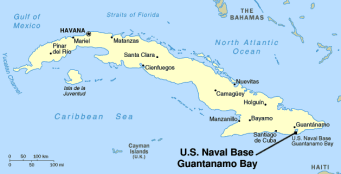
Guantanamo Bay

Preparations to Attend Abd al-Rahim al Nashiri Hearings at Guantanamo Bay, 1 – 7 March 2015

al Nashiri

Abd al-Rahim al Nashiri

I am scheduled to travel to Guantanamo Bay, Cuba to monitor the Al Nashiri Hearings at U.S. Military Commissions from 2 – 7 March 2015.  This is the case against a man, al Nashiri, who is charged in these proceedings with having being a masterminded of the October 2000 attack on the U.S.S. Cole, docked off the coast of Yemen, killing 17 U.S. sailors and wounding dozens more.

At Guantanamo Bay, I will be representing Indiana University McKinney School of Law’s Program in International Human Rights Law, which has received NGO Observer status by the Pentagon. This human rights program created the Military Commission Observation Project, and the Project nominated me for this mission.

Background

I have a Bachelor of Law from Moi University based in Eldoret Kenya (’09). I also hold a Master of Laws (LL.M.) degree in International Human Rights Law (’11) from IU McKinney, which is how I primarily got involved with the Program in International Human Rights Law.  In 2010, I was an intern in this human rights program, working in Vienna Austria in. As an International Human Rights Law student in Prof. Edwards’s classes, I gained valuable gainful insight into international criminal law, and the Guantanamo Bay case of David Hicks, on which IU McKinney students worked and on which Professor Edwards served as an expert witness.

I am currently studying International Research Ethics, but have not lost my interest in international law.

Experiences

I have had an interest in international law for many years now, but certain events heightened my desire to understand international criminal law and international humanitarian law.

On August 7, 1998, the US Embassy in Nairobi, Kenya was bombed, killing over two hundred person, wounding countless people, and causing significant property damage. There was a similar terrorist attack in neighboring Tanzania. The blast rocked our notions of the relative peace and security we had experienced as a nation. Al Qaeda claimed responsibility, and terrorism was at doorstep of my East African home.

Al Nashiri was a suspected mastermind of those East African bombings, and one of the suicide bombers, the driver of the truck carrying explosives who attacked the Embassy, was his cousin, Azzam (pg. 152, 9-11 Commission Report). It was purely coincidental that I was approved for the Al Nashiri hearings. Although as a nation we lost family and friends, I naturally was inclined to seeing all those involved pay for their crime. At the same time, reading about the torture that alleged masterminds and perpetrators were subjected to left me conflicted as a human being, and a continued believer in the universality and inalienability of human rights.

With this background and my academic experience in international law, I am eager to attend the hearings and apply what I have learned to assess whether the accused are accorded fair trials, and whether the rights and interests of all other stakeholders are being fully afforded to them.

Reason for Applying to be an Observer

I admired the work of the IU McKinney PIHRL before I even joined McKinney School of Law. In 2009, I was fortunate to meet Prof. Edwards in Eldoret, Kenya, and had a chance to work with interns from PIHRL who did their internships in the legal office where I worked in Kenya just after I completed my law degree. As an affiliate of Professor Edwards’ program, I was very proud when it earned United Nations ECOSOC Special Consultative Status, and very proud when the Pentagon granted the PIHRL NGO Observer Status to the Military Commissions.

Courtroom sketch of al Nashiri by artist Janet Hamlin.

Courtroom sketch of al Nashiri by artist Janet Hamlin.

Al Nashiri

As mentioned, al Nashiri is charged with masterminding an attack on USS Cole in October 2000 and on. He faces charges in perfidy, murder in violation of the law of war, attempted murder in violation of the law of war, terrorism, conspiracy, intentionally causing serious bodily injury, attacking civilians, attacking civilian objects, and hazarding a vessel.

Personal Thoughts on the Hearings

I look forward to attending the hearings. I am however conflicted. The purpose of allowing observers is to ensure free and fair trials are conducted before the Military Court at Guantanamo, yet the process is riddled with torture and gross human rights abuses. I have received countless of emails from human rights based organizations, to sign petition for the closure of Guantanamo Bay. I cannot say that I have made any active advocacy efforts towards this end. I find it unsettling after claims and evidence of illegal detention and a flagrant violation of rights, there is an interest in the right to a fair trial. At the same time, terrorist continue to launch attacks against innocent human beings. I have witnessed this in Kenya, and continue to witness it with the constant threats from the militant group Al- Shabaab. I desire justice for the victims of terrorism, and respect for human rights for those accused.

Travel to Guantanamo Bay, Cuba

My journey to Guantanamo begins March 1, and will return to the country on March 7. I will be posting my observations on this blog as I continue to prepare, and updating on the hearings on a daily basis. I look forward to meeting other NGO Observers who will be there, attending the hearings and applying the Guantanamo Bay Fair Trial Manual to give an objective and personal view of the proceedings.

Avril RuaAvril Rua, Guantanamo Bay, Cuba, 21 February 2015

9/11 Hearings Misc Motions Heard

On Wednesday, February 11,  Judge Pohl called for the parties to suggest motions that could be heard outside of the 292 conflict-of-interest matter and the prior CIA black site interpreter matter (350). There was an aura that the 9/11 hearings were on life support as the prosecution and defense struggled to put motions on the table that could be argued during the remainder of this week. Mr. Walter Ruiz, Learned Counsel, proposed a number of motions that deal only with his client, Mustafa al-Hawsawi.

This morning he called to order the Military Commission to hear arguments on a variety of outstanding motions. Defendant Mr. al Baluchi chose not to attend the hearings today. As a result, the first few minutes of the proceedings dealt with an Officer of the Judge Advocate General Corp’s office testifying that he had informed Mr. al Baluchi of his rights to attend and to obtain his waiver. Typically when this happens the prosecution files a “submission of alias” because the testifying officer does not provide his name on the witness stand. Learned Counsel for Mr. al Baluchi, James Connell, noted on the record that the prosecution had not made such admission this morning.

David Nevin, Learned Counsel for Khalid Shaikh Mohammed, again went on the record to make an on the record motion (and to indicate that he will be filing a written motion) to halt all proceedings until such time as the matter of the former CIA black site interpreter issue is resolved.  Again, he was overruled.

Today’s activity focused on motions focused by Mustafa al-Hawsawi.  Mr. Walter Ruiz, Learned Counsel, argued the following motions:

  • AE192 & AE196 Motion to Seek to Disqualify Legal Adviser, Office of the Military Commission Due to the Unlawful Interference with the Professional Judgment of the Chief Defense Counsel and Detailed Learned Military Counsel. Mr. Ruiz requested that Judge Pohl go forward with an analysis of the underlying facts and law because these circumstances are representative of an instance of unlawful influence in the proceedings. The issue of unlawful influence does not resolve itself simply because those involved have left the Office of the Military Commission. Ms. Bohrmann, Learned Counsel, for Mr. Walid bin Attash, similarly urged Judge Pohl to undertake the analysis and make a ruling.
  • AE332 & AE340 Motions to compel discovery of Mr. Hawsawi’s medical records and access to medical personnel who treat Mr. Hawsawi. Mr. Ruiz requested access to medical records and medical personnel in order to judge the standard of care his client is receiving and also to help Mr. Hawsawi make medical decisions. His health has showed signs of deterioration. The prosecution challenged these motions by arguing that the medical issues are arising out of a December 2014 incident in which Mr. Hawsawi was injured while in detainment. The prosecution also stated that his medical records, which were classified, are being declassified and delivered to the defense on a rolling basis.
  •  AE303 Motions addressing conditions of confinement. Mr. Ruiz argued that the circumstances of confinement at Guantanamo Bay violate humanitarian law. He did note that there has been one change. For example, Mr. Hawsawi did not have any access to his family from 2003 through most of 2014.  In October 2014 a process was put in place to allow the defendants to record messages that will be delivered to their families. In January 2015 a process was put in place to enable the defendants to Skype with their families. His overall focus was that quality of life will equal quality of defense and that the United States has a legal duty to abide by the law. The prosecution urged Judge Pohl to stay out of the detention role and noted that the Geneva Convention does not apply to these defendants because they are “alien unprivileged enemy belligerents.”
  • AE214 & AE214A Motion to Compel Mr. Hawsawi Access to the Government of Saudi Arabia in Compliance with United States Law and Motion to Compel Prosecution to Produce Un-redacted Copies of Correspondence etc. Pertaining to Requests by Saudi Arabia to Meet With Its Citizens Held in Guantanamo Bay Mr. Ruiz urged Judge Pohl to order this discovery so that Mr. Hawsawi would have access to officials of his home state, Saudi Arabia.

At the conclusion of lengthy oral arguments, Judge Pohl asked if there was any further outstanding matters.  Again David Nevin renewed his concern that the legal proceedings were continuing in light of the 292 and 350 matters.

James Harrington, Learned Counsel for Ramzi bin al Shibh, brought up what he called a “simmering problem.” He stated that the manner in which the defendants are handcuffed/shackled has changed and that as a result the defendants are experiencing injuries.  Mr. Harrington noted that the defendants are not attending attorney-client meetings rather than suffer the injury. He asked Judge Pohl to ask the prosecution to look into the matter and see if the issue can be corrected.

The proceedings concluded with James Connell, Learned Counsel, asking Judge Pohl to issue an subpoena or other relief to provide the defense access to the former CIA black site interpreter.  Judge Pohl declined to do so and asked for a written motion.

Camp Justice Guantanamo Bay, Cuba December 2014

(Catherine Lemmer, 9/11 Hearings, Guantanamo Bay, February 9-13, 2015)


40 Seconds is a Long Time & Other GTMO Musings

Monday, February 9, was my first observation experience in the Guantanamo Bay courtroom. It is difficult to describe because I am prohibited from writing much of what I would like to say about the activities in the courtroom. It is a highly controlled area. A sign informs observers that among other things, sketching and even doodling, are prohibited in the gallery. After seeing the courtroom activity, I believe even more so that the courtroom proceedings should be broadcast live on C-SPAN or other network.

Observers, along with the media, are seated in a four-row gallery behind a glass window. Upon entering the gallery you are given an assigned seat number. Media representatives, along with the court sketch artist, are assigned to the front row. Media may also watch the courtroom action on a direct feed to their office/lounge. This allows them to send immediate updates. There is a special gallery section for the family members of 9/11 victims. A curtain can be drawn to protect the victim family members from view of others in the event there is a need for privacy.

The defendants are able to see into the gallery; and at one point Khalid Sheihk Mohammed looked back and acknowledged one of his pro bono attorneys who was present in the gallery.

The gallery is on a 40-second delay. It is amazing how long 40 seconds feels! The time delay gets a bit weird when the “all rise” is given when Judge Pohl leaves and the gallery is still processing the last minute of the activity. I was standing and still scribbling notes as I watched the monitor.

There are a lot of actions that seem unnecessarily proscribed at Guantanamo Bay.  For example, the NGO Observer office/lounge is in the old airport hangar, as is the media’s office/lounge. However, we enter our NGO Observer office/lounge from a door on the outside of the building and can’t go into the hangar. During General Martins’ press briefing, the NGO Observers could not go into the hangar and watch.  We had to stay in our office/lounge and watch it via a live link.

DSCN0945 NGO Observers Media


Similarly the NGO Observers had to watch the defense team press briefing in our NGO Observer lounge/office. The feed to the NGO Observer lounge/office was terminated at the end of the hour, even though the press asked the defense teams if they would continue with the briefing. The NGO Observers later learned that the questions and answers continued for some time after the feed was terminated.

After the startling allegations against the newly assigned interpreter by Ramzi bin al Shibh, one NGO observer remarked “you just can’t make this stuff up!” That about sums up the process here at Guantanamo Bay.

 (Catherine Lemmer, 9/11 Hearings, Guantanamo Bay, February 9-13, 2015)

Still Awaiting A 9/11 Update

On Monday, February 9, Judge Pohl recessed the 9/11 hearings to permit General Martins’ prosecution team and the defense teams to investigate the allegations made by the 9/11 defendant, Ramzi bin al Shibh, that he recognized the new interpreter assigned to his defense team as a worker at a CIA black site. Interestingly, his statement naming the individual and directly making reference to a CIA black site was not censored by the Courtroom Security Officer. As a result, the unofficial transcript first posted to the Military Commissions site included the interpreter’s name. Later in the afternoon a redacted unofficial transcript was posted. A number of the NGO Observers felt that the inclusion of the interpreter’s name in a public document was unwise.

General Martins asked for time to discover the facts and file “papers.”  Defense teams asked that the filings be adversarial (ie., available to the defense) rather than ex parte. In addition, defense teams asked that the interpreter be made available for interviews.

There has been a good deal of going and coming of lawyers at the courtroom.  However, no news is leaking out to the NGO Observers. It is now 6:30 pm on Tuesday and the docket does not specifically reflect any filings by the prosecution or the defense on this matter. The prosecution did file an “Unclassified Notice of  Classified Filing” earlier today. The document is not available for public review.

Although there is much speculation as to whether the 9/11 hearings will move forward, there is no news as of this time.

(Catherine Lemmer, 9/11 Hearings, Guantanamo Bay)

9/11 Hearings Halted

The 9/11 hearings at Guantanamo Bay were recessed until 9:00 am Wednesday, February 11 to give the defense and prosecution teams to investigate the defense team interpreter accused of being a CIA black site worker.

Today’s action started with a request by retiring Navy Lieutenant Commander Kevin Bogucki to resign from the defense team for Ramzi bin al Shibh.  When asked if he accepted Major Elena Wichner as new counsel, Mr. bin al Shibh stated that he could not trust the defense team interpreter sitting next to him because he recognized him as CIA black site worker that was involved in the CIA Rendition, Detention and Interrogation program.  Cheryl Bohrmann, Learned Counsel for Walid bin Attash, stated her client had informed her of the same just minutes before.

Ironically the interpreter alleged to be a CIA black site worker replaced the individual dismissed from Mr. bin al Shibh’s team who was found to be the FBI infiltrator.

After a brief recess to bring in General Martin’s prosecution team, Judge Pohl asked the prosecution and defense for a “way forward.”  General Martin’s asked for time to investigate and make filings. David Nevin, Learned Counsel for Khalid Sheikh Mohammad, requested that the Military Commission require the dismissed interpreter be held on the island and made available for interviews with the defense.

Cheryl Bohrmann inquired of Judge Pohl if General Martins’ prosecution team was the best option for the investigation of what might again be the government’s infiltration of the defense teams. She noted that her client, Mr. bin Attash, was “visibly shaken” and suggested the the Special Review Team already in place to investigate the FBI conflict-of-interest matter should be used.

Judge Pohl chose to rely on the prosecution and indicated that he didn’t intend that this matter would go through the usual three-week briefing schedule. The hearings are recessed until Wednesday, February 11.

(Catherine Lemmer, 9/11 Hearings, Guantanamo Bay, February 9-13, 2015)

9/11 Hearings in Recess

The 9/11 hearings are in recess because defendant Ramzi bin al Shibh alleged in the courtroom that the interpreter at his defense table had been at a CIA black site. Defense counsel for Walid bin Attash, Cheryl Borhmann, then indicated that her client had informed her of the same.  Court is in recess until 10:30 am.  General Martins’ prosecution team has been called to court to deal with the issue.  His team was not in court because the Special Review Team was representing the government on the FBI conflict of interest matter.

(Catherine Lemmer, 9/11 Hearings, Guantanamo Bay, February 9-13, 2015)

Gitmo Observer Provides NGO Observer Resource Centre

The remaining copies of the Guantanamo Bay Fair Trial Manual and other resources and supplies are set up in the NGO Observer lounge and ready for use by the NGO Observers.

DSCN0936

Gitmo Observer NGO Resource Centre

This trip has nine NGO Observers.  The NGO Observers represent the law schools of Duke University, Seton Hall, and Georgetown University. The other NGO Observers represent Amnesty International, National Institute for Military Justice, New York City Bar Association, Judicial Watch, and Pacific Council on International Policy.  Everyone has been uniformly impressed by the Guantanamo Bay Fair Trial Manual. Hopefully we will get some good feedback!

Earlier today the prosecutor provided the updated 9/11 court filings on cds. They also provided two dvd/cd drives for those NGO Observers whose laptops no longer have dvd/cd drives!  Technology sure has a way of complicating things on days.

 (Catherine Lemmer, Guantanamo Bay, 9/11 hearings, February 9-13, 2015)     

First Up: Motions on Severance & Conflict-of-Interest

gitmo picI am en route via Chicago and Washington D.C. to Guantanamo Bay, Cuba for the first week of the 9/11 hearings.  The hearings are scheduled to start at 9:00 am on Monday, 9 February 2015. Judge Pohl has ordered that all five defendants must be present in court.

The first issue to be addressed during this session is reconsideration of Judge Pohl’s order of August 2014 (AE312) to sever Ramzi bin al Shibh’s case from the other four 9/11 defendants. Mr. in al Shibh’s case was severed as a result of the prosecution’s request for a competency hearing for him as well as the conflict-of-interest matter arising from FBI investigation into his defense team. If this sounds familiar, it should. These same motions were scheduled for hearing but not heard when the December 2014 hearings were cancelled over the female guard issue.

The resolution of the potential conflict-of-interest matter is a complex issue that has delayed the hearings for nearly a year. In 2014, the Military Commission concluded that there was no actual or potential conflict with respect to four of the five 9/11 defense teams. The Military Commission did conclude that there may be an actual or potential conflict with respect to the legal team representing Mr. bin al Shibh. In August, Judge Pohl ordered Independent Counsel for Mr. bin al Shibh to investigate and advise him. Lt Col Julie Pitvorek, USAF was assigned as Independent Counsel for Mr. bin al Shibh. LtCol Pitvorek will be present at the February hearings, as will Mr. Harrington and Lieutenant Commander (LCDR) Bogucki, Mr. bin al Shibh’s present counsel.

In April 2014 a Special Review Team consisting of Department of Justice prosecutors was appointed to investigate the FBI’s undisclosed interviews and investigations of certain members of the 9/11 defense teams. The creation of the Special Review Team was required because General Martins’ prosecution team can not investigate the defense teams. The Special Review Team functions as the prosecution with respect to the investigation of the defense teams and whether the FBI activity created a conflict-of-interest for the defense team.  The Special Review Team was in court at the preliminary hearings in June, August, and October on behalf of the prosecution. These prosecutors will be in court for the February hearings to represent the government for the three pleadings that will be heard by Judge Pohl related to these matters.  Should these matters be resolved, the parties will move on to the many other matters scheduled for argument in the following weeks.

The matters before the Military Commission are legally and factually complex. It makes it challenging for NGO Observers tasked with observing, analyzing, and reporting on whether the military commissions are open, transparent, and providing fair trials to the defendants.  It is important that we focus on our specific role in the process. The Guantanamo Bay Fair Trial Manual is a great tool to help us do so.

The matters scheduled on the docket include:

AE 312C Defense Response to Emergency Government Motion to Reconsider AE 302 Severance Order The order severing Mr. bin al Shibh is currently in abeyance (temporarily suspended). The judge may revoke the order, sever Mr. bin al Shibh, or continue to hold it in abeyance.)

AE 292RR Prosecution Special Review Team Motion for Reconsideration of AE 292QQ (Order) (Prosecution Special Review Team seeks to have Judge Pohl reconsider his decision that there may be a potential conflict within Mr. bin al Shibh’s defense counsel.)

AE 292VV Defense Motion to Compel Discovery Related to Interference with Defense Function by the United States.  (The defense asks Judge Pohl to compel the Prosecution’s Special Review Team to provide the evidence related to the FBI’s investigations of the defense teams. )

AE 292YY Defense Motion for Appropriate Relief-Disclosure by Military Judge Whether He has Acquired Information Relating to the Case from an Undisclosed Source and the Details of the Information (The defense asks Judge Pohl to disclose what information he has about the FBI investigation that has not been provided to the defense.)

AE152 Prosecution Motion for R.M.C. 909 Hearing (The prosecution asks the Commission to establish the competency of Ramzi bin al Shibh to stand trial.)

AE 254KK Prosecution Government Motion For an Expedited Litigation Schedule to Resolve AE 254Y (The prosecution requests oral argument relating to the issue of female guards in contact positions with defendants.)

AE 331 Military Commission Judge Trial Conduct Order (The military judge ordered the government to review the Protective Order regarding classified information and sealed pleadings in light of the release of the Torture Report.)

AE 008 Defense Motion to Dismiss for Defective Referral (The defense position is that the Convening Authority did not charge the defendants properly.)

AE 031 Defense Motion to Dismiss for Unlawful Influence (The defense position is that the President of the United States put pressure on the Convening Authority to bring the case against the defendants.)

AE 192 Defense Motion to Disqualify (The defense position is that the Legal Advisor to the Convening Authority unlawfully interfered with the professional judgment of the Chief Defense Counsel and Mr. al Hawsawi’s Learned  Counsel.)

AE 196 Defense Motion to Disqualify (The defense position is that the Chief of Operations for the Convening Authority unlawfully interfered with the professional judgment of the Chief Defense Counsel and Mr. al Hawsawi’s Learned Counsel.)

AE 254 Defense Emergency Defense Motion to Permit Attorney-Client Meetings (The defense position is that JTF-GTMO is interfering with attorney-client visits.)

AE 112 Defense Motion to Compel White House and DOJ policy on Rendition, Detention, and Interrogation Program (The defense seeks to compel discovery about the policies underlying the CIA rendition, detention, and interrogation program.)

AE 114 Defense Motion to Compel Information regarding Buildings in Which Defendants May Have Been Confined (The defense asks the prosecution to produce evidence about any facility where the defendants were held.)

AE 182 Defense Motion to Possess and Resume Use of a Microsoft-Enabled Laptop Computer (The defense asks that the defendants have access to standalone computers to work on their defenses.)

AE 183 Defense Motion for Telephonic Access for Effective Assistance of Counsel (The defense asks to be able to communicate by telephone with the defendants.)

AE 195 Defense Motion to Compel Production of Communications Between Government (The defense seeks information about government involvement with the movie Zero Dark and Filmmakers of Zero Dark Thirty.)

AE 206 Defense (Mohammed) Motion to Cease Daily Intrusive Searches of Living Quarters and Person (The defense wants the prison to use less intrusive means to search for physical contraband.)

AE 036E Prosecution Motion to Clarify Order AE036D (The prosecution asks the Judge to order that the prosecution has control over all witnesses, including remote testimony.)

AE 036G Defense Motion to Compel Discovery (The defense wants the Judge to compel discovery on government policy of producing witnesses.)

AE 036H Defense Motion to Compel Witnesses (The defense wants the Judge to compel witnesses on prosecution statements regarding costs of producing witnesses.)

AE 214 Defense Motion to Compel access to Government of Saudi Arabia. (The defense requests that the Military Commission compel the Secretary of Defense to facilitate communications between Mr. Hawsawi and Saudi Arabia.)

AE 119 Defense Motion to Dismiss and to Compel a Status Determination Pursuant to Article 5 of the Geneva Conventions (The defense asserts that there is a question as to the status of the defendants under Article 5 of the Geneva Conventions and charges should be dismissed.)

AE 164 Defense Motion to Stay all Review Under 10 U.S.C. § 949-4 and to Declare 10 U.S.C. §949p-4(c) and M.C.R.E. 505(f)(3) Unconstitutional and In Violation of UCMJ and Geneva Conventions (The defense argues that the Commission’s decision to permit trial counsel to substitute, summarize, withhold, or prevent access to classified information is unconstitutional.)

AE 018W Joint Defense Motion to Amend AE 018U Privileged Written Communications Order (The defense argues that interpretations of the provisions in the written communication order are restricting attorney-client communications and should be amended to protect the rights to effective assistance of counsel and to prepare and participate in own defense.)

AE 018BB Defense (WBA) Motion to Compel Paper Discovery in Accordance with Privileged Written Communications Order (The defense requests that the Commission order the government to provide a duplicate copy of all paper discovery materials releasable to Mr. bin ‘Attash.)

AE 018MM Defense Motion to Compel Reasonable Privilege Review Team Hours of Operation (The defense requests that the Commission order the Privilege Review Team (PRT) to maintain reasonable weekend hours at all times; or at a minimum, maintain weekend hours for processing materials immediately prior and to and following hearings, or when there are approved attorney-client visits.)

AE 161 Defense (AAA) Motion to Require the Government to Comply with MCRE 506 Regarding redaction of Unclassified Discovery (The defense argues the Commission should order the prosecution to produce the complete, unredacted copies of certain unclassified discovery documents under Military Commissions Rule of  Evidence 506.)

AE 190 Defense (AAA) Motion to Compel Production of Information Relating to Statements Made by Mr. al Baluchi or Potential Witnesses at a Detention Facility Classified Motion AE 191 Defense (AAA) Motion to Compel Production of Information  Classified Motion AE 194 Defense (AAA) Motion to Compel Discovery of Mr. al Baluchi’s Statements (The defense requests that the military judge compel production of all records of all statements made by Mr. al Baluchi in the government’s possession

(Catherine Lemmer, 9/11 Hearings, Guantanamo Bay February 9-13, 2015)

Stakeholder Rights – The Prosecution

I am scheduled to leave for Guantanamo Bay on February 7 to obusbaseserve the Guantanamo Bay military commission pre-trial proceedings in the case against the five 9/11 defendants. The flight is a little longer than necessary because the plane is prohibited from crossing Cuban air space. In addition to the NGO Observers, the plane to Guantanamo Bay will carry many of the other players, including the defense teams, prosecutors, media, and victim family members.
As an NGO Observer, it is my role to attend, observe, analyze, critique, and report back on the Guantanamo Bay proceedings to help ensure that the proceedings are fair and transparent for all of the stakeholders. The Guantanamo Bay Fair Trial Manual sets out the rights and interests of the many stakeholders: the defendants, prosecution, victims and their families, press, witnesses, Joint-Task Force-GTMO, U.S. citizens, international community, and NGO observers.

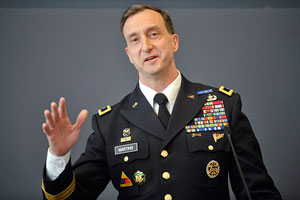
general martins
Brigadier General Mark Martins (Harvard University)

Since my December 2014 Guantanamo Bay mission I have given a good deal of thought to the rights of one stakeholder group in particular: the prosecution. I met Brigadier General Martins, the chief prosecutor, and some members of his team in December during the NGO observer briefing. During the briefing he was asked the “How did you get here question?” In his response he described his past military service, conversations with family, and his legal education and training.

At the conclusion of our meeting, I thanked him for taking on the role of chief prosecutor. Many might wonder why. The short answer is that the prosecutor represents the rights and interests of society as a whole. The guarantee of a fair and transparent trial is as dependent on the prosecution upholding its duty to all of the stakeholders as it is on the defense teams zealously working on behalf of their clients and the judges engaging in thoughtful and insightful legal analysis when rendering rulings.

Standard 1.1 of the National Prosecution Standards of the National District Attorney’s Association states that “the primary responsibility of a prosecutor is to seek justice, which can only be achieved by the representation and presentation of the truth.” Standard 3-1.2(c) of the ABA Standards for Criminal Justice further notes that it is the duty of the prosecutor to “seek justice, not merely to convict.”  10 USC §949(b) (2014) prohibits the coercion or influence of military commission prosecutors. As a stakeholder entitled to a fair trial the prosecution in fulfilling its duty to seek justice has the right to operate with sufficient resources, without judicial prejudice, and free from outside influence.

The duty to seek justice through the representation and presentation of the truth is not necessarily inconsistent with a military commission proceeding. General Martins has indicated that the prosecution is bringing only those charges it believes it can prove; and that no classified information will be used as evidence as it is important for all the stakeholders to be able to evaluate the merits of the evidence. In short, he has advocated for justice with an open and transparent proceeding. However, General Martins and his team are in the challenging position of bearing the burden of illegal and unethical actions by governmental units over which he has no authority (e.g., the FBI and CIA). It may not be possible to counter the taint of these actions on the military commission proceedings. It remains to be seen how he and his team will balance the consequences of these actions while upholding the duty to seek justice.

He is an equally delicate balance with respect to the families of the victims. General Martins often speaks of justice for the victims. The voice of the victims and their families is a strong and compelling voice and the jury (panel) when finally selected and sitting will undoubtedly empathize with it.  As the proceedings progress, those interested in a fair and open process will need to be attentive to ensure that the prosecution serves justice by remaining neutral to and independent of each individual stakeholder group.

(Catherine Lemmer, 9/11 Hearings, Guantanamo Bay, February 2015)

By the Numbers: An Observation on 9/11 Transparency

Saturday, February 7, will find me again in the departure lounge at Andrews Air Force Base awaiting my departure to Guantanamo Bay to observe the 9/11 hearings scheduled to take place the week of February 9.  The military commission made the 6-page amended docket available on January 26, 2015.  The docket lists over 30 motions; and notes that counsel should be prepared to argue any other motion for which the briefing schedule has concluded.

KSM II Docket February 2015


In an effort to prepare for the upcoming hearings, I went to the military commission website to review the relevant documents. Whenever I go to the case site I am reminded of the overwhelming complexity of these hearings. Here are just a few numbers I noted:

  • 2959 documents listed on the docket (269 webpages)
  • 55 documents filed in January 2015
    • 32 documents filed by the defense teams
    • 4 documents files by the prosecution
    • 19 documents filed by the commission

Of the 55 documents filed in January 2015, three are available for public review. One of these three is the amended docket.

Transparency is one key to making sure there are fair and open trials afforded to the defendants held at Guantanamo Bay. The inability to review court filings casts an interesting shadow on the goal of transparency.  Other key elements of fair and open trials are detailed in the Guantanamo Bay Fair Trial Manual that I will be taking and distributing to NGO Observers and other interested persons next week.

(Catherine Lemmer, 9/11 Hearings GTMO, February 2015)

Travel to GTMO Notification & Initial Thoughts on Hadi al Iraqi, 26 – 30 January 2015 – Margaret Baumgartner

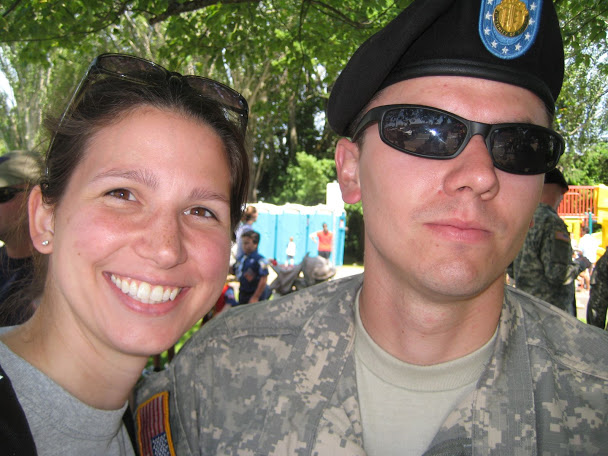
Me (Margaret Baumgartner) and one of my favorite members of our armed services.

Me (Margaret Baumgartner) and one of my favorite members of our armed services.

Notification of Travel

Wow.  I am thrilled to be a part of this opportunity. I think all of my co-workers are also just as excited to hear about the experience, as well as read about it, on this blog.  In fact, one of my Dutch co-workers happened to stop by my office and he was very interested in hearing about this project in general.  A word of caution to the over-achievers (like me), the process for travel is NOT as clear-cut at it seems (is it ever?).  There is a fair amount of paperwork that needs to be filled out precisely and reviewed by other parties.  Luckily, Professor Edwards has a lot of patience and experience!

About Me

By trade, I am a Patent Attorney with a tech company in Indianapolis.  I graduated from the McKinney School of Law in 2010 and have been practicing in a corporate setting since.  My family is heavily involved with the military which has affected me and my interest in the events that have shaped their lives.  I also travel extensively and am incredibly fascinated with foreign policy and history.  I also am fascinated with how people in other countries in the world view the U.S.  This opportunity allows me to help inform people about our country, GTMO, and the ongoing proceedings (or lack thereof) of the detainees. (more…)

Preparing for Guantanamo Bay 9-11 Hearings

Our plane to Guantanamo Bay is scheduled to depart from Andrews Air Force Base on Saturday morning, 13 December 2014.

Our plane to Guantanamo Bay is scheduled to depart from Andrews Air Force Base on Saturday morning, 13 December 2014.

Panic like a 1st year law student or new law firm associate!

It is easy for an Guantanamo Bay fair trial NGO observer to experience the same sort of panic that a first year law firm associate experiences when thrown into a complex litigation matter. I’ve spent a fair bit of time over the last few days reading and re-reading the motions to be heard next week when I am in Guantanamo Bay. Despite my homework, I am not sure I fully comprehend the significance of many of the details.


Blog posts – to a fair trial – Guantanamo Bay Fair Trial Manual.

Generally, my blog posts during my Guantanamo Bay mission will not focus so much on the substance of the legal arguments related to the case. Instead, they will focus on right to a fair trial issues, as discussed in the Guantanamo Bay Fair Trial Manual. However, on the eve of my departure, I wanted to post on the defendants in the hearings next week, the pre-trial motions scheduled, and on the odd assortment of categories of lawyers expected to be present to represent the defendants and to represent the U.S.

The hearings for 15 – 16 December 2014

Five motions are scheduled to be heard during two days of hearings at Guantanamo Bay in the case against 5 alleged masterminds of the World Trade Center / Pentagon attacks on 9-11. All five defendants, Khalid Shaikh Mohammad, Walid Muhammad Salih Mubarak bin ‘Atash, Ramzi bin al Shibh, Ammar al Baluchi (aka Ali Abdul Aziz Ali), Mustafa Ahmed Adam al Hawsawi, and their legal defense teams are expected to be present for the hearings. Also expected to be present is Independent Counsel appointed for Mr. bin al Shibh.

The regular prosecutors in the case will likely not be in the courtroom during at least some of the hearings, but the U.S. will be represented by a “Special Review Team” that was called in to represent the U.S. next week because of conflict of interest issues related to due to allegations related to the FBI allegedly infiltrating defense teams on the case(more…)

Preparing for the 9-11 Guantanamo Bay Hearings

My work with the The Gitmo Observer

I have been involved with the U.S. Military Commission Observation Project (“MCOP”) (also known as The Gitmo Observer) since mid-spring 2014.  In my position as a law librarian at the Indiana University Robert H. McKinney School of Law I have worked on developing and maintaining The GITMO Observer site and providing research support for the Guantanamo Bay Fair Trial Observation Manual.  Thus I am honored and excited to have been selected to serve as an NGO observer at the upcoming military commission hearings on December 15 and 16 at Guantanamo Bay.

My work in South Africa

I begin assisting Professor George Edwards and the MCOP upon my return from South Africa in April 2014. I spent six months (September 2013 – April 2014) in Johannesburg as a Senior Fellow at the Legal Resources Centre of South Africa (LRC). The LRC is South Africa’s largest and oldest national public interest law organization. Established in 1979, the LRC lawyers challenged apartheid and played important roles in drafting the South African Constitution. In 1994, Nelson Mandela appointed LRC’s founder, Arthur Chaskalson, to serve as the first President of South Africa’s Constitutional Court. The LRC advances research and provides free legal services to the poor and vulnerable in the areas of land and housing rights, children’s rights and education, environmental justice, HIV/AIDS, health and social services, refugee matters, and women’s equality.

George Bizos 85th Birthday 010During my time with the LRC, I enjoyed many a brown bag lunch with George Bizos, an LRC lawyer. An internationally renowned South African human rights lawyer, George Bizos is credited with crafting the three words in Nelson Mandela’s statement during his 1964 treason trial which resulted in the imposition of life imprisonment rather than the death sentence. Upon learning that an American sat across the tea table from him the first time we met, George looked at me and said, “I have sympathy with his position but your President Obama has to shut down Guantanamo Bay.”  The topic of Guantanamo Bay would come up often during the six months I spent at the LRC and my knowledge of what was happening and why at Guantanamo Bay would prove woeful in comparison to that of George Bizos. The MCOP provided a fortuitous opportunity to learn more about the military commission process at Guantanamo Bay upon my return to the States.

The 9-11 case / Khalid Shaik Mohammed case that I will monitor next week

I will be observing hearings with respect to the five 9-11 defendants: Khalid Sheikh Mohammed, Walid Muhammad Salih Mubarak Bin ‘Attash, Ramzi Binalshibh, Ali Abdul Aziz Ali, and Mustafa Ahmed Adam al Hawsawi.

Earlier this week Professor Edwards was able to confirm that the hearings will involve matters of guard gender, the FBI probe/conflict of counsel, and the hearing schedule for 2015.

My preparation for the hearings

Even though I have been involved with the MCOP project, I had and still have lots of preparation to do. I’ve reread parts of the Guantanamo Bay Fair Trial Observation Manual to better understand my obligations to observe and analyze the proceedings. I am also reading the many documents related to this matter that are hosted on the U.S. Office of Military Commissions website. This is a complex case with five defendants and five separate defense teams.  As a result, I have also been reading biographical information on the Human Rights Watch and other sites to help me identify and keep separate each of the defendants. Later this week I am meeting with two other observers, Hattie Harmon and Chuck Dunlap, who have recently observed proceedings at Guantanamo Bay for advice and information.

Lecture by Gitmo Defense Counsel – Rick Kammen

I recently attended a lecture by Rick Kammen, the lead lawyer for al Nashiri  in the USS Cole case. His presentation focused on the many systemic problems of the Guantanamo Bay military commissions. What was readily apparent from his presentation is that Americans as a whole don’t pay much attention to the activities of the military commissions. In addition to its critically important work to ensure fair and transparent trials for all the stakeholders, MCOP is equally important in that it offers opportunities for many of us to become involved and expand awareness in others.

(Posted by Catherine Lemmer)

How Can the President Close Guantanamo Bay? by Clarence B. Leatherbury

Senate Bill 2410 - Carl Levein - To Authorize Military Activities for 2015On June 24, 2007, while on the Presidential campaign trail, Illinois Senator Barack Obama stated to a crowd in Texas, “We’re going to close Guantanamo. And we’re going to restore habeas corpus.” Now President Barack Obama is trying to honor that promise.

One way President Barack Obama could close Guantanamo Bay is by vetoing the annual defense spending bill. The 113th Congress drafted Senate Bill 2410, known as the “Carl Levin National Defense Authorization Act” for Fiscal Year 2015. The National Defense Authorization Act includes a provision which prohibits the President of the United States from transferring the remaining 149 detainees to the U.S.

The provision reads:

SEC. 1031.LIMITATION ON THE TRANSFER OR RELEASE OF INDIVIDUALS DETAINED AT UNITED STATES NATIONAL STATION, GUANTANAMO BAY, CUBA.
(a) In General- Except as provided in subsection (b), none of the funds authorized to be appropriated by this Act for fiscal year 2015 may be used to transfer, release, or assist in the transfer or release to or within the United States, its territories, or possessions of Khalid Sheikh Mohammed or any other detainee who–
(1) is not a United States citizen or a member of the Armed Forces of the United States; and
(2) is or was held on or after January 20, 2009, at United States Naval Station, Guantanamo Bay, Cuba, by the Department of Defense.
(b) Transfer for Detention and Trial- The Secretary of Defense may transfer a detainee described in subsection (a) to the United States for detention pursuant to the Authorization for Use of Military Force (Public Law 107-40), trial, and incarceration if the Secretary–
(1) determines that the transfer is in the national security interest of the United States;
(2) determines that appropriate actions have been taken, or will be taken, to address any risk to public safety that could arise in connection with detention and trial in the United States; and
(3) notifies the appropriate committees of Congress not later than 30 days before the date of the proposed transfer.

Veto?

If President Barack Obama vetoed the legislation though, Congress could override the veto with a two-thirds vote of both houses, whereupon the legislation would become law. (more…)

Gitmo Hearings – View From Ft. Meade – Clarence Leatherbury – 16 June 2014

Introduction

Before I went to Fort Meade to view the trial, I watched several interviews on Youtube which discussed Guantanamo Bay issues. I want to share with everyone reading this blog two of the interviews, because the topics they discussed are extremely relevant to the June 16th hearing concerning the alleged architects of the 2001 attack on the World Trade Center & Pentagon.

Tom Woods Show Interview

First I want to talk about an interview I heard on the Tom Woods Show between historian and author Thomas Woods and Justin Raimondo of Antiwar.com. The interview took place on June 12, 2014. Mr. Raimondo stated that a large portion of the detainees at Guantanamo Bay were not terrorist. He stated that the U.S. military would pay Afghanistan farmers and peasants large amounts of cash to capture and turn in potential terrorist to (more…)