After a 2 hour delay leaving Indianapolis due to inclement weather and a pilot swap, I made it to Washington D.C shortly before noon. I am currently in a hotel across from the main entrance to Andrews Air Force Base. As tomorrow’s flight is a military one, I expect to hurry up and wait. So I anticipate having some time to meet my fellow observers tomorrow morning.
Abd al Hadi al Iraqi
September Hearings at Guantanamo Bay for Hadi al Iraqi
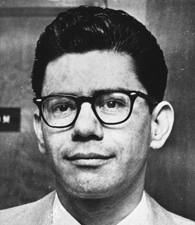
Ernesto Miranda, the defendant in the landmark U.S. Supreme Court case that bears his name (1967)
The hearings I am scheduled to observe at Guantanamo Bay for Hadi al Iraqi have been shortened from one week to only 3 days, September 21-23. Only two (but important) issues are set for the commission:
1. Defense Motion to Suppress, AE 045
On June 9, 2015, the defense team filed a motion to suppress statements al Iraqi made while in custody to federal law enforcement agents between May 2007 and May 2009. The Uniform Code of Military Justice (“UCMJ”) requires Miranda like warnings to be issued prior to questioning. The Military Commission Act specifically exempts the Military Commissions from following this UCMJ requirement. The 35-page defense motion can be found here.
The defense first argues the Fifth Amendment and Miranda require the suppression of statements made by al Iraqi because he was in CIA custody and was not read Miranda warnings before interrogation. The defense addresses an argument they expect the prosecution to make, in that the admissibility of the statements hinges whether Miranda applies, but whether the the Fifth Amendment applies.
Second, the defense argues whether or not the Fifth Amendment applies, Miranda warnings are required since the Military Commission Act (MCA) requires the exclusion of statements obtained by torture or cruel, inhuman, or degrading treatment. That MCA provision can be found here. The defense motion has a dearth of quotes from a number of judicial decisions that have discussed the right against self-incrimination.
2. Intent to Disclose Classified Information
The commission will hear argument and receive evidence on the Notice to the Defense of the Government’s Intent to Disclose Classified Information Pursuant to M.C.R.E 505(h)(2). The documents pertaining to the issue listed on the Military Commission are not yet available for download.
Interesting Side Note

President Obama and Pope Francis, 2014
Pope Francis is scheduled to visit Cuba before he travels to Washington D.C next week. Rumor has it he will be in Guantanamo Bay on September 22. Pope Francis, the first pope from Latin America, played a key role in restoring relations between the United States and Cuba. It will be interesting to see if does indeed stop by GTMO and to learn what his interests there may be.
I am expected to be joined on this monitoring mission to Guantanamo Bay by 11 Observers from a range of institutions around the U.S. We have been communicating with each other via e-mail, introducing ourselves, requesting and receiving tips on travel to Andrews Air Force Base for our early morning flight to Cuba on Sunday, and organizing logistical matters. I am looking forward to meeting all of my colleagues in just a few days.
By: Tyler Smith, 3L, Indiana University Robert H. McKinney School of Law
Preparations for Guantanamo Bay, Cuba on Hadi al Iraqi Case

Tyler Smith near Tel Aviv, Israel in June 2015, while participating in a study abroad program
On Friday, August 28, 2015, the Pentagon confirmed a slot for me to travel to Guantanamo Bay, Cuba to monitor hearings in the U.S. Military Commission case against Hadi al Iraqi. The hearings are scheduled for September 21-25.
I was previously scheduled to attend hearings in March 2015. But those hearings were cancelled a few days prior to departure.
Pre-trial Hearings for Abd al Hadi al Iraqi
Abd al Hadi al Iraqi is an alleged high-ranking member of al Qaeda who has been held in Gitmo since 2007. Ten days of hearings were scheduled to take place in July 2015 to cover a variety of issues.

Abd al Hadi al Iraqi, alleged high ranking al Qaeda member
The night before those hearings were to begin, the defense raised the issue of a possible conflict of interest involving a member defense team. As a result, the hearings were pushed back two days. When the hearings finally began, they lasted just three hours. The court recessed to resolve another conflict with the defense. The court ruled that the hearings would be continued until September.
Information about the July hearing can be found here.
My role
The Military Commission Observation Project (“MCOP”) was founded by Professor George Edwards of the Indiana University McKinney School of Law after the Pentagon granted Military Commission Observer status to the Program in International Human Rights Law that Professor Edwards also founded. MCOP participants can include Indiana University McKinney School of Law “Affiliates”, which includes students, faculty, staff and graduates of the law school. Some IU McKinney Affiliates who have participated are listed on this website. Persons interested in registering for possible travel to Guantanamo Bay or Ft. Meade can find more information and the registration form here.
The MCOP sends monitors to Guantanamo Bay, Cuba to monitor hearings live, and to Ft. Meade, Maryland to monitor Guantanamo trials through secure videolink direct from the Guantanamo Bay courtroom. MCOP monitors attend, observer, analyze, critique and report on Guantanamo Bay proceedings. We are seeking to assess whether the rights of the different stakeholders are being met, and to report on whether or not they are being met or not. Obviously the detainees’ rights are front and center. However, defendants are not the only stakeholders we are concerned with. Other stakeholders include the prosecution, victims and their families, witnesses, observers / monitors, and the press.
I am not certain why I was chosen to travel to Guantanamo Bay through my Indiana law school’s MCOP, but it could have been in part because of my military background. Having served eleven years in the Indiana Army National Guard, I can perhaps offer some insight as to the rights and interests of the military members who are responsible for GTMO’s detainee operations.
Indiana National Guard at Guantanamo
Members of the Indiana Army National Guard’s 38th Infantry Division (nicknamed the “Cyclone Division”) have previously supported the mission performed by Joint Task Force Guantanamo (“JTF-GTMO”). Members of the historic “Cyclone” division are currently scheduled for a rotation in Guantanamo Bay in the coming months.

American WWII poster created to advise servicemen and civilians to avoid careless talk regarding information that could be used by the enemy
I do not know the details as to when exactly they are leaving, how long they will be there, how many are going, or what their exact mission will be. That information is generally not publicized in order to protect the Soldiers and their loved ones.
It is vital for military members to maintain Operational Security (“OPSEC”) at all times; a concept sometimes difficult for some military members to grasp in the age of social media.
Conclusion
I appreciate the opportunity to be a part of this project. I am looking forward to sharing my experiences and contributing to the Guantanamo Bay Fair Trial Manual section pertaining to the rights and interests of JTF-GTMO personnel.
By: Tyler Smith, 3L, Indiana University McKinney School of Law
Indiana law students and faculty at Ft. Meade’s Guantanamo hearings

Right to left — Mr. Tex Boonjue, Ms. Hee Jong Choi, and me. We’re standing in front of the Post Theater at Ft. Meade.
I was at Ft. Meade, Maryland today to monitor hearings in the Guantanamo Bay Military Commission case against an alleged high-ranking al Qaeda member, Hadi al Iraqi. Hadi faces war crimes charges in the court, located in a remote area of Cuba. The U.S. military broadcasts the hearings live to a Ft. Meade base movie theater (the Post Theater) via a secure video-link.
Indiana students at Ft. Meade
I was joined by two Indiana University McKinney School of Law students, both of whom have strong interests in human rights and international criminal law. They are both representatives of Indiana’s Military Commission Observation Project (MCOP).
Ms. Hee Jong Choi is a rising third year student who is an intern in Indiana’s Program in International Human Rights Law. She has been working on North Korean human rights issues, while she was based in South Korea for the first half of the summer, and while based in Washington, DC at an NGO (HRNK – The Committee for Human Rights in North Korea) for the second half of the summer.
Mr. Tex Boonjue is a rising 2nd year Indiana student, who is working for the Court of Appeals for the Armed Forces (CAAF) at the Washington, DC Naval Yard.

Fort Meade’s Post Theater is screening Guantanamo Bay war crimes hearings during the day, and San Andreas in the evenings.
Defendant’s opportunity to speak today – Conflict of interest
Today’s hearings were notable, in that the defendant had an opportunity to speak more than defendants typically speak at military commission hearings. Typically, at the beginning of a hearing week, the military judge will ask the defendant whether the defendant understands his rights. The judge lists our numerous rights, and the defendant is given a chance to answer as to his understanding of those rights. Generally, after that, the lawyers do the rest of the talking, along with the judge.
Today, an issue was presented regarding the possibility that the lawyer who represented Hadi for a year may have a conflict of interest that could have a negative impact on Hadi. The judge asked Hadi series of questions, in open court on the record, and Hadi replied. Hadi and the judge entered into a discussion about these issues.
Hearings suspended, again
Ultimately, due to questions concerning the possible conflict, the judge suspended the hearings, indefinitely.
The hearings for July 2015 had been scheduled for two weeks, beginning Monday, 20 July. The night before, this conflict issue was raised in special conference, and the judge postponed the hearings until today, Wednesday the 22nd. Today, we had about 3 hours of court time, including the time that the defendant and the judge conversed, and including pauses and a long break.
The two weeks of hearings could be over as of lunch time today.
In the meantime, many dozens of people associated with the hearings boarded a plane this past Sunday at Andrews Air Force Base, bound for 2 weeks at Guantanamo Bay. The plane may be forced to return to Andrews more than a week early, with only 3 hours of court.

At the Ft. Meade Commissary today
Who else was at Ft. Meade today?
Also in the Post Theater observing today’s hearings were 7 law student interns from the Office of the Chief Prosecutor of the Military Commissions, along with one of their supervisors, Major Chris Hartley (Army JAG, International Law Advisor). Two law student interns from the Human Rights First National Security section were present, as was another gentleman who did not identify himself. A DoD contractor was there to help ensure that no one brought cell phones into the Theater. And a technician and another administrator popped in from time to time to check up on things.
It was an early lunch day at Ft. Meade.
Greg Loyd, our Indiana McKinney representative who is in Guantanamo Bay this week, reported that there is plenty to keep him and observers busy down there, even with the hearings being suspended. He, and the rest of us, are spending time working on the Guantanamo Bay Fair Trial Manual.
George Edwards – Ft. Meade, Maryland
Hadi’s Guantanamo hearings delayed two days

We are 6 NGO Observers on this trip to Guantanamo Bay, along with our Military Commission escort. Next time we wont stand in the shade for our photos!)
The Hadi al Iraqi Guantanamo Bay hearings begin tomorrow (Wednesday, 22 July), two days late due to an issue that apparently arose on Sunday the 19th, our first day in Cuba.
I came to Cuba to observe these war crimes hearings, and though the hearings were postponed, I and the other Observers had a very full two days.
On Monday I went for a 4:00 a.m. run with a fellow Observer. We ran early to avoid the daylight heat and humidity. As required, we carried our base identification card and wore reflective gear.
We then met with the other Observers and our escorts for breakfast at the base dining hall. This gave us a chance to get to know each other and learn about the different non-governmental organizations we represent. At the dining hall we saw members from every branch of the U.S. armed forces. As for the food, well, it was pretty decent.

I’m sharing this tent with the two other male Observers. the 4 female Observers are sharing their own tent.
Who are the Guantanamo Observers this week?
I am representing the Military Commission Observation Project of the Indiana University IU McKinney School of Law (MCOP), founded by Professor George Edwards. Five other NGO’s sent representatives to attend this round of Hadi hearings. NGOs generally are tasked with attending, observing, analyzing, critiqueing and reporting on the military commission proceedings. Our Indiana project, which is also known a the “Gitmo Observer”, is specifically looking at the rights and interests of the full range of Guantanamo Bay military commission stakeholders, including, for example, the defendants, the prosecution, the victims and their families, the witnesses, the media, and the military personnel who guard the prisoners and run the detention facilities.

My third of the men’s tent.
Our group of Observers consists of two attorneys, four law school students from four different law schools, and one representative from an NGO that focuses on human rights. The diverse backgrounds of this group will help provide different points of view from which to observe the proceedings and, thus, hopefully lead to a fuller review of the hearings.
Internet Access
After breakfast, I met with the other Observers for an informal discussion. We met outside near a particular restaurant so that several of the Observers could use the free wifi available at that particular location.
Internet access is quite an issue at the base. Internet access through a wired ethernet connection costs $150/week. This cost is prohibitive to some NGO’s and to some Observers. The Observers who cannot afford to pay for the wired connection must rely upon free wifi. This service, which is only available at select locations is both slow and unreliable due. This, in turn, runs the risk of limiting timely reporting from Observers.
The NGO Library
I then went to the NGO library to learn what resources were present to aid us in our observations. A number of NGO’s, including the Military Commission Observation Project through Indiana’s IU McKinney School of Law, stocked the library with helpful written material.
The MCOP most notably included two resources (1) a briefing book that includes the Manual for Military Commissions and (2) a copy of the 500 page Executive Summary from the Senate Select Committee on Intelligence’s Committee Study of the Central Intelligence Agency’s Detention and Interrogation Program.
To understand the rights of stakeholders, it is important to understand the legal framework in which stakeholders exercise their rights. As such, the Manual for Military Commissions is a great resource as it sets forth how military commissions, such as the one handling the al-Hadi al-Iraqi case operate, both in and outside of court hearings. This includes, for example, discovery issues, trial rules, and sentencing procedures.
The second document will be helpful as the Hadi defense team has made numerous references to this study through many of its pleadings. This document is important as it is referenced by the defense in many of its pleadings.
Big Day Tomorrow
It is hard to believe that the hearings begin tomorrow. I’m excited about this opportunity to watch the hearings, analyze the proceedings, and then report to you.
I and other Observers have been using the Guantanamo Bay Fair Trial Manual, that provides insights as to what we might wish to look for as we assess whether stakeholders are receiving a fair hearing.
Greg Loyd – Guantanamo Bay, Cuba
My arrival at Guantanamo Bay, Cuba

I’m standing at the front of Camp Justice, my home for the next two weeks at Guantanamo Bay. I am facing the makeshift complex that houses the courtroom where hearing are scheduled to begin tomorrow, Monday, 20 July 2015.
I arrived at Guantanamo Bay Naval Station yesterday, on a sunny Sunday July afternoon. I am scheduled to be here from tomorrow (the 20th) through 31 July to monitor hearings in the case against alleged al Qaeda official Hadi al-Iraqi.
I flew from Andrews Air Force Base – along with the judge, prosecution and defense attorneys, media, and other NGO Observers – on an air force flight. Check-in was similar to check-in for a regular commercial flight. I presented my ID card at the Andrews ticketing counter, confirmed my destination, and the attendant gave me a boarding pass.

Sunrise at Andrews Air Force Base, Sunday, 19 July 2015
Waiting to Board
In the Andrews terminal, I had the opportunity to meet fellow NGO Observers and other people involved in the military commission. Many people traveling with us appeared to have formed strong bonds, as they quite happily greeted one another with wide smiles, a change in the tone of their voice, and a strong handshake or hug.
When did friends and Colleagues last see each other?
Watching the men and women at Andrews greet each other so warmly made a lot of sense to me, since the different groups of people may not have seen each other in a while. I’m not sure when the last hearings were in the Hadi case, but there have been no military commission hearings at all for many months.
Unlike many courts, the Military Commission doesn’t conduct court hearings each and every day. Instead, the court only conducts hearings on the days or weeks designated by the judge in light of pending motions, the status of the parties’ trial preparations, and other considerations. Weeks and months can go by with no hearings in the Hadi case, or in any of the other few pending Guantanamo Bay cases.
The judge and others involved with the hearings (excluding the defendants) do not stay at Guantanamo Bay when there are no hearings. Instead, everybody (again, except the defendants) travel to the base only for the scheduled hearings.
Hearings have indeed been scheduled in multiple cases over the last several months, but most of those hearings were cancelled.
We are 6 NGO Observers on this trip to Guantanamo Bay, along with our Military Commission escort. Next time we wont stand in the shade for our photos!)
NGO Impact: A Cost – Benefit Analysis
The repeat cancellations present a potential problem for NGO’s, among other stakeholders. Such cancellations (particularly those that occur shortly before a hearing date) create a degree of uncertainty for NGO’s representatives regarding the cost of planning on attending hearings. This cost notably includes time reviewing relevant motions, statutes, and human rights treaties, and that time could instead be invested in other valuable projects. If hearings are rescheduled too often, there is a risk that NGO’s will elect to invest their time in other worthy goals that may have a more certain application, rather than preparing for a hearing that may be cancelled. Should this occur, then fewer NGO’s may send Observers, which could negatively impact the quantity and quality of Observer reporting.
A personal example
On three prior occasions, I was selected to travel to observe the proceedings as a representative of the Military Commission Observation Project of Indiana University School of Law.
Each previous time the hearings were cancelled. Each time I prepared for the hearing, purchased flight tickets, paid for my ground transportation, and coordinated work schedules and assignments with co-workers. While I am fortunate to work in a very team oriented office, such cancellations (and subsequent rescheduling) put pressure on my co-workers.
As a trial attorney, I understand the need to continue court hearings, sometimes at the last minute. I also understand that the complexity of these issues often necessitates a fair amount of work by all parties to properly prepare for the hearings. Nonetheless, the potential danger to NGO’s remains as they work to balance their limited time, manpower, and other resources.
While these cancellations can be frustrating, I hope that Observers can use this time beneficially to review and re-review the law, commentary, and analysis. Perhaps this additional analysis under multiple deadlines will lead to creative ideas to contribute to the discussion.
Breaking News
Just moments ago, my fellow NGO Obsevers met for Sunday dinner to discuss the hearings set to begin tomorrow morning. While at the restaurant, we were notified that the hearings scheduled for Monday, July 20 and Tuesday, July 21 were postponed until Wednesday.
That’s not a big problem for us, as our Guantanamo Bay tents are only a few feet away from the courtroom, and it is not a logistical nightmare to have Monday and Tuesday without hearings. But, Indiana’s Military Commission Observation Project is sending 4 people to Ft. Meade, Maryland, to monitor these same Guantanamo hearings via a secure simultaneous video-feed. It must be more challenging for the Ft. Meade Observers to change their hearings schedule to get to Ft. Meade.
Its time now to re-read some material I brought along.
Greg Loyd – Guantanamo Bay, Cuba
Guantanamo Bay case against Hadi al Iraqi case – July hearings

Seal of the Office of Military Commissions, U.S. Department of Defense.
The hearings I am scheduled to observe at Guantanamo in the case against alleged al Qaeda leader Hadi al-Iraqi are set for 10 days, 20 to 31 July 2015. Many issues are set to be litigated. This blog will introduce some of these topics:
- Defense motion to dismiss
The defense is asking the judge to dismiss the case as a whole, or, alternatively, to dismiss just on charge (Count V, Conspiracy).
- Motion to suppress defendant’s statements.
The defense is asking the court to prohibit the Government from admitting at trial many statements made by the defendant.
- Government motions on admissibility of certain evidence
The prosecution wants the court to determine whether the judge will permit particular pieces of evidence to be admitted at trial.
- Personal jurisdiction
This motion asks to judge to rule whether the court has personal jurisdiction over the defendant. The Government will have the burden to establish that the court has the authority over this particular defendant so that the court can conduct his trial. If the court does not have jurisdiction, then the trial cannot go forward.
A busy 10 days.
The prosecution and defense have submitted hundreds of pages of briefs and other documents related to these and other motions. It looks like it can be a busy 10 days for us at Guantanamo Bay.
I am excited about the opportunity to observe these proceedings. I will work hard to help keep you posted. In the meantime, please keep reading about the case!
By Greg Loyd – Guantanamo Bay, Cuba
Traveling to Guantanamo Bay for Hearings Tomorrow

Mr. Greg Loyd (left) & Professor in Washington, DC on the eve of Mr. Loyd’s departure for Guantanamo Bay hearings in the case against Hadi al Iraqi. Professor Edwards will monitor the same hearings at a secure location at Ft. Meade, Maryland, beginning Monday, 20 July 2015.
Greg Loyd will fly to Guantanamo Bay, Cuba to monitor hearings in the military commission case again Hadi al Iraqi. Professor George Edwards will monitor those same hearings via a secure video-link at Ft. Meade, Maryland.
Mr. Loyd, who is a graduate of the Indiana University McKinney School of Law, is representing the law school’s Military Commission Observation Project (MCOP), founded by Professor Edwards. Three Indiana students and graduates will join Professor Edwards at Ft. Meade for the hearings, that commence Monday, 20 July 2015.

Hadi al-Iraqi
Who is the defendant?
The pre-trial hearings are in the case against Hadi al Iraqi, who is an alleged high ranking member of al Qaeda. He is charged with being an al Qaeda liaison to the Taliban, to al Qaeda in Iraq, and to other affiliated groups. Professor Edwards was in the courtroom at Guantanamo Bay in the 2014 summer when Hadi al Iraqi was arraigned on these charges.
The flight to Guantanamo Bay & drive to Ft. Meade
Mr. Loyd is scheduled to report to Andrews Air Force Base on Sunday, 19 July 2015, for his flight to Guantanamo Bay. Professor Edwards and the other Indiana monitors are scheduled to drive to Ft. Meade early Monday morning for the hearings. While Mr. Loyd will be in the Guantanamo courtroom, the Ft. Meade viewers will witness the proceedings live by video.
Blogging
All Indiana monitors will be posting blog entries about their observations. They are all using the Guantanamo Bay Fair Trial Manual to help them assess whether in their opinion, all stakeholders are receiving the fair trial to which they are entitled. The defendants are entitled to a fair trial, and so too is the prosecution. Other stakeholders with rights and interests include the media, the U.S. an international public, and the victims and victims’ families.
Guantanamo NGO Observers from IU McKinney Law School Featured in Indiana Lawyer

Military tribunals for some accused of terrorist attacks on the United States are held at Camp Justice at Guantanamo Bay. (Photo by Catherine Lemmer, IU McKinney School of Law)
The Indiana Lawyer published the following article by Marilyn Odendahl on 25 February 2015. Text and photos are in the original article.
IU McKinney Gitmo Observers Illuminate Murky Proceedings in Gitmo Trials
by. Marilyn Odendahl (25 February 2015)
The U.S. Military Commission Observation Project overseen by Indiana University Robert H. McKinney School of Law is continuing to send individuals to watch and report on the accused terrorists’ trials being held at Guantanamo Bay. Blog posts and articles from the observers chronicle the glacial pace of the proceedings, the unexpected courtroom twists and the nagging constitutional questions.
Professor George Edwards
The project regularly sends faculty, students and alumni to either Guantanamo Bay or Fort Meade in Maryland to observe the tribunals. Professor George Edwards, founder and director of the project, explained the work of the observers is not to address the political issues or comment on the substance of the military commissions.
“We’re interested in seeking to assess whether the stakeholders are receiving the rights and interests that are afforded to them,” Edwards said. “(Those rights) include the right to a fair hearing, the right to an independent tribunal, the right to trial without undue delay.”
He pointed out the observers also are looking at the stakes that the victims of the terrorists attacks and their families have in the proceedings. What about their rights to have access to the trials, to make statements, to confront and to have closure?

Professor Catherine Lemmer
IU McKinney librarian Catherine Lemmer, who Edwards described as instrumental in helping to build the observation program, heard some victims’ voices when she traveled to Guantanamo Bay for the hearings of the alleged co-conspirators of the Sept. 11, 2001, attacks.
One man said he was attending the proceedings to remind the judge and attorneys that planes had flown into the twin towers of the World Trade Center and the Pentagon. A mother of a fallen firefighter said she was struggling to hang on to her opposition to the death penalty, but she believed the trials had to be fair because the United States would be judged by how it handles the detainees.
The project drew praise from panelists who participated in a recent forum at the law school examining the tribunals. Hosted by the Indiana International & Comparative Law Review, the symposium brought together legal scholars from IU McKinney and around the country to discuss whether the end is coming for Guantanamo Bay or if the practice of international criminal law has reached a turning point.

An IU McKinney symposium examined trials at Guantanamo Bay. Panelists included (from left): Richard Kammen, Kammen & Moudy; Shahram Dana, The John Marshall Law School; George Edwards, IU McKinney; and Paul Babcock, editor-in-chief of the Indiana International & Comparative Law Review. Chris Jenks of Southern Methodist University Dedman School of Law participated via video link. (Photo by Dave Jaynes, courtesy of IU McKinney Law)
Two participants – Shahram Dana, associate professor at The John Marshall Law School and Chris Jenks, assistant professor at Southern Methodist University Dedman School of Law – on the second panel discussion both noted IU McKinney’s effort in documenting the proceedings at Guantanamo Bay is shining a light on America’s response to terrorism and will be an invaluable resource for history.
Lemmer advocates for the proceedings to be shown on C-SPAN. The American public should see for themselves, she said, so they form their own opinions. By seeing what is happening in that courtroom, she said it is easy to realize how things could go wrong.
“The role of the attorneys, our role (as citizens) is to hold fast to the Constitution when really bad things happen and everybody wants to step over it,” Lemmer said. “Ultimately, the price we pay for not doing it right is incredible. This is our Constitution and it is getting overwhelmed, which should not happen.”
Lemmer took her first trip to Guantanamo Bay in December 2014. However, the proceedings were derailed by the ongoing revelations that the Federal Bureau of Investigation may have infiltrated the defense teams. The FBI is accused of listening to defense attorneys’ meetings with their clients and reviewing their correspondence as well as attempting to turn legal team members into informants.
When she returned in early February 2015, the FBI conflict-of-interest issue was still being argued. Then unexpectedly, Ramzi Bin al-Shibh, one of the defendants in the courtroom, said he recognized his interpreter as someone he encountered during the period he was held at one of the Central Intelligence Agency’s secret prisons. Another defendant told his attorney he also remembered the interpreter from the black site.
“It became very surreal,” she said.
To Indianapolis defense attorney Richard Kammen, the confusion and conundrums that swirl around Guantanamo Bay could be resolved by moving the proceedings to federal court. Kammen, lead counsel for USS Cole bombing suspect Abd al-Rahmin al-Nashiri, pointed to the hearings of accused Boston Marathon bomber Dzhokhar Tsarnaev as an example that U.S. courts can handle high-profile terrorism cases.
“There’re so many more moving parts down there than there would be in federal court, so things just get more messed up,” he said.
Currently, Kammen and his defense team are tangling with the federal government to release the details of the treatment of al-Nashiri while he was kept in a black site. The release of the CIA Torture Report publicly confirmed that the defendant had been physically, psychologically and sexually tortured, but Kammen said the defense still needs details of what was done and when.

Professor Tom Wilson
IU McKinney professor Lloyd “Tom” Wilson is scheduled to observe the al-Nashiri proceedings during his first trip to Guantanamo Bay. The task of watching and relaying what is happening will be difficult, he said, because he will be seeing just a snapshot of a long, complex and secretive process.
Wilson was careful in his preparation for the trip, not wanting to form any preconceived ideas or prejudices before he arrived in the courtroom. He is going out of a sense of civic duty and to understand the situation better than he does now.
Still, the proceedings are not easy to comprehend and continue to spark debate many miles away from the detention camp.
As part of his remarks during the IU McKinney symposium, Kammen described Guantanamo Bay as a “law-free zone.”
Co-panelist Jenks countered that characterization, arguing traditional rules governing the treatment of prisoners of war have been upended by terrorism. In previous conflicts, nation states battled each other but now the United States is fighting against groups that are unconnected with any organized government or country. Even so, he continued, the detainees at Guantanamo Bay have a right to counsel and are being given a trial.
Kammen responded that even if his client is acquitted, he will not be released.
“That,” Kammen said, “is a law-free zone.”
_______
The original Indiana Lawyer article can be found here: http://www.theindianalawyer.com/iu-mckinney-gitmo-observers-illuminate-murky-proceedings-in-gitmo-trials/PARAMS/article/36436
Thoughts on My 23-27 March Mission to Guantanamo Bay
Abd al Hadi al-Iraqi
During the last full week of March 2015, I will travel to Guantanamo Bay (GTMO), Cuba as a member of the Military Commission Observation Project (MCOP) at the Indiana University Robert H. McKinney School of Law. It’s an honor to have been selected. I will observe military commission proceedings for Abd al Hadi-al Iraqi, who arrived from CIA custody to GTMO in 2007.
In 2013, the United States government charged him with denying quarter, attacking protected property, using treachery or perfidy, and attempted use of treachery or perfidy in a series of attacks in Afghanistan and Pakistan between about 2003 and 2004, and conspiracy to commit law of war offenses.
General Preparation for the Project and my Guantanamo Bay travel
Whirlwind is a term I have seen associated with the process of becoming a fair trial observer as a part of the Military Commission Observation Project (MCOP). I didn’t really have any previously determined thoughts on GTMO that were fully fleshed out by thorough law school level research. Prior to conducting research, I think my level of knowledge was comparable to that of the average American. Though, maybe slightly than more than average, given that I have known several members of the military who served there.
Nevertheless, I have begun the process of researching and learning as much as possible about the project itself, the circumstances surrounding the operation of GTMO and military commissions, and the specific case I will observe. Absent a background in international law, the Guantanamo Fair Trial Manual has been a great resource in becoming familiar with the various sources of law that are implicated in the military commission system.
In addition, I’ve had to explore my thoughts and feelings about what the overarching principles of justice really mean as applied to GTMO. As is with any person, my life experiences have shaped my perspectives on the ethical components of domestic and global issues.
My Indiana McKinney Law School Career
Despite my penchant for world travel, becoming a member of MCOP is admittedly my first law school experience dealing with any area of international law. During my second year of law school I worked as a part-time law clerk for the Marion County Public Defender Agency. Following that, I volunteered with the Neighborhood Christian Legal Clinic’s Expungement Help Desk, where I informed members of the community about Indiana’s expungement law. In July 2014, I began working full-time for the Indiana Bureau of Motor Vehicles, and next month I will begin as a part-time law clerk for the Indiana State Personnel Department. This semester I have been fortunate enough to extern for Justice Steven H. David of the Indiana Supreme Court. From July 2007 to August 2008, Justice David (at the time Colonel David) was the Chief Defense Counsel for the Military Commissions at Guantanamo Bay.
My Military Service
As a member of the Army National Guard for over 10 years, I deployed once in 2011 to Kosovo as a part of Kosovo Force (KFOR) 14. KFOR has been a part of the larger multinational presence in Kosovo since 1999.
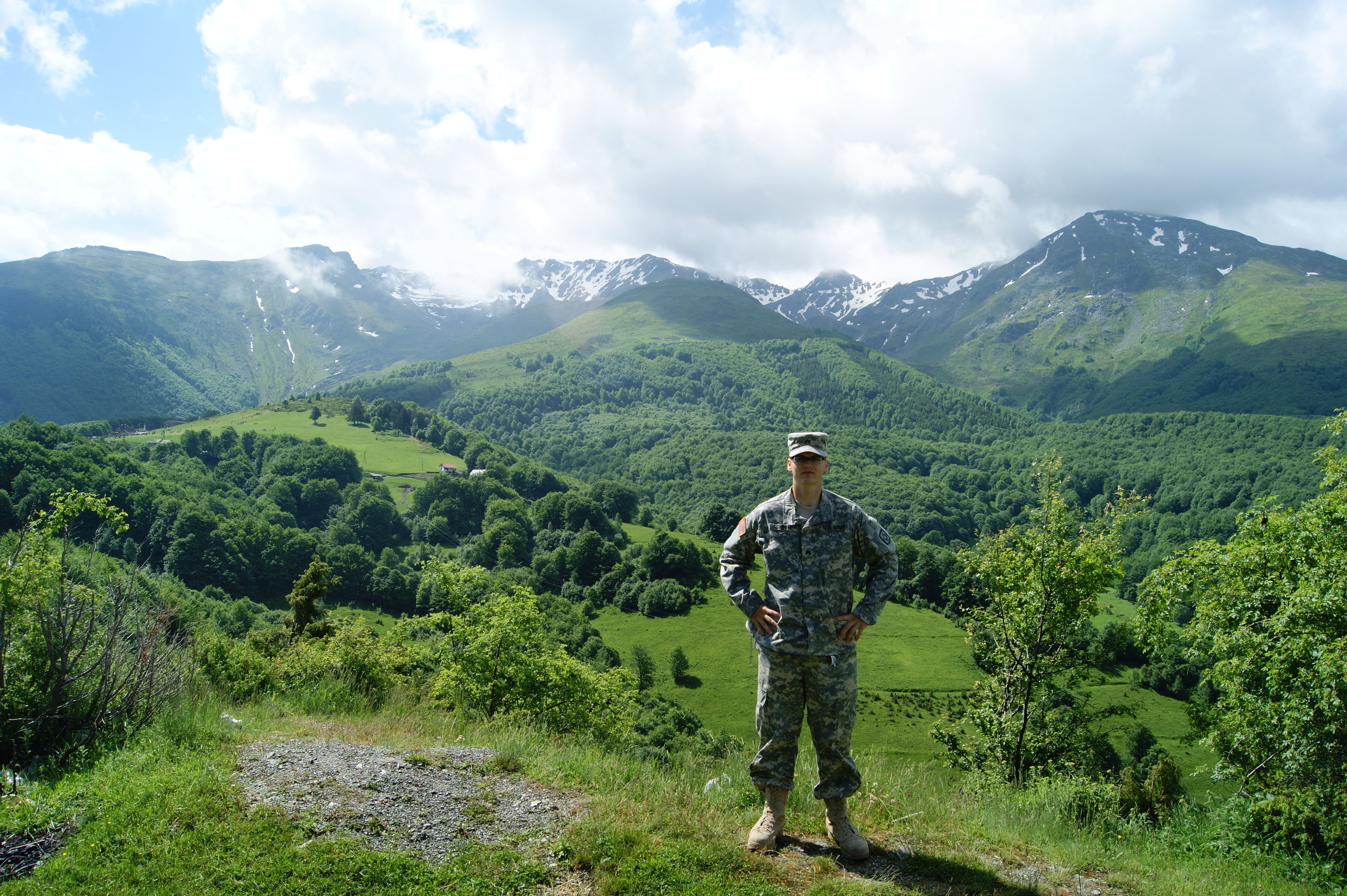
In addition, I have personally participated in the military funeral honors ceremonies for 323 veterans, a handful of which have been Iraq and Afghanistan war casualties. In no way does this fuel personal anger or hatred towards the detainees held in GTMO. Those servicemen were honored for their sacrifices for democracy that implores fairness in the service of justice. On the contrary, it is all the more reason for me to ensure I am doing everything within my power to help the MCOP fulfill its missions (attend, observe, analyze, critique, and report).
As stated in the Guantanamo Bay Fair Trial Manual, “NGO Observers are the eyes and ears of the outside world as to what happens at Guantanamo Bay. NGO Observers have a unique responsibility to share their experiences, insights and conclusions with the outside world. NGOs should not bow to pressure. What happens at Guantanamo Bay should not stay at Guantanamo Bay.”
As a part of that mission, I have been tasked with expanding the portion of the Guantanamo Fair Trial Manual covering the rights and interests of the men and women in Joint Task Force Guantanamo (JFT-GTMO).
DoD Orders Received
I just received my DoD orders via e-mail today. Preparation for this trip has been a whirl-wind. I’m almost done meeting next week’s deadlines for work, since I will be out of the office (I should be careful, they might expect this type of productivity from me on a regular basis!). My state-side brother and I were talking logistics and he laughed at me for getting excited about the mess hall. I always have enjoyed the food in the messes and I think it annoyed my brother that I would insist on eating there when I would visit. In his words, the mess hall only has good food when a General visits. It’s a lucky week for me then, since there will be a General in camp!

Late night at the office, trying to get through some items in preparation for Sunday’s trip!
On Tuesday, I had breakfast with former rep (and fellow 2010 graduate) Hattie Harman. She highly recommended the book “The Terror Courts” by Jess Bravin. I plan to dig into that book before getting down to GTMO as it mentions several people who are involved in the proceedings. I hope this will give me a better sense of who I am talking to when I meet people. The book should also give me some talking points to pass time while we wait in the lines.
I have also started my refresher with “the Manual” in preparation and I also went to the GTMO website for information. I am not myself until I’ve had coffee in the morning (see my prior Fort Meade postings describing said addiction), so I was scouring the site for information of a rumored cafe. I will also have my own trusty stash, just in case.
On Friday, I will be attending Professor Edwards’ class as a guest to field questions, talk about the project, and meet other participants. That is the extent of my preparation outside of the mandatory paperwork to date, however, that will increase as Sunday approaches.
18 and 19 November Military Commissions Events at Guantanamo Bay – Hattie Harman
The Military Commission hearing pre-trial motions in the U.S. government’s case against Abd al Hadi al-Iraqi reconvened Wednesday, November 18 at 1:00 p.m. Hadi is accused of several crimes arising out of his alleged role as an al Qaeda commander in Afghanistan during the post-9/11 period. Before convening today, Commission Judge Captain Kirk Waits conducted conferences with the parties on various issues including some anticipated to arise on Wednesday.
Defense Motion AE 21 – Contact with Female Guards
The first issue addressed was the status of defense motion AE 21 requesting that female guards cease certain physical contact with Hadi. The Commission previously granted Hadi’s motion on a temporary basis and the motion was expected to be argued on the merits in this week’s session. But apparently at Tuesday’s conference it became apparent that Hadi’s defense team had been unable access certain evidence that it intended to use in support of its motion. Specifically, Hadi objects to being touched by unrelated females based on his religious beliefs. The government argues that the operational security needs of the detention facility require the use of some female guards. The offensive touch typically occurs during the shackling process when Hadi is being moved from his cell to another location. Apparently in October when Hadi so objected to being shackled by female guards, he was “forcibly removed” from his cell over his objection. A video of this forcible removal exists and has been in the possession of the prosecution team for over two weeks. However, due to problems with the security process (due to the highly classified nature of the video), the defense team was unable to view this evidence until just before Tuesday’s hearing. Additionally, the defense has not yet been provided access to witnesses to the touching and to evidence and/or witnesses confirming the security needs of the detention facility. While the government argued vigorously against extending the time for argument on this issue, the Commission seemed to recognize that the defense could not present a viable substantive argument on the issue without more discovery. The Commission noted that if Hadi is presented with the choice of being shackled by a female or forgoing a meeting with his defense counsel, Hadi’s beliefs apparently prevent him from meeting with counsel or attending his own proceedings. “That is the most basic of due process,” said Judge Waits. And in addition to these rights being recognized under the United States Constitution, they are recognized under numerous internationally binding treaties as well as the Military Commissions Act itself. But also seemingly recognizing that the government has an interest in operating its corrections facilities in a safe, effective, and efficient manner respecting the rights of all genders to equal employment opportunities, the Commission ordered the parties to submit additional briefing on the issue prior to the next scheduled set of hearings in late January.
Defense Motion AE 20 – Article 5 Status Hearing or Dismissal for Lack of Personal Jurisdiction
After wrapping up the briefing schedule for the access to witnesses issue, the Commission issued an oral ruling on one of the motions argued Monday, AE 20. Readers may recall that this motion concerned the defense’s request that Hadi is entitled to a hearing pursuant to Article 5 of the Geneva Conventions in order to determine his status and thus what type of tribunal may try him for the alleged war crimes. Hadi contends that he should be presumed a prisoner of war (POW) and thus may not be tried by a Military Commission. He asked for a determination be made pursuant to Article 5 which provides a particular procedure with a specially constituted panel for determining status. The government argued that Hadi is clearly an unlawful enemy belligerent subject to the jurisdiction of the MCA and no further status determination is needed. Rejecting both parties’ positions, Judge Waits on Wednesday granted the defense’s alternative request, which was that the Commission itself make a determination as to Hadi’s status for purposes of jurisdiction.
Rule 802 Scheduling Conference, Courtroom Tour, and Visit to Camp X-Ray
No open courtroom proceedings occurred on Wednesday, but the parties and the Commission held a Rule 802 scheduling conference to hammer out the way forward and to prepare a plan for the next set of hearings which will occur in late January. The non-governmental observers (NGOs) of the hearings thus had a day devoted to learning more about the facilities associated with the hearings and the detainees. First we were given a detailed tour of the courtroom complex and its related facilities, including the cells used to house detainees on days when they make an appearance in court. Next, the Joint Task Force Public Affairs Office graciously led the NGO observers on a tour of now-closed Camp X-ray.
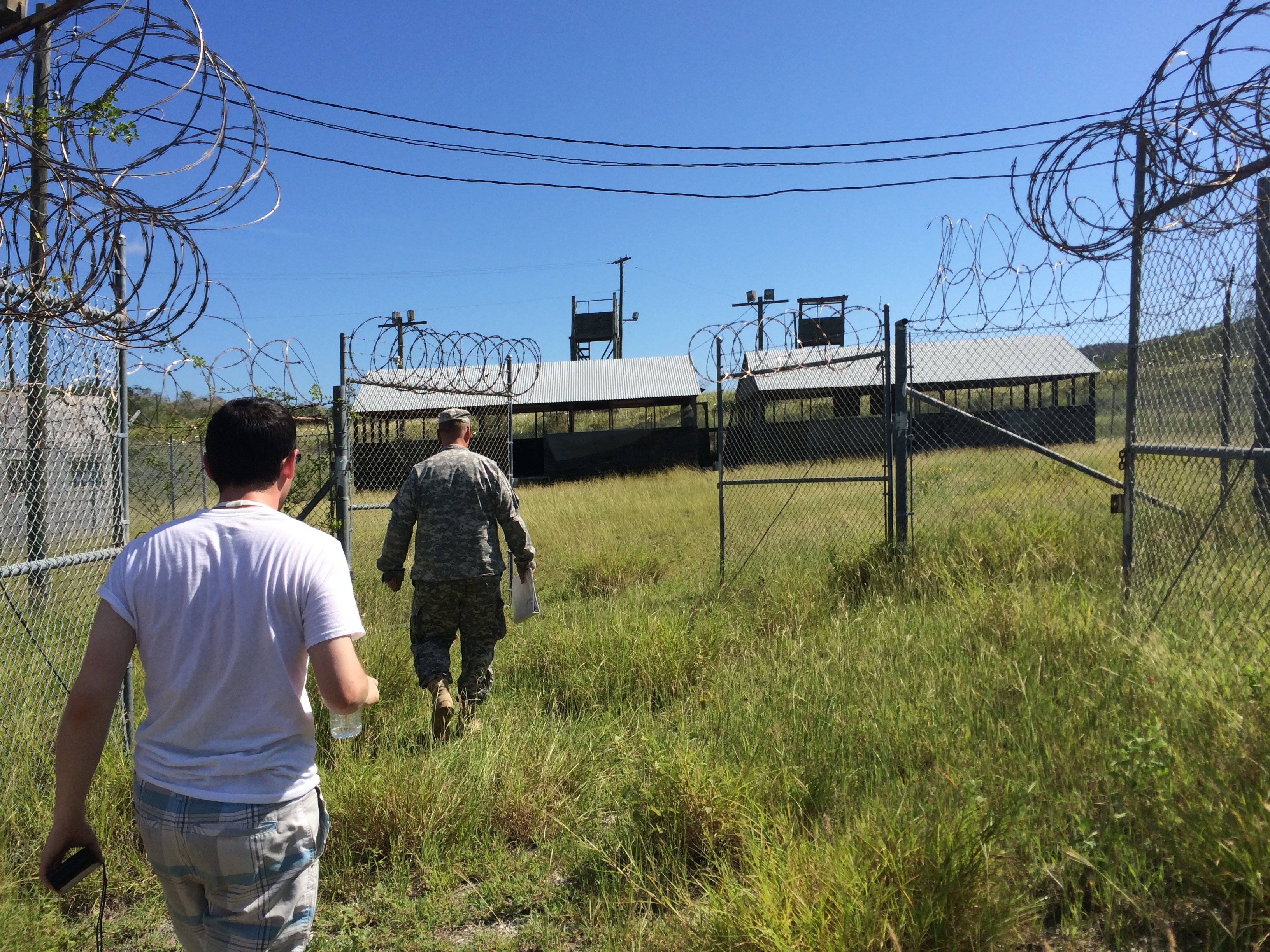
NGOs being led through Camp X ray by Army personnel.
This area was used in the 1990s to temporarily house the large influx of Haitians arriving at Guantanamo seeking refuge in the United States. For a period of spanning late 2001 and early 2002, Camp X-ray was used to house detainees who were captured in conjunction with the U.S. actions in Afghanistan and elsewhere after the 9/11 attacks. The conditions were quite primitive, and essentially consisted of a small, covered area enclosed by chain link fence for each detainee.
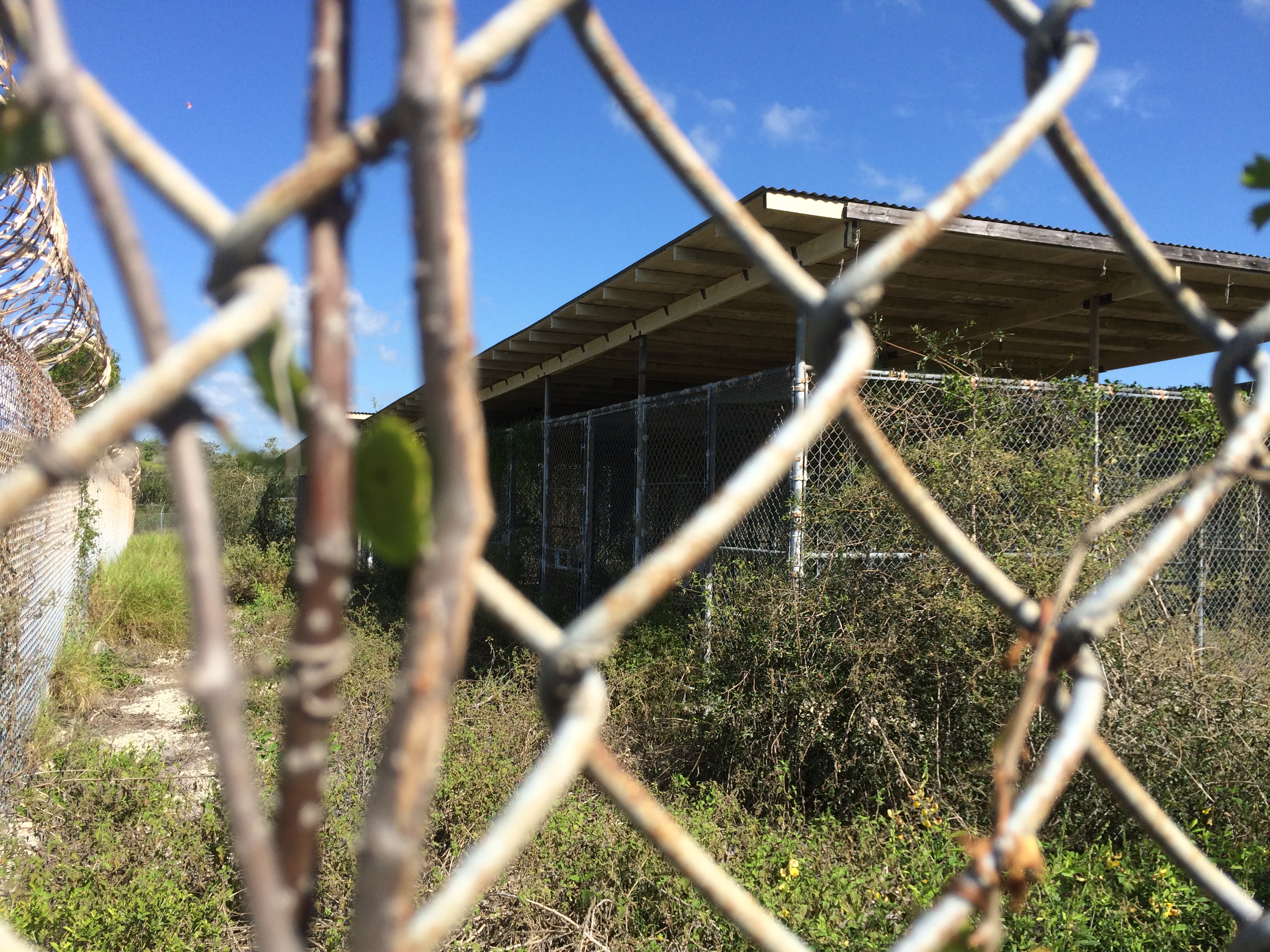
View of a row of detainee housing at now-closed Camp X ray
The entire camp was of course heavily guarded and surrounded by concertina wire, most of which still appears to be in place. Fortunately, the government constructed a series of newer, more humane detention areas to house the detainees when it became apparent the situation was not going to be temporary. Camp X-ray is being conserved in its present state for historical and legal purposes.
Arrival at Guantanamo Bay Naval Station (GTMO) – Hattie Harman

My Air Miami plane parked at Guantanamo Bay air field after arriving from Andrews Air Force Base.
[Gitmo Observer staff posted this item for Ms. Hattie Harman because she had no internet access at Guantanamo Bay to post this herself.]
After a very pleasant flight, I arrived at GTMO a little after 1:00 p.m. today (Sunday). In addition to the contingent of NGO observers, press, and defense, prosecution, and judicial personnel, passengers on the flight included several “regular” military travelers to the Naval Station (i.e., military personnel with no involvement in the legal proceedings against the detainees but traveling to GTMO on other military business). The flight included a movie (Spiderman 2), a hot meal (choice of lasagna or chicken), and hot towel service. It was reminiscent of air travel in the 1980s!
After Arrival
We were busy all afternoon getting badges for access to the court areas, obtaining supplies at the Naval Exchange, and doing a lot of waiting. Despite the warnings of recent Gitmo Observer travelers, I expected more from the Internet here. My attempt to purchase (at the cost of $150.00) wired Internet access from the NGO “internet cafe” was foiled for my lack of a proper adapter.
I was able to make it into “town” at 7:00 p.m. to a location that reportedly had wireless Internet access only to find it was not functioning. Not only am I presently unable to post to the Gitmo Observer Blog, I am without any access to email or any other Internet-dependent mode of communication. There is of course no cell phone service either. We’ll see what tomorrow brings on the communication front.
Hearings Commence Tomorrow, Monday, November 17
In the morning, I expect to be escorted along with the other NGO observers to the courtroom in advance of the 9:00 a.m. commencement of this set of pretrial hearings in the United States’ prosecution of abd al Hadi al-Iraqi. Hadi is accused of several crimes arising out of his alleged role as an al Qaeda commander in Afghanistan during the post-9/11 period. Four motions are scheduled to be heard in this three-day session.
PS: For access to the Guantanamo Bay Fair Trial Manual, click here.
Departure for Guantanamo Bay Naval Station (GTMO) – Hattie Harman

NGO Observers studying the Guantanamo Bay Fair Trial Manual. At Andrews Air Force Base waiting for our flight to Guantanamo Bay.
I flew from Indianapolis to Washington National Airport yesterday afternoon, in preparation for this morning’s departure to GTMO. Through the gracious hospitality of old friends, I had a lovely place to stay for the night and was driven to the Andrews Air Force Base Visitor’s Center at 5:30 A.M. Non-governmental organizations (NGOs) such as the Gitmo Observer (of Indiana University McKinney School of Law) tend to have very meager budgets, thus most – if not all – of our representatives’ travel expenses are borne by the individual observer. I must thank Spike Bradford, Jill Keesbury, and their son Angus for picking me up at National Airport, putting me up for the night, and driving me to Andrews at the crack of dawn. They are true friends indeed.
Pre-departure Discussions
In addition, my hosts provided very stimulating pre-trip conversation. Spike works for the D.C. area-based Pretrial Justice Institute, a nonprofit organization promoting safe, fair, and effective pretrial practices nationwide.
As the proceedings I will be observing this week at GTMO – those of Abd al Hadi al-Iraqi – are in the early pretrial stages, Spike offered me some perspective for comparison to U.S. domestic criminal courts. To me, the most stark comparison was between the different lengths of pretrial detention. In typical domestic United States criminal jurisdictions, the accused must be charged with a crime within 48-72 hours of arrest or detention, and then has the right (which he or she may choose to waive) to be brought to trial within a particular time limit. See, e.g., Ind. Rule Crim. Procedure 4(B) (affording accused the right to move for a trial within 70 days). In addition, the U.S. Constitution guarantees the right of the accused “to be informed of the nature and cause of the accusation” and importantly provides that “the accused shall enjoy the right to a speedy and public trial.” U.S. Const. amd. VI (emphasis added). The accused al Qaeda commander Hadi al Iraqi, whose proceedings I will observe next week, was first brought to GTMO in 2007 after being held by the CIA. Hadi was first charged with a crime in 2013.
Andrews Air Force Base

Arrival at Andrews
When I arrvied this morning at Andrews Air Force Base, I met several other NGO observers who will be attending this week’s hearings. One, a representative of the American Bar Association Criminal Justice Section, was already familiar with the work of The Gitmo Observer. I distributed copies of the Guantanamo Bay Fair Trial Manual to the NGOs and it was well received. Many other passengers continue to arrive at the Andrews terminal and are checking in for today’s flight, which is scheduled to depart for GTMO at 10:00 a.m.
Departing Indianapolis for Guantanamo Hearings – Hattie Harman

The things I CAN’T forget to take to GTMO!
Tomorrow (Sunday) I will fly from Andrews Air Force Base to Guantanamo Bay Naval Station, Cuba to observer next week’s pretrial hearings in the U.S. prosecution of alleged al Qaeda commander Abd al Hadi al-Iraqi (17 – 20 November 2014). I will be transporting several updated draft copies of the Guantanamo Bay Fair Trial Manual to distribute to other non-governmental observers (NGOs).
Visit to International Criminal Law Class
Last evening, I had the good fortune to be a guest in Professor George Edwards’ class in International Criminal Law at the Indiana University McKinney School of Law. Professor Edwards, with help from students and others, has drafted the Guantanamo Bay Fair Trial Manual for use NGO observers and anyone else interested in determining whether stakeholders are getting a fair trial. I cannot thank Professor Edwards and his students enough for preparing the Manual and for welcoming me to their class. The Manual has been an indispensible part of my preparation, as it contains a trove of information about the treaties, U.S. laws, and regulations governing proceedings under the law of war, and international human rights law, and it also identifies the various stakeholder groups in these proceedings, all of whom have rights under these laws, treaties, and regulations.
Making Connections – Theory to Practice
I am an attorney by profession, and my work involves primarily appellate review of both criminal and civil substantive law issues. Issues of procedure and particular rights arise from time to time but are by far most of my work involves more substantive questions such as, “Was a particular piece of evidence properly admitted?” and “Did the trial court properly apply the existing case law in instructing the jury?”. The rights issues I deal with are typically secondary to the substantive law questions. Further, to the extent I deal with rights issues in practice, these issues relate almost invariably to the rights of the criminal defendant. Therefore, participation in this MCOP project requires me to shift my legal mindset and approach the proceedings from a very different perspective.
I have no previous experience in international law so of course the Guantanamo Bay Fair Trial Manual is extremely informative. But I found my visit to last night’s class was absolutely essential in helping me to make connections between the Manual’s exposition of human rights law procedures and the application of these rights to the stakeholders in practice. The students and Professor Edwards were able to help me focus on my role to assess whether the proceedings are delivering the rights to which each stakeholder is entitled, not what substantive law is at issue in the particular case.
Next Week’s Guantanamo Hearings – Hattie Harman
Defendant Abd al Hadi al Iraqi
Today is Veteran’s Day and I am spending my day off from work preparing to attend next week’s pretrial hearings at Guantanamo Bay, Cuba. Next Monday, Tuesday and Wednesday (November 17, 18, and 19, 2014) proceedings will resume in the case United States v. Abd al Hadi al-Iraqi. Abd al Hadi was brought to Guantanamo in 2007 after detention by the CIA. Abd al Hadi is charged with several war crimes arising out of his alleged role as an al Qaeda commander in Afghanistan during the years following the September 11th attacks.
Hearing Agenda
The military judge’s order AE022 (corrected) enumerates the pretrial motions on the agenda for next week’s hearings. Prior to the hearings, the parties and judge will meet for a pretrial conference on Sunday afternoon, November 16 at 5:00 p.m. The hearings are scheduled to begin at 9:00 a.m. on Monday and will include discussion and argument regarding four pending motions:
- AE 018 – Defense Motion to Compel Discovery
- AE 019 – Defense Motion to Strike Common Allegations
- AE 020 – Defense Motion to Dismiss for Lack of Subject Matter Jurisdiction and to Compel a Status Determination pursuant to Article 5 of the Geneva Convention
- AE 021 – Emergency Defense Motion for Appropriate Relief to Cease Physical Contact with [Female] Guards
With regard to the last item, the judge issued an order on November 7 (AE021B) which has been reported to temporarily grant Abd al Hadi’s request for cessation of physical contact with female guards.
My Role at the Proceedings
As a non-governmental observer (NGO) attending the hearings under the auspices of the Military Commissions Observation Project (MCOP) of the Indiana University McKinney School of Law Program in International Human Rights Law (PIHRL), I am tasked with the following duties:
- Attend the hearings each day as an informed observer.
- This requires a substantial commitment in terms of personal time and resources, including arranging for travel to Andrews Air Force Base, completing numerous government and MCOP documents, researching the status of the case and the motions to be heard next week, and reading and studying the Guantanamo Bay Fair Trial Manual prepared by MCOP.
- Objectively and with an open mind observe the proceedings and interact with stakeholders present on site (including prosecutors, defense counsel, press, and other NGOs) to glean as much information as possible about the experiences of all stakeholders holding rights to fair proceedings at Guantanamo.
- Analyze the hearings.
- My observer’s role on behalf of MCOP is to analyze to proceedings not so much from a substantive legal perspective, but rather to focus on the various fair trial rights of all stakeholders to the proceedings.
- Critique the hearings.
- This includes identifying both positive and negative aspects of the process, both in the abstract (e.g., as compared to other judicial processes) and in practice at the hearing site. Where possible, assess the fairness of the proceedings with regard to the various stakeholders.
- Report on the hearings.
- Disseminate, through the Gitmo Observer and otherwise, information about the hearing process and the fairness of the proceedings. Prepare a report for MCOP upon my return.
Pre-Departure Tasks
I will depart Indianapolis for Washington, D.C. on Saturday and am ordered to arrive at Andrews Air Force Base (more…)
It’s a Small World – by Hattie Harman
Preliminary Preparations
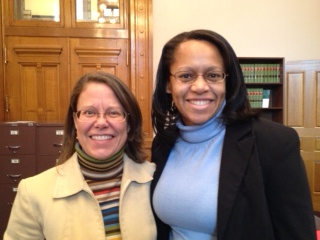
Hattie Harman and Traci Cosby — Both going to Cuba this month
As I read Chuck Dunlap’s blog posts this week, I find myself looking more and more forward to my upcoming trip to Guantanamo for the next round of hearings (Nov. 17-19, 2014). Chuck is an Indiana University McKinney School of Law graduate who works at the Indiana Bar Foundation, and he is at Guantanamo Bay this week monitoring the hearings in the case of al Nashiri, who allegedly masterminded the 2000 attack on the USS Cole that killed 17 sailors off the coast of Yemen.
I will be monitoring a different case, that of Hadi al Iraqi, who was alleged to have run al Qaeda’s army in Afghanistan, was arraigned this past summer, and his pre-trial hearings are at an early stage.
Yesterday I received instructions from the Pentagon to help me prepare for my mission, including information about the logistics of eating, sleeping, and – most importantly – viewing the proceedings. Reading Chuck’s posts and seeing his photos makes it seem more real all the time!
And I have been especially fortunate this past week to have had short conversation with Indiana Supreme Court Justice Steven David about the Naval Station itself and his experiences there. Justice David, is his position as an Army Colonel, previously served as chief defense counsel. Of course, our conversation was quite limited due to the nature of the subject but it was nonetheless very helpful and exciting to meet with someone who has had his “boots on the ground” at Guantanamo.
Two Views of Cuba
Although I won’t be leaving for Cuba for another week, my good friend and co-worker Traci Cosby is leaving tomorrow for Havana. Traci will be part of a delegation from the American Bar Association Section of Dispute Resolution spending several days in Havana meeting Cuban dignitaries and learning about the Cuban legal system.
 How strange it is that two friends and close co-workers would end up – entirely independently – traveling to Cuba in the same month! Obviously, Traci’s and my experiences of Cuba will be very different. But I look forward to swapping stories with her when we both return.
Stakeholders may vary across Guantanamo Bay proceedings – Hattie Harman
My upcoming mission to Guantanamo Bay
Late last week I was honored to learn I have been nominated by Indiana’s Military Commission Observation Project (MCOP) and approved by the Office of Military Commissions to travel to Guantanamo Bay to observe the November 17-21 pretrial hearings in the case against Hadi al Iraqi. I had the good fortune to travel to Fort Meade in April of this year to observe via secure video link a set of hearings in the case against Khalid Shaikh Mohammad (KSM) and his co-conspirators in the planning and execution of the 9/11 attacks. I am very much looking forward to observing more hearings in person at Guantanamo Bay.
Guantanamo Bay Fair Trial Manual
In preparation for my upcoming trip to GTMO I have begun studying MCOP’s indispensible Guantanamo Bay Fair Trial Manual. The Fair Trial Manual focuses on assisting observers in assessing whether the rights of all stakeholders in the Military Commission proceedings are adequately protected. And while one frequently thinks of the right to a “fair trial” as belonging only to the accused person, I recognize now that this is too narrow an understanding of the concept. As the Fair Trial Manual makes apparent, a somewhat disparate set of individuals and organizations have an interest in the outcome of Military Commission proceedings, and, concomitantly, in their fairness. Just as in traditional criminal trials, the crime victims and their families have an interest in a fair proceeding with a just outcome. A conviction which is later reversed due to a faulty proceeding serves no one, including (and perhaps especially) the victims. (more…)