GTMO

GITMO Pre-departure Impression – Qifan Wang – August 2 2014

I arrived at DC early in the morning. The flight from Indianapolis to DCA took less than two hours. It was Saturday morning thus the traffic was very smooth. The hotel I’m staying tonight is very close to the Andrews Air Force Base. Tomorrow morning the observers are suppose to get to the base before 630. So it’ll really another day starting early.

I review the travel documents and the procedure to be followed tomorrow. And also I check the MC website again for updates. However there’s nothing new released. Till now everything is basically set and I’m really heading GITMO!

GITMO Pre-departure Impression – Qifan Wang – July 28 2014

As the research assistant for MCOP, to participate in the project as an observer has always been my hope. It’s a great honor for me to be nominated for traveling to GITMO observing the al Nashiri hearings (Aug. 3 – Aug. 9). Honestly speaking, when the chance actually comes, a feeling of both excitement and nervousness follows. On one hand, after keeping tracking the proceedings for several months, I’m so eager to get a closer real-time look in the courtroom in GITMO. On the other hand, I’m concerning that in order to be a competent observer, I need to be more familiar with the case, substantively and procedurally.

In fact, there has not been a plenty of time for me to digest the nervousness. As soon as being nominated, I started working on document collecting for the August Hearings. Professor Edwards comes up with the great idea that we could build a library for NGO observers in GITMO, including background introduction, legal instruments, in-depth comments and so on. With a hard copy of our document collection placed in the GITMO NGO facility, all observers may enjoy the convenience to get a quick review of the case or law at issue. I think this would be very helpful and necessary, not only for our participants, but also for those from other institutions. Undoubtedly, a comprehensive reference plays a very important role in an ideal court observation.

As the departure date approaching, the excitement just grows with the tightness of schedule. Four days to go, being both short and long.

Gitmo NGO Observers With Chief Prosecutor General Mark Martins

Chief Prosecutor Gerneral Mark Martins and NGO Observers - GTMO - 16 June 2014

Left to right: Professor Andrew Clapham, Mr. Jason Aldrich (Judicial Watch), Mr. Mark Sorsaia, Professor George Edwards (Founder, The Gitmo Observer), Brigadier General Mark Martins (Military Commissions Chief Prosecutor), Ms. Kate Rocco (Cravath, Swaine & Moore), Mr. Evan Matheney, Lt. Col. Dru Brenner-Beck (Ret.), Dr. Jerry Green.

Guantanamo Bay Military Commissions Chief Prosecutor Brigadier General Mark Martins met with 8 NGO Observers who traveled to Guantanamo Bay for hearings in the 9-11 case and for the arraignment in the case against Abd al Hadi al-Iraqi. These proceedings occurred at Gitmo during the week of 16 – 20 June 2014. At the meeting with the NGOs, General Martins discussed a wide range of issues related to the Military Commissions, including the range of charges brought against various accused, the suitability of these cases being tried at Guantanamo Bay (more…)

Environment of Fear Is Not Necessary – The 911 Hearings – Salam Almarhoon

On June 16, 2014, I attended the hearing of persons accused of masterminding the attacks of 11 September 2001 on the World Trade Center and the Pentagon. The hearing was aired via a secure video line to Ft. Meade. I have conflicting thoughts about the whole process.

Alleged Mistreatment of 9-11 Defendants

The first thing that caught my attention is the defense team of Ramzi bin al-Shibha (RBS) mentioned that RBS was mistreated repeatedly inside the prison. The prison guards give RBS a hard time. This includes the night just before the hearing when the guards awakened RBS after he just fall asleep. I looked up on the internet and found a video from Al Jazeera Arabic about the same topic (http://www.youtube.com/watch?v=5JBjDntXEOU). The (more…)

Hearing Motions 16 – 17 June–By Megan Alvarez

After receiving the documents corresponding to the hearings for the week of June 15th, I was anxious to review them. I sat down this morning to look over them, and now, I am ready and excited about next week.

The hearing next week is about FBI contact with a Defense Security Officer (DSO officer) and whether it creates a conflict of interest for defense counsel. Regardless of how the judge decides to proceed in this matter, it is concerning to me that the government seems to be uninterested in the way its actions are perceived or the effects they may cause. This contact could lead (more…)

Hoosiers play integral roles in historic military commissions

gitmo-coin-15col - 4 June 2014

Indiana Justice Steven David holds a challenge coin he helped design while working at Guantanamo Bay as chief defense counsel. (IL Photo/ Marilyn Odendahl)

[This article is by Marilyn Odendahl and originally appeared on 4 June 2914 in The Indiana Lawyer at this link)]

The words Indianapolis attorney Richard Kammen used to describe the trials taking place at Guantanamo Bay are jarring – “legally grotesque situation,” “huge stain on American justice,” “secret expedient rigged justice.”

Then he noted the situation of alleged terrorists being put on trial for acts of terrorism and murder is not black and white. There is (more…)

IU McKinney students observe trial proceedings at Guantanamo Bay

The USS Cole after it was attacked by suicide bombers in October 2000 in Yemen. (Photo courtesy of United States Marine Corps)

The USS Cole after it was attacked by suicide bombers in October 2000 in Yemen. (Photo courtesy of United States Marine Corps)

(This article by Marilyn Odendahl was originally published on 4 June 2014 in The Indiana Lawyer at this link) Sitting in a hotel room, preparing to watch a video cast of a hearing with Abd al-Rahim al-Nashiri, one of the alleged masterminds behind the bombing of the USS Cole, Whitney Coffin considered the process of using military commissions to try suspected terrorists. “Before I actually see the hearing, my pre-impression is this is the best way to do it,” Coffin, a 2014 graduate of Indiana University Robert H. McKinney School of Law, said. “Some push to put this in federal courts, but what state is (more…)

Final Days at GTMO – 30 – 31 May 2014

IMG_0252

James Zender, IU McKinney Law School JD graduate, at Guantanamo Bay in May 2014.

On the final two days of scheduled hearing days at Guantanamo Bay, the hearings either ended early or were deemed classified. The NGO Observers were excluded from classified hearings. Thus, we had lots of time to explore Guantanamo Bay.

What to do at GTMO when there are no hearings?

With significant down time when we can’t monitor hearings, there were still a number of ways for us to fill our time in Guantanamo.

The Morale, Welfare, and Recreation (MWR) wing of the military has a heavy presence and their mission is to ensure military members have relaxing and appropriate non-work related activities to maintain somewhat of a normalized life experience in such a secluded location. They have an outdoor movie theater that plays brand new movies most evenings. They provide cook out facilities at the beach. There is a golf course and dive shop. With time to kill, we were able to take our pick on how we wanted to pass our time.

Radio Gitmo

Our first stop was Radio Gitmo, which is in charge of the airwaves on base. They host three radio stations and sell a popular Fidel Castro bobble head. After a tour of the facilities (I had never been in a radio station before) we got to see the back room where they still maintain a huge collection of vinyls. Our guide noted it was the largest vinyl collection in the military and they still regularly play them on the air.

Image

The vinyl collection at Radio GITMO

Camp X-Ray – A familiar site

On our way back from Radio Gitmo, we drove past the infamous Camp X-Ray site. This camp was the very first one to hold detainees after 9-11 until Camp Delta was built. After the transfer to Camp Delta, the military wished to raze Camp X-Ray, but a US court ordered it preserved as evidence. We were not allowed to take picture of it, but there are pictures you can find online from those authorized to take them. Its current condition is one of (more…)

Al Nashiri Hearings – August 5 2014 – GTMO – Qifan Wang

Today’s hearing starts at approximately the same time as yesterday. Again, the court staff checks with the interpreter during preparation.

Judge’s Comments

The first thing in the morning is Judge Spath commenting on AE305. He agrees that he would be the one ruling on the open motions. While he is going to do it on existing records, without extra hearings, unless the records are not enough to give a ruling. Then he mentions that the defense may file motions for reconsideration if there is any new fact occurrs. Next he comments on the resource issue discussed yesterday. Since there is no motion for that particularly, Judge Spath notices the defense that if they fail to get assistance from the Convening Authority, they may file motions to request in the court and the court would issue orders if necessary.

AE278 – Protocol for the Procedure of Execution

Then we move on to AE278, the defense’s motion to compel the Secretary of Defense to  publish protocol for the procedure of execution. Recognizing the case is still in constructive/evidentiary phase, Mr. Kammen focuses on the impact of protocol upon the jury. He mentions that the jurors are military members, and ‘killing people is part of the bill’ for them. Thus it is highly possible that the way of execution, rather than execution itself would be determinative to the jurors’ decision. If the way is cruel, the jurors may consider that ‘this is not the right way since we are not in battlefield’. Besides, Mr. Kammen argues that it is not rare that the rules are changing all the time. He mentions the security policy regarding cuff links again. Thus to get a settled protocol in writing, a court order would be necessary. On the other side, the government argues that the protocol is a matter of law, and not a mitigation element (not unique to the defendant). Thus it is not appropriate to talk about it to the commission members. Also, if the defendant is found guilty and subject to execution, that would be years later. It is not ripe to discuss this issue at this point. The discussion for this motion does not last long. 

AE279 – Additional Funding for Mitigation Investigator

Next motion is AE279, resource again. The defense is requesting additional funding for a mitigation investigator Mr. Assed to continue his work in Saudi Arabia, communicating with Mr. al Nashiri’s family and neighborhood. As the only person speaks Arabic and is Muslim (only Muslims can travel in Mecca, the home city of Mr. al Nashiri), Mr. Assed’s participation is essential for the mitigation investigation. The defense establishes their argument based on the cultural background, the language barrier, the social atmosphere in Saudi Arabia and argues that the additional 175 hours of work is necessary. Dealing with the fact that Mr. Assed has already been working on this issue for 400 hours, defense mentions that it’s not enough to a large extent due to the lack of proper resource. For example, their request for a female interpreter has been denied, thus they have to go on the trip without one, and later make another travel in order to fulfill the purpose. The government argues that it’s already 400 hours spent on one single person, and the resource provided to the mitigation team is considerable. Besides, the specifities provided by the defense is not enough to articulate the actual needs. It is noticeable that Judge Spath interrupts the government’s counsel several times, mentioning that this is related to the direct communication with defendant’s family. I think that Judge Spath is more with the defense for this motion. At the very end, he comments that since it’s a capital case, there will be more cost incurred. If the government chooses to go for it, those costs have to be accepted. I would not be surprised that Judge Spath rules for the defense. Again, I’m not able to assess the allocation of resource from a comprehensive point of view. But that female interpreter example is impressive. At least in that circumstance, it is indeed a difficult situation the defense is facing.

Classified Information

The next two motions, AE280 and AE281 all deal with classified information. In AE280, the defense is requesting the government to provide more specific markings in the classified document summaries, indicating what is classified and what is not, rather than marking the whole document as classified. The government argues that there is no legal authority to impose this duty, either in the DoD Mannual or in the Executive Order. And as a practical matter, if there is any inconsistency regarding the classification level between the summaries and the subsequent materials, a lot of more litigations will be followed. In AE281, the defense is requesting a guidance of how to handle those classified information to the defendant, Mr. al Nashiri himself. The defense concerns that without a clear and stable secrecy policy dealing with Mr. al Nashiri getting access to the classified information, it is practically difficult to predict what kind of behavior would be considered as leaking information. For example, what if Mr. al Nashiri goes back to his cell and tell other people about the information? In fact, no documents or agreement is for him to sign relating with his security clearance. The government argues that it has been confirmed that Mr. al Nashiri can use the summaries, and other materials. There should be no worries from the defense.

I could see that it’s a matter of trust at issue here again. The defense feels insecure and untrusted, that the government may use any behavior to preclude an defense attorney, to continue detaining Mr. al Nashiri and to impose negative impact upon the defense. Thus they are trying to get as much clear policy or guideline as possible, to ensure that they are complying with everything. In my view this concern is not unreasonable in circumstance. While the production for such document or policy is determined by the OCA, which is not subject to the direction from the government. Thus it is another thing we never know whether the defendant can get or not.

AE283 – Admissibility of Evidence

In the afternoon, the first motion is AE283. The government is requesting a hearing to determine the admissibility of photograph and video taken near the site of bombing as evidence. The defense is not objecting for such hearing, while emphasis that the government must establish solid ground for the admissibility. Being less complex, the discussion of this motion does not last long.

Yemen Friendship Agreement

Next, the court moves on to AE285 and AE306. These two motions are filed by the defense, arguing that applying MCA to Mr. al Nashiri (holding dual citizenship of Saudi Arabia and Yemen) violates the Yemen Friendship Agreement. Under the agreement, Mr. al Nashiri as a citizen of Yemen shall enjoy the full protection of laws and authorities of United States, according to the defense. The Yemen Friendship Agreement is a treaty and shall be the law of the land under the Supremacy Clause of the Constitution. And the Congress cannot pass law (MCA in this circumstance) to alter or limit it. Also, United States is exercising de facto control of Guantanamo Bay, thus the Constitution applies geographically. As for MCA, it limits several fundamental rights and only applies to non citizens. Thus, applying MCA to the defendant constitutes a violation of the Agreement. Judge Spath raises the question that is the Agreement made with a consideration, or applicable to the enemy combatants. In my view this is a question of whether there has been a fundamental change of circumstance which may invalidate the treaty in certain circumstance. Defense counsel argues that the Agreement is reaffirmed in 2004, and if then the President want to change or limit it, he should have done so. The government cites several prior motions and argues that this issue has been discussed. And the law controlling and protecting Mr. al Nashiri is MCA. Besides, the Agreement itself, as an international treaty, does not create private right, or private cause of action.

In fact I have been expecting more robust arguments for this motion. While the defense to some extent focuses on the different treatment Mr. al Nashiri is receiving, rather than bouncing back to the treaty law rebuttal the government made. Noticeably, this motion is one of those the defense trying to make constitutional challenges and get rid of MCA as a whole, followed by AE295 and AE296 – 301.

Constitutional Arguments

AE295 challenges MCA’s constitutionality base on its selective targets towards Muslim. The government rebuts that it is not the case.  MCA deals with those who violate the law of war. And it’s not targeting any religion particularly. Thus it is facially neutral. AE296 – 301 raises the ex post facto argument that the statute of limitation, which is five years, provided by Article 43 of the Uniform Code of Military Justice has passed, thus all the charges against Mr. al Nashiri shall be dropped. The government argues that MCA does not provide a statute of limitation, and the provision of UCMJ does not automatically apply. In addition, having no statute of limitation is consistent to the international criminal law practice.

These two sets of motions, especially the ex post facto arguments, are significantly shorter than I have expected.  These questions touch the basis of legacy/constitutionality of the MCA, as the controlling legal instrument here. Ironically, these motions seem to be less developed comparing with others. Maybe it is just acknowledged that these motions are less likely to work in the Military Commission anyway.

The court recesses. Tomorrow morning would be the end of this weeks’ hearings.

Training to Monitor Trials at Guantanamo Bay

MCOP - Pre-Departure - 11 April 2014 - Classroom shot

IU McKinney Law Affiliates During Briefing to Monitor Guantanamo Bay trials. Some in the photo are members of Professor Edwards’ Spring 2014 International Law class that studied the international law aspects of the 9-11 attacks, other crimes, and jurisdiction to try such crimes.

Guantanamo Bay Briefing

This photo is the of  first group of Indiana University McKinney Law School Affiliates to be part of a Pre-Departure Briefing for monitoring US Military Commission hearings.

The Pentagon awarded IU McKinney’s Program in International Human Rights Law (PIHRL) special “NGO Observer Status” permitting the PIHRL (pronounced “Pearl”) to send IU McKinney Affiliates (students, faculty, staff and graduates) to monitor hearings at Guantanamo Bay, Cuba or at Ft. Meade, Maryland. The training of this first group took place in Indianapolis at the law school on Friday, 11 April 2014.

MCOP Briefing Book; Geneva Conventions

The MCOP Briefing Book — About 2000 pages on Military Commission law and practice. Participants were also provided copies of the 1949 Geneva Conventions and the Protocols Additional.

In the picture are four IU Affiliates who traveled to Ft. Meade in April for hearings in the 9-11 World Trade Center bombing case and the 2000 U.S.S. Cole bombing case. Also pictured are two IU Affiliates who traveled to Guantanamo Bay for hearings in both those cases in April.

Mr. Rick Kammen (center of photo with jeans and light top), who is a lawyer for defendant al Nashiri in the USS Cole Case, lectured on the history of U.S. Military Commissions, substantive and procedural law related to the Guantanamo Bay Military Commissions, litigation strategies, and the logistical difficulties associated with trying cases at a base on an island, away from the Mainland U.S.

Those pictured whose mission was to Ft. Meade are Jeffrey Kerner, Jeff Papa, and Hattie Harman.

Judge Pat Riley (Indiana Court of Appeals) is pictured behing Rick Kammen’s right shoulder.

Professor George Edwards (PIHRL Founding Director & MCOP Founding Director) appears at the far right of the photo.

Absent from the photo above are Jeff Meding (who was in Washington DC for his flight from Andrews Air Force Base to GTMO the next day) and Luke Bielawski, who went to Ft. Meade. Luke is in the photo below.

Briefing Book

Left to right: Luke Bielawski (Ft. Meade – USS Cole), Jeffrey Werner (Ft. Meade – 9-11), George Edwards (Ft. Meade – USS Cole; Guantanamo Bay – US v. David Hicks), Judge Patricia Riley (Guantanamo Bay – USS Cole), Jeff Papa (Ft. Meade – USS Cole) & Hattie Harman (Ft. Meade – 9-11). Absent is Jeff Meding (Guantanamo Bay – 9-11, who was en route to Andrews Air Force Base for his flight to GTMO)

Left to right: Luke Bielawski (Ft. Meade,  USS Cole), Jeffrey Werner (Ft. Meade, 9-11), George Edwards (Ft. Meade, USS Cole; Guantanamo Bay, US v David Hicks), Judge Patricia Riley (Guantanamo Bay, USS Cole), Jeff Papa (Ft. Meade, USS Cole) & Hattie Harman (Ft. Meade, 9-11). Absent is Jeff Meding (Guantanamo Bay, 9-11, who was en route to Andrews for his GTMO flight)

The  Pre-Departure Briefing Book of the MCOP was compiled by Mr. Jeff Meding, Ms. Qifan Wang, Ms. Kristin Brockett, and Professor George Edwards. For each cycle of hearings, a Supplementary Briefing Book will be prepared and distributed to all participants. A copy of our Briefing Book is now permanently housed in the NGO Observer Compound at Guantanamo Bay for subsequent McKinney Affiliates and others to use on their Missions to GTMO for hearings or trials.

Indiana Appeals Court Judge Travels to Guantanamo Bay

Indiana Court of Appeals Judge Patricia Riley traveled to Guantanamo Bay, Cuba for U.S. Military Commission Hearings

Indiana Court of Appeals Judge Patricia Riley traveled to Guantanamo Bay, Cuba for U.S.  Military Commission Hearings as part of the Indiana University McKinney School of Law Military Commission Observation Project (MCOP) which is part of the law school’s Program in International Human Rights Law (PIHRL – pronounced “Pearl”) founded by Professor George Edwards in 1997.

Indiana Judge Speaks While Heading To Guantanamo Bay

Judge Patritica Riley (Indiana Court of Appeals) sent the following note in on Easter Monday, 21 April 2014, when she was waiting at Andrews Air Force Base for her flight to Guantanamo Bay. She will be monitoring hearings in the U.S. Military Commission case of 5 defendants accused of masterminding the attack on the USS Cole, a US naval ship docked in Yemen in 2000. That suicide attack killed 17 US sailors and injured over 30 other service personnel on the ship.

Judge Riley’s mission to GTMO (or Gitmo) is through the Military Commission Observation Project (MCOP) of the Indiana University McKinney School of  Law’s Program in International Human Rights Law (PIHRL) (pronounced “Pearl”), which was founded by Professor George Edwards in 1997. The Pentagon granted the PIHRL “NGO Observer Status”, which permits the program to send McKinney students, faculty, staff and graduates to monitor the Military Commissions.

Following are Judge Riley’s words from Andrews Air Force Base:

“Waiting at Andrews for  the plane to take us to Guantanamo Bay.  It is a normal waiting area but everyone is going to GITMO and each has a different role.  The victims and/or their families are here by lottery and may be sitting next to a member of the defense team.  The prosecutors may be sitting next to the observers from different NGOs.  Until we get to the base the roles each person will play are not talked about except in very general terms.

I’ve talked to Cassandra Adams who is a professor/mediator from Birmingham, Alabama who is a DIVO, defense initiated victim for outreach.  She will be sitting in an area designated for observers and is not able to approach the victims directly.  She is available if they need support

Dr. Susan Cosby, Boston,Mass, is here as a specialist for prisoners who have been tortured.  She has met with al-Nashiri on three different occasions.

I’m having coffee with Rick Kammen from the defense team.  They have all gathered together, as old friends would, getting caught up with matters that have popped up at the last minute.  There is a lot of chatter but I feel the underlying tension building as they each refer to the job ahead with seriousness and respect for each other’s roles.

Carol Rosenberg, reporter from Miami Herald,and only news reporter here, just told me that there is no wireless connection and you must pay $150/wk for an Ethernet connection that doesn’t work half the time.  I can register my device at the library and it might work at the local Starbucks.  Hard to believe that the connections are so poor.

I will be in touch as soon as I can.”

We are looking forward to more posts from Judge Riley! She is scheduled to be in Guantanamo Bay, Cuba until Wednesday, 30 April 2014. She will fly back to Andrews Air Force Base on a military flight, and then return to Indianapolis.


My Last Day at Guantanamo Bay (Jeff Meding)

My Last Morning at GTMO. As the sun rose.

My Last Morning at GTMO. As the sun rose.

Winding Up My Mission To Guantanamo Bay, Cuba
My last day at Guantanamo Bay, Cuba was the 18th of April 2014. I woke up early, at 5:30 a.m., to pack and get to breakfast before it was time to leave. We had to catch a ferry by 7 a.m. that would take us to the Guantanamo Bay landing strip for our flight back to Andrews Air Force Base.

An Amazing Experience
My time at GTMO was, very simply, an amazing experience!

First, all of the NGO’s on the trip were great. Although we inevitably had various views about the MC, everyone was very respectful of each other’s opinions. There were productive conversations between the group members and it was beneficial to hear various viewpoints that I had not considered.

Second, Ben Fenwick and Joanna Leichtman, our MC escorts for the weekend, were fabulous! They were both extremely organized, accommodating, and genuinely nice people. They made the trip that much more enjoyable!

OMC escorts, Ben Fenwick and Joanna Leichtman, were amazing during the mission to GTMO!

OMC escorts, Ben Fenwick and Joanna Leichtman, were amazing during the mission to GTMO!

Third, the entire GTMO military community was very welcoming. I feel lucky I had the opportunity to meet these extraordinary men and women.

Also, I learned a great deal that will help me in my career as a lawyer. Being in the courtroom is very different from reading about motion hearings in criminal cases.

Finally, the ability to witness the 9/11 MC Hearings was a once in a lifetime experience.

Divisiveness? Controversy?
There is no doubt that the Military Commissions are divisive as an issue.

This became especially clear after the news this week that the FBI allegedly questioned a member of the defense team of defendant Ramzi Binalshibh, who is charged with Khalid Shaid Mohammad and others in the 9/11 case. The person who was approached was the defendant’s Defense Security Officer (DSO), who is a civilian who assists the defense team handle classified evidence. The FBI had the DSO sign a non-disclosure agreement. This revelation caused the judge to halt the proceedings because it potentially has created a conflict of interest issue between the defense attorneys and their clients. Until this issue is resolved, nothing else is going to move forward in the 9/11 case.

The ferry coming to pick us up and take us to the landing strip for the flight back to Andrews Air Force Base.

Ferry coming to pick us up and take us to the landing strip for the flight back to Andrews Air Force Base.

Arguments For and Against the 9/11 Case Being Tried in a Military Tribunal
I understand that there are arguments on both sides of the aisle as to why this case should or should not be in military court.

The Prosecution wants to try this case in a MC in GTMO because of the potential safety concerns if it was in U.S. Federal Court. Also, I think the Prosecution wants this case in a MC because they do not want the alleged torture of the defendants to be admitted into evidence.

Now, I am not going to pretend to be an expert in the distinction between the Rules of Evidence in Federal Court vs. Military Commissions. However, after reading the rules and talking with various people from the Defense Teams, as well as NGO’s, it seems that in Federal Court the alleged torture information would be more likely to be admitted into evidence.

Finally, right now, GTMO seems to be the only place where the Prosecution can try the defendants.

Bringing the defendants to the U.S. and trying them in Federal Court is not an option under the National Defense Authorization Act for FY2014, which “contains an absolute bar on the transfer of Guantanamo detainees into the United States for any purpose, and also prohibits the building or modifying of facilities in the United State to house such detainees.” See Jennifer K. Elsea and Michael John Garcia, The National Defense Authorization Act for FY2012 and Beyond: Detainee Matters, pg. 42 (2014).

The Defense on the other hand thinks this case should be tried in Federal Court, not a MC. Based off of my conversations with members of the Defense Teams, I think the Defense believes their clients will not receive a fair trial in a MC. Some issues presented in this MC include due process, attorney-client privilege, and conflict of interest concerns.

Also, based on the Governments involvement in this case, there seems to have been an erosion of the professional working relationship between the Prosecution and Defense Teams. For example, various events have been reported that have created a sense of distrust of the Government and Prosecution in this case. Some events include CIA censorship of the proceedings, smoke detectors that were installed with listening devices in the meeting rooms of the defendants and their attorneys, and the disappearance of Defense Team information that was stored on hard drives.

Leaving GTMO.

Leaving GTMO.

Frustration
Overall, the latest delay in the case seems to be frustrating for everyone involved with the Military Commissions, especially the family members of the 9/11 victims.

What Happens in Vegas?
As these hearings plod along, it is interesting that the 9/11 case is not getting more national news coverage. The famous saying “what happens in Vegas stays in Vegas” unfortunately seems applicable to GTMO.

By Jeff Meding, Military Commission Observation Project, Indiana University McKinney School of Law

_______


Hattie Harman at Fort Meade – 9/11 Case (17 April 2014)

Special Counsel Appointed to Investigate FBI Infiltration of 9-11 Defendant’s Defense Team
As Jeff Meding posted earlier, the main event of Thursday’s short hearing was the government counsel acknowledging that special counsel Fernando Campoamor-Sanchez has been appointed to represent the government on the issue of the alleged FBI infiltration of Binalshibh’s defense team (seeking information about Mohammad’s defense team) (AE292).  Campoamor-Sanchez is best known for his role in prosecuting the Chandra Levy murder in 2011 when he was an Assistant United States Attorney (AUSA).

After today’s hearing, the Miami Herald reported that by Thursday evening, the 9-11 case Judge Pohl had “appointed two unnamed independent defense counsel” to advise Mohammad and Binalshibh with regard to the potential conflict of interest that may arise within their defense teams stemming from the FBI investigation. And at Thursday’s hearing, Judge Pohl left open the possibility that, depending upon what is revealed in discovery into the FBI investigation, the other defendants may also need separate counsel for this purpose.

Can Defense Counsel Bring Back to GTMO Defendant’s Notes Written at GTMO?
Another interesting issue addressed Thursday was defense counsel Cheryl Bormann’s request that Judge Pohl issue an order from the bench allowing her to bring writings made by her client Bin Attash back to him at Guantanamo. Apparently counsel had been permitted access to writings her client made that related to his defense, and was permitted to take them from Guantanamo in order to use them in the development of the defense. But when she attempted to bring them back to discuss in conference with Bin Attash, the “Privilege Review Team” (PRT) refused to allow it. Judge Pohn granted Bormann’s request.

Khalid Shaik Mohammad’s Defense Counsel to Leave
Finally, Army Major Jason Wright, one of Mohammad’s defense counsel, informed the court that he likely will be leaving the defense team this summer. As an Army JAG officer, Wright is required to complete his LLM degree after attaining the rank of Major. This would require him to leave his present assignment as counsel for Mohammad. Wright’s deferral request was denied, and he has been ordered to report for his LLM assignment in July. Major Wright informed Judge Pohl that he determined that his obligation to his client must take precedence and for that reason he has resigned his commission and will be separated from the Army on August 26. This will allow Wright to represent Mohammad through the June hearings and hopefully at the August hearings as well.

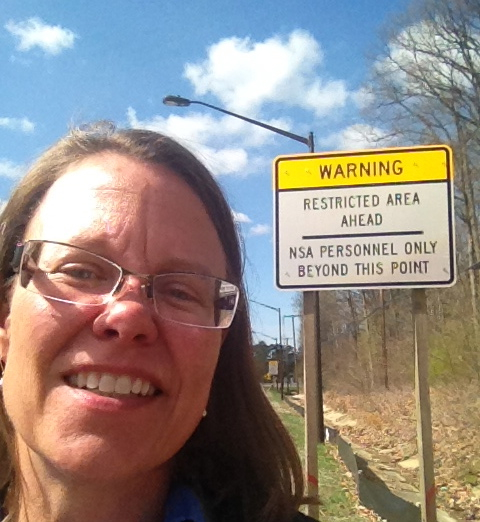
No luck visiting the NSA!

No luck visiting the NSA!

Post-Hearing on Thursday
After Thursday’s hearings adjourned, I took a quick tour of the base on my way to the airport.

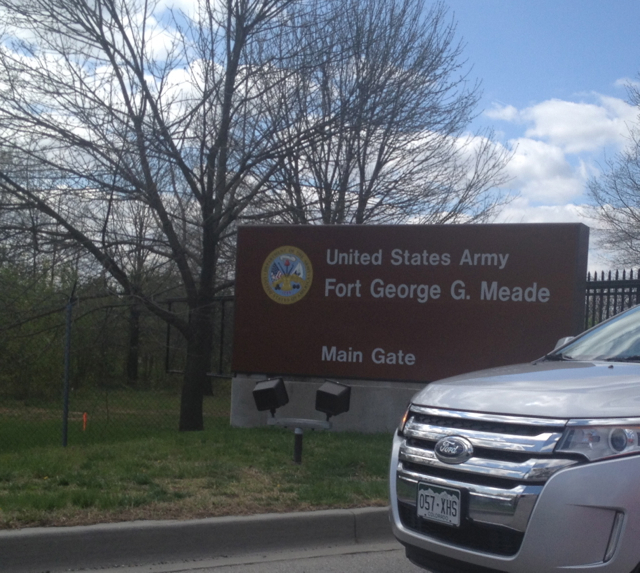
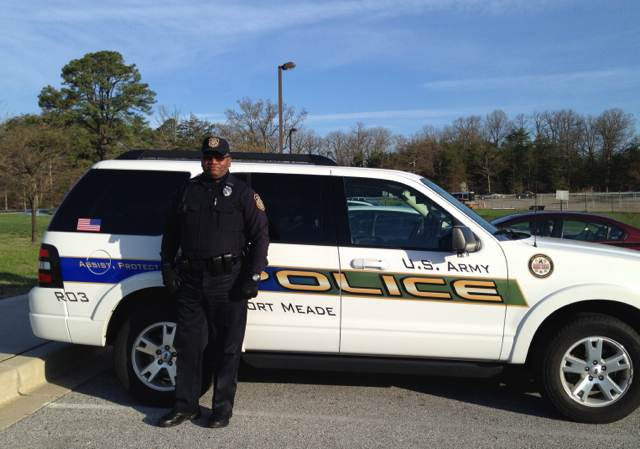
I was unable to see the National Security Agency (NSA) headquarters, though, as I was confronted by signs as pictured at right.  And while I was unsuccessful at convincing Military Police Officer Robinson to take my photograph by the main gate, I was able to convince him to allow me to take his photo by his police vehicle.  I must say that everyone I encountered at Fort Meade was most gracious and helpful.

main gate

Fort Meade Main Gate

Officer Robinson

Officer Robinson

Touch Down at Indianapolis Airport–Met by police, fire trucks, sniffer dogs!
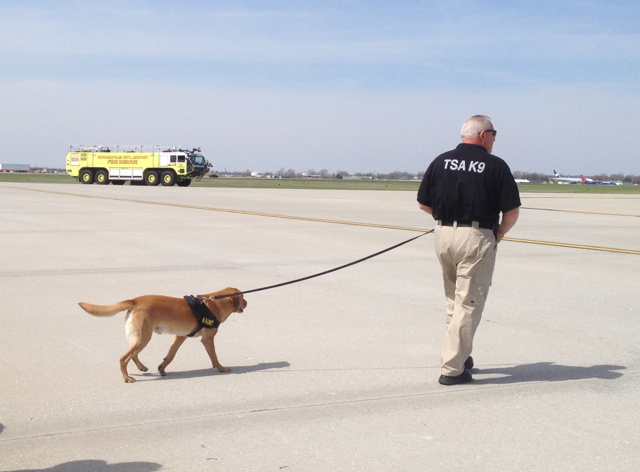
Things got even more interesting on my return trip to Indianapolis, when the Southwest flight on which I was traveling landed on time and then taxied into what seemed like the middle of nowhere! The plane was surrounded by police and fire trucks. Passengers were deplaned by stairway onto the tarmac where we and our carry-on luggage were sniffed dogs handled by TSA agents. We were then bussed nonchalantly to the terminal to continue on our way.

I later read news reports that my flight had requested an “emergency landing” after having received a “threat.” Precisely what the threat was, I still do not know! But I arrived home from Fort Meade safe and grateful for the wonderful experience of serving as an observer on behalf of McKinney’s MCOP team.

Deplaning in Indianapolis

Deplaning in Indianapolis

TSA dog and fire truck

TSA dog and fire truck

Our transport to the terminal

Our transport to the Indianapolis terminal

_______

Final Day of GTMO 9/11 Hearings (Jeff Meding) (17 April 2016)

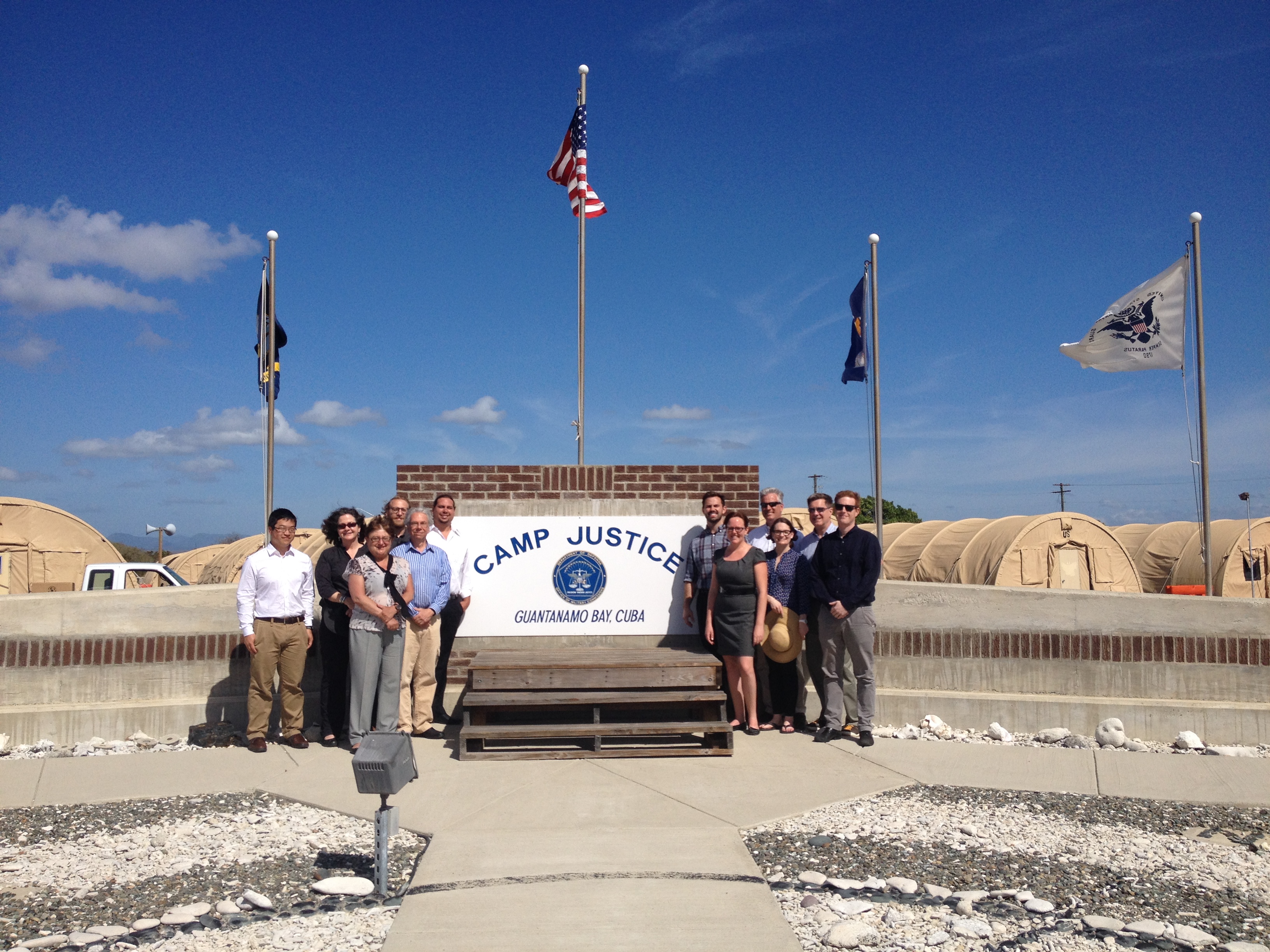
En route to the final 9/11 hearings for April 2014. Please see below a picture of me standing in front of the Camp Justice sign. Also, you will see a photo of the entire NGO group that was taken right before the hearing today.

Standing in front of Camp Justice.

Standing in front of Camp Justice.

All of the NGO's taking a photo in front of the Camp Justice sign.

All of the NGO’s taking a photo in front of the Camp Justice sign.


Well, as predicted, today’s hearing was over in less than an hour. It started a 0907 AM and recessed at 0950 AM. KSM, Ramzi Binalshibh, and Ammar al-Baluchi were present when the MC was called to order. The FBI issue (292) was the main focal point of this hearing. In fact, between the hearing being adjourned on Tuesday and resuming today, the Defense counsel filed a discovery motion (292D). In response to this Motion, the Government filed (292F ex parte) requesting time to file a submission by a newly detailed trial counsel. Finally, the Defense counsel filed an objection (292G) to the Government’s 292F motion.

Special Trial Counsel Fernando Campoamor-Sanchez, an official of the U.S. DOJ, was appointed to represent the U.S. in all matters relating to 292 (FBI issue). The Prosecution team wants to insulate itself from any 292 issue.

Judge Pohl worked out some procedural matters on how to proceed forward with the hearings and address the 292 issue. And just like that, the hearings were over and the court was recessed.

Below is a link to the Transcript of today’s Hearing.

KSM II ((TRANS17April2014-AM)


By Jeff Meding, Military Commission Observation Project, Indiana University McKinney School of Law

9/11 relatives frustrated as Guantanamo hearings stall

http://news.msn.com/us/9-11-relatives-frustrated-as-guantanamo-hearings-stall


By Jeff Meding, Military Commission Observation Project, Indiana University McKinney School of Law

9/11 Guantanamo Hearings Adjourned Until Thursday (Jeff Meding)

Since the hearing was adjourned until Thursday, a couple of NGO’s went to Windmill Beach to go snorkeling and scuba diving. I wish I had an underwater camera because we were in a great area for snorkeling. That being said, I noticed at times it is easy to forget you are at GTMO. For example, one moment I am watching a school of fish swim by while I am snorkeling, and the next moment, as I come up from the water, I see an area of GTMO surrounded by barbed wire. The contrasting images do throw you off a bit because you are surrounded by this beautiful water, but at the same time you are on a military base.

After the beach, we went to dinner and I came back and worked on the Blog. Unfortunately, most people are under the assumption that tomorrow’s hearing is going to be over very quickly. I hope this is not the case, but if I was a betting man, I would bet that it will be over before 10 AM.

I will be sure to fill everyone in once I get out of the court room.

By Jeff Meding, Military Commission Observation Project, Indiana University McKinney School of Law

Jeff Meding at Guantanamo Bay — 15 April 2014

Today lasted longer than yesterday’s roughly 40 minute hearing. However, it was still over by 11:15 AM.

As the hearing began, it was noticeable that only KSM and Ramzi Binalshibh were present. Walid bin Attash, Ali Abdul Aziz Ali aka Ammar al-Baluchi, and Mustafa al Hawsawi were not present when the MC was called to order at 0915 on 15 April 2014. Captain G, a liaison between the Staff Judge Advocate and the JTF-GTMO camp in which the detainees are held, testified that she advised each defendant of their right to be present at the hearing. Each of the three defendants waived their right to be present. As a procedural note, I imagine Captain G’s full name was not released for security concerns, although this was never addressed during her testimony.

The entire hearing dealt with the conflict of interest issue. This issue was created when 2 FBI agents interviewed the Deputy Security Officer (DSO) for Ramzi Binalshibh’s Defense team. The DSO acts as a liaison with defense counsel on what evidence should be considered classified and what evidence should be considered unclassified in court filings. Although the DSO from Binalshibh’s team has been removed, the conflict of interest issue is the sticking point right now. Judge Pohl referred to this as the FBI interview issue (292).

All five Defense teams want an abatement of the hearings until the conflict of interest issue is resolved, while the Prosecution wants Judge Pohl to deny the abatement request and move onto the original docket. Specifically, the Defense teams want the Commission to conduct an inquiry as to whether or not a conflict actually exists. Mr. Nevin, lead defense counsel for KSM, said case law requires an inquiry when a “specter of a conflict is presented.” The Defenses argument is that there is a possibility that a conflict exists because of this FBI investigation; therefore, an inquiry must be conducted by the Commission. Defense cited 3 SCOTUS cases in support of their argument. The cases were Wood v. Georgia, Cuyler v. Sullivan, and Holloway v. Arkansas.

On the other side of the aisle, the Prosecution wants Judge Pohl to address the originally scheduled docket and come back and look at the conflict of interest issue at a later hearing. It is the Prosecution’s contention that there is “no legally cognizable conflict of interest” for any of the defense attorneys; therefore, the hearing should proceed as originally intended and the 909 issue should be addressed.

The most interesting exchange of the hearing occurred when Judge Pohl questioned Mr. Ryan, an attorney for the DOJ and co-counsel for the Prosecution. Judge Pohl asked Ryan, based on his experience, since it it is an ongoing investigation, did Ryan think it would be unlikely that the 2 FBI agents would cooperate if the Judge issued an order for them to appear? Mr. Ryan stated “[I] think the commission would be greatly mistaken to go down a road of trying to look inside an ongoing investigation being conducted by the Federal Bureau of Investigation, if, in fact, one is in — exists.” The Courts inability to order certain agencies — namely the FBI — to come testify gives off the initial impression that there is a lack of control by the MC over the proceedings. Which brings the question: Ultimately, who is in control of these proceedings?

I think Judge Pohl should just bifurcate the issues. Since the defense is not challenging Binalshibh’s competency, I don’t understand how they would be conflicted to let the Prosecution present evidence on the 909 issue. The MC could use this week to figure out Binalshibh’s competency, then it can move onto the FBI issue (292) during the next round of hearings. This would allow the Prosecution to address the 909 issue and it would also allow the Defense to have an inquiry conducted into the FBI investigation before the next scheduled hearings. It seems to me to be the pragmatic solution. With all of this being said, I understand the gravity of the conflict of interest issue and I am sure Judge Pohl would rather be safe than sorry. He would rather address the conflict of interest issue first, so it potentially is not brought up later on appeal and reversed for structural error — which under the Federal Court system requires an automatic reversal without a showing of harm.

Note: I would like to thank my fellow IU Affiliate, Hattie Harman, for bringing the structural error issue to my attention.

Judge Pohl adjourned the hearings until Thursday, April 17 and issued an Order that anyone who was approached by the FBI or any other federal government agency, concerning any defense-related matters, must disclose this to the Lead Counsel of each team, and not anyone else. Also, by Wednesday at 5 PM, the defense has to submit any proposed orders of production that they believe appropriate in the case.

If you would like more details about today’s hearing please find a copy of the transcript below.

KSM II (TRANS15April2014-AM)

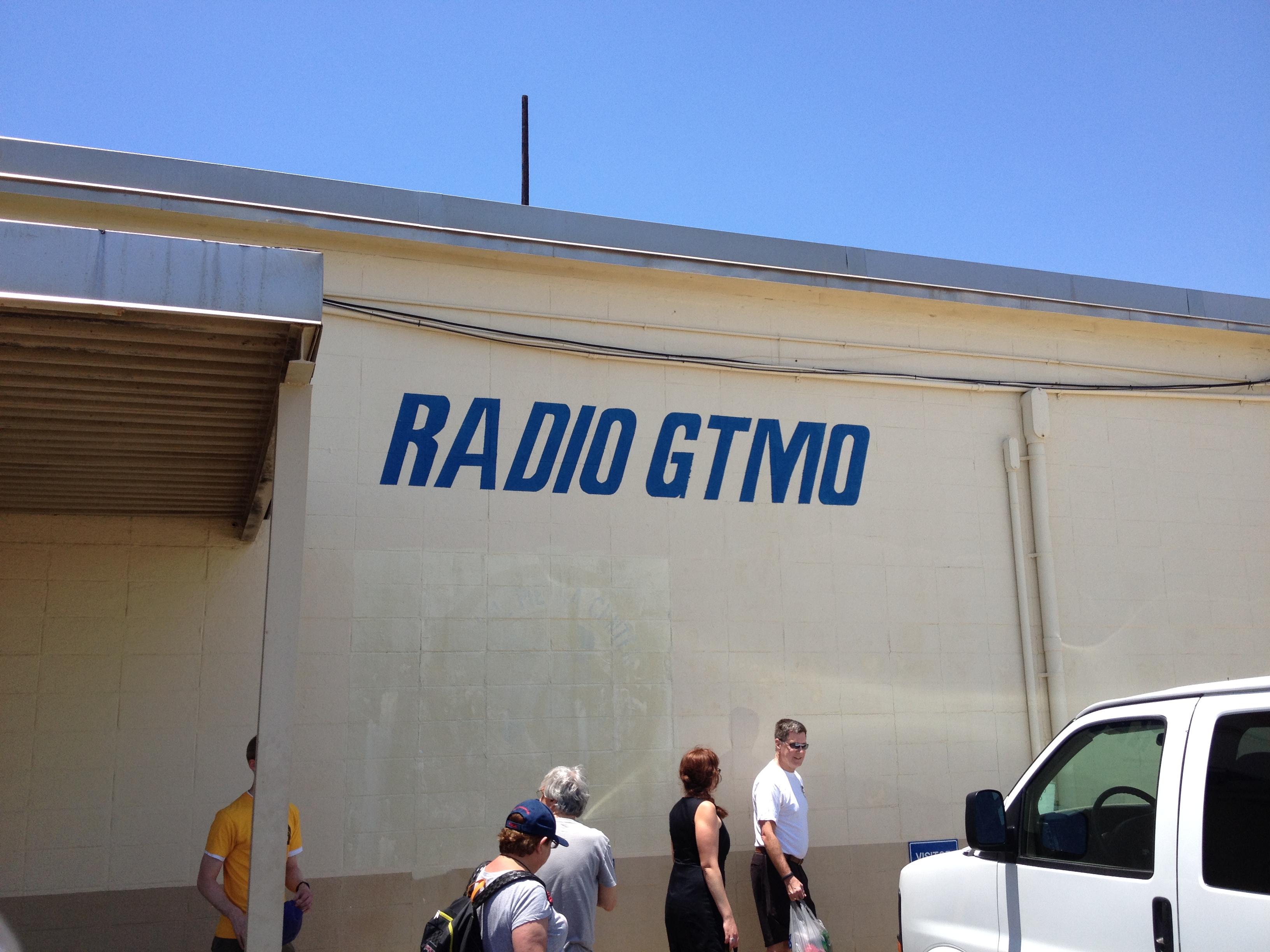
Since the hearing was over before noon, some of the NGO group went and took a tour of Radio GTMO. The station’s motto is “Rockin in Fidel’s Backyard.” We visited the radio station because it also has a popular gift shop. In fact, I bought a couple of “challenge coins” here. These coins are generally collected by other service members to show what bases they have been to.

Radio GTMO

Radio GTMO


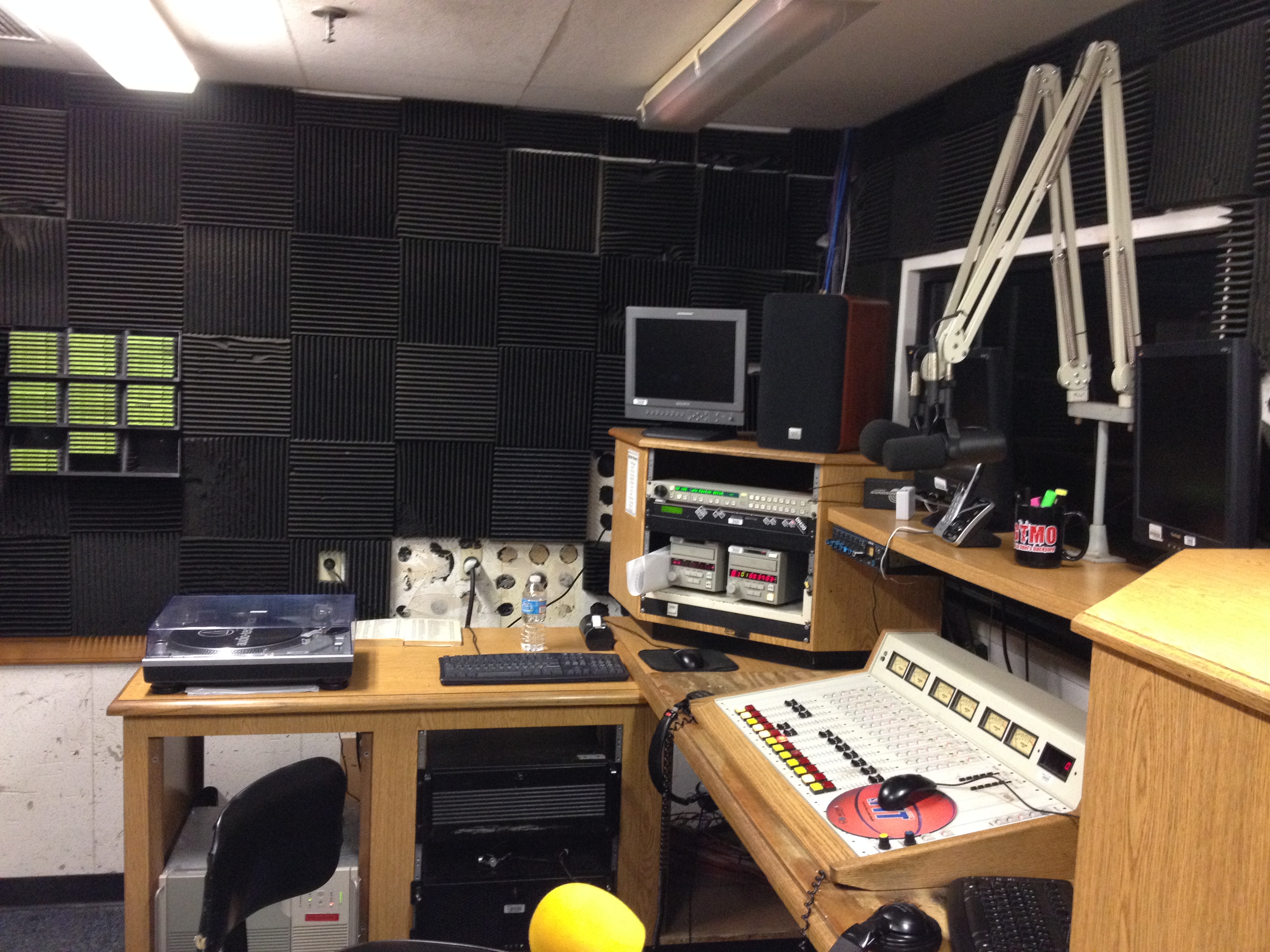
Radio GTMO Studio

Radio GTMO Studio

All of the NGO’s, 13 of us, met with General Mark Martins, Chief Prosecutor of the Military Commissions, for a Q&A session at 5:30 PM. General Martins was very respectful of everyone’s questions and I appreciate it that he took time out of his extremely busy schedule to sit down with us. Overall, I thought it was a productive Q&A, given the fact that the General can only talk about so much because of the nature of this case. That said, I got the impression that he answered most of the NGO’s questions in a very prosecutorial/politician sort of way — making sure to never tip his hand.

Although the hearing was cut short, I felt the rest of the day was productive. Time to wait and see what Thursday brings. Until then, it looks like Wednesday is going to include some more snorkeling!

By Jeff Meding, Military Commission Observation Project, Indiana University McKinney School of Law

Into The Guantanamo Bay Courtroom — The 1st Day of Hearings (Jeff Meding)

I woke up this morning and I was anxious for the Hearings in the 9-11 case  to begin.

To The Courtroom
All of the NGO’s walked over to the courtroom at about 8:15 AM. After proceeding through security, I sat in the gallery about 15-20 minutes before the Hearing started.

I was assigned to seat 12 and it was almost unreal, being behind the window, only yards away from 9/11 defendants.After reading the 9/11 Commission Report and other articles pertaining to the attack, it felt very strange to be sitting behind the alleged defendants of the deadliest terrorist attack in U.S history.

As I looked through the window  that separated the observers from the accused, I was able to distinctly see all 5 defendants.

  • Khalid Shaid Mohammad (KSM) is at the first table.
  • Walid bin Attash is at the second table.
  • Ramzi Binalshibh is at the third table.
  • Ammar al-Baluchi is at the fourth table.
  • Finally, Mustafa al Hawsawi is at the fifth table.

As the defendants were brought into the courtroom, each was accompanied by 4 guards (2 on each side of each defendant).

Speaking of guards, there were a lot of guards in the courtroom.

Fair Trial if Each of 5 Defendants Has 4 Guards in the Courtroom
If this case ever does go to trial,  I wonder if the defense counsel for each defendant will ask that the guards leave because it impacts their clients ability to receive a trial by an impartial jury. If there are guards surrounding the prisoners and the Commission Members (Jurors) are allowed to see this, then the defense may argue that their clients will not receive a fair trial because the Commission Members cannot be impartial when each defendant has 4 guards escorting him and at least 20-25 guards in the entire courtroom. That is an issue that may be brought up in the future, but for now I am going to focus on the matters at hand.

The Judge Enters Courtroom — The Proceedings Begin — “40 Seconds Into The Future”
Judge Pohl entered the courtroom and began the proceeding by reading each defendant his rights. All 5 defendants said they understood their rights. It is weird sitting in the gallery because what is known as “looking 40 seconds into the future” happens. According to Ammar al-Baluchi’s defense team, this is the sensation created by watching the hearing from the gallery where the live action is 40 seconds in the future relative to what is shown on the television. It definitely takes a couple of minutes to get used to. After all 5 defendants acknowledged their rights, the hearing got very interesting!

Competency of One of the Defendants
First, Judge Pohl addressed the Prosecution’s ex parte motion 152v, which related to the 909 issue of Ramzi Binalshibh’s competency. The Prosecution filed the ex parte motion of Sunday, 13 April 2014. After the Government made its request, Mr. Jay Connell, learned defense counself for Ammar al-Baluchi, objected to the ex parte hearing because he said it fell outside the narrow ex parte rules.

FBI Allegedly Creates Conflict of Interest by Interaction With Defense Team Liaison?
At this point, Mr. Harrington, learned defense counsel for Ramzi Binalshibh, noted that he filed an emergency motion to abate the proceedings on Sunday evening. This could potentially cause the proceedings to be halted for the rest of the week because it has huge implications!

In the Motion, the defense team for Binalshibh, said that their Defense Security Officer (DSO) was visited by two FBI agents on 6 April 2014 and asked to sign an agreement with them. The DSO is a civilian whose job includes assisting (more…)