GTMO

CIA Detention & Interrogation Report Released – Details Torture of GTMO Prisoners

Today the Senate released the Executive Summary of its report that details torture of Guantanamo Bay prisoners, many of whom were held in secret prisons spread around the globe and subjected to treatment deemed “harsh” and “brutal” and that rises to the level of torture.

The report is titled the “Committee Study of the Central Intelligence Agency’s Detention and Interrogation Program,” and resulted from a 5-year study conducted by the U.S. Senate’s Select Committee on Intelligence.

The 525-page Executive Summary, which is heavily redacted, can be found here: CIA Detention & Interrogation Senate Report – 9 December 2014

[office src=”https://onedrive.live.com/embed?cid=4496F33CBC0BA017&resid=4496F33CBC0BA017%2123964&authkey=AKl5jI7aKcxD7Nk&em=2″ width=”576″ height=”388″]

Minutes after the Executive Summary was released, defense counsel in the 9-11 case, that is pending at Guantanamo Bay, circulated an e-mail that stated “The government has excluded from the report the identities of the torturers, the locations of the torture, and many other facts no doubt contained in the remaining 6,125 pages of the report.”

Indiana Law Affiliate Traveling to GTMO this weekend

Ms. Catherine Lemmer, an international librarian at the Indiana University McKinney School of Law, is scheduled to travel to Guantanamo Bay, Cuba this weekend for hearings in the 9-11 case. Ms. Lemmer, who has been instrumental in the Guantanamo Bay Fair Trial Manual and in building the The Gitmo Observer website and blog, will be posting her impressions of the “Torture Report” soon.

Arrival at Guantanamo Bay Naval Station (GTMO) – Hattie Harman

GTMO - Air Miami - IMG_1085 - Hattie Harman - 16 November 2014

My Air Miami plane parked at Guantanamo Bay air field after arriving from Andrews Air Force Base.

[Gitmo Observer staff posted this item for Ms. Hattie Harman because she had no internet access at Guantanamo Bay to post this herself.]

After a very pleasant flight, I arrived at GTMO a little after 1:00 p.m. today (Sunday).  In addition to the contingent of NGO observers, press, and defense, prosecution, and judicial personnel, passengers on the flight included several “regular” military travelers to the Naval Station (i.e., military personnel with no involvement in the legal proceedings against the detainees but traveling to GTMO on other military business).  The flight included a movie (Spiderman 2), a hot meal (choice of lasagna or chicken), and hot towel service.  It was reminiscent of air travel in the 1980s!

After Arrival

We were busy all afternoon getting badges for access to the court areas, obtaining supplies at the Naval Exchange, and doing a lot of waiting.  Despite the warnings of recent Gitmo Observer travelers, I expected more from the Internet here.  My attempt to purchase (at the cost of $150.00) wired Internet access from the NGO “internet cafe” was foiled for my lack of a proper adapter.

I was able to make it into “town” at 7:00 p.m. to a location that reportedly had wireless Internet access only to find it was not functioning.  Not only am I presently unable to post to the Gitmo Observer Blog, I am without any access to email or any other Internet-dependent mode of communication.  There is of course no cell phone service either.   We’ll see what tomorrow brings on the communication front.

 Hearings Commence Tomorrow, Monday, November 17

 In the morning, I expect to be escorted along with the other NGO observers to the courtroom in advance of the 9:00 a.m. commencement of this set of pretrial hearings in the United States’ prosecution of abd al Hadi al-Iraqi.  Hadi is accused of several crimes arising out of his alleged role as an al Qaeda commander in Afghanistan during the post-9/11 period.  Four motions are scheduled to be heard in this three-day session.

PS:  For access to the Guantanamo Bay Fair Trial Manual, click here.

Departure for Guantanamo Bay Naval Station (GTMO) – Hattie Harman

NGOs with the Fair Trial Manual

NGO Observers studying the Guantanamo Bay Fair Trial Manual. At Andrews Air Force Base waiting for our flight to Guantanamo Bay.

I flew from Indianapolis to Washington National Airport yesterday afternoon, in preparation for this morning’s departure to GTMO. Through the gracious hospitality of old friends, I had a lovely place to stay for the night and was driven to the Andrews Air Force Base Visitor’s Center at 5:30 A.M. Non-governmental organizations (NGOs) such as the Gitmo Observer (of Indiana University McKinney School of Law) tend to have very meager budgets, thus most ­– if not all – of our representatives’ travel expenses are borne by the individual observer. I must thank Spike Bradford, Jill Keesbury, and their son Angus for picking me up at National Airport, putting me up for the night, and driving me to Andrews at the crack of dawn. They are true friends indeed.

Pre-departure Discussions

In addition, my hosts provided very stimulating pre-trip conversation. Spike works for the D.C. area-based Pretrial Justice Institute, a nonprofit organization promoting safe, fair, and effective pretrial practices nationwide.

As the proceedings I will be observing this week at GTMO – those of Abd al Hadi al-Iraqi – are in the early pretrial stages, Spike offered me some perspective for comparison to U.S. domestic criminal courts. To me, the most stark comparison was between the different lengths of pretrial detention. In typical domestic United States criminal jurisdictions, the accused must be charged with a crime within 48-72 hours of arrest or detention, and then has the right (which he or she may choose to waive) to be brought to trial within a particular time limit.  See, e.g., Ind. Rule Crim. Procedure 4(B) (affording accused the right to move for a trial within 70 days). In addition, the U.S. Constitution guarantees the right of the accused “to be informed of the nature and cause of the accusation” and importantly provides that “the accused shall enjoy the right to a speedy and public trial.” U.S. Const. amd. VI (emphasis added). The accused al Qaeda commander Hadi al Iraqi, whose proceedings I will observe next week, was first brought to GTMO in 2007 after being held by the CIA. Hadi was first charged with a crime in 2013.

Andrews Air Force Base

Arrival at Andrews

Arrival at Andrews

When I arrvied this morning at Andrews Air Force Base, I met several other NGO observers who will be attending this week’s hearings. One, a representative of the American Bar Association Criminal Justice Section, was already familiar with the work of The Gitmo Observer. I distributed copies of the Guantanamo Bay Fair Trial Manual to the NGOs and it was well received. Many other passengers continue to arrive at the Andrews terminal and are checking in for today’s flight, which is scheduled to depart for GTMO at 10:00 a.m.

Departing Indianapolis for Guantanamo Hearings – Hattie Harman

IMG_1079

The things I CAN’T forget to take to GTMO!

Tomorrow (Sunday) I will fly from Andrews Air Force Base to Guantanamo Bay Naval Station, Cuba to observer next week’s pretrial hearings in the U.S. prosecution of alleged al Qaeda commander Abd al Hadi al-Iraqi (17 – 20 November 2014). I will be transporting several updated draft copies of the Guantanamo Bay Fair Trial Manual to distribute to other non-governmental observers (NGOs).

Visit to International Criminal Law Class

Last evening, I had the good fortune to be a guest in Professor George Edwards’ class in International Criminal Law at the Indiana University McKinney School of Law. Professor Edwards, with help from students and others, has drafted the Guantanamo Bay Fair Trial Manual for use NGO observers and anyone else interested in determining whether stakeholders are getting a fair trial. I cannot thank Professor Edwards and his students enough for preparing the Manual and for welcoming me to their class. The Manual has been an indispensible part of my preparation, as it contains a trove of information about the treaties, U.S. laws, and regulations governing proceedings under the law of war,  and international human rights law, and it also identifies the various stakeholder groups in these proceedings, all of whom have rights under these laws, treaties, and regulations.

Making Connections – Theory to Practice

I am an attorney by profession, and my work involves primarily appellate review of both criminal and civil substantive law issues. Issues of procedure and particular rights arise from time to time but are by far most of my work involves more substantive questions such as, “Was a particular piece of evidence properly admitted?” and “Did the trial court properly apply the existing case law in instructing the jury?”. The rights issues I deal with are typically secondary to the substantive law questions.   Further, to the extent I deal with rights issues in practice, these issues relate almost invariably to the rights of the criminal defendant. Therefore, participation in this MCOP project requires me to shift my legal mindset and approach the proceedings from a very different perspective.

I have no previous experience in international law so of course the Guantanamo Bay Fair Trial Manual is extremely informative. But I found my visit to last night’s class was absolutely essential in helping me to make connections between the Manual’s exposition of human rights law procedures and the application of these rights to the stakeholders in practice. The students and Professor Edwards were able to help me focus on my role to assess whether the proceedings are delivering the rights to which each stakeholder is entitled, not what substantive law is at issue in the particular case.

Next Week’s Guantanamo Hearings – Hattie Harman

Abd al Hadi al Iraqi

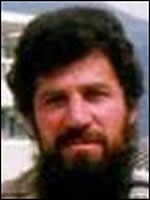
Defendant Abd al Hadi al Iraqi

Today is Veteran’s Day and I am spending my day off from work preparing to attend next week’s pretrial hearings at Guantanamo Bay, Cuba. Next Monday, Tuesday and Wednesday (November 17, 18, and 19, 2014) proceedings will resume in the case United States v. Abd al Hadi al-Iraqi. Abd al Hadi was brought to Guantanamo in 2007 after detention by the CIA. Abd al Hadi is charged with several war crimes arising out of his alleged role as an al Qaeda commander in Afghanistan during the years following the September 11th attacks.

Hearing Agenda

The military judge’s order AE022 (corrected) enumerates the pretrial motions on the agenda for next week’s hearings.   Prior to the hearings, the parties and judge will meet for a pretrial conference on Sunday afternoon, November 16 at 5:00 p.m. The hearings are scheduled to begin at 9:00 a.m. on Monday and will include discussion and argument regarding four pending motions:

  • AE 018 – Defense Motion to Compel Discovery
  • AE 019 – Defense Motion to Strike Common Allegations
  • AE 020 – Defense Motion to Dismiss for Lack of Subject Matter Jurisdiction and to Compel a Status Determination pursuant to Article 5 of the Geneva Convention
  • AE 021 – Emergency Defense Motion for Appropriate Relief to Cease Physical Contact with [Female] Guards

With regard to the last item, the judge issued an order on November 7 (AE021B) which has been reported to temporarily grant Abd al Hadi’s request for cessation of physical contact with female guards.

My Role at the Proceedings

As a non-governmental observer (NGO) attending the hearings under the auspices of the Military Commissions Observation Project (MCOP) of the Indiana University McKinney School of Law Program in International Human Rights Law (PIHRL), I am tasked with the following duties:

  • Attend the hearings each day as an informed observer.
    • This requires a substantial commitment in terms of personal time and resources, including arranging for travel to Andrews Air Force Base, completing numerous government and MCOP documents, researching the status of the case and the motions to be heard next week, and reading and studying the Guantanamo Bay Fair Trial Manual prepared by MCOP.
  • Objectively and with an open mind observe the proceedings and interact with stakeholders present on site (including prosecutors, defense counsel, press, and other NGOs) to glean as much information as possible about the experiences of all stakeholders holding rights to fair proceedings at Guantanamo.
  • Analyze the hearings.
    • My observer’s role on behalf of MCOP is to analyze to proceedings not so much from a substantive legal perspective, but rather to focus on the various fair trial rights of all stakeholders to the proceedings.
  • Critique the hearings.
    • This includes identifying both positive and negative aspects of the process, both in the abstract (e.g., as compared to other judicial processes) and in practice at the hearing site. Where possible, assess the fairness of the proceedings with regard to the various stakeholders.
  • Report on the hearings.
    • Disseminate, through the Gitmo Observer and otherwise, information about the hearing process and the fairness of the proceedings. Prepare a report for MCOP upon my return.

Pre-Departure Tasks

I will depart Indianapolis for Washington, D.C. on Saturday and am ordered to arrive at Andrews Air Force Base (more…)

Al-Nashiri GTMO Hearings – 5 – 6 November 2014 – Charles Dunlap

IMG_1584

Chuck Dunlap with Rick Kamman, Chief Defense Counsel for Al-Nashiri

Now that I have reliable internet access I wanted to post the remainder of my blog entries from my trip.  First about the hearings themselves.  The hearings took place Wed. & Thurs morning Nov. 5-6.  Rather than go into detail about all ten of the motions I will try to give an overview and summary of the proceedings.

Range of Motions

The hearings were scheduled for two days and actually ran for 1 1/2 days.  Of the ten issues, they can be summarized as follows;

  • dismissal of the death penalty since the defendant will not have access to classified evidence against him;
  • abatement of proceedings due to lack of adequate medical care for defendant
  • defense request to have access to an MRI machine to assess the defendant’s mental state
  • request for the defendant to have a Skype call with his parents
  • motion to withdraw the death penalty because it is no longer a military necessity
  • motion to suppress evidence due to lack of Miranda warning
  • motion to exclude hearsay evidence
  • other more procedural motions

Themes –Logistical Issues

Overall, the hearings were much like you would see in any court. However, one of the strong themes that came out of the hearing days was how the logistical challenges of being at Guantanamo Bay impacted everything and made things more challenging (and costly).  The logistics of having all of the court personnel travel to the base, combined with some of the limitations once at the base were very evident.

Another theme was the uncertainty on some of the procedures and trial logistics.  The parties often referred to the Military Commissions legislation but often there was no specific guidance on some of the more detailed points and issues so the parties had to look to other authority like federal courts.IMG_1429

Schedule Going Forward – 

The parties also worked with the judge to try and plan out the new schedule going forward.  The next big event will be pretrial hearings scheduled for February when the parties are set to begin arguments focused on the government’s efforts to introduce 72 hearsay statements which constitute the bulk of their case.  Since the standards for hearsay are different in Military Commissions, this will be one of the main pretrial events.

For those interested in looking at the specific pleadings, transcripts etc. you can find them at http://www.mc.mil/CASES.aspx).

It’s a Small World – by Hattie Harman

Preliminary Preparations

Hattie Harman and Traci Cosby -- Both going to Cuba this month

Hattie Harman and Traci Cosby — Both going to Cuba this month

As I read Chuck Dunlap’s blog posts this week, I find myself looking more and more forward to my upcoming trip to Guantanamo for the next round of hearings (Nov. 17-19, 2014). Chuck is an Indiana University McKinney School of Law graduate who works at the Indiana Bar Foundation, and he is at Guantanamo Bay this week monitoring the hearings in the case of al Nashiri, who allegedly masterminded the 2000 attack on the USS Cole that killed 17 sailors off the coast of Yemen.

I will be monitoring a different case, that of Hadi al Iraqi, who was alleged to have run al Qaeda’s army in Afghanistan, was arraigned this past summer, and his pre-trial hearings are at an early stage.

Yesterday I received instructions from the Pentagon to help me prepare for my mission, including information about the logistics of eating, sleeping, and – most importantly – viewing the proceedings.  Reading Chuck’s posts and seeing his photos makes it seem more real all the time!

And I have been especially fortunate this past week to have had short conversation with Indiana Supreme Court Justice Steven David about the Naval Station itself and his experiences there.  Justice David, is his position as an Army Colonel, previously served as chief defense counsel. Of course, our conversation was quite limited due to the nature of the subject but it was nonetheless very helpful and exciting to meet with someone who has had his “boots on the ground” at Guantanamo.

Two Views of Cuba

Although I won’t be leaving for Cuba for another week, my good friend and co-worker Traci Cosby is leaving tomorrow for Havana. Traci will be part of a delegation from the American Bar Association Section of Dispute Resolution spending several days in Havana meeting Cuban dignitaries and learning about the Cuban legal system.

ABA itinHow strange it is that two friends and close co-workers would end up – entirely independently – traveling to Cuba in the same month!  Obviously, Traci’s and my experiences of Cuba will be very different.  But I look forward to swapping stories with her when we both return.

Meeting with Chief Prosecutor – Part II – Wednesday

The NGO Lounge at GITMO where NGO's have a place to work (without Wi Fi though)

The “NGO Lounge” at GITMO where NGO’s have a place to work (without Wi Fi though)

More on the NGO meeting with the Chief Prosecutor General Martins

To conclude a summary of our meeting with General Martins, Chief Prosecutor for the Military Commissions, here are several other topics we discussed in our meeting:

No Miranda warnings required

• One of the primary differences with the Military Commissions and traditional Article III Courts are the different standards regarding Miranda Rights and the admission of hearsay evidence. Generally the standards for admission of hearsay evidence and evidence gathered without first issuing a Miranda warning is less strict. Gen. Martins stressed that due to the nature of the environment where the evidence is collected (often in a theatre of war) there are not always trained law enforcement personnel available and therefore the standard should be different than in a traditional civilian law enforcement/Court setting. That being said, he reiterated that even though the standards may be “lower” there is still a threshold that must be met and not just anything can be admitted. There is still a need for the prosecution to prove that the evidence being proffered is reliable through a “totally of the circumstances” analysis and the defense has an opportunity to counter that through cross examination etc. which is all set forth in the MCA of 2009.

Timetable for al Nashiri trial

• One specific question from the group was when he thought the actual trial would begin for Al-Nashiri. Gen. Martins indicated that he anticipated that at the current pace and posture of the case, the trial could begin in the fall of 2015.

Evidence generated from “enhanced interrogation”?

• In addition, he also noted that for the government’s case it will use no testimony generated from any enhanced interrogation procedures.

Declassifying information

• Gen. Martins also indicated that the government is under an obligation to declassify as much information as possible under the MCROE 505 and that they have been striving to meet that obligation. He also pointed to the volume of materials and direct resources and documents from the proceedings that are available for anyone to ready and review on the internet, and that they strive to make the entire process extremely open and public as the MCA requires.

Listening device disguised as smoke detector in attorney / client meeting room; FBI investigating defense team members

Some of the aL-Nashiri hearing NGO Observers at a table outside our tents.  They stopped letting NGOs have wifi access at this location.

Some of the aL-Nashiri hearing NGO Observers at a table outside our tents. They stopped letting NGOs have wifi access at this location.

• In response to a question from the group, Gen. Martins discussed some of the particularly troublesome issue that some observers of the process have mentioned concerning the revelations of a listening device concealed in a smoke detector in a room where attorneys met and conferred with their clients at GITMO, as well as the FBI interviewing members of the defense team and having nondisclosure statements about the interviews so other members of the defense team would not know of the interviews occurring. The FBI issue is currently being litigated in the 911 case and Gen. Martins has walled himself off from that case so he wasn’t able to comment very much on that other to say that it was a legitimate issue from both sides and the judge is currently hearing arguments on it. Regarding the smoke detector issue, he indicated that the facts presented showed that the room was a multi-purpose room used for other detainee procedures where surveillance was necessary and the listening devices were not operative during the attorney client meetings.

ISIS / ISIL — Captured taken to GTMO?

• An additional question raised by the group concerned the current conflict with ISIS/ISIL in the middle-east and whether or not in the event any of their members were captured, would they potentially be transferred to GITMO to face a military commission. The General responded that it is an open question (and theoretical at this point) on how that would be handled. There are several issues associated with that question that all have to do with the limited jurisdiction of the military commissions based on the MCA of 2009. You would need to explore if they are affiliated with Al Qaeda, are they foreign nationals, are they unlawful enemy belligerents etc.

Future Updates

I will also be posting future updates from the subsequent day’s activities of this trip.

Day 1 – Meeting with Gen. Martins, Chief Prosecutor Post 1 of 2 -Charles Dunlap

NGO Meeting with Chief Prosecutor General Martins

On the afternoon we arrived at GTMO for the al Nashiri hearings (Monday, 3 November 2014), the 10 NGOs met with Brigadier General Mark Martins, the Chief GTMO prosecutor. We met from 6:00 p.m. to 7:30 p.m.

We talked with him and his staff about what to expect in the Al-Nashiri hearings and about Military Commissions in general. Here is a summary of some our discussions, with more to come in future posts:

Criticisms of the Military Commissions

A main criticism of the Military Commissions is that many commentators believe that the Article III court system is better positioned to conduct these types of trials. Gen. Martins agreed that in most cases, Article III Courts can do an effective job.  However, he said that in some cases, the Military Commissions were the best forum for several reasons, including the complexity of the cases, rules of evidence in a combat situation, and others (to be discussed in additional posts to come).

One issue that he pushed back on concerned media reports that “hundreds” of “terrorism” cases have been tried in federal courts in the same time that only a few have been tried in Military Commissions. His issue with this statement is that it does not tell the entire picture.  His said that it is not an apples to apples comparison since only 15 of those cases were eligible for a Military Commission to begin with.  In many cases of concurrent jurisdiction, it may be appropriate for the federal courts to handle the cases but Military Commissions are set up for the particularly challenging cases which is why they take a great deal of time.  In addition, since federal legislation prohibits transferring detainees to the mainland, the Military Commissions are the only way forward with some of the cases based on the legislation creating the Military Commissions and providing them  sole jurisdiction.

International Law and the Military Commissions?

Another issue discussed was the international law requirement for Courts to be “Regularly Constituted.”  This presents a challenge since these Military Commissions were only created after 9-11 and while they are legislatively created and not Article II courts created under military / executive branch authority, some issues exist associated with their longevity and if they are in fact “regularly constituted.”  This is one area where having a federal court (Article III) trial would alleviate this concern.

Continuing this post..

I plan to continue this post tomorrow when I have additional time with the Wi Fi.

Today (Tuesday, 4 November) was pretty much devoted to boat tour of the Bay and associated areas.  Tomorrow (Wednesday, 5 November) we will be observing the first day of scheduled pre-trail hearings for Al-Nashiri.

More to come tomorrow….

Headed to Gitmo – Chuck Dunlap

Chuck Dunlap's Boarding Pass - Andrews Air Force Base to GTMO - 3 November 2014

Chuck Dunlap’s Boarding Pass for his flight from Andrews Air Force Base to GTMO – 3 November 2014

Chuck Dunlap arrived at Andrews Air Force Base around 6:00 on the morning of Monday, 3 November 2014 for his flight to Guantanamo Bay, Cuba to monitor the U.S. Military Commission hearings in the case of al Nashiri, an alleged mastermind of the 2000 suicide bombing of the U.S.S. Cole off the coast of Yemen.

Mr. Dunlap had difficulty posting a post this morning, so we are re-posting his Andrews’ photos. He will post again upon his arrival at GTMO later today.

Chuck Dunlap's Plane - AAFB to GTMO

At Andrews Air Force Base. This is the chartered plane that will take Chuck Dunlap from Andrews to GTMO today.

This morning, Mr. Dunlap reported “We had a brief delay waiting for VP Biden’s plane to leave.” So, they were expected to arrive at Guantanamo Bay later than expected.

Upcoming Trip to Guantanamo Bay for Al Nashiri hearings (Luke Purdy)

On the right, the hole in the side of the U.S.S. Cole that al Nashiri (left) is accused to have planned the bombing of. The U.S. ship was docked in a port in Yemen during the October 2000 attack that killed 17 U.S. sailors and wounded over 30.

On the right, the hole in the side of the U.S.S. Cole that al Nashiri (left) is accused to have planned the bombing of. The U.S. ship was docked in a port in Yemen during the October 2000 attack that killed 17 U.S. sailors and wounded over 30.

During the first week of October 2014, I plan to travel to Guantanamo Bay, Cuba as a representative of the U.S. Military Commission Observation Project (MCOP), which is also known as the Gitmo Observer. While at GTMO, I plan to observe military proceedings in a capital case against Abd al-Rahim al Nashiri, whom the United States Government has accused of planning the bombing of the USS Cole in October 2000, which resulted in the deaths of 17 U.S. sailors.

The U.S. Military Commission Observation Project (MCOP or Gitmo Observer) was established by the IU McKinney Program in International Human Rights Law. MCOP was granted “NGO Observer Status” by the Pentagon in 2014. This means that MCOP representatives may travel to Guantanamo Bay (or view a secure video link at Fort Meade in Maryland) to observe trial procedures at GTMO that are otherwise inaccessible to the public.

As an NGO Observer, MCOP seeks to ensure that fair trial rights are afforded to all stakeholders in the observed proceedings. These stakeholders include the defendant(s), victims and family members of, and the prosecution. Representatives of MCOP will observe, document, critique, and analyze these proceedings with the help of a Fair Trials Manual and Checklist, which can be accessed here.

Photo of me taken during the 2014 summer in Pago Pago, American Samoa, during my IU McKinney Law International Human Rights Law internsip.

Photo of me taken during the 2014 summer in Pago Pago, American Samoa, during my IU McKinney Law International Human Rights Law internsip.

My Interest in the Guantanamo Bay Military Commissions

My interest in MCOP emerged from a variety of sources, including an overseas international human rights internship, classes in law school, and a growing desire to get more international human rights work experience, specifically in the context of military tribunals. (more…)

Hadi al Iraqi Hearing commences at GTMO – Jeff Papa

Jeff Papa at Camp Justice, holding Indiana folder.

Jeff Papa at Camp Justice, holding folder with an Indiana logo.

Jeff Papa reported that the Hadi al Iraqi hearing commenced today at 1330 (Monday, 15 September 2014). Due to erratic internet connections, he could not send in his commentary on the hearing. He was able to send this photo. He promises more later.

My First Afternoon at Guantanamo Bay (Jeff Papa)

Jeff Papa - At Camp Justice - GTMO - 14 September 2014

“Camp Justice” is the name of the barracks-like Tent City where NGOs are housed at Guantanamo Bay. Immediately to my left, out of the camera’s view, is the court house complex.

  Andrews Air Force Base – Early Sunday Morning

The military instructed us to arrive at Andrews Air Force Base no later than 0630 this morning for our 10 am flight to Guantanamo Bay, Cuba.

There was some confusion since the address given for the Andrews Visitor Center was apparently wrong. Several of the nine Non-Governmental Organization (NGO) representatives traveling with us arrived at the Andrews main gate, and got turned back. One of our escorts arrived at 6:30 and transported us to the air terminal on the base.

Flying to Guantanamo

As those familiar with the GTMO process know, the planes to Guantanamo contain many different categories of participants, including the presiding officers, defense counsel, prosecution, victims’ family members, NGO representatives, and the media. Today was no different. We met several of these people, including Carol Rosenburg of the Miami Herald who routinely covers GITMO proceedings (she mentioned Indiana’s own Justice Steve David, who served here previously).

The flight to Guantanamo was a little over three hours. The weather on arrival was perfect – blue sky and temperatures in the 80s.

This is my bed for the next few days at Guantanamo Bay. They keep the tents very cold to discourage insects, banana rats and iguanas.

This is my bed for the next few days at Guantanamo Bay. They keep the tents very cold to discourage bugs, banana rats and iguanas.

We took a ferry from the airfield across the bay to the main base area and were escorted to our quarters – barracks-like tents kept ice cold to discourage bugs, banana rats and iguanas from intruding.

No more WiFi.

Unfortunately, a change in access now prevents non-military persons (like the NGOs) from accessing WiFi in the area where our tents are. No mainland U.S. wireless carriers function here. We also have no access to Cuban carriers.

We received photo identification badges that give us access to the courtroom. We then visited the Navy Exchange store for supplies. Still no WiFi was available.

We finally found a restaurant with extremely slow WiFi some distance away – but too slow to upload or download much more than email (thus no photos with this posting, at least not today).

front cover - Guantanamo Bay Fair Trial Checklist

Front cover of Guantanamo Bay Fair Trial Checklist. It has been well-received at Guantanamo Bay.

 Sunday Afternoon Business

Prosecution and defense counsel met with the judge this afternoon to review the schedule for this week’s hearing. It is rumored that tomorrow’s hearing may start late as defense counsel is transitioning and the accused, Hadi al Iraqi, has not yet met the incoming counsel.

Guantanamo Bay Fair Trial Checklist a “Must Have”

The newest draft of the Guantanamo Bay Fair Trial Checklist prepared by Professor George Edwards and his law students at the Indiana University McKinney School of Law has been well-received by the other NGO representatives (a very diverse group). I believe the Checklist is quickly becoming the “must have” guide for NGOs observing GITMO proceedings.

NB:  Update just in… Hearings will not begin until 1300 hours tomorrow (Monday afternoon, instead of 9:00 in the morning as scheduled). And a few photos made it through the slow internet connection.

Jeff Papa - Camp Justice Sign - long one -- GTMO -- 14 September 2014

Another view of the front of Camp Justice.


Preparing to Travel to Guantanamo Bay (Jeff Papa)

front cover - Guantanamo Bay Fair Trial ChecklistIntroduction

I am scheduled to travel to Guantanamo Bay, Cuba for pre-trial hearings beginning Monday, 15 September 2014. I have reviewed many documents related to the case I will monitor – against alleged senior al Qaeda in Iraq official named Hadi al Iraqi, who is said to have been a liaison with the Taliban. Hadi al Iraqi’s charge sheet is posted here on the Gitmo Observer website, where other basic Military Commission documents can be found.

My role is as an “NGO Observer”, sent to monitor the proceedings and determine for myself whether, based on the law and my observations of facts, I believe that stakeholders are receiving a fair trial. My most important tool for preparing for this mission is the newly launched Guantanamo Bay Fair Trial Checklist, which provides a framework for me to conduct monitoring.

The Guantanamo Bay Fair Trial Checklist

I have read and re-read the Guantanamo Bay Fair Trial Checklist, which is an innovative document created by Professor George Edwards, the Founding Director of the Program in International Human Rights Law (PIHRL) of the Indiana University McKinney School of Law. Edwards is also the founder of The Gitmo Observer – also known as the U.S. Military Commission Observation Project (MCOP) of the PIHRL.

Volume I of the Checklist identifies a list of right for stakeholders during pre-trial hearings. While this document will be further developed by PIHRL students at the McKinney Law School, the current version includes a comprehensive list of rights for victims, victim’s families, the accused, the prosecution, the press, and witnesses. The Checklist is very easy to use, and should be utilized by any observer of commission proceedings, whether they want to quickly learn basic facts or want to study in great detail a particular hearing.

The Checklist contains sources of domestic U.S. and international law for reference, and provides easy to understand, but comprehensive, checklists for each possible right, as well as general background information. If you review available background information about a particular hearing you will monitor, and then reading through this Checklist step by step, you will gain a very deep understanding of the issues involved, as well as the likely legal arguments, strengths and weaknesses of each party’s position.

An Objective / Neutral Source

The Checklist provides an objective, neutral framework for analyzing the commission proceedings. The Checklist will become the standard document for those new to commission observation, as well as for seasoned experts.

Checklist Volume 1

Volume I of the Checklist  covers pre-trial hearing stage issues, as that is the current stage of the most Guantanamo Bay proceedings today. But many of the Checklist considerations are entirely relevant to other phases (pre-hearing, trial & judgment, and post-trial/post-judgment). Future Volumes of the Checklist are planned to cover these remaining phases in a comprehensive manner.

In the 2014 summer, I traveled to Ft. Meade, Maryland to observe a different Military Commission hearing. I did not have the benefit of the Checklist , which had not yet been created. I read many documents for the earlier proceeding. I wish I had had the Checklist then. In preparing for my hearings at Guantanamo Bay next week, I appreciate that the Checklist is well-organized and clarifies the issues in my mind, and provides a very logical flow regarding what issues are likely to arise in a particular proceeding.

This Checklist  will become the standard for reviewing commission proceedings. Following the Checklist through its stages is easy to follow, and ensures that all issues are covered. The references to source law and rights within the document is also extremely helpful.

The full name of the Checklist  is  the Guantanamo Bay Fair Trial Checklist for U.S. Military Commission Participants and Observers: A Guide for Assessing Human Rights Protections for the Prosecution and the Defense, Victims and Victims’ Families, Witnesses, the Press, NGO Observers, and Other Military Commission Stakeholders.

A copy of the current draft of this excellent resource can be found at http://gitmoobserver.com/2014/08/12/guantanamo-bay-fair-trial-checklist-launches/

Charges Against Abd al Hadi al Iraqi (Jeff Papa)

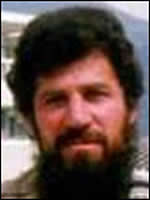
Hadi al Iraqi

Hadi al Iraqi

The Latest Guantanamo Bay Charges

On 18 June 2014, the Military Commissions arraigned Abd al Hadi al Iraqi on a number of charges. Hadi al Iraqi’s first pre-trial (pre-commission) hearings are scheduled to be held at Guantanamo Bay, Cuba 15 – 16 September 2014.

I have been selected to travel to Guantanamo Bay as an NGO Observer for these hearings next month. I will be representing the Military Commission Observation Project (MCOP) of the Indiana University McKinney School of Law. (We are also known at The Gitmo Observer“).

Charges Against Hadi al Iraqi

Specific allegations against Hadi al-Iraqi  fall within five general charges. These are highlighted and summarized below.

Charge I: Violation of 10 USC 950t(6), Denying Quarter

The government alleges that Al Hadi directed forces under his control in Afghanistan and Pakistan that there should be no survivors allowed and that all hostilities should conclude with no opposing survivors, even if practicable to accept surrender.

Charge II: Violation of 10 USC 950t(4), Attacking Protected Property.

The government alleges that Al Hadi intentionally attacked a medical helicopter, which was clearly marked as medical and protected (more…)

Afternoon al Nashiri Hearing – 4 August 2014 – GITMO – Qifan Wang

Judge Spath is presiding over the al Nashiri USS Cole case.

Judge Spath presides over the al Nashiri USS Cole case.

Lunch 

After the NGO Observers had a quick lunch in the NGO Lounge, we returned to the courtroom for the continuation of the case against al Nashiri, an alleged mastermind of the USS Cole attack off the coast of Yemen that killed 17 U.S. Sailors and injured dozens more.

Judge fails to recuse himself.

Unsurprisingly, the first thing in the afternoon is Judge Spath’s denying the motion of recusal.

How many judges are on the case? Who is in charge?

The court move to motion AE305 dealing with another very strange situation.

Chief Judge Pohl presided over the al Nashiri case from its beginning, until last month when he detailed a successor, Judge Spath, to handle the case.

But Judge Pohl reserved his authority regarding some al Nashiri motions. The result is at this specific time, there are two military judges in charge.

The defense makes a textual interpretation of the Military Commission Act, which consistently use the singular form (‘a military judge’ and then ‘the military judge’). The defense wants Judge Spath to reconsider some prior motions Judge Pohl had ruled upon.

On the other side, the government does not have much trouble with that. The government is arguing that there is no actual overlap between the authority of Judge Pohl and Judge Spath.

Chief Judge Pohl originally presided over al Nashiri case.

Chief Judge Pohl originally presided over al Nashiri case.

Judge Spath asked whether he can issue order in contradiction with Judge Pohl’s former rulings. The answer would be yes. Then it just becomes more confusing since what would be the actual point for Judge Pohl to preserve this authority? The defense labels the potential impact on the court as ‘unlawful influence’, while the government rebuts as there is no prejudice shown.

It is somehow difficult for me to comment on this motion and these arguments. Just like lots of other motions or procedures, this is a unique situation and it’s foreseeably hard to find any reference or precedents. I agree that if any new fact or law occurred, a motion for reconsideration  (more…)

al Nashiri Hearings begin – August 4th Morning – GITMO – Qifan Wang

al Nashiri, the alleged USS Cole attack mastermind, in the GTMO courtroom

My First GTMO Hearing

This is the very first hearing I’m participating in as an NGO Observer at GTMO. It is for the al Nashiri case against the person charged with being mastermind of the attack on the USS Cole in Yemen in 2000.

Moving to the GTMO Courtroom; Prosecutor Statement

We walked from our tents to the court. After strict security checks, the NGO team entered the gallery. The seats are assigned and we all sit on the left end of the room. It is said the families of the victims are on the left side. While we are waiting for the hearing, we learn that the Chief Prosecutor Brigadier General Mark Martins gave a statement yesterday afternoon. He made some brief remarks about the recent decision by the Court of Appeals for the DC Circuit, al Bahlul v. United States, upholding the conspiracy conviction and vacating the material support for terrorism and solicitation convictions. Also, he mentioned about the upcoming discussions about motions and orders around AE120AA. This is also among the main issues for this week’s hearings.

Inside the Court — The Hearings Begin

Before the hearing starts, the staff in the courtroom check with the interpreters whether the system works. The interpreters are obviously in another room, rather than being present in the courtroom. At about 9 a.m., the hearing starts on time. This is the first time that the Air Force Col. Judge Vance Spath appears for the week. The defendant, Mr. Al Nashiri is sitting in the courtroom, physically close to his learned counsel, Mr. Kammen. There is only one person sitting between them. I’m not sure who this person in the middle is, and suspect that he is the interpreter on the defense team. Mr. al Nashiri is wearing a white T shirt and looks in an (more…)

Arrival at Guantanamo Bay – 3rd August – Qifan Wang

Sign at the GTMO Office of the Military Commissions Expeditionary Legal Complex

Arrival — NGO Observers Meet

Our flight from Andrews Air Force Base was delayed and we finally arrived at Guantanamo Bay around 2:45 p.m. on Sunday.

Soon the NGOs all met and we got familiar with each other and shared some ideas about the upcoming hearings in the al Nashiri case which we will be observing.

Motions of the Week

We have a copy of the docketing order and it lists some motions that will be heard. One of the emotions is about the issue of ex post facto. That is a defendant cannot be charged for behavior that happened before there was a law against it. Crimes cannot be made up and charged after the behavior happens. If the logic stands, all defendant’s conduct shall be barred from prosecution. On the government’s side there may be a necessity argument considering the gravity of the crime, the difficulties for investigation and collection of evidence, and so on.

At this moment I could not predict how the judge would rule or even explain this issue. The only impression I’m having is that it’s another hard decision to be made. We’ll see soon.