Uncategorized

9/11 Guantanamo Hearings Start with Fireworks, Focus on Rights of the Accused

mcop_mcgill-training-centerYesterday, I monitored the first day of this week’s pre-trial hearings in the case against the alleged 9/11 masterminds. I viewed the proceedings via secured video link at the McGill Training Center at Fort Meade, Maryland, and represented the Indiana University McKinney School of Law’s U.S. Military Observation Project.

A Defendant’s Defiance

“I don’t understand,” Ramzi bin al Shibh snapped at Military Commission Judge, Army Colonel James L. Pohl, upon being asked if he understood his rights to be present or absent at the hearings against him and four other alleged masterminds of the 9/11 Word Trade Center and Pentagon attacks. bin-al-shibh

bin al Shibh, who allegedly helped hijackers find flight schools and enter the United States in addition to helping fund the operation, has alleged that the guards at Guantanamo Bay’s Camp 7 have been tormenting him and keeping him awake by shaking or vibrating his room and bed despite Judge Pohl’s order to cease the alleged conduct.

At the beginning of each week of pre-trial hearings, the 9/11 military judge requires each defendant to be physically in the courtroom, and asks each defendant whether he understands certain rights.

“You don’t understand your rights?” Judge Pohl asked bin al Shibh, noting that they had been through similar rights colloquies on other occasions.

bin al Shibh seemed to believe that Judge Pohl was being inconsistent and therefore unfair in enforcing rulings. He appeared to be upset that Judge Pohl could force him to be present at the hearing Tuesday, the first day of the hearing week, but that the guards at Camp 7 did not, according to bin al Shibh, have to comply with the Judge’s orders.

The two had a quick, yet contentious back-and-forth regarding who had to listen to whom.

Near the end of the exchange, Judge Pohl stated that if bin al Shibh “did not understand” his rights, that he would continue to be brought back in front of the court until it was clear that he did understand his rights. Judge Pohl then ordered bin al Shibh—who continued to talk over him—out of the courtroom until after the lunch break. On the CCTV, we could hear bin al Shibh continue to yell at the judge, even after bin al Shibh left his chair and was being escorted outside the courtroom. I learned from our Indiana McKinney observer who was physically in the courtroom’s gallery during the outburst that those sitting in the gallery behind double-paned glass could hear bin al Shibh yelling even after he left the courtroom and was on his way to his holding cell.

Other Defendants Acknowledge Their Rights

The other four defendants, Khalid Sheik Mohammed—who wore a green camouflaged “army” coat, what appeared to be a white Pakol (hat), and a red beard—Walid bin Attash, Ammar al Baluchi (aka “AAA”), and Mustafa al Hawsawiall acknowledged their rights. They all answered “yes” in Arabic when asked if they understood.

Judge Pohl’s Control of the Courtroom

judge-pohlAt the beginning of the hearing, and especially during the contentious exchange with bin al Shibh, Judge Pohl appeared to keep his cool, and he allowed all of the accused to speak. To keep control of his courtroom, he could have reacted more assertively and perhaps even had bin al Shibh restrained. But he did not. And, bin al Shibh re-joined the hearing after the lunch break, though it was unclear from the video feed how he had changed his behavior during the remainder of the proceeding, though I did not observe any additional outbursts during the day.

bin Attash Complains

After the exchange between Judge Pohl and bin al Shibh, another defendant — Walid bin Attash — addressed the court and protested his counsel. He raised four points, which he said wanted to make for the record.

First, he said that he did not believe his defense counsel was helpful to him and therefore he didn’t want them.

Second, he appeared to state that no legal mail had been exchanged between him and his defense counsel, though it is not exactly what he was saying. I plan to check the transcript as soon as it is posted and update this blog post.

Third, he stated that he has had no meetings with his defense counsel since last year.

Fourth, he appeared to tell the Commission that the “ill” of the actions he alleged of his defense team, “will make them part of killing me…and part of the government’s decisions,” and that they would be of no help to him. Again, I plan to check the transcript as soon as it is posted and update this blog post.

al Hawsawi’s Motions

After the bin al Shibh and bin Attash fireworks subsided, the defense team for al Hawsawi called witnesses and made motions focusing on the rights of the accused related to material covered by attorney / client and other privileges that was removed from al Hawasi’s Camp 7 cell when a staff member inspected his cell in 2015.

Walter Ruiz, counsel for al Hawsawi, examined two assistant staff Judge Advocates (SJA) who were stationed at Camp 7 during those inspections. Ruiz inquired about what legal materials al Hawsawi is permitted to have in his cell; how those materials are to be marked to indicate that they are protected; where in those cells those legal materials are to be maintained; procedures for when materials are located in the cell and the materials are not in a “legal bin” and are not “marked”; and how all of that comported with Judge Pohl’s order regarding the protection of an accused’s legal documents.

Colonel Sterling Thomas, who represents al Baluchi, questioned the current SJA, known in the hearing as “Major.” It appears as though he suggested that because the accused help with their own defense, the accused need to be able to create their own documents. And, if there were a protocol for giving the accused pre-marked / pre-stamped sheets to use for their work product, guards and others would know that words written on those sheets were protected and not subject to retention or seizure. The lack of a protocol could put defendants at a disadvantage and give the government an upper hand. The lack of a protocol could also tend to diminish defendants’ trust in the process.

I believe that the lack of protocol also might present concerns for the government, specifically regarding guard safety and national security. If pre-stamped / pre-marked sheets are essentially deemed invincible and shielded, then it is possible that those sheets could communicate potentially harmful acts or plans within them.

Furthermore, it was revealed that the translator, who possessed no legal background or qualifications, determined whether the documents were legal in nature. This is a concern for both the government and defense, and it is counter a requirement that an impartial third-party review documents for their safety and legitimacy. If someone must determine that a particular document is protected by privilege, the one who makes the determination about the nature of the words on the page should be trained as an attorney.

al Baluchi’s Motions

al Baluchi’s team focused on allowing access to certain redacted documents. To be sure, the accused have a right to certain classified information, especially if it is being used against them. It’s necessary to the right to a fair trial and the right to have the effective assistance of counsel.

Yesterday’s motions focused on documents with alleged arbitrary redactions; redactions of the specific names of personnel; and some documents which were identical in content but contained different redactions which would arguably unnecessarily burden defense counsel who would need to piece the information together.

Other redactions contained certain incidents involving the accused to which Judge Pohl exclaimed, “He was there! What are we keeping from him?”

Defense counsel argued that in capital cases, it is essential for an adequate defense to be able to confront witnesses for better or worse, and preferred that the military Judge review the redactions to ensure that the information was not material; rather than taking the prosecution at its word.

The government argued the redactions were needed for “force protection” (protecting guards, staff, etc.) and national security.

My Conclusions

mcop_observer-group-pic-commissaryThe hearings illuminated the very fine line that the court must walk in balancing the rights and interests of the accused and the rights and interest of the United States government, as well as the rights and interests of other stakeholders – including, for example, JTF-GTMO personnel, the victim’s and their families, the public, the media and others.


Mike Cunningham, J.D. Candidate (2017)

NGO Monitor, U.S. Military Commission Observation Project (MCOP)

Program in International Human Rights Law

Indiana University Robert H. McKinney School of Law

Arriving at Ft. Meade to Monitor Guantanamo Bay Hearings

I completed the first leg of my journey from Indiana to Ft. Meade, Maryland to monitor the U.S. Guantanamo Bay Military Commission case against the 5 alleged masterminds of the 9/11 attack on the World Trade Center and Pentagon. The hearings are being broadcast from Guantanamo to Ft. Meade this week. I am monitoring as a representative of the Military Commission Observation Project (MCOP) of the Program in International Human Rights Law of Indiana University McKinney School of Law.

My arrival in the DC area

I arrived at Washington-Dulles Airport late last night (Sunday) and proceeded to Ft. Meade, where my fellow Indiana McKinney student Katherine Forbes was waiting to escort me onto the base. Katherine was able to escort me on to base since she is also a member of the Indiana National Guard.  She and I are staying at a hotel inside of Ft. Meade, which makes picking up our badges and attending the hearings very convenient.

img_6997

Katherine Forbes (left) and I in our hotel room inside Ft. Meade.

My DC tour after hearing opening delay

Originally the hearings this week were scheduled to begin on Monday, 10 October 2016. Since the hearings were pushed back to start a day later on Tuesday the 11th, I decided to use Monday to visit Washington D.C., since I have never had the chance to visit before.  I took a train from Odenton MARC station near Ft. Meade, and was dropped off at Union Station in D.C. about 40 minutes later.  From there, I took a taxi to the Lincoln Memorial.  As I walked up to the monument, I was struck with a surreal moment of finally seeing the statue of Lincoln in person, only every having seen it in media.  I sat on the steps of the memorial, looking towards the Lincoln Memorial Reflecting Pool and the Washington Monument, and thought of how Dr. King must have felt, standing in the same location, giving the “I Have A Dream” speech to thousands of supporters.

img_6905

Spending time at the Lincoln Memorial.

From there, I walked down the National Mall, stopping at the Vietnam Memorial, as I made my way to the White House.  There it was, as I’d always seen it in videos and pictures.  I was surrounded by people speaking in foreign languages, French, Spanish, Vietnamese, German – other languages I couldn’t distinguish.  It was an honor to me, at that moment, realizing that these people had traveled thousands of miles to visit our center of government, and the heart of our great nation.

After the White House, I walked over to the Smithsonian National Museum of American History, before making my way to the United States Supreme Court.  There were less tourists at the Supreme Court than anywhere else I had visited, so I took my time and enjoyed the near-deserted symbol of American jurisprudence.

img_6959

Enjoying a beautiful, sunny day on Capitol Hill.

Unfortunately, since today is a federally recognized holiday, the court was closed, so I enjoyed the view of the Capitol building from the steps of the Supreme Court, before making my way over.  The Capitol building was my last stop for the day, having walked several miles, and needing to prepare to observe the hearing tomorrow morning.  I made my way to the Union Station, and caught a train back to Ft. Meade.

Conclusion

So far, this trip is, to me, what law school is all about.  To be exposed with a wide variety of experiences makes for a well-rounded individual. Today prepared me for tomorrow in a way I couldn’t imagine before.

Speaking of tomorrow, I have been spending time preparing for the hearings, trying to learn as much as I can about the case. I am looking forward to it.

The Flip-Side: Monitoring Guantanamo Bay Hearings via CCTV at Ft. Meade, Maryland

elc-fence

This looks like just a picture of a fence. It is. But, behind this fence is the courtroom for the military commissions in Guantanamo Bay. For security purposes, this is the only permitted photo of the Military Commission courthouse. Part of my job there was to make sure this was the only photo the media took directly of the courthouse area.

From June 2013 to February 2014, I was deployed to Guantanamo Bay as an Army public affairs non-commissioned officer. While there, I worked in the Media Operations Center (MOC) where the foreign and domestic media watch the pre-trial hearings via a live feed from the courtroom. When court was not in session I made sure the media had transportation, a comfortable and clean tent to sleep in, and followed the security rules set in place. But when the court sessions began, I would sit and watch the hearings live feed with the media. The two cases I saw concerned the alleged masterminds of the 9/11 attacks on the World Trade Center and of the 2000 attack on the U.S.S. Cole off the coast of Yemen.

I often watched these hearings with fascination at how the arguments were presented and wondered what their implications were for the realm of international law.

All of that was before I started law school.

Now, I am in my second year at Indiana University School of Law studying international law. The Guantanamo Bay, Cuba U.S. Military Commission Observation Program (MCOP) through the Program in International Human Rights Law (PIHRL) of Indiana University McKinney School of Law provided the opportunity to travel this week to Ft. Meade, Maryland, where pre-trial hearings are being broadcast live via CCTV direct from the Guantanamo Bay courtroom. Unlike three years ago, I will be an objective and independent human rights observer specifically tasked with attending, observing, analyzing, critiquing, and reporting what I see and hear. That is my role with the Program.

I am enrolled in an International Criminal Law course this semester, taught by Professor George Edwards. In this course I am researching a section of a Guantanamo Bay Fair Trial Manual. I am using this opportunity at Ft. Meade to gain further insights into my research topic for the Manual.

My mind is eager to know more about this process and to witness these hearings as a student of the law—to be a part of the flip side.

Katherine M. Forbes, J.D. Candidate 2018

NGO Monitor, U.S. Military Commission Observation Project (MCOP)

Program in International Human Rights Law

Indiana University Robert H. McKinney School of Law

John Adams, the Rule of Law, and the Alleged 9/11 Masterminds

I am honored and humbled to have been selected as an observer for the IU-McKinney U.S. Military Commission Observation Project. This week I will monitor the hearings of Khalid Sheik Mohammed and the other alleged masterminds of the 9/11 attacks on the World ksmTrade Center and Pentagon. I’m excited to contribute to the betterment of the  Guantanamo Bay Fair Trial Manual.

I take very seriously my duty, in this historic project, to be the eyes and ears of the outside world, and to report on these commissions “independently, impartially, accurately, and with integrity.”

headshotAs a member of the “9/11 generation,” this project is particularly special to me, because it allows me to directly participate in promoting the liberty and security of all mankind. Terrorism, war, and international crime in a global world are things with which we — the United States — must deal. But how we proceed is crucial to fostering that liberty, peace, and security for generations to come.

bostonmassacretrialIf we are to be a force for good in this world, then we must be vigorously devoted to our principles of fairness and justice—even in the hardest of circumstances.

That is achieved through a steadfast commitment to the rule of law.

In his defense of the British soldiers in the Boston Massacre trials, John Adams eloquently argued that:

The law, in all vicissitudes of government, fluctuations of the passions, or flights of enthusiasm, will preserve a steady undeviating course; it will not bend to the uncertain wishes, imaginations, and wanton tempers of men.…The law, no passion can disturb. ‘Tis void of desire and fear, lust and anger. ‘Tis mens sine affectu; written reason; retaining some measure of the divine perfection. It does not enjoin that which pleases a weak, frail man, but without any regard to persons, commands that which is good, and punishes evil in all, whether rich, or poor, high or low, ‘Tis deaf, inexorable, inflexible.  On the one hand it is inexorable to the cries and lamentations of the prisoners; on the other it is deaf, deaf as an adder to the clamours of the populace.

The IU-McKinney U.S. Military Commission Observation Project helps hold our government to high standards, of which we can all be proud. This accountability encourages improvement and it provides us with an opportunity to set a good example for the rest of the world, which in turn emboldens the United States with the necessary credibility to be brokers of peace and diplomacy.

Mike Cunningham, J.D. Candidate (2017)

NGO Monitor, U.S. Military Commission Observation Project (MCOP)

Program in International Human Rights Law

Indiana University Robert H. McKinney School of Law

My Mission to Guantanamo Bay – Monitoring the U.S.S. Cole Case Against al-Nashiri


I was selected to travel to Guantanamo Bay, Cuba to monitor U.S. Military Commission prdavid-frangosoceedings in the case against al Nashiri, the alleged mastermind of the 2000 bombing of the U.S.S. Cole off the coast of Yemen, killing 17 U.S. sailors and wounding dozens more.img_7049-1

I applied for and was accepted as a non-governmental organization (NGO) monitor with the US Military Commission Observer Project (MCOP) through Indiana McKinney School of Law’s Program in International Human Rights Law (PIHRL). As a student at IU McKinney, I am enrolled in an International Criminal Law course taught by Professor George Edwards, who also founded the school’s Military Commission Observation Project. As part of this class, I and other students are researching and drafting the Guantanamo Bay Fair Trial Manual, which is used by monitors around the U.S. who travel to Guantanamo Bay to seek to ascertain whether all stakeholders are being afforded their rights. This Manual explores the rights of the defendants, and also explores the rights and interests of the prosecution, victims and victims’ families, the media, the guards at Guantanamo Bay, witnesses, monitors, and others.

Why did I apply?

I applied to the observer project to learn more about how internationally recognized rights are or are not available for people involved with Guantanamo Bay. I was initially thinking about rights of detainees only in the U.S. Military Commissions at Guantanamo Bay, but now I understand that there are more stakeholders. I was also interested in learning more about Guantanamo Bay, generally, and the law that is applied there – much of what I am learning about in my International Criminal Law class. Finally, I believe that my travel to Guantanamo Bay will help as I continue to research and write my sections of the Guantanamo Bay Fair Trial Manual.

Before now, most of what I knew about Guantanamo Bay has come from media reports.  That is, until I enrolled in International Criminal Law, taught by Professor Edwards.  In the class I have been learning about the military tribunal at Guantanamo Bay and hoimg_0603w international law applies to and plays a role in the hearings and trials of the detainees held at Guantanamo. I am a career military officer, and have spent the majority of my adult life in the military. I am also a law student and attend the evening law program at IU McKinney. This has given me a strong desire to observe all sides of the legal issues at Guantanamo.  Going to Guantanamo Bay and seeing firsthand what the pre-trial hearings entail is the best way to fully explore these issues.

As a career military officer I was surprised at how little I knew about this topic and the law that surrounds these issues.  Hopefully traveling to Guantanamo will help provide a better understanding of both international criminal law and how it applies in a military tribunal. I am thankful to have been accepted for this Guantanamo Bay mission. I have been diligently preparing by reviewing the Military Commission Act of 2009 and other related resources.  The dates I am scheduled to attend hearings are October 17-21, 2016.  The plans are for me to travel to Andrews Air Force Base near Washington, D.C. in order to connect with a military transport. From Andrews AFB the military transport is schedule to take me to and from Guantanamo Bay.

The U.S.S. Cole bombing defendant

During the week I am scheduled to be in Guantanamo Bay, the court will be holding hearings in the case involving the October 2000 USS Cole attack.  The Defendant is Abd al-Rahim Hussein Muhammed Abdu al-Nashiri. Surprisingly, al-Nashiri has been held in U.S. custody, without a trial, for 16 years.

Professor George Edwards created the Guantanamo Bay Fair Trail Manual, mentioned above.  As described by the Manual, it  “identifies general categories of internationally-recognized rights that apply to fair trails in the U.S. Military Commission context, and explains how these rights have been interpreted and applied by U.S. and international tribunals.”  You can access the Manual here. I am responsible for researching, drafting, and updating multiple sections of Manual.  These sections include the “Right to Trial by Competent Independent and Impartial Tribunal” and the “Right to be Present at or Absent Form Pre-Trial Hearings.”

The schedule

Since being accepted as an observer I have received notice that the court already reduced the hearing days down to three days instead of five.  The scheduled hearing days are now 17 Oct – 19 Oct. Hopefully the court will not reduce the hearing days even more or cancel them completely. I have also been reading another IU McKinney student, Aline Fagundes blog.  Aline Fagundes was supposed to travel to Guantanamo Bay Cuba on Saturday the 8th of October, but has been rescheduled to Monday the 10th of October, due to hurricane Matthew. Hopefully there are no more delay’s and she makes it to Cuba in time to make her trip valuable as an observer.  Hopefully I do not have the same delays, especially considering the short week we already have scheduled.

Defense Counsel

In the U.S. Military Commission, if the defendant faces the death penalty, the court is required to ensure that the defendant is assigned “Learned Counsel”, that being defense counsel with experience handling death penalty cases. The Learned Counsel in this case is Mr. Richard Kammen, who happens to be a criminal law practitioner based in Indianapolis, IN. This is of particular interest due to my attendance at IU McKinney School of Law also located in Indianapolis, IN.

Professor Edwards was recently at Guantanamo Bay for hearings in the al Nashiri case, While there, Professor Edwards conducted our International Criminal Law class by video conference and included guests, Mr. Kammen and his military co-counsel, Lieutenant Commander Jennifer Pollio. My understanding is that this may have been the first such law school class conducted live from Guantanamo Bay to the United States. Mr. Kammen is scheduled to come to our law school in the near future to speak to our class again. Hopefully when I travel to Guantanamo Bay I will have the opportunity to meet Mr. Kammen and speak with him about the hearings.

David Frangos, J.D. Candidate (2018)

NGO Monitor, U.S. Military Commission Observation Project (MCOP)

Program in International Human Rights Law

Indiana University McKinney School of Law

All of my comments above are mine and mine alone, written in my personal capacity, and not in the capacity as a member of the United States Army, or the Indiana Army National Guard, and do not necessarily reflect the opinions of the U.S. Government, the U.S. Army, or the Indiana University Robert H. McKinney School of Law.

Ready to fly to Guantanamo Bay – Cuba

I am now at Joint Base Andrews Naval Air Facility Washington, known as JBA – Joint Base Andrews (joint base due to the merger of the Andrews Air Force Base and the Naval Air Facility Washington). The JBA is the home of Air Force One, the aircraft that carries the President of the United States.

img_9159

I just met the other NGO’s Observers who, like myself, are scheduled to fly to Guantanamo Bay to monitor hearings in the case against Khalid Shaik Mohammad and four other alleged masterminds of the September 11 attack on the World Trade Center and the Pentagon (please, see my previous posts clicking here).

FullSizeRender-1.jpg

I distributed to each NGO Observer a copy of the Guantanamo Bay Fair Trail Manual


The hearings are now scheduled to start tomorrow (Tuesday, October 11) and to last until Friday, October 14. We are scheduled to flight back to the U.S. on Saturday, October 15.

We are ready to depart. Keep tuned to follow my first post from Cuba.


Aline Fagundes (LL.M. Candidate, ’17)

NGO Monitor, U.S. Military Commission Observation Project (MCOP)

Program in International Human Rights Law

Indiana University McKinney School of Law


All of my comments above are mine and mine alone, written in my personal capacity, and not in the capacity as a Judge, and do not necessarily reflect the opinions of Indiana McKinney’s MCOP, the PIHRL, or any other individual or group.

Our 2-day delayed flight to Guantanamo Bay’s War Crime Court

A few weeks ago I was confirmed as an NGO Observer to monitor the hearings in the 9/11 case at Guantanamo Bay (click here to see my previous posts). It was finally the day to fly from Indianapolis, where I currently live, to Washington DC, where I would catch a military flight at Andrews Air Force Base to take me to Guantanamo Bay. The flight from Andrews to Guantanamo Bay was scheduled for Saturday, October 8, morning, and I was supposed to be at Andrews at 5:30 am.

I was at Atlanta Airport, half way to DC, when I opened my emails and received this message, sent Friday, October 7, at 4:42 pm:

“There has been a change in the flight schedule and you will all now be flying down on island on Monday at 1000. Unfortunately, the number of passengers for tomorrow’s flight exceeded the number of seats available on the aircraft (primarily due to additional personnel that needed to fly down to assess the infrastructure post-storm).”

I was already on my way, so I had to book two extra nights at the DC hotel, and spend the whole weekend in DC.

On Saturday, October 8, Carol Rosenberg (link), a Miami Herald correspondent and one of the passengers of our original Saturday morning flight – that was taking judges, defense councils, prosecution, interpreters, victims and family members, media and others to Guantanamo – tweeted she had to leave the airplane and was not able to go to Guantanamo Bay that day. Apparently information was circulated that the issue was the overweight of the aircraft and the Pentagon needed to solve it to be able to fly around the Hurricane Mathew.

I'm being ejected 11:47am.png

captura-de-tela-2016-10-09-as-14-13-04


Until that moment, it appears that those on this plane thought only the NGO Observers would be left behind in DC for 2 days. As it turns out, media may have been bumped out the plane, but media’s luggage stayed on board. How would that help effectively resolve overweight issues?

Captura de Tela 2016-10-09 às 13.50.00.png

Carol Rosenberg then reported that she noticed the IT support techies were likewise bumped from the flight.


captura-de-tela-2016-10-09-as-14-14-49

(see more here)

So, I am thinking what kind of additional personnel instead of NGO Observers and media needed to fly down to assess the infrastructure post-storm, if IT techies were not essential.

The transparency we are pursuing seems to be blurred.


Aline Fagundes (LL.M. Candidate, ’17)

NGO Monitor, U.S. Military Commission Observation Project (MCOP)

Program in International Human Rights Law

Indiana University McKinney School of Law


All of my comments above are mine and mine alone, written in my personal capacity, and not in the capacity as a Judge, and do not necessarily reflect the opinions of Indiana McKinney’s MCOP, the PIHRL, or any other individual or group.

The NGO’s Flight to Guantanamo Bay is Postponed for 2 days

“There has been a change in the flight schedule, and you will all now be flying down on island on Monday at 10:00.”

I received this message from the Pentagon when I was at the Atlanta Airport yesterday (Friday), on the way from Indianapolis to Andrews Air Force Base near Washington DC.

I am an observer from Indiana University McKinney School of Law’s Program in International Human Rights Law, confirmed to attend and monitor hearings at Guantanamo Bay from 11 to 14 October, 2016 (please read my previous posts here). The hearings are in the case against Khalid Shaik Mohammad and 4 other defendants who allegedly masterminded the 9/11 attacks on the World Trade Center and the Pentagon.

The flight to Guantanamo was originally scheduled to depart from DC on Saturday, October 8, and I was supposed to be at the Joint Base Andrews Terminal at 5:30 am.

We were informed, “the number of passengers for tomorrow’s flight exceeded the number of seats available on the aircraft (primarily due to additional personnel that needed to fly down to assess the infrastructure post-storm).”


My role as NGO Observer in the 9/11 case

I would have to spend 3 nights in DC before flying to Cuba, and the other 11 NGOs and I would miss almost 3 days of observation. This delay undermines part of my job as a monitor, since the whole purpose of this mission in not solely to watch the hearings. For instance, we will be missing a gathering on Sunday we were invited to by one of the defense teams, miss opportunities to meet with other defense counsel and media, miss possibly meeting the prosecution, and miss other valuable interactions. As observers, our responsibilities include to attend, observe, analyze, critique and report on the Military Commissions. The observer’s job begins at the moment of the confirmation to attend the hearings, and includes paying attention to communications with the Pentagon, defense counsel, and other NGOs, and otherwise observing and interacting with other stakeholders.

IMG_9054.JPG

Rather than being at Guantanamo and meeting with defense counsels, other NGO’s, media and observing the situation on the ground, I am stuck in a hotel, near Washington DC.


I just learned on Twitter that there may have been issues about the media and their equipment on the plane this morning (Saturday). I will monitor and report about it later. See @GitmoWatch, @carolrosenberg and @GitmoObserver.


Aline Fagundes (LL.M. Candidate, ’17)

NGO Monitor, U.S. Military Commission Observation Project (MCOP)

Program in International Human Rights Law

Indiana University McKinney School of Law


All of my comments above are mine and mine alone, written in my personal capacity, and not in the capacity as a Judge, and do not necessarily reflect the opinions of Indiana McKinney’s MCOP, the PIHRL, or any other individual or group.

Observing at Ft. Meade and Hurricane Matthew

My name is Sheila Willard and I am a 2L student at IU McKinney Law.  Born and raised in Texas, I moved to Indiana a year and a half ago with my Hoosier husband to escape the humidity and to start a new life in the Midwest.  My parents hail from Argentina, South America, and I am a first generation American.

I first became acquainted with the Military Commission Observation Project (MCOP) after receiving an email from Professor Edwards soliciting applications from those interested in participating in the observation of 9/11 hearings.  My entire adult life I have been concerned with human rights and, having grown up with the tragedy of 9/11, the email naturally piqued my curiosity.  I submitted my application, and hoped for the opportunity to be involved in an observation.  A few weeks later, I received clearance to observe the hearings at Ft. Meade, Maryland, during the week of October 10, and immediately began planning my trip there.

screen-shot-2016-10-07-at-4-03-06-pm

Travel from Indianapolis, IN to Ft. Meade, MD with a stop in D.C. on the way.

Due to Hurricane Matthew wreaking havoc in the Caribbean and off the southeast coast of the U.S., the hearings originally scheduled to begin on Monday, October 10, will likely be pushed back a day and begin instead on Tuesday, October 11.  As of this afternoon, there is no update stating otherwise, so I may change my flight to arrive on Monday instead of Sunday, as originally planned.  Regardless, I am happy for the opportunity Professor Edwards has given us and am looking forward to making the trip next week.

Until then, I am preparing by reading the Guantanamo Bay Fair Trial Manual and keeping a watchful eye out for further instructions.  I am excited to make the trip, but am emotionally torn for the thousands of people affected by Hurricane Matthew.  As of this afternoon, the casualties have soared to over 800 people in Haiti, and Florida is next to be hit.  Having lived in Houston through Hurricanes Katrina and Rita, I know from experience how much stress is involved in evacuation and how much heartbreak is felt in the aftermath.  I pray for the people who have lost everything overnight and hope for the strength they will require to rebuild their lives.

636113501950853669-ap-aptopix-haiti-hurricane-matthew

First reports of Hurricane Matthew aftermath on Haiti. USA TODAY, Photo: Dieu Nalio Chery, AP (10/7/16)


Sheila Willard, J.D. Candidate 2018

NGO Monitor, U.S. Military Commission Observation Project (MCOP)

Program in International Human Rights Law

Indiana University Robert H. McKinney School of Law

Preparing to Travel to Guantanamo Bay


Since the Pentagon has authorized me to be an MCOP Observer (click here), I have been involved with preparing my travel to Guantanamo Bay. In this case, preparing means concrete steps and psychological preparation.

Hurricane Matthew

To add more emotion to all ongoings, the hurricane Matthew crossed that area. Around 700 people and 65 pets were evacuated from the U.S. Naval Base in Cuba. The hurricane is heading the east coast of the United States, so we are following the weather forecast to see if the flight from Andrews Air Force Base will be able to depart on Saturday to Guantanamo Bay.

161004-hurricane-matthew-cr-0517_1090abcfc45fe31e5b9f0e73c31f9a90-nbcnews-ux-2880-1000

Hurricane Matthew path on Tuesday, October 4, 2016.


A lot to do before

While the travel is confirmed, I have to keep working on my project. Besides studying the Manual, many, many forms needed to be filled.

The first set of forms is from the Pentagon. It consists of Ground Rules, Invitational Traveler Worksheet, Release, Indemnification and Hold Harmless Agreement, and ID Card/Base Pass Registration. After we fill this set, it has to be submitted to IU Lawyers, who need to approve it before we send back to the Pentagon. Sure, it all also pass through IU McKinney PIHRL, by the personal and close assistance of Professor George Edwards, who has a large experience in this process and always have a sharp look to avoid any minimal mistakes. There is one form from PIHRL, which is basically an agreement including obligations for each participant. This form serves as a basic but good guidance to MCOP Observers, once we have to share all we see, writing this blog, updating the Manual, posting information and working as the eyes and the ears of the outside world.

The third set of forms comes from the Office of International Affairs Study Abroad of IUPUI, and it is split into two phases. The first step, mostly related to data (passport, address, ID etc.), has around half dozen forms all online, and once it is approved it opens the second online phase with thirteen forms. The purpose of those forms are safety, including travel registration, health insurance, medical information, housing information, emergency contacts, and rules about what you can or cannot do abroad.


To be a good observer

But as I mentioned before, the preparation involves study the Manual. I can say it is the most important and helpful thing to do. The Manual helps the Observer to improve its role. A long time ago, I heard from a professor that “if you do not know what you are looking for, when you find it you may not realize.” Well, this is entirely true, and the Manual will not let you miss anything.

manualThe main purpose of the MCOP is to pursue a fair trial. A right to a fair trial has many perspectives, and I would say the most important task is to be able to be aware of the rights of all stakeholders.

The hearing I am about to attend is related to the September 11 Attack on the World Trade Center and the Pentagon. The whole world was shocked after that episode. For sure many people might be thinking of why an NGO is worried in ensuring any rights to someone who committed such a horrible crime? Many reasons. For instance, the NGO Gitmo Observer is not interested solely in the defendant’s rights, but also the rights of the victims and their families, the prosecution, the witnesses, the media, men and women who guard the detainees, and the domestic U.S. and international communities. Also, the rights of the defendants, ultimately, belong to everybody, because everybody can be suited and need to be sure a fair trial will be perceived, especially to be able to prove its innocence, or if not innocent, to be punished proportionally to what have been done.


Psychological Preparation

Finally, there is the psychological preparation. My eyes cannot blink. This is a unique opportunity. The biggest challenge is to avoid any bias, preconception, prejudice, prejudgment. I will have to keep my mind open to absorb as much as I can, and then start to settle it to be able to analyze what I saw. Being myself a judge it is unavoidable to compare what I do to what the U.S. Military Commission does, and maybe it can be useful, for me or others.

And this is all about to start. In two days, if the Hurricane Matthew allows me, I will be flying to Washington DC and, then, to Guantanamo Bay.

Next post will be the first in transit or the first after cancellation.

Wish me luck!


Aline Fagundes (LL.M. Candidate, ’17)

NGO Monitor, U.S. Military Commission Observation Project (MCOP)

Program in International Human Rights Law

Indiana University McKinney School of Law


All of my comments above are mine and mine alone, written in my personal capacity, and not in the capacity as a Judge, and do not necessarily reflect the opinions of Indiana McKinney’s MCOP, the PIHRL, or any other individual or group.

Guantanamo Bay Partial Evacuation – Hurricane Matthew 

Here’s a story from Weather Nation TV about Guantanamo Bay being partially evacuated due to Hurricane Matthew:

http://www.weathernationtv.com/news/guantanamo-bay-evacuated-matthew-nears/

Mission to Guantanamo Bay to Monitor 9/11 Pre-Trial Hearings.

From 1 – 8 October 2016, I am scheduled to be in Guantanamo Bay (GTMO), Cuba as a non-governmental organization (NGO) representative to monitor U.S. military commission proceedings against 5 men alleged to have masterminded the September 11, 2001 attacks on the World Trade Center and the Pentagon. I was selected to as a monitor for the Military Commission Observation Project (MCOP) of the Indiana University McKinney School of Law.

I was first introduced to the complex issues surrounding Guantanamo Bay during the summer of 2015 when I monitored a pre-trial proceeding of Abd al Hadi al Iraqi, who is an alleged high ranking member of al Qaeda and liaison between al Qaeda Iraq and the Taliban. Those proceedings were held at Guantanamo Bay, but I observed them through a secure video feed at Ft. Meade, Maryland, along with Ms. Hee Jong Choi (an IU McKinney School of Law alumni), and Professor Edwards (who founded and directs the IU McKinney Guantanamo Bay project).

ft-meade-summer-2015

I was previously at Ft. Meade monitoring a pre-trial proceeding of Abd al Hadi al Iraqi.To my left is Ms. Heejong Choi and Professor Edwards.

Since 2015, I have learned a great deal about military trials and the rights of all stakeholders during this arduous process. I applied to travel to Guantanamo Bay to gain a further understanding of the military proceedings and to observe firsthand whether the rights of all stakeholders are being afforded to them. I recognize that detainees have the right to a fair trial. But other individuals and entities have rights and interests as well – for example, the victims and family members, media, the prosecution, and the general public all have rights and / or interests in this process. Because of this, I am very excited that I have been selected to travel to Guantanamo Bay.

Initial thoughts on my travel to Guantanamo Bay

Throughout the past 2 years of law school, I have had a few experiences related to the U.S. Military.

During the summer of 2015, I worked with the Navy JAG as a legal clerk for the Military Court of Criminal Appeals located at the Washington Navy Yard in Washington, D.C.

Also, as mentioned, during that summer I had the chance to observe a military hearing of Abd al Hadi al Iraqi, an alleged senior member of al-Qaida, at the Fort Meade military base. During these proceedings I was able to listen to Hadi speak at length with the military judge – in open court — about whether he understood the rights afforded to him. Also, at this proceeding I was able to observe the issue of whether there was a potential conflict of interest in having the defendant’s lawyer represent another detainee, with whom the defendant had close ties.

Upon returning to school for the Fall 2015 semester, as part of my International Criminal Law class, I conducted high level academic research on the use of hearsay in military courts for the Guantanamo Fair Trial Manual.

I believe the ability to remain objective is an essential skill for human rights advocates and lawyers. Collectively, my past experiences involving the military have greatly shaped how I view the issues surrounding military trials and Guantanamo Bay. I believe my ability to remain objective during the upcoming proceedings will require less mental effort as my prior experiences have given me a balanced understanding of the issues.

My Indiana McKinney Law School Career

Since beginning law school in the fall of 2014, I have been engaged in a variety of activities.

During my 1L year, I was a legal intern at the Neighborhood Christian Legal Clinic in Indianapolis. Also, as previously mentioned, during the summer of 2015 I was an intern for the Navy JAG in Washington, DC and participated in the MCOP at the Ft. Meade military base.

During my 2L, I participated in the JESSUP international moot court competition in Chicago as well as my school’s Staton moot court competition. I was also an executive board member of the Asian Law Students Association (ALSA) and the International Human Rights Law Society (IHRLS). Through the IHRLS, we were able to raise over $8,000 for Women and Law Swaziland (WLSA), an NGO in Swaziland involved in promoting women’s rights.

swaziland-pihrl-summer-2016

In Swaziland with three women for a rural village. I had the opportunity to work with Women and Law Swaziland (WLSA) promoting women’s rights. 

During the summer of 2016, I was a participant in my school’s Program in International Human Rights Law Overseas Internship Program. As part of that program, I had the opportunity to work at Women and Law Southern Africa (WLSA), a women’s rights NGO in Manzini, Swaziland for 5 weeks, and HURIGHTS, a human rights NGO in Osaka, Japan for 8 weeks.

charm-npo-osaka-japan

I interned at HURIGHTS Osaka for 8 weeks during the summer of 2016. I collaborated with a few NGOs as part of my research. Here I am with a staff members of CHARM, which I wrote a newsletter article on. 

Now as a 3L, along with being a full-time student, I am an intern at the American Civil Liberties Union (ACLU) in downtown Indianapolis.

I am hoping to work as an intern for the United Nations Office of the High Commissioner for Human Rights in the spring of 2017, and delay my law school graduation.

Conclusion

I am hoping that my travel to Guantanamo Bay and my observation of the week’s proceedings will give me insight into the U.S. military’s approach with high profile cases and will help clarify some of my questions, namely, how the legal mechanisms in place are implemented and are they implemented in a way that conforms with international standards of justice and a fair trial?

I am glad that I had an opportunity to travel to Ft. Meade for the Hadi al Iraqi hearings and to work on the Guantanamo Bay Fair Trial Manual. I would encourage any IU McKinney law student, graduate, or faculty or staff member to participate in the MCOP.


Tex Boonjue, J.D. ’17

NGO Monitor, U.S. Military Commission Observation Project (MCOP)

Program in International Human Rights Law

Indiana University McKinney School of Law


Back to Guantanamo Bay Post 9/11 Anniversary 

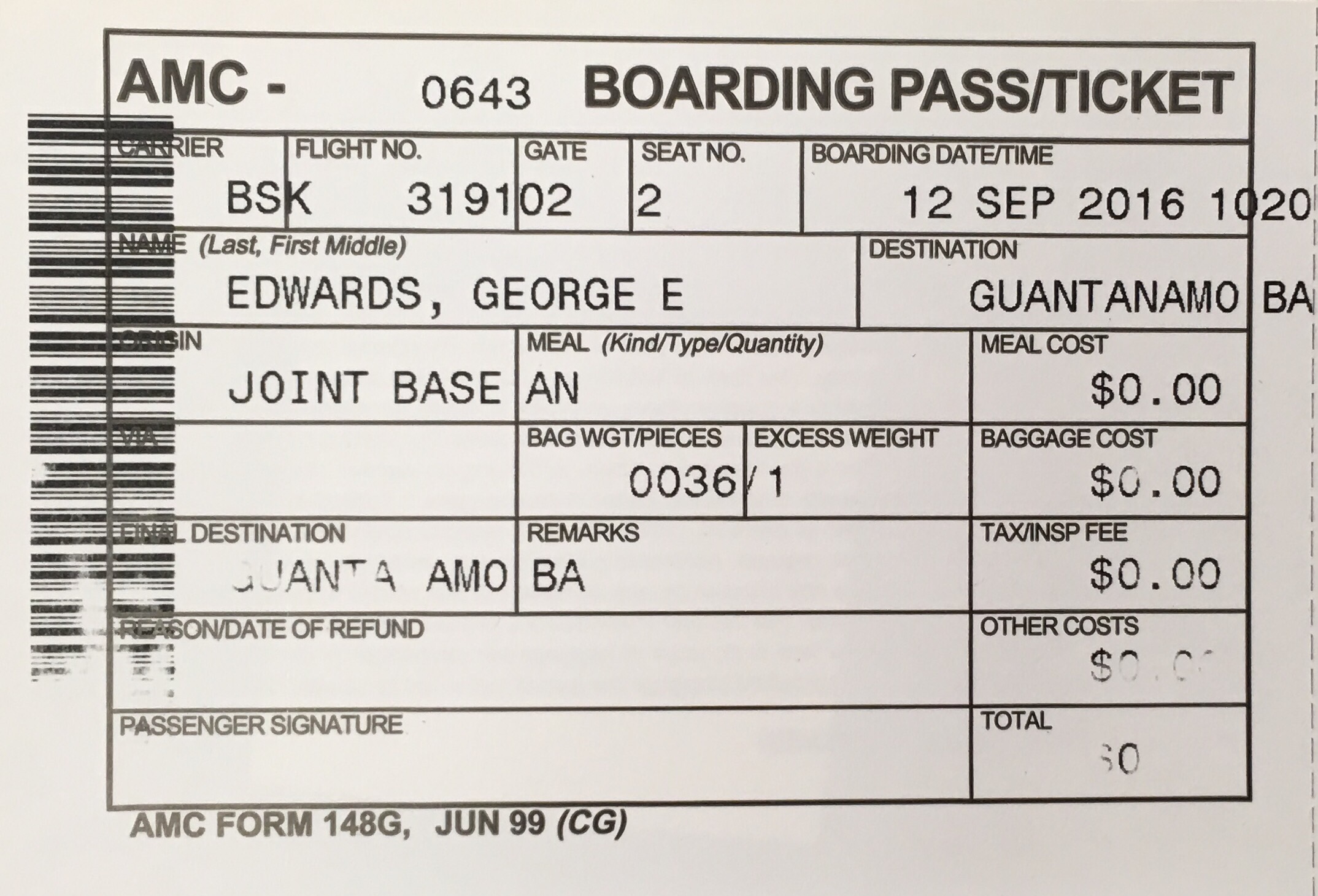
I returned to Washington, DC from Guantanamo Bay on Saturday the 10th of September, and am going back to Guantanamo on Monday the 12th.

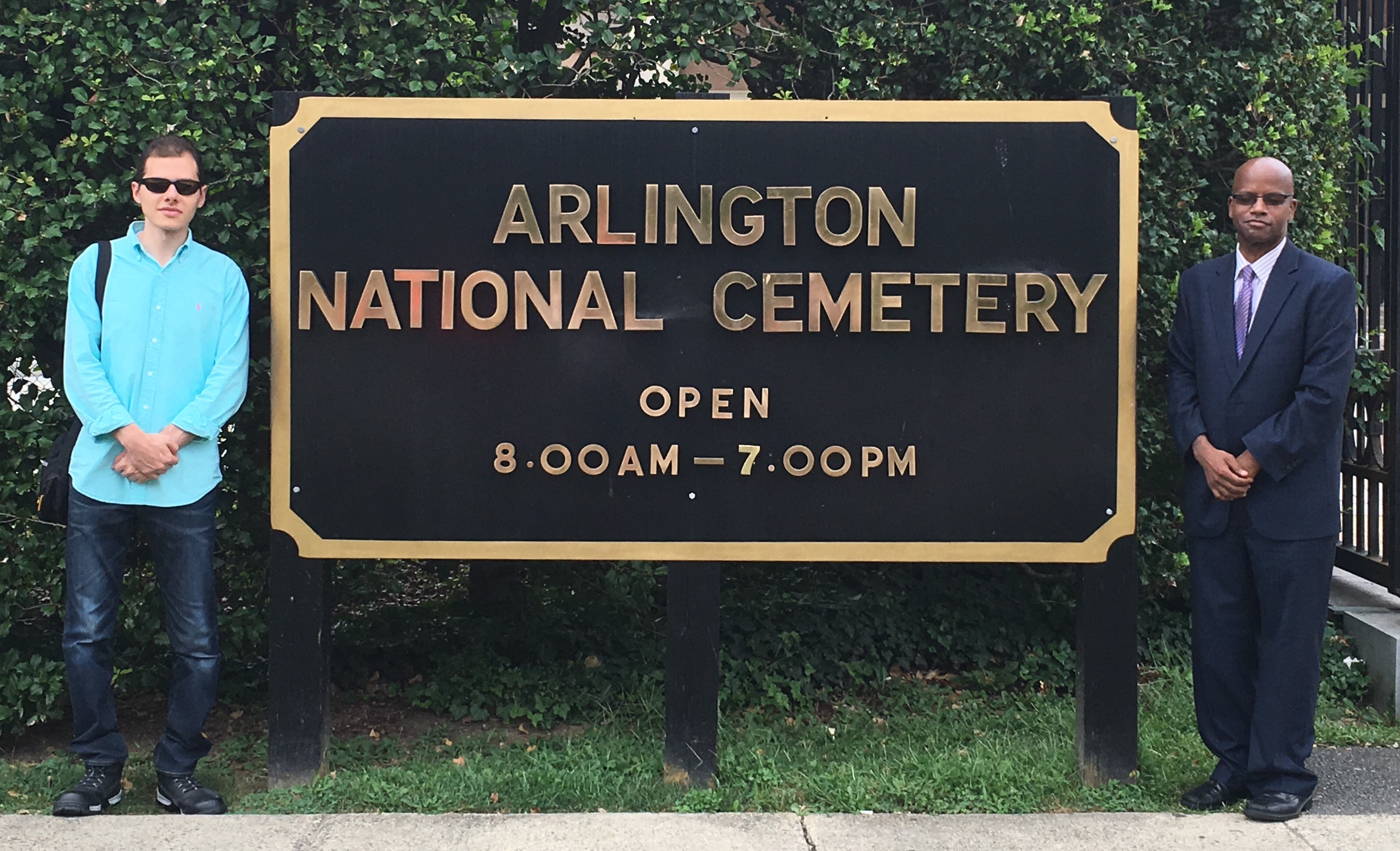
On Sunday, the 15th Anniversary of the World Trade Center and Oentagon attacks, my law student Faisel Sadat and I paid respects at Arlington Cemetery. 

Why Guantanamo Bay again?

Last week I was there for pretrial hearings in the U.S. Military case against all Nashiri, who allegedly masterminded the 2000 bombing of the USS Cole off the coast of Yemen, killing 17 US sailors. 

This week I am monitoring the modification of the guilty plead for Majid Khan, who is the only person convicted of crimes among the 61 men being held at the Guantanamo prison. 

I am joined by 6 non-governmental organization (NGO) representatives (pictured above), including one who was with me last week.

We are expected to have only one hour of court this week, on Wednesday. 

Guantanamo Detainee Rabbani Requests Freedom

Abdul Rabbani

Abdul Rabbani

Yesterday, 7 July 2016, Adbul Rabbani requested a Guantanamo Bay “Periodic Review Board” to set him free, after almost a dozen years at the remote island prison.

Unfortunately, I was not permitted to attend live video of the hearing, that was broadcast into a secure building near the Pentagon, with such “public” hearings being open to select human rights organization representative, legal experts, and media. My application to attend these hearings is still pending. So, I cannot describe to you what Rabbani looks like, his demeanor, the manner in which he interacted with his Government-appointed Personal Representative or his Private Counsel (if in fact his private counsel was present), what the room looks like or how it is set up, whether Rabbani was shackled to the floor, or any other aspects or dynamics of the public portion of the hearing.

Instead, I post below 3 documents that the Pentagon posted on its website (www.prs.mil) after yesterday’s hearings. These documents shed some light into who the government believes Rabbani is and what the government believes Rabbani did, what his Personal Representative said during the hearing (I attach a written statement), and what his private counsel submitted (a written statement — again, I do not know whether the private counsel was present and read the statement, or whether it was submitted separately).

Gulam Rabbani

Rabbani’s brother, who is also incarcerated at Guantanamo Bay

Regarding documents, the Pentagon posted that at the request of Rabbani, his own written personal statement and the transcripts of the public portion of the hearing were not posted. Had I been permitted to be present at the hearing, I would have heard what Rabbani had to say in his personal statement, and I would have heard the interaction between and among participants (questions, answers, discussion). Now there is no way to know what Rabbani wrote or said in his plea that he is not a threat to the national security of the U.S. Based on the statement of the private counsel, it is possible that he requested to be sent to Saudi Arabia (Medina) where he has family, rather than Pakistan, where he first got involved in matters that ended up getting him to Guantanamo Bay. Also, we do not know whether in his written statement or in otherwise during the hearing the topic of came up of his brother, who is also incarcerated at Guantanamo Bay.

Here is the Government’s Summary of Unclassified Information on Rabbani:

[office src=”https://onedrive.live.com/embed?cid=AA02978A4AC8C787&resid=AA02978A4AC8C787%21143&authkey=AMrtSku8WiJ0svo&em=2″ width=”876″ height=”688″]


Here is the Opening Statement of Rabbani’s Government-Appointed Personal Representative:

[office src=”https://onedrive.live.com/embed?cid=AA02978A4AC8C787&resid=AA02978A4AC8C787%21144&authkey=AG_QPaN1au7QtBI&em=2″ width=”876″ height=”688″]


Here is the Opening Statement of Rabbani’s Private Counsel:

[office src=”https://onedrive.live.com/embed?cid=AA02978A4AC8C787&resid=AA02978A4AC8C787%21145&authkey=AHYgMODn8_H6q4M&em=2″ width=”876″ height=”688″]


Here is a screenshot indicating that  “At the request of the detainee, the detainee’s written submission is not posted”.

Rabbani - PRB Written Personal Statement Not Authorized for Release by Rabbani - 7 July 2016


Here is a screenshot indicating that “At the request of the detainee, the transcript of the detainee session is not posted“.

Rabbani - PRB Transcript Not Authorized for Release by Rabbani - 7 July 2016


What about other detainee written statements & public PRB hearing transcripts?

Other detainee written statements appear on http://www.prs.mil, and other PRB public session transcripts also appear. Public documents from other PRBs will be posted on this site after I observe a PRB in which those documents will be released. That way, readers can get a fuller picture of the PRB and the PRB process — from documents to personal observations of the proceedings, with the personalities and process being more accurately and comprehensively described.

George Edwards

Periodic Review Board (PRB) Project

Another Guantanamo Detainee permitted to plead for release

omar al rammah - yemen

Omar Mohammed Ali al Rammah

The Pentagon posted on their website a hearing date for another detainee to be permitted to plead for his release.

On 21 July 2016, Omar Mohammed Ali Al-Rammah, will be given an opportunity formally to request repatriation to his home country (Yemen — which would almost certainly not be granted) or transfer to a third country. The hearing is called a “Periodic Review Board” or “PRB“.

al Rammah, who is alleged to be a member of al Qaeda, is suspected to have played a major role in “al-Qaida linked plans to conduct explosives operations in Georgia and Chechnya”  in the Republic of Georgia. (Per a JTF-GTMO memorandum from 2008). That 2008 memorandum noted that al Rammah was at that time a high risk (as he was “likely to pose a threat to the US, its interests, and allies”), a medium threat from a detention perspective, and of medium intelligence value.

It was previously reported that the 14 July 2016 was the last scheduled PRB. And that was true at the time. The al Rammah hearing was just added to the public schedule.

It is hoped that the Pentagon will permit me to observe the al-Rammah hearing.


Guantanamo Detainee Seeks Release; Legal Observer Not Permitted to Attend

Abdul Rabbani

Abdul Rabbani set to plead for release from Guantanamo Bay

On the morning of Thursday, 7 July 2016, a Pakistani detainee imprisoned at Guantanamo Bay since 2004 was scheduled to formally plead for his freedom. Such hearings are held at Guantanamo Bay, but are piped in by live video at a secure location near the Pentagon.

I have for many months sought to observe these hearings — called Periodic Review Boards (PRBs) — but have not been granted permission. Members of the human rights community, media, and others routinely attend and observe these hearings. I am awaiting a letter from the Director of the Office in charge, telling me “yes” or “no”, officially, whether I will be able to observe the last scheduled of the “initial review” PRBs. The last in this initial series is scheduled for Thursday, 14 July 2016 — one week from today.

Abdul Rabbani, born in Saudi Arabia but claiming Pakistani citizenship, is alleged, among other things, to have operated safe houses in Karachi, Pakistan that housed high level al Qaeda members, and to have had links with Osama bin Laden, Khalid Shaik Mohammad, and 11 of the 9/11 hijackers.

Today’s hearing is not a criminal in nature (unlike all the other Guantanamo Bay hearings I have observer) — today there are no charges, judge, or jury.

Today’s hearing was prompted by a 2011 Presidential Executive Order through which detainees are periodically reviewed on whether they maintain a threat to U.S. national security. If they do not pose a threat, they could in theory be set free from Guantanamo Bay (as many hundreds have been released since 2002, and have many dozens have been released recently).

These PRB hearings are incredibly important for many reasons, and it is important for observers to be able to observe them, live, in progress, at least from the remote security DC-area facility.

Instead of a bona fide judge and jury, this morning Rabbani would have made his case for release to a a cross-section of representatives of the US national security community that he is not a threat to the national security of the US, and that he should be repatriated to his home country or transferred to a third country. They would likely render a decision within a month from today.

If they find that he is not a significant threat, that might be another step in the direction of Guantanamo Bay closing, if Rabbani could be freed from Guantanamo. The Guantanamo Bay population is below 70 detainees, from a high of 780.

Did Rabanni’s hearing happen this morning?

I do not yet know if the hearing went forward this morning. Though I timely requested to observe, and submitted significant materials in support of my request, I was not granted permission to attend and observe.

I posted earlier about the published standards for clearing observers for PRB hearings, and linked to the Pentagon website that lists the standards.

We at the Periodic Review Board (PRB) Project are very much looking forward to receiving an official letter either officially granting permission to attend next week’s final “initial review” PRB, or officially denying permission to attend and observer next week’s final “initial review” PRB.

We will keep you posted!

PS:  I will plan to post some of the materials I submitted to the Pentagon as credentials to gain PRB observer status.

George Gedwards

Guantanamo Detainee To Plead for Freedom at Special Hearing

Abdul Rabbani

Abdul Rabbani’s PRB is set for 7 July 2016

On Thursday, 7 July 2017, Guantanamo Bay detainee Abdul Rabbani is scheduled to have a chance officially to plead that he poses no threat to U.S. national security and should be released from Guantanamo.

He may speak at a hearing, called a Periodic Review Board (PRB), authorized by a 2011 Executive Order issued by President Obama. Detainees may argue for their freedom before a panel representing a cross-section of the U.S. national security community.

Rabbani is expected to appear in a small room at Guantanamo Bay, with a U.S. government provided military “special representative” at his side. He and the special representative may make statements, call witnesses, or invoke other rights. The review panel consists of representatives of the Departments of Defense, State and Homeland Security; the Chairman of the Joint Chiefs of Staff; and the Office of the Director of National Security – all viewing remotely, presumably via secure video-link from their Washington, DC area offices.

Over 50 PRB “initial reviews” have been held since 2013. After Rabbani’s PRB tomorrow, the last scheduled PRB is set for Thursday, 14 July 2016, for Ismael Ali Faraj Ali Bakush (ISN 708), of Libya, who has been held at Guantanamo since 2002. For a chart of scheduled PRBs (past and future), please see the bottom of this link.

If after the “initial review”, a detainee is deemed not to be a significant threat to the US, arrangements may be sought for repatriating him to his home country or releasing him to a third country. If he is deemed a significant threat, he will have a “file review” every 6 months, and a “full review” every 3 years (“triennial review”).

Denial of me to observe PRBs at remote DC-area location

PRBs are also video-cast live from Guantanamo to a remote facility near the Pentagon, where specially approved media, non-governmental organization (NGO) representatives, and individuals may view the public portion of the proceedings.

One would expect the PRBs to be transparent, with reasonable access for media, human rights observers and individual experts to view from the remote DC-area facility. It has proved difficult to gain permission to observe a PRB.

The Pentagon has denied multiple NGOs permission to observe, including NGOs with longstanding work in Guantanamo Bay detainee related issues. Also, the Pentagon has denied access to at least one individual with longstanding work in the areas of wartime detention, international law, and human rights – me!

I have been seeking permission to attend PRBs for many months, submitting significant materials in support of this request. I have been denied permission to observe PRBs multiple times, for multiple unofficial reasons. I await an official letter from the Periodic Review Secretariat (PRS) either expressly granting permission to observe, or expressly denying permission.

Since over 50 detainees have had their “initial review” PRBs, and only a couple are left, the last opportunity to observe an “initial review” will likely be within the next week.

Criteria for approving media and non-media observers for PRBs

The Periodic Review Secretariat lists criteria for selecting PRB observers as follows:

In selecting applicants for observer status, the following criteria will be considered:

  • Reach of the applicant organization or individual (e.g., audience size, readership, subscriptions, circulation, viewers, listeners, website hits, writings, broadcasts, professional standing, diversity of audience, etc.).
  • Nexus of the applicant’s organizational mission to Periodic Review Board proceedings, wartime detention, international law, and/or human rights.  If the applicant is an individual, the nexus of the individual’s writings, commentaries, and/or broadcasts on the same topics may be considered.
  • Extent to which applicant has provided longstanding and frequent coverage of issues relating to Periodic Review Board proceedings, wartime detention, international law and/or human rights.

All groups, organizations and individuals (if not affiliated with a group or organization) will be evaluated under these procedures.  Applicants are asked to provide documentation and examples of how the organization or the individual meets the above criteria.

http://www.prs.mil/Press-Releases/Observers/http://www.prs.mil/Press-Releases/Observers/

I have applied for observer status under the various prongs, including the second prong (second bullet point) — the “nexus standard” — which calls upon the Pentagon to consider the following when selecting PRB Observers:


(1)  For organizations, the nexus of the organizational mission to:

(a) Periodic Review Board proceedings;

(b) wartime detention;

(c)  international law; and/or

(d) human rights. 


(2)  For individuals, the nexus of the individual’s writings, commentaries, and/or broadcasts to

(a) Periodic Review Board proceedings;

(b) wartime detention;

(c)  international law; and/or

(d) human rights.


We look forward to learning from the Pentagon whether this standard is met and I will be able to observe PRBs, or whether the standard is not met and I will be officially denied (following multiple other denials). It is particularly important to be able to observe PRBs, not only because of the role they may play in the debate regarding closing Guantanamo Bay, but also because these hearings are very important in discussions regarding rights and interests of all Guantanamo Bay stakeholders.

Who is Rabbani?

Rabbani was born in Saudi Arabia, claims citizenship of Pakistan, and is about 46 or 47 years of age. It is alleged that among other things, he operated safe houses in Karachi, Pakistan that housed high level al Qaeda members, and had links with Osama bin Laden, Khalid Shaik Mohammad, and 11 of the 9/11 hijackers.

Gulam Rabbani

Rabbani’s brother — Gulam Rabbani

He was captured in September 2002 in Pakistan in a raid that netted several others since taken to Guantanamo Bay. He and others were held at various prisons, including in CIA custody (black sites), before being transferred to Guantanamo Bay in 2004.

Rabanni’s brother – Gulam Rabbani – is also being held at Guantanamo Bay.

Is Rabbani a risk?                  

In previous years, through different, non-PRB processes, Rabbani was considered a risk.

For example, 9 June 2008, Rear Admiral DAM. Thomas, Jr (US Navy, Commanding) wrote a memo to the Commander of the US Southern Command, recommending Rabbani’s continued detention. He contended that Rabbani’s risk assessment was as follows (bold & all caps in the original):

“A HIGH risk, as he is likely to pose a threat to the US, its interests, and allies”

“A MEDIUM threat from a detention perspective”–

“Of HIGH intelligence value”

The PRB panel is expected to render a decision within a few weeks after the hearing as to whether Rabbani currently poses a significant national security risk to the U.S. A decision is not set to be made until the panel hears directly from the personal representative, and quite possibly from the detainee himself, from witnesses, and from the Government.

The overwhelming majority of each PRB is conducted in secret (closed / classified) proceedings. Most of the PRBs I have reviewed transcripts of list the public sessions as lasting around 19 to 21 minutes on average (again, with that figure being an estimate). The open session would typically consist of the special representative speaking and the detainee making a statement.

Please look forward a future post on the actual Rabbani hearing. Unfortunately, at this point, I will not be able to post based on personal observations in the closed DC-area hearing. I will need to wait until the public transcripts are posted online.

I will be able to gain some insights into the Rabanni proceedings from reading the posts of NGOs and media who have been cleared to attend. Individuals who have witnessed PRBs at DC location have been able to observe the demeanor of the detainee, hear him read his personal statement in his own voice, study his body language, and witness interaction between the detainee and his special representative. Much is missed when one is prohibited from observing PRBs with one’s own eyes in real time.

George Edwards


Periodic Review Board (PRB) Project of The Gitmo Observer

Screenshot 2016-07-04 14.11.56The Periodic Review Board (PRB) Project of The Gitmo Observer is discussed on this page:  https://gitmoobserver.com/prbs/.

This project details a critically important process at Guantanamo Bay in which detainees are given an opportunity formally to plead to the U.S. Government that the detainees should be set free from Guantanamo Bay. Detainees may argue that they are not a significant security threat to the national security interests of the U.S., thus possibly paving the way for the detainees to be repatriated to their home countries or transferred to third countries. Many of the detainees have been held at Guantanamo Bay since soon after the prison site was opened in January 2002, with some of them approaching their 15th year being at the remote Caribbean Island prison.

Below is a Chart of Periodic Review Boards that were provided for in 2011 but commenced in 2013. The final 2 “initial reviews” that may occur appear to be set for 7 and 14 July 2016. This chart was prepared by The Gitmo Observer, with information gathered primarily from the Pentagon’s PRB Secretariat website (www.prs.mil), with consultation of publicly available information from new sources and NGOs.


[office src=”https://onedrive.live.com/embed?cid=AA02978A4AC8C787&resid=AA02978A4AC8C787%21137&authkey=ABdMvFS9AHCkUT8&em=2″ width=”876″ height=”688″]


Screenshot 2016-07-04 14.11.56

PRB Chart – 3 July 2016

_______