Uncategorized

Arrival at Guantanamo Bay Today

gitmo6-lemmerdsc-0185-15col

Camp Justice — Where we are staying during our week at GTMO. Photo by Catherine Lemmer, IU McKinney School of Law)

Our flight to Guantanamo Bay was delayed leaving Andrews Air Force Base. We arrived at Guantanamo after a 3 hour flight. We were processed through the arrival gates and loaded a ferry to the main post. I found it interesting that all of the victims’ families, defense counsel, prosecutors, media, court stenographers and NGOs traveled on the same flight.


Our group of NGO Observers is staying at Camp Justice. Camp Justice is essentially rows of Quanset hut type tents. Our tents are air conditioned, with a 6-8 small bunks. We have a refrigerator, lights and electricity in all of the tents. Bathroom (latrine) tents and shower tents are located nearby. We were given a short period of time to get settled in. We then headed to the security office to obtain our badges. Badges are required for all NGO Observers, media, and others when occupying Camp Justice. We were given a short briefing regarding some of the rules and conditions. Our cell phones will not work (phone calling cards are available). Wi-Fi is very limited and available on some hotspots on the main post. We can, however, buy internet access through an Ethernet connection. It is slow, but it works.

DSC00646

One of our Camp Justice tents.

We later took a tour of the main base. And, as the highlight of the evening, we were invited to a barbeque with some of the defense counsel. When asked about the volume of filings in the case, one attorney remarked that the 9/11 hearings have over 11,000 pages of transcript and over 20,000 pages of motions. We also learned that the public transcripts are usually available online within 24 hours. It was an opportunity for us to talk to the counsel, as attorneys, and get their input on some of the questions we had.

On a sad note, we learned of the passing of Supreme Court Justice Antonin Scalia, when one of our NGO attorneys drew our attention to the CNN headline.

There are no hearings scheduled for tomorrow. Sunday is Valentine’s Day. The dining facility will host a Valentine’s Day brunch. We are scheduled to tour the lighthouse and receive a briefing from Brigadier General Martins, the Chief Prosecutor of the US Military Commissions.

I recognize that I am the eyes and ears into Guantanamo Bay and the Military Commissions for many people in Indiana and elsewhere who will not have the opportunity to visit this base. In upcoming blogs I will report more on the substance of our monitoring work, as well as my other experiences here in Cuba.

Paul Schilling

Indiana University McKinney School of Law, JD Graduate

Indiana Deputy Attorney Geberal (posting in personal capacity)

(Posted by G. Edwards on behalf of P. Schillng)


Hearings Cancelled this Week

January 26 & 27 Guantanamo Hearings Cancelled

I am a first year law student at the Indiana University Robert H. McKinney School of Law, and I was set to travel to Ft. Meade Maryland this week to observe hearings via lifestream from Guantanamo Bay. The hearings scheduled for this week were for Hadi al Iraqi, who is alleged to, among other charges, have been involved in a series of attacks in Afghanistan and Pakistan around 2003 and 2004. The hearing postponement appears to have resulted from a motion for continuance filed by the defense. The defense filed two motions for continuance in January. Although neither the motions for continuance nor the responses to those motions have been made public, I suspect they are related to the hearings being cancelled this week. I feel a little disappointed that this week’s hearings were cancelled, although I must admit I was concerned that bad weather could cause problems with travel from Indianapolis to Ft. Meade.

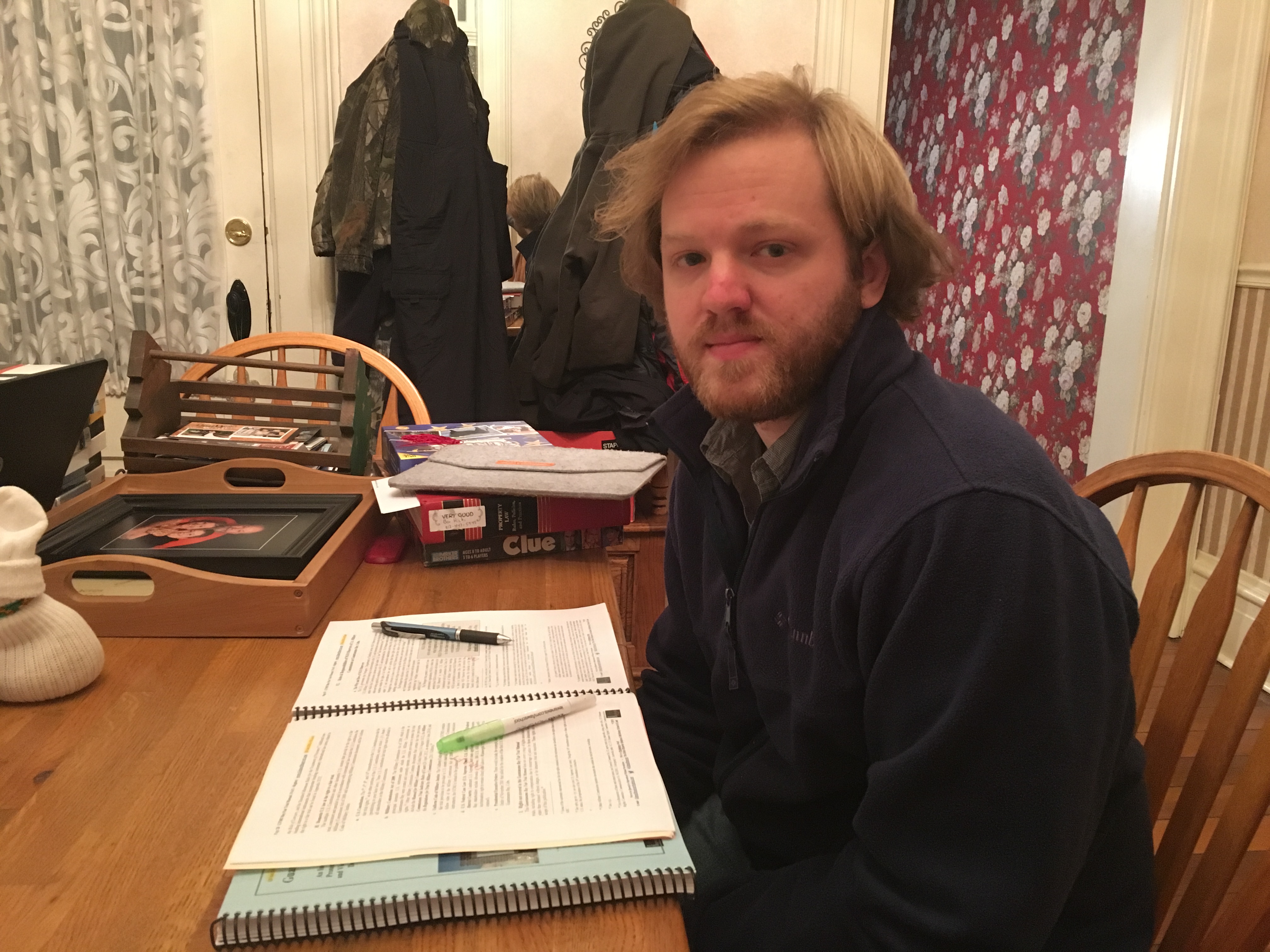
I review the Guantanamo Bay Fair Trail Manuals in preparation for my observer mission.

I review the Guantanamo Bay Fair Trail Manuals in preparation for my observer mission.

A Rare Opportunity

Not many people have the opportunity to view the hearings of an alleged war criminal. Although the hearing for this week was cancelled, I hope that I will be able to attend one of the other hearings in the future. I understand that delays and postponements are inevitable, but hopefully these will not affect my future travel plans.

Eichmann Trial

A few years ago I read a book by Hannah Arendt entitled Eichmann in Jerusalem, in which Arendt describes the challenges associated with reporting on the trial of Adolf Eichmann who was tried for having a major role in the atrocities of the Holocaust. One of the specific challenges Arendt noted is a problem associated with holding a trial for someone who is generally believed to be guilty from the start. She questioned whether such a trial trial can have legitimacy, or if it is more of a show. As I go into this process, this issue does not concern me. I believe it is important to have a trial, especially in these instances. One concern is that most people likely believe that those held in Guantanamo Bay are guilty, based solely on the fact that they are being held there. Holding a trial is an essential part of ensuring that all stakeholders are treated fairly. My role as an observer is an essential part of this process. I take this role very seriously and will always strive to remain objective when reporting on the procedural process.

Final Thoughts

I remain optimistic about my observer mission, despite the first hearing I was set to view being cancelled. As I continue the semester I hope I can find time to attend another hearing, and ultimately hope to travel to Guantanamo Bay, Cuba, to see a hearing in person.

My Scheduled Trip to Guantanamo Bay

My name is Leontiy Korolev and I am very excited by the possibility of traveling to Guantanamo Bay to observe hearings in the U.S. Military Commission case against Hadi al Iraqi on 26 and 27 January 2016.

I graduated from Indiana University McKinney School of Law a few years ago, and now work as an attorney for the State of Indiana.  In Law School, I was president of the International Human Rights Law Society and had the honor of receiving a scholarship to travel to Geneva, Switzerland as an extern for the Program in International Human Rights Law. For a while after Law School I was a research assistant for the Program in International Human Rights Law, and assisted with drafting and researching parts of GuanFT Manualtanamo Bay Fair Trial Manual.

Case Background

The Office of the Military Commission provides background information on the Guantanamo Bay Trials including any official documents that have been released to the public. The Charge Sheet is an interesting read and lays out the U.S. Government’s charges against Hadi al Iraqi.  The specific charges are found on pages 10-12 of the Charge Sheet dated 02/10/2014. The five charges allege that Hadi al Iraqi committed the following crimes: (1) denying quarter, (2) attacking protected property, (3) using treachery or perfidy, (4) attempted use of treachery or perfidy, and (5) conspiracy. It is important to note that there are numerous news sources available online and elsewhere about the allegations and Hadi al Iraqi; the Charge Sheet only provides the Governments allegations.

But learning about Hadi is only part of my preparation. I also have to learn about what my responsibilities are as an “observer” or “monitor”.

The Guantanamo Bay Fair Trial Manual contains a chapter about the Role of the Observer / Monitor. I understand that I am to attend, observer, analyze, critique and report on U.S. Military Commission hearings.  I am looking forward to digging into the Manual and learning more about the role of the Observer/Monitor. Professor Edwards provided the following summary of the role of the Observer/Monitor: “We are observers, and have an opportunity to see, hear and learn things that other stakeholders are not privy to. We are the eyes and ears into the Commissions for the outside world. If we do not post information, outsiders will not know. We have undertaken to send people to Ft. Meade & GTMO in great part to provide insights for those who cannot go. So, if we do not post, stakeholders and others of interest do not find out.”

Approval Process

There are a handful of blogs below that provide some background on the Hadi al Iraqi trials, however I do think that think there may be at least a few people interested in reading about how one is able to travel to Guantanamo Bay and the steps that were taken to apply as well as the steps that needed to be taken to “finalize” travel.  Finalize is in quotes because I write this, unfortunately knowing that the hearing could be continued at any moment, perhaps even during my drive to Andrews Airforce Base.  Of course it could also be continued as I fly on a military jet to Cuba, but I think that alone would be an experience, so it wouldn’t be the end of the world.  The trial could also be continued after I land, which would then leave me with a few days in Cuba, which is not the worst thing in the world either! UPDATE: the hearing was actually cancelled the day before I was set to travel, but I will cover the cancellation in a future post.

I have scoured my inbox to see the exact date of my application and it looks like my first application to participate as an observer in the Military Commission Observation Project of the Indiana University McKinney School of Law’s Program in International Human Rights Law was in March 2015.  I remember waiting and hoping for the opportunity but as time went by, I was convinced the opportunity would escape me.  It had been months since I thought I may yet have the chance to observe the Guantanamo Bay Trials in person, at Camp Justice.

The process has been a practice in managing expectation and curbing my enthusiasm.  I waited to hear back after applying the second time, but did not hold my breath.  Shortly after submitting the application I was informed that I had been nominated to travel to Guantanamo Bay for the Hadi hearings. There was a caveat, the nomination did not mean anything unless I was approved to go by the Pentagon.  I don’t know about most of the readers, but I have never had to obtain approval from the Pentagon to do anything before.  Perhaps Pentagon approval should have been a given, but in my mind it certainly was not.

It seems like time stood still for the next 12 days.  The approval email finally arrived and I was given two weeks to submit a handful of additional documents to the Pentagon.  This may seem like plenty of time, but the approval came on December 23.  Not only were the holidays here but there was a very specific submission process.  The documents followed a complicated path.  The Pentagon sent them to me, I had to fill them out, scan them and send them to Indiana University McKinney School of Law’s Program in International Human Rights Law (“PIHRL”).  Those documents were then reviewed by PIHRL and sent to IU Counsel on the IUPUI campus who reviewed and sent them to lawyers in Bloomington.  The lawyers in Bloomington reviewed the documents and sent them to the Indiana University Treasurer.  The Treasurer has the authority to execute the documents.  Once executed they were sent back to Bloomington Lawyers, the IUPUI lawyers, PIHRL, back to me and finally to the Pentagon.  I received the documents back from PIHRL on January 4th, one day before the submission deadline given to me by the Pentagon. A few more email exchanges followed and I was able to submit the documents to the Pentagon before the deadline.  I’m sure this all seems more dramatic to me than to the reader (hopefully readers), but given my excitement to attend the hearings, I think it is understandable.

Conclusion

Although the hearings were cancelled the day I was set to begin travel, this has been a learning experience and I hope to receive another opportunity to observe and report in the future.

Hadi al Iraqi Hearing – Background & Personal Reflections

Abd al-Hadi al-Iraqi

I am privileged to have the opportunity to monitor the Military Commissions  of Abd Hadi al Iraqi (“Hadi”).  The Pentagon has granted Military Commission Observer status to the Program in International Human Rights Law (“PIHRL”) of my law school Indiana University McKinney School of Law.  Professor George Edwards developed the Military Commission Observer Program (“MCOP”).

The MCOP sends observers to Guantanamo Bay, Cuba to monitor the hearings in person and to Fort Meade, Maryland to observe hearings on closed circuit TV.  Our job, as MCOP observers, is to seek to determine whether the rights all stakeholders (prosecution, defense, victims, etc.) have been afforded to them. Essentially, we are to review the applicable international law and determine whether a fair trial has been afforded to all stakeholders.  I will submit a future post(s) regarding the rights we are tasked with safeguarding.

As such, it is an honor for me to travel to Fort Meade to observe the Military Commission.  My intent in this post is to provide some background on the Hadi al-Iraqi case and some personal reflections.

Background:

I spent 15 years in the Army as a military policeman.  I deployed to Afghanistan while serving the Maryland National Guard with then 290th MP Company.  Additionally, a sister company in our battalion served 6 months at Guantanamo Bay (“Gitmo”) guarding some of the first prisoners located there in  2003 – 2004.

Once I was informed that I was selected as an observer, I did some background research.  I began by checking previous entries on the Gitmo Observer Blog.  I noticed that a previous entry regarding female guards mentioned that Col. David E. Heath was the commanding officer of the detention center.

JI Award

Col. (then Captain) Heath presenting me an award in June 1995.

I served under Col. Heath (then Captain Heath) from 1994-1995 as a military policeman on Johnston Island (referred to as “Johnston Atoll” by civilians) a small, desolate outpost in the south Pacific.  Johnston Island (“JI”) is located approximately 825 miles southwest of Hawaii. JI served as a storage and disposal point for chemical weapons. If I recall correctly, was Col. Heath’s first assignment as a commanding officer.


I then reviewed the charges and case materials and timeline for al Iraqi. It is alleged Hadi served as an Al Queda (“AQ”) liaison to the Taliban and later as an AQ commander.

Hadi is alleged to have sworn allegiance to Osama Bin Laden around 1999.  From 2002-03, he directed, funded, supplied, and supervised AQ operations in Afghanistan and Pakistan

Some key moments on the timeline stood out to me [Interspersed in bold / italics are some of my own personal reflections of my experiences in Afghanistan at the time some of the events occurred]:

Timeline of Allegations Against Hadi al Iraqi

June 7, 2003 – Hadi allegedly provided a suicide bomber to detonate a vehicle-borne explosive device (“VBIED”) hidden in a civilian vehicle near a bus carrying German military members.  The blast, which occurred near Kabul, Afghanistan, killed numerous German soldiers and Afghan civilians.

My unit (290th MP Company) arrived at Camp Phoenix, Kabul, Afghanistan in late June 2003, shortly after this incident.  The German unit that was bombed were on their way back to Germany.  Their duty in Afghanistan was complete.  Their bus was taking them from the ISAF base in Kabul to the airport when the VBIED went off next to one of the buses. This incident was briefed to us and provided a prime example of the importance of operations security (“OPSEC”).  We were aware how important is was to stay alert and not share too much information.

September 29, 2003 – Hadi allegedly organized and planned an attack on a US installation in Shkin, Afghanistan, killing one US soldier and firing RPGs and small arms at a marked medevac helicopter.  Additionally, the attack was videotaped.  The video showed the US soldier dying, and was used as a propaganda film.

October 2, 2003 – Hadi is alleged to have funded an improvised explosive device (“IED”) attack in which his co-conspirators planted an IED which detonated as a Canadian military convoy passed.  The blast killed 2 Canadian soldiers and injured another in Kabul.

I was in Kabul when this occurred.  The Canadians killed were a SGT and CPL.  Camp Phoenix observed a moment of silence for their passing. It also served as evidence that IEDs were being used in Afghanistan.  During this period of time, IEDs were mainly being used in Iraq.  That would change in the coming months and years. The use of IEDs in Afghanistan would accelerate rapidly. 

October 25, 2003 – Hadi’s alleged co-conspirators attacked a convoy using RPGs and small arms, killing 2 US persons in Shkin, Afghanistan.  They believed the convoy to be carrying “important persons” or “diplomats.”

November 16, 2003 – Hadi allegedly provided a reward of $200 – $300 US dollars to the Taliban for assassinating a civilian UN worker near Ghazni Afghanistan.

January 27, 2004 – Hadi allegedly provided a suicide bomber and funding for simultaneous attacks on coalition forces in Kabul.  The suicide bomber detonated an explosive vest directed at a Canadian convoy.  One Canadian soldier was killed, three injured.

It is my recollection (but it may have been another incident that occurred during this time frame) that this bomber used a motorcycle or motorbike to drive alongside the convoy, in traffic, and detonate alongside the passenger side of the vehicle.  This information was provided to US forces, so that future convoys and patrols would be on the lookout for motorcycles and items placed on our vehicles. 

Late 2003/2004 – Hadi allegedly provided $25,000 US dollars to a co-conspirator in a plot to murder Pakistani President Musharraf.

June 2006 – Hadi is alleged to have begun to travel to Iraq and acted as an AQ liaison.

October 2006 – Hadi attempted to travel to Iraq undetected, and presented false passports and documents to Turkish officials.

Late 2006-Early 2007– The details of his capture and transfer are unclear.  Hadi was ultimately detained.  At some point he was transferred to US custody and held by the CIA.  In April 2007, the US confirmed that al Iraqi, along with 14 other “high value detainees” had been transferred to Gitmo.

Conclusion

I am grateful for the opportunity to participate in this project.  I am looking forward to observing the hearing and providing feedback.

Paul Schilling

J.D. Graduate, Indiana University McKinney School of Law

A Forever Prisoner

G-Bay Diary Book Cover

NPR’s David Welna  updates NPR listeners on Mohamedou Ould Slahi, a forever prisoner at Guantanamo Bay, and author of Guantanamo Diary.  Written in long-hand,  the book describes his nearly 14-year ordeal as a detainee at Guantanamo Bay. The US Government redacted much of the work and has prohibited the author from seeing a published print copy of his book.

The story details the torture Mr. Slahi was subjected to at Guantanamo Bay and discusses the legal limbo he now resides in as a forever prisoner.

Welna interviews Mr. Slahi’s attorney, Nancy Hollander, and others during the story. You can find the NPR story (and interviews) here.

Question of Undue Influence

post theater

Front entrance of the Post Theater at Ft. Meade, Maryland, where Military Commission hearings are fed live from Guantanamo Bay, Cuba.

Today, the court spent a third consecutive day questioning witnesses regarding the female guard issue. Colonel David Eugene Heath, the current overseer of the detention center at Guantanamo Bay. Defense focused heavily on Col. Heath’s understanding of the Geneva Conventions, as well as his understanding and application of the detainees’ status as prisoners of war.

Luke in front of post theater

Me in front of the Post Theater, just outside the room where Military Commission hearings are aired.

Defense council for one of the defendants also brought up the fact that a complaint had been lodged against the judge for undue influence by military officials. Judge Pohl quickly pointed out that he had refused to even look at the contents of the complaint. Defense council argued that even if there had been no undue influence, there was still an appearance of undue influence, which obliged the prosecution to provide defense council with the contents of that complain. The prosecution responded that “apparent undue influence” is determined through an objective standard of analysis–i.e. whether a reasonable person would deem that there had been apparent undue influence. Since this was not the case, argued the prosecution, the complaint need not be handed over to the defense.

I experienced a kind of Kafkaesque disorientation as I contemplated the microscopic issues being dealt with today when compared with the “Gorgon’s Knot” of a case being sorted out bit by bit at Guantanamo. I was particularly struck by the lack of timeliness evident at the tribunal. International Law grants the accused the right to a “speedy trial”–a name one could hardly give to these hearings with a straight face.

By: Luke Purdy, 11 December 2015, 9/11 Hearings Guantanamo Bay (viewed at Ft. Meade in Maryland)

9/11 Hearings In Morning Recess

Law Professor posts from Guantanamo Bay about 9/11 hearings.

9/11 Hearings In Morning Recess

The 9/11 Hearings are recessed this morning (Wednesday, December 9) because Mr. Mustafa al Hawsawi did not voluntarily waive his right to be present at the proceedings.

Mustafa_al-Hawsawi_2012

Mustafa al Hawsawi

Mr. al Hawsawi was forced to choose between attendance at today’s Military Commission hearings or a meeting with the International Committee of the Red Cross.

Under the Military Commission’s procedures in place here for the 9/11 proceedings, a defendant must attend the proceedings or voluntarily waive his right to attend.  If a defendant chooses not to attend, but does not do so voluntarily, the Joint Task Force must “force” the defendant to come to the proceedings.

Judge Pohl “sternly” advised the government that although he understands that there are “a lot of fingers in  the pie” and “no unity of command” it is not acceptable to have these kinds of easily avoidable delays.  The hearings are now in recess to permit Mr. al Hawsawi to attend his ICRC meeting this morning and then attend the hearings this afternoon.

In the afternoon we are set to pick up with the female guard issue.

By: Catherine A. Lemmer, 9 December 2015, 9/11 Hearings Guantanamo Bay

Hearings on the Use of Female Guards at Detention Center

I arrived at Ft. Meade’s theater a few minutes before the day’s Military Commission hearings were set to begin. Guantanamo Bay’s courtroom broadcasts a live feed of the hearings to a number of bases throughout the continental United States, including Ft. Meade. Hearings were set to begin yesterday, but they were delayed by a day, as the judge decided to spend monday discussing evidentiary matters with council.

Post Theater 1

Sign for the Post Theater, where live feed of the Military Commission Hearings is Shown. The theater also shows regular hollywood films at the base.

As the session began, the judge had a brief colloquy with the five detainees in the room. After reading their rights, the judge asked them each in turn if they understood what had been said. The detainees all replied in the affirmative, though one of the defendants complained about his female defense council, claiming that she was not representing his interests.

After the judge finished the colloquy with the defendants, the remainder of the day’s session was spent in direct and cross-examination of a witness in the case, who for confidentiality purposes when by the name “Lieutenant Colonel (Lt. Col)”, relating to her use of female guards during her oversight of the detention facility where the defendants were being kept.

Emotions were fairly heated during these exchanges. The questioning related to a motion that would make permanent an order by the military commissions judge that would prevent female guards from having direct contact with detainees who, for religious reasons, are opposed to direct contact with un-related women. Defense council questioned the Lt. Col. about her awareness of the rules concerning cultural awareness, as well as her reasons for selecting the guards who would ultimately do searches of the prisoners’ rooms. The prosecution sought to emphasize the Lt. Col’s dedication to following Military Commission rules in a practical and efficient manner.

Throughout the hearing, trial participants voiced concerns about confidentiality. Prior to questioning of the witness, the military judge emphasized that today’s hearings would only focus on nonconfidential materials, and that feed would be cut off to the continental locations (such as Ft. Meade) if council or the witness mentioned any sealed information. As a result, there were numerous times throughout the hearing that the witness would hesitate to answer a question due to confidentiality concerns.

Council for the prosecution and defense spend both the morning and afternoon sessions questioning the Lt. Col. about her oversight of the detention center that she oversaw when female guards were given positions that put them in close contact with the detainees. Depending on whether the judge agrees, she may be brought back for another round of examination in the coming days.

By: Luke Purdy, 9 December 2015, 9/11 Hearings, Guantanamo Bay

9/11 Hearings Set To Proceed

Professor Catherine Lemmer at Guantanamo Bay, Cuba

Professor Catherine Lemmer at Guantanamo Bay, Cuba, December 2015

There were no open hearings today, December 7, 2015, in the 9/11 case. The hearings were closed for a 505H hearing during which the prosecution, defense teams, and judge addressed a number of evidentiary issues.

One of the on-going matters the parties discussed today was the use of female guards in the detention camps. The inmates object to the use of female guards for religious reasons. The court heard, during the open session in October 2015, extensive testimony and evidence on this issue.  Despite that the court was in open session the transcript has been significantly redacted and is now labeled: “Unclassified For Public Use.” This means that the previously available information is now classified. For example, there is less than one page of transcript for the 11:16 AM to 12:28 PM session on October 30, 2015.

GITMO transcript

gitmo transcript 2

All the transcripts are available on the Military Commission site. The unofficial word is that the female guard issue will be continued in the February 2016 hearings. Judge Pohl will hear additional classified evidence at that time. Until such time, the interim order will remain in place that prohibits female guards from interacting with the defendants for purposes of “legal activities.”  For example, transporting the defendants to attorney meetings or to court.  It is an order limited to legal matters, therefore the female guards are not prohibited from interacting with the defendants in such instances as escorting them to the recreation area or for matters other than legal.

The unofficial word is that the Military Commission will conduct four days of hearings starting tomorrow morning. At that point Judge Pohl will engage in a colloquy with each defendant regarding his right to be present in the courtroom. This colloquy occurs each time the hearings are convened.

As the NGO Observers were not able to be in the courtroom, we visited the Navel Exchange (NEX) for supplies. There was a huge Christmas display in the entrance to the NEX; many of the units decorate a Christmas tree. The Christmas tree pictured above features two local wildlife — the iguana and the banana rat.

The NGO Observers were taken on a drive up on the windmill ridge. From there you could see the entire naval station. The JTF detention centers are on the other side of the island and off-limits to the NGO Observers.

By: Catherine A. Lemmer, 7 December 2015, 9/11 Hearings, Guantanamo Bay

Monday’s 9/11 Hearings Are Closed

At the end of today’s (Saturday) 802 conference, we were informed that there will be no open hearings on Monday, December 7, 2015.  The Defense teams, Prosecutor, and Judge will be conducting a 505H hearing to discuss evidentiary matters related to a number of motions. If Monday’s 505H hearing resolves some matters, we will start up on Tuesday with the female guard issue, the CIA interpreter on Mr. bin al Shibh’s team, and again the conflict of interest matters.
By:  Catherine A. Lemmer, 5 December 2015, 9/11 Hearings, Guantanamo Bay

Enroute to Guantanamo Bay for 9/11 Hearings

I arrived at Andrews Air Force Base in the dark and am all checked in. I got my ticket and had a chance to read the Andrews Gazette while waiting for the rest of the NGO Observers to arrive.

Andrews gazette

I’ve introduced myself to the other NGO Observers as they arrived and I’ve handed out the newest version of our Guantanamo Bay Fair Trial Manual. There are seven observers this time, representing law schools, human rights and other non-profit organizations, and the private bar. I look forward to sharing conversations and learning from them this week.

Andrews Air Force Lemmer

Professor Catherine Lemmer at Andrews Air Force Base     5 December 2015

The issues before the hearing this week are of great interest — classified information, the female guard issue, the CIA interpreter issue, and the continuing conflict-of-interest issues. I was at Guantanamo Bay for the February 2015 9/11 hearings when the CIA interpreter issue stopped the hearings. I am very interested to see how that issue will be advanced.  It will also be interesting to see if the recent move by the military to open all combat positions to women will have an impact on the discussion of the female guard issue.

The chatter in the departure lounge is that the week is shaping up to be very productive.  It is sure to be an interesting and informative week.

By:  Catherine A. Lemmer, 5 December 2015, 9/11 Hearings, Guantanamo Bay

My first 24 Hours at Guantanamo Bay, Cuba

gettyimages_171562448

This is a Getty image photo. I plan to swap out this photo for one that I took at GTMO today, as soon as I can get a better internet connection.

I have been to Guantanamo Bay, Cuba several times, but only when U.S. Military Commission hearings were scheduled involving alleged war criminals charged with heinous crimes.

This time my visit is focusing on the Joint Task Force Guantanamo (JTF-GTMO) side, dealing with the detention of “detainees” (rather than dealing with trials of “defendants” or “accused” persons).

My goal on this trip is to gather information useful for my new book, The Guantanamo Bay Reader, set to be published by Indiana University Press.

Please watch this space for more on the detention side of what happens at Gitmo. My first 24 hours at Gitmo have been busy, and I have an even busier next 24 hours scheduled.

Stay tuned.

George Edwards

Going Back to Guantanamo 

I’ve been to Guantanamo Bay in multiple capacities. Today I go to conduct research on my new book, The Guantanamo Bay Reader (Indiana University Press, 2016). 

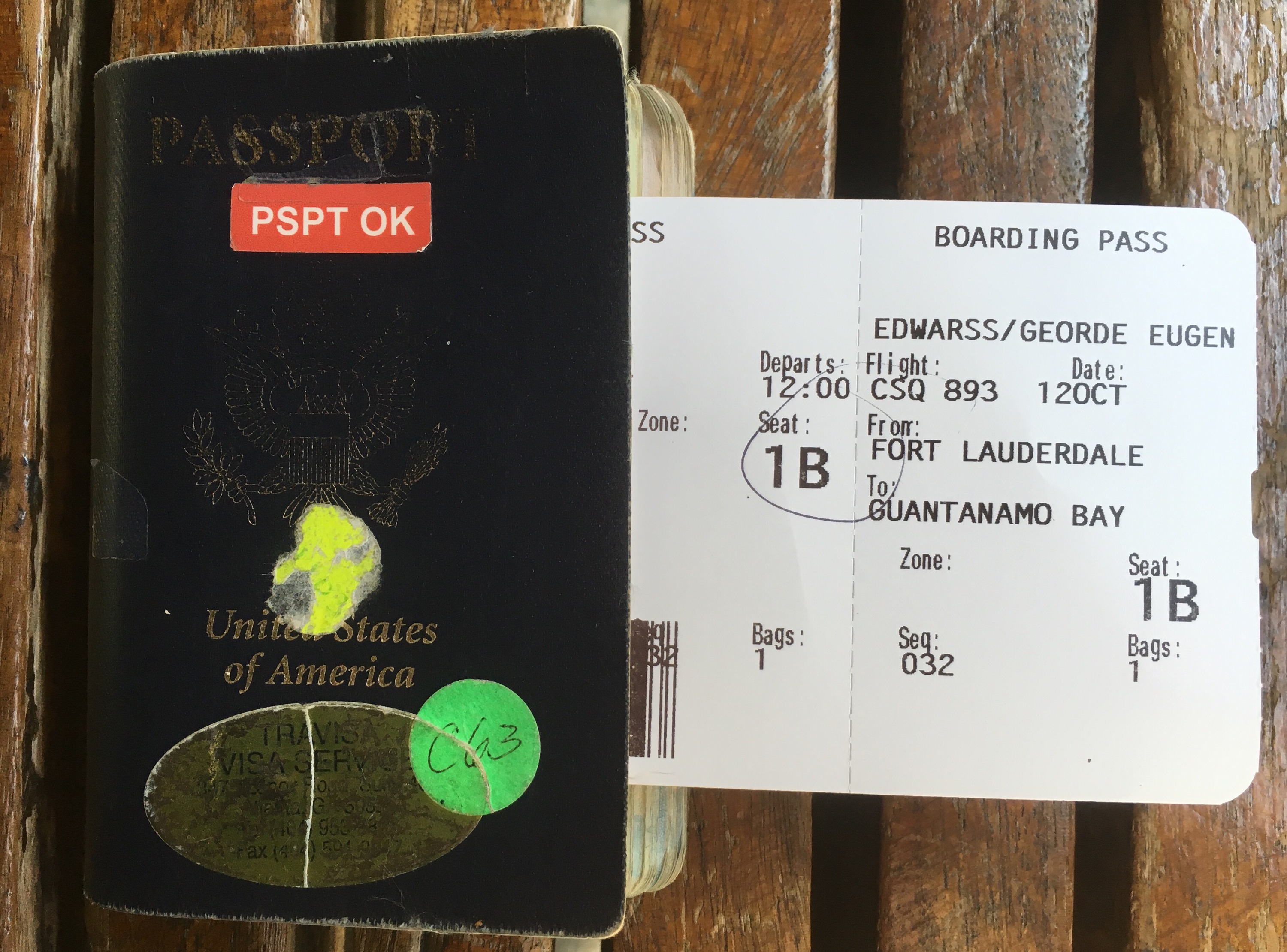
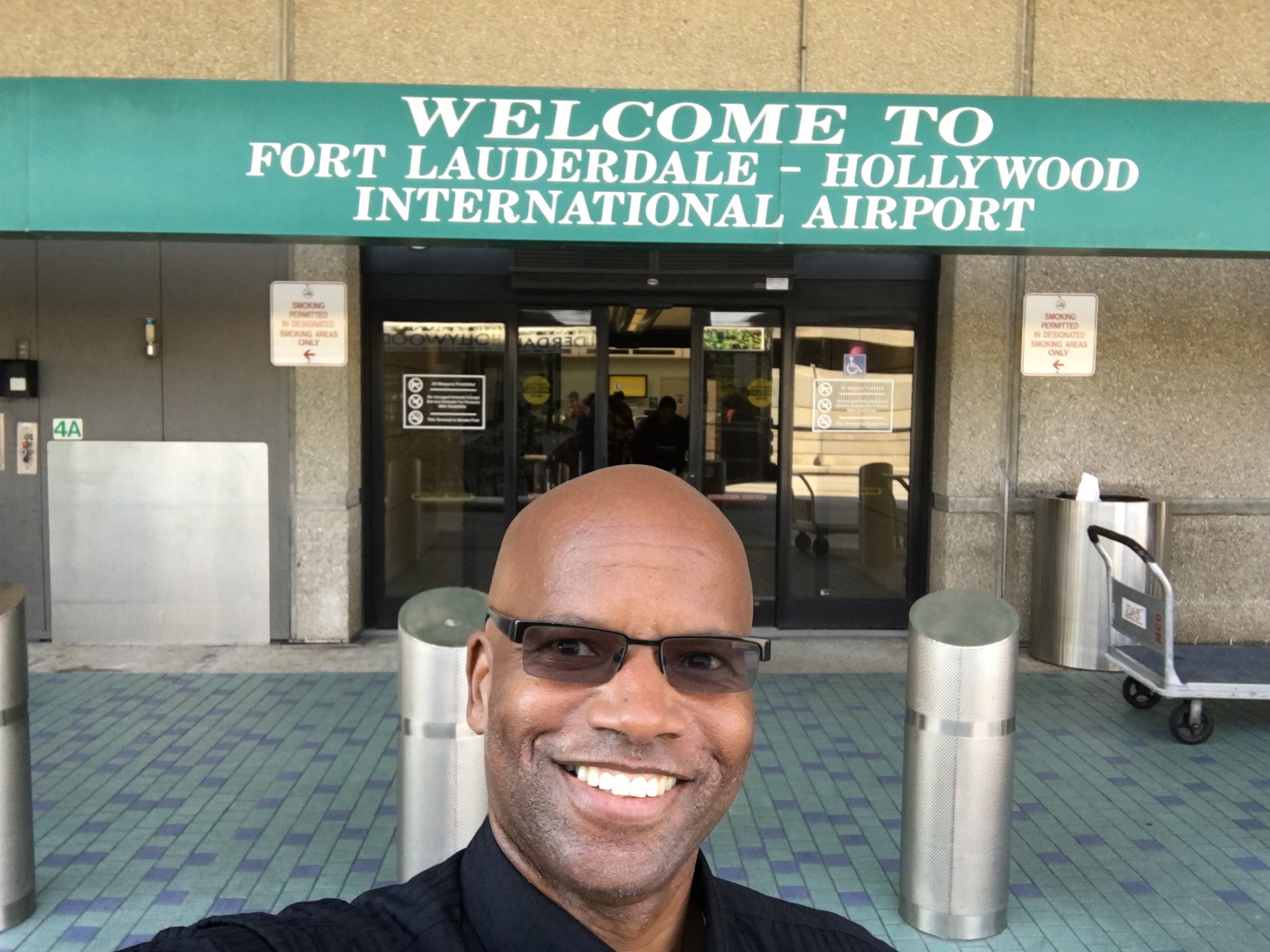
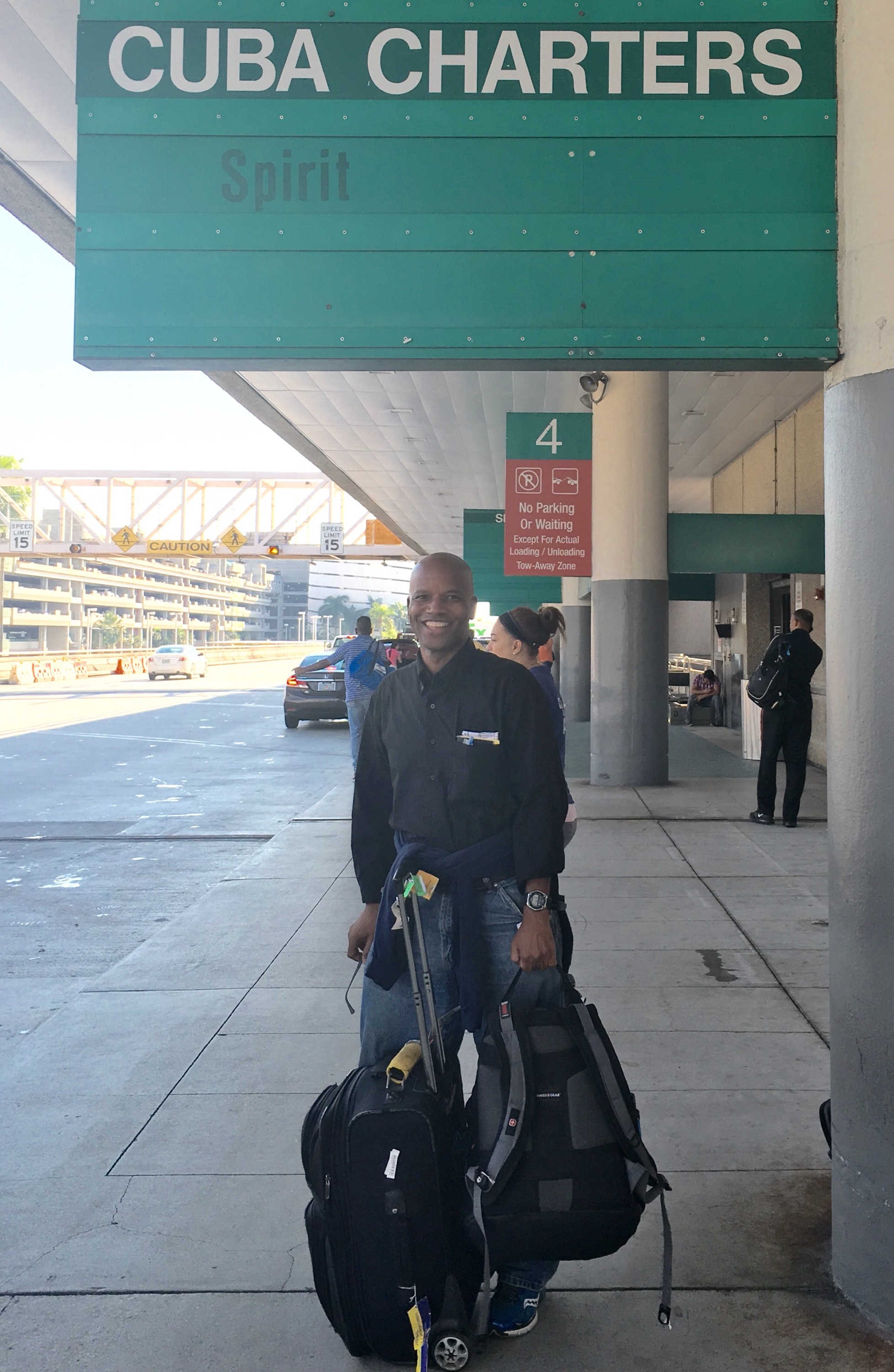
I’m flying on my own today, not attached to a specific US Military Commission.  That’s why my flight check-in to Guantanamo was at a discreet counter, on the lowest floor of the Ft. Lauderdale International  Airport, next to the baggage claim. In the past I’ve flown with a group from Andrews Air Firce Base. 
I’ll check in later after touching down in Cuba. 


“Towards the Closure of Guantanamo” report issued by Inter-American Commission on Human Rights

The Inter-American Commission on Human Rights (IACHR) issued “Towards the Closure of Guantanamo.” The report, consisting of an executive summary and six chapters, reiterates the IACHR’s call to close Guantanamo. The report is available at the link above and below. To scroll, simply place your cursor anywhere on the document, there is no scroll bar. Note: there are numerous blank pages in the scrollable PDF document.

[office src=”https://onedrive.live.com/embed?cid=AA02978A4AC8C787&resid=AA02978A4AC8C787%21110&authkey=AIDgbTATjVNqPyE&em=2″ width=”876″ height=”688″]

Gearing Up For Gitmo

Luke near a Tsunami Hazard Site in American Samoa, while on a 2014 summer human rights internship

Luke near a Tsunami Hazard Site in American Samoa, while on a 2014 summer human rights internship.

My name is Luke Purdy, and I am an almost-graduated 3L law student from Indiana University Robert H. McKinney School of Law. I am scheduled to fly to Guantanamo Bay, Cuba on 29 August to observe the Military Commission’s proceedings against Khalid Sheikh Mohammed, which have been ongoing since 2003. I have also been scheduled to attend previous hearings at Guantanamo Bay, but these hearings (one of which was for Al-nashiri, accused of the 2000 bombing of the USS Cole) were cancelled at the last minute. 

Background

I first heard about IU McKinney’s Gitmo Observer program while I was interning in Melbourne, Australia for the law school’s Program in International Human Rights Law. During that time I worked on the defense of an alleged Serbian war criminal. This experience elevated my interest in the world of military law, specifically when it impacted the rights of criminal defendants. Soon after returning from my internship in Australia, I dove into more classes relating to international human rights. In one class, International Criminal Law, I was able to contribute to a Fair Trial Manual being drafted by the Program in International Human Rights Law for use by observers at Military Commission proceedings like the one I am scheduled to attend at the end of this month. As many prior observers have done, I will be bringing copies of these manuals for observers to use during the upcoming trial against Khalid Sheikh Mohammad.

alg-khalid-shaikh-mohammed-jpg

Photograph of Khalid Shaikh Mohammad, the accused war criminal whose hearings I am scheduled to attend.

The Charges

The defendant in this trial, Khalid Sheik Mohammad, is accused of participating in numerous terrorists plots against the United States, including the 9/11 attacks on the World Trade Center. Khalid confessed to many of these crimes. However, some have criticized the procedures used on Khalid to elicit these confessions, which included waterboarding. Ultimately, if convicted of war crimes, Khalid Sheik Mohammad could face the death penalty.

My Role

In line with the goals the Military Commission Observation Project, my task as an MCOP representative is to attend, observe, analyze, critique, and report on the Military Commissions. Specifically, I am interested in learning about the defense team’s access to discovery materials, and whether rules of confidentiality interfere with the defense’s ability to defend their client fairly. I would also like to see how classified information is used (if at all) by the prosecution, and get a sense of how “reasonable” the speed of the trial is, and whether proceedings are being carried out without undue delay.

(Luke Purdy, Indianapolis, 10 August 2015)

Hadi Hearings Continued

SummaryGuantnaamo Bay - Military Commission Seal

The July 2015 session of the Abd al-Hadi al-Iraqi court hearings began Wednesday morning, 22 July 2015, at the Guantanamo Bay Naval Station. This session was scheduled to last until Friday, 31 July 2015. After about three hours of legal argument this morning, the court recessed the hearings without setting a new hearing date/time. 

Hearing Overview

At approximately 9:00am, the judge took the bench and began the proceedings. The judge noted that the prosecution, defense, and he had conducted a number of conferences since the court was last in session. These hearings were not on the record and were conducted by telephone. 

In reviewing these conferences, the judge noted that the parties had agreed to cancel prior hearings and instead address the pending legal issues during the 20 July – 31 July court hearings. The judge indicated that holding one longer hearing would be more efficient than conducting multiple smaller hearings to resolve these issues.  

Sunday, 19 July Conference

The judge stated one such hearing took place last Sunday, 19 July. During this hearing, one of Hadi’s attorneys informed the judge that the prosecution gave the defense, just two hours prior, information indicating that one member of the defense team may have a conflict of interest. At that time, the court delayed the start of the proceedings from Monday, 20 July until Wednesday, 22 July. However, after approximately three hours of argument morning of 22 July, the court recessed the hearings again so that the defense team could further investigate the potential conflict of interest issue.

Thursday, 23 July Ruling

On Thursday, 23 July, the court conducted another hearing with the parties off the record. The other Observers and I were notified afterwards that the court ruled that no additional hearings would be heard during the current court session. Therefore, even though the court hearings were scheduled to last until 31 July, no other hearings in the case would occur during this timeframe. As the court order will not be available online for approximately two weeks, I have not yet reviewed the document for information that may provide insight regarding the court’s rationale beyond what was said in court. 

The case is next set for hearings 21 September – 25 September. 

Preparing to Leave

Based upon this court order, the media, the Observers (including me), and others involved with the military commission process began preparations to depart Guantanamo Bay a week early. We originally planned on leaving on August the first, but since there were no more court hearings, it was time to head home.

First Night at Guantanamo Bay, Cuba

IMG_1307We arrived at Guantanamo Bay safely. It took a while to get settled in.

One of my first tasks was to set up the Gitmo Observer Resource Center, which is a compilation of Military Commission documents, Geneva Conventions, Briefing Books, and office supplies for all of the NGO Observers to use. It is set up in a room called the “NGO Lounge”. All of our Gitmo Observer materials were in a big black trunk, presumably placed there by the last Indiana University McKinney Law School Observer who was down here at GTMO last week.

On the plane to GTMO and while here, several NGO Observers have been reading Gitmo Observer’s Guantanamo Bay Fair Trial Manual. They seem to be very intrigued. This 400-page document written by IU McKinney affiliates looks at rights and interests of all stakeholders, including defendants, prosecution, victims, the press and others.

It was freakishly cold last night in our tent. IU McKinney’s GTMO sleeping bag AND electric blanket came in very very handy!

In the morning we are taking a tour of the GTMO courtroom.

(Avril Rua Pitt, Guantanamo Bay, Cuba, 2 March 2015)