Uncategorized

At Ft. Meade for Guantanamo Hearings

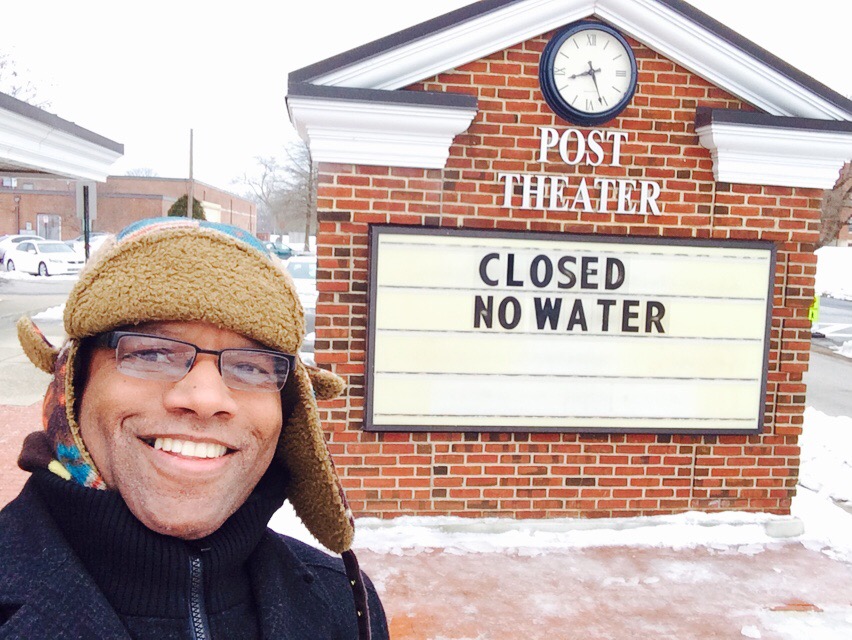
I just arrived at Ft. Meade, Maryland for today’s live hearings in the Guantanamo Bay case against al Nashiri, who allegedly orchestrated the bombing of the USS Cole off the coast of Yemen in 2000. It’s actually a secure feed live from the courtroom at Guantanamo Bay, Cuba, broadcast in a movie theater (the Post Theater) at this military base in Maryland.

Ft. Meade is the only place outside of Guantanamo that NGO Observers accredited by the Pentagon, like me and Affiliates of the Indiana University McKinney School of Law, can monitor in real time what’s happening in the Guantanamo Bay courtroom.

More to come later today.

(George Edwards, Ft. Meade, Maryland, Monday, 23 February 2015)

IMG_7709

Going to Ft. Meade to Monitor Guantanamo Bay Hearings

I’m traveling to Washington, D.C. this morning, bound for Ft. Meade, Maryland where on Monday morning I plan to monitor Guantanamo Bay US Military Commission hearings in the case of al Nashiri, a man accused of masterminding the suicide attack on the U.S.S. Cole off Yemen’s coast in 2000.

Why Ft. Meade?

Not everyone who wants to view Guantanamo Bay hearings is able to travel to Guantanamo Bay. It’s complicated to get there.

The Pentagon has opened a few select viewing sites for interested persons to view what is happening in the Guantanamo Bay courtroom, via secure videolink. It’s kind of like watching a courtroom drama on TV, and that courtroom scenario is real.

My colleague Professor Tom Wilson of Indiana University McKinney School of Law is scheduled to fly to Guantanamo Bay tomorrow, Sunday, to monitor the al Nashiri hearings. He will blogging about rights of all Guantanamo Bay stakeholders.

He will also be telling us at Ft. Meade what is happening outside the Guantanamo Bay courtroom that we can’t see or hear in Maryland.

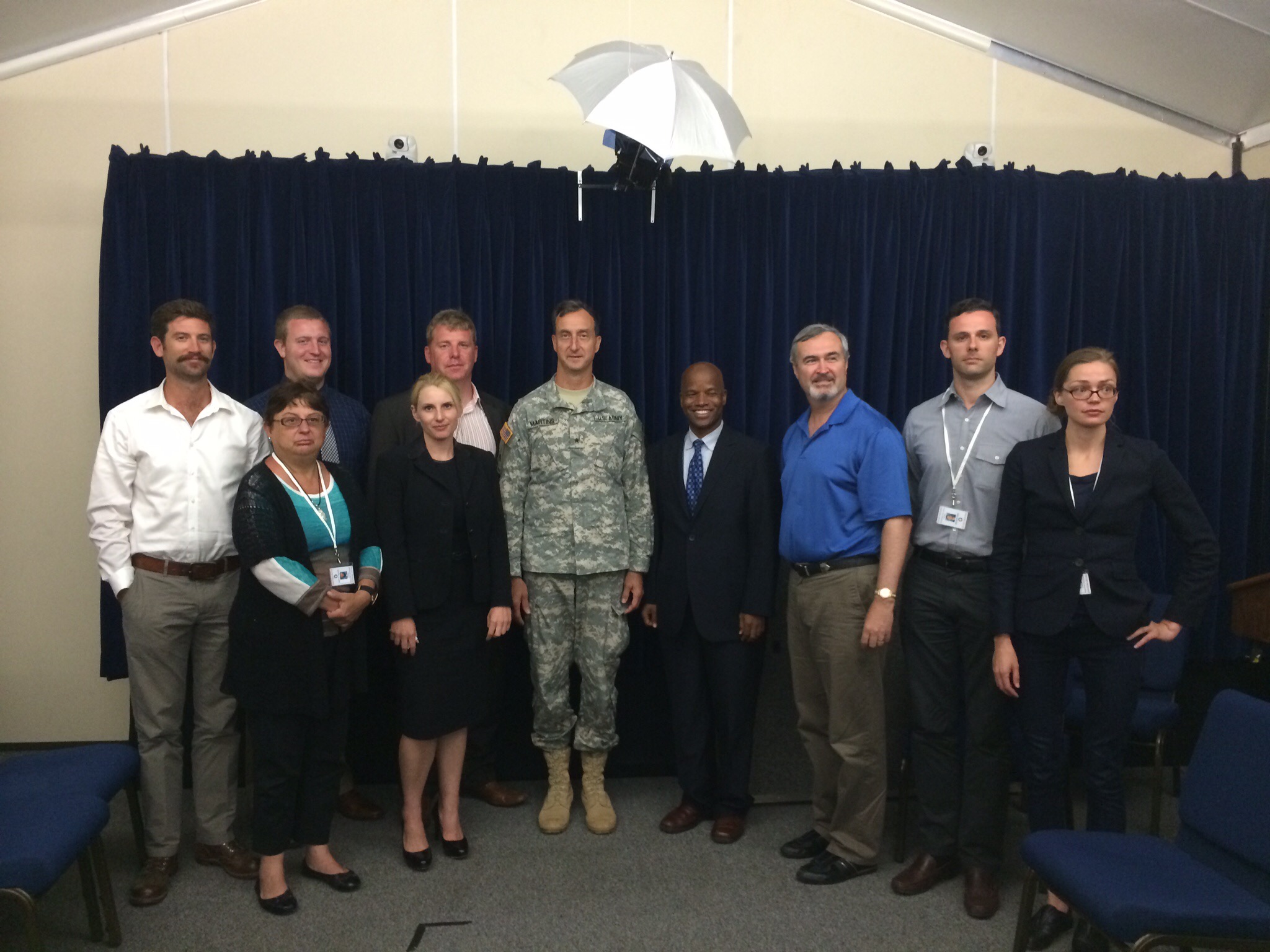
The photo is of a group of NGO Observers at Guantanamo Bay in August 2014, on my last mission to the Cuban military base.

(George Edwards, Washington, D.C.., 21 February 2015)

IMG_0010-0

9/11 Hearing: CIA Black Site Worker, Conflict-of-Interest, and Severance

Camp sign

The high lights of today’s (11 February 2015) 9/11 hearings at Camp Justice, Guantanamo Bay, include:

  • Opening statement by General Martins that the presence of a former CIA black site worker on a defense team “in no way resulted from any action by any agency of executive branch to gather information on any of the defense teams.” He repeated the statement twice before moving on.
  • General Martins then indicated that the interpreter’s name, appearance, and presence at Guantanamo Bay was classified information (he didn’t address that the original unofficial transcript posted on the Military Commission website included the interpreter’s name for a few hours until it was redacted)
  • On the matter of the former CIA black site worker, Judge Pohl shut down defense counsel’s attempt to present a”preview” of the motions they will be filing in response to the government’s filing and General Martins’ opening statement.
  • Defense counsel for all the teams argue that General Martins’ statement is a suggestion that defense counsel failed to adequately represent their clients because they, the defense counsel, did not discover the interpreter’s past history.
  • Defense counsel David Nevin stated he wants to find out what purpose the interpreter was put on the defense team if it was not to have him gather information.
  • Special Independent Counsel for Mr. Ramzi bin al Shibh, Lt. Col. Julie Pitvorek (USAF), stated that the defense teams can not move forward on the conflict-of-interest matter without additional information.
  • Judge Pohl denied the Special Review Team’s request for a closed meeting with Special Independent Counsel and him.
  • Defense counsel David Nevin objected at three different points to the continuation of the hearings until the interpreter issue can be investigated and resolved. His objections were overruled.
  • After a short recess, Judge Pohl took up the matter of severing Ramzi bin al Shibh and the 292 motion series.
  • Judge Pohl started by pressuring the prosecution to indicate  “how long was too long.”  In short how long would the government oppose severance knowing it would hold up the trial of the other four defendants. The government remains opposed to severance.
  • Judge Pohl called a long lunch recess to allow the lawyers to deal with the interpreter and severance issues. We will resume at 2:00 pm.

(Catherine Lemmer, 9/11 Hearings, Guantanamo Bay, February 9-13, 2015)


What’s Really at Issue with Female Guards touching #Guantanamo Bay Detainees

Camp signThe main issue that was argued the last week of January was whether or not a female guard should be permitted to have contact with a detainee.  Practical concerns were raised in regards to religion.  With Islam, it is taboo to be touched by a female that a man is not related to or married to.  Several witnesses were called, including the female guard at issue.  Steps were taken to preserve her anonymity and there was no personally identifiable information that was given about her.  She testified as to how her job required her to handle the detainee.  Arguments were made that went to whether or not allowing females to touch detainees would hinder that females’ advancement in her career, whether or not the defendant’s religious views were being violated, whether or not suitable male replacements could easily be found, etc.

I think the real issue, that was never broached, is whether the commission actually has the jurisdiction to rule on this matter with regards to general handling while in custody down at Gitmo.  This hinges on how broadly the court interprets the defense’s request for touching to cease.  Defense tried to argue for all touching, period, to cease.  The judge cannot rule on what happens outside of court related proceedings, and even then, how far does his authority reach?  Does it apply to court related medical exams?  Transfers from the detention facility to the court holding facilities prior to coming into the court room?  Anything further is speculation and a ruling has not been handed down yet by the judge, but I will definitely be interested to see how this comes out.

(Margaret Baumgartner, Hadi al Iraqi Hearings, January 25-31, 2015) 

Using the Fair Trial Manual at GTMO – Hadi al Iraqi Hearings – January 25-31

I thought I would comment on how I used the Guantanamo Bay Fair Trial Manual throughout my week at GTMO.  Our group was very lucky in that we had more open sessions than other groups have seen in the past.  The Manual came in particularly handy when we met with counsel, when I spoke with people outside of the courtroom, educating observers in the gallery, and also while observing the hearings.

Sit-down with Colonel Jasper

Colonel Jasper is integral to the defense of the detainees.  He is a Marine Judge Advocate and gladly spent an hour speaking to our small group.  I wasn’t quite sure what questions to ask him, so I consulted the sections of the manual dealing with “Right to effective Assistance of Counsel”, “Right to Communicate with Counsel of His Own Choosing”, and “Right to Attorney Client Privilege”.  These sections helped me to ascertain what questions to ask someone in his position.  I can definitely see that he is an effective counsel.  He believes very strongly in the rights of his client (Hadi al Iraqi) and was incredibly passionate in his conversation with us.

Several of my questions for him came from the manual, which one could not readily ascertain just from observation of the proceedings alone.  According to Colonel Jasper, the Government is running all of the proceedings and his client is not getting a fair shake.  The prosecution has more resources, he only has four days each month with his client to communicate (and this is when he travels into GTMO), the judge is biased, etc.  He does not have the opportunity to really consult with his client in confidence, claiming the government observes, but he does not know to what extent.

I did ask him what his level of security clearance is, to confirm that it is the same as that of the prosecution.  To me, it still does not make sense that defense counsel cannot see the same documents as the prosecution.  In my legal practice, we often encounter documents subject to confidentiality orders that only our counsel can see.  They can then advise us on strategy, but not on the contents of the documents.  I would think that the defense counsel would at least be afforded this, but apparently everything is on a “need-to-know” basis for everyone involved.

Use in the Gallery

I let several observers flip through the manual who were not with our NGO party during the hearings.  Unfortunately, the size of it was a bit daunting to some and they looked at the first few pages before just handing it back to me.  It was more effective for me to summarize the purpose of the Manual and that I was using it as a guide for my observations.  I took lots of notes in it and it was also integral in keeping me awake and paying attention.  Sometimes the content of the hearings can get a little dry and it gets a bit difficult to not let the mind wander.  It’s also helpful to go back through now that I’m home and I can flip back through it for my notes.

Conversations with my Fellow NGOs

Discussing issues prior to the first hearing of the trip on the first day.

Discussing issues prior to the first hearing of the trip on the first day in the NGO Lounge.

The manual also served as a good conversation topic with my fellow NGOs.  It was a fabulous ice-breaker at Andrews when I handed it out and then we could discuss the contents of it throughout the trip. One example of the topics that came up was that the majority of the questions seemed more biased in favor of the detainees and the defense when we are supposed to be impartial observers.

Suggestions were made to pare down the size of the manual, focus more on the questions of law that continually come up among the current proceedings, and provide a shorter version of the manual that refers to the longer version for more detail.

(Margaret Baumgartner)

At GTMO’s Hadi al Iraqi hearings – January 2015

Margaret Baumgartner - GTMO NGO Lounge - January 2015

Margaret Baumgartner at GTMO’s NGO Lounge. Holding copy of the Guantanamo Bay Fair Trial Manual

Greetings from the Pearl of the Antilles (Cuba’s nickname).  I must admit that I feel quite at home here as GTMO is very similar to most every other military base I’ve been to.  The accommodations are reasonable and I hate to admit that I really like galley food.  We had a bit of a delay at Andrews AFB, which is fairly normal.  There was a lot of standing around and waiting, which is also normal.  Our escorts were also on the flight and that gave us a chance to get to know them a bit before landing and for them to be more comfortable around us.

Our Octet of NGOs

I’m lucky in that we seem to a have a nice olio of backgrounds in this small group.  There’s myself, a law professor from SMU, law students from Georgetown, UVA, Seton Hall, a D.A. from West Virginia who is heavily involved with criminal rights, and two persons from interest groups.  One is Human Rights First. The other one escapes me at the moment, but he is affiliated with the University of Richmond.  Four men, four women.  One is a Marine Corps Officer who is finishing law school to go JAG.  Another wants to focus on National Security after law school graduation.

Concerns have been made in the past that the NGOs that do attend are just there to warm seats, without a real connection or interest in the case, or to get a free vacation.  I do not see that with this group.  All are bright eyed, interested, and I saw many using the hours we were delayed at Andrews to peruse the Guantanamo Bay Fair Trial Manual.  It seems that everyone travelling knows each other pretty well (the same people go every time).  NGOs receive 14 spots in the gallery, according to one person, so it is a shame that only 8 of us are on this trip.  This brings me to my focus of the trip, which will be exploring the issue of Public Access to the hearings.

General Martins center) and NGO representatives at GTMO. January 2015

General Martins (4th from right) and NGO representatives at GTMO. January 2015

The Hearing Schedule

Monday, we had only a half day of hearings before they were classified.  The gallery was only about half full of observers.  Of those present, about half were in uniform.  The gentleman who sat behind me was a member of the U.S. Army.  I struck up a conversation with him while we were waiting on proceedings to begin.  He did not know much about what he was going to be observing, so I shared my copy of the charge sheet with him.  We discussed a lot of it and I also told him about the NGO mission.  The hearings on Tuesday were closed and Wednesday is going to be witness examination for the issue of female guards coming into physical contact with devout Muslim detainees.  Thursday should be open and Friday will be closed.

Access to the Proceedings

A lot of what I’ve seen has been that people are not informed.  This concern was reiterated by several others that I spoke with.  They also wish that civilians were more interested in the proceedings.

Access to Fort Meade is fairly easy.  One only needs a valid driver’s license and their car registration and insurance to get onto the post.  Once they are approved by gate security, the Post Theatre is accessible to observers.  Of course, people are not allowed phones or recording devices, but this is the norm throughout civilian courts as well.  Concerns can be raised about the lack of public theaters for observation, but conversely, there is not a public outcry for more.  Accommodations have been made for the locales of the victim families, such as Fort Devins in Massachusetts, Fort Dix, etc.  However, it should be noted that we are in the pre-trial motion phase.  For most people, this stage is boring.  I think that more accurate observations can be made once the trial phase begins as to whether there is a greater demand for places to observe.

(Margaret Baumgartner-GTMO, January 2015)
Op-Ed: Torture is ineffective in getting information

The Indianapolis Star published Clarence Leatherbury’s  Op Ed: Torture is ineffective in getting information on 17 January 2015. Mr. Leatherbury is a third-year law student at IU Robert H. McKinney who traveled to Ft. Meade, Maryland to monitor U.S. Military Commission hearings in 2014.  Courtroom proceedings at Guantanamo Bay can be viewed by simultaneous secure videolink at the U.S. military base at Ft. Meade.

(Catherine Lemmer)

Andrews Air Force Base Terminal – Heading to Guantanamo Bay

20150125_062052

Inside the terminal at Andrews.  Getting ready to board the plane.  It’s early!  I will blog more on that later.  Everyone in the group is very talkative and interested in the proceedings.  The copies of the Manual were much appreciated that I passed around!

(Margaret Baumgartner, Hadi al Iraqi hearings)

Year End Update: More Guantanamo Detainees Released (Catherine Lemmer)

Keeping informed. 

Carol_Rosenberg,_by_Colonel_Bryan_Browles

Carol Rosenberg by Colonel Bryan Browles (from Wikipedia)

The most important thing I observed during my time at Guantanamo Bay is that the activities that occur there are far from the minds of most Americans. In my small opinion, this physical and virtual distance creates a situation ripe for abuse. On the flight home I sat across the aisle from Carol Rosenberg (Miami Herald) and plied her with questions. She is perhaps the best source of knowledge as she has been on the story since the arrival of the first detainees in 2002. During the NGO Observer Tour of the courtroom facilities, the Officer in Charge of the Office of Military Commissions, John Imhof, often looked to her for information.

I made a commitment to myself to stay informed. It shouldn’t take a lot of effort — I’ve started following Ms. Rosenberg’s twitter feed and set up an alert on my news feeds.

National Public Radio interviewed Ms. Rosenberg at 6:45 pm EST on December 31 regarding the release of an additional four detainees and the efforts to close Guantanamo Bay. As of this date, there are still 127 detainees, 59 of whom have been cleared for release. While the rest of the world prepared for year end celebrations, she maintained her vigilance on our behalf.

(Posted by Catherine Lemmer)

From the Guantanamo defense: “This is Not What America is About”

Not What America is About – Meeting with Defense Teams

“This is Not What America is About” was the consistent theme of the nearly two-hour session NGO Observers had with defense teams for three of the 9/11 defendants: Mr. Mustafa Ahmed Al Hawsawi, Mr. Mubarak Bin ‘Attash, and Mr. Ramzi Bin Al Shibh. Held in the NGO Lounge, a one-window room carved out of metal hangar and filled with mis-matched 1980’s college dorm and office furniture, we listened as the legal teams told of FBI spying on privileged attorney-client meetings with the use of listening devices designed to look like smoke detectors, FBI attempts to use members of the legal teams as informants, Joint-Task Force seizure and review of attorney-client correspondence, CIA control of the courtroom that lead to monitoring of conversation at the defense tables (ironically the $12 million courtroom was designed to prevent this kind of activity), and trial delay tactics. In short, as James Harrington, Learned Counsel for Ramzi Bin Al Shibh, said,  “this is not what America is about.”

Judge Pohl

Judge Pohl

Questions and answers were traded with the defense teams about the Military Commission and the process itself. Unlike the established U.S. federal court system, the Military Commission is a new process and every issue is subject to briefing and arguments; and a ruling by Colonel Judge James L. Pohl. James Harrington described the situation as such, it is a “process set up for a particular goal, when rules don’t achieve [that] goal, the rules are changed.” Despite evidence that terrorists can successfully be tried in Federal courts (e.g.,  Sulieman Abu Ghaith, Osama bin Laden’s son-in-law) the Military Commission process appears at this point in time to be what we stuck with.

Defense Counsel Wearing Hijab

Learned Counsel Cheryl Bormann, who represents Mubarak Bin ‘Attash, also noted the disparate resources made available to the defense teams. For example, her team has not been assigned an investigator. Ms. Bormann wears a hijab during meetings with her client and court proceedings. She explained that she wears hijab to establish rapport with her client. There was a definite undercurrent of a difference of opinion among the defense teams as to whether the wearing of the hijab will create an unfavorable impact with the judge and jury (panel) when and if the 9/11 case ever gets to trial. (more…)

Last Hearing Option Cancelled – Listening to Both Sides: First Up the Prosecution

The NGO observers had a sliver of hope that we would see actual court proceedings when we learned on Sunday that Walter Ruiz, attorney for Mustafa al Hawsawi one of  9-11 detainees, had filed a motion for a hearing to obtain medical care for his client. The motion alleged that Mr. al Hawsawi was thrown to the ground and shackled on December 7 due to a misunderstanding as to whether he was to return to his cell or to the recreation area. However the Judge (Army Col. James L. Pohl) denied the request. The next hearings for the 9-11 detainees are docketed for February 9.

Given the lack of court proceedings, the NGO observers pushed for meetings with the defense and prosecution teams. The meeting were scheduled around the various 802 conferences and client meetings.

BG_Mark_Martins

Brigadier General Mark S. Martins

We met first with Brigadier General Mark S. Martins, the chief prosecutor, and three members of his team. Prior to the meeting we were provided with his 13 December 2014 prepared remarks. The prepared remarks addressed the release of the Torture Report. It was Brigadier General Martins’ opinion that the Torture Report will not disrupt or derail the Military Commission process. Rather, the release of previously classified information will speed discovery for the defense. He reiterated in his prepared remarks that the prosecution will not introduce as evidence statements obtained through torture.

Brigadier General Martins began the session by introducing his staff and referring us to his prepared comments. He noted that he would not discuss the female guard issue nor the FBI conflict-of-interest issue; the latter because he had walled himself off from this issue. He then went on to answer our questions and provide information.

As in his prepared remarks, Brigadier General Martins discussed the prosecutions’s intent not to use evidence obtained through torture. He noted that it is imperative that the people see the government’s case. This is not possible if the prosecution uses classified information. Ironically, his intent doesn’t seem to be shared by some other powers in the government — for example, those entities fighting the release of the remaining torture materials. (more…)

9-11 Hearings Halted Due to Female Guard Issue

DSC_0212-001 - Copy

9-11  Parties Court Seating Chart

I won’t be using this seating chart this morning.

Despite closed-door sessions with Judge Pohl on Sunday (14 December 2014), the prosecution and defense did not reach agreement on the female guard issue. A detainee is physically touched by the guards when moved from his cell; for example, for court appearances and attorney meetings. Woman constitute nearly 25% of the guard population at Camp 7 where the high level detainees are imprisoned and are integrated into the details. The detainees object on religious grounds to physical contact with women. If women are in the transfer detail, the detainees refuse to leave their cells; even if it means foregoing attorney meetings. If a detainee refuses to leave his cell, a forced cell extraction occurs (“FCE”). The FCE has been described as a tackle-and-shackle procedure.

All detainees were ordered to appear in court this morning which could have prompted FCEs. In order to avoid FCEs, Judge Pohl cancelled today’s hearings.

The NGO observers are awaiting a briefing from Chief Prosecutor Mark Martins later this afternoon. There is also the possibility of a briefing from the defense teams. I will post updates as soon as I have any news.

Addendum: The continued use of female guards despite the religious concerns of the detainees is perplexing. Other accommodations have been made for the detainees. For example, they are allowed to bring their prayer rugs into the courtroom; action in the courtroom stops to allow the detainees to pray; the direction of Mecca is marked on a wall in the courtroom; and dietary restrictions are taken into account when preparing their meals. Explanations as to why all male guard transfer teams are being used include the following (paraphrased): (i) the armed forces are an equal opportunity employer and women are being integrated; (ii) the judge does not manage or wish to manage the detainee facilities; (iii) 25% of the guard force here is women and it is not possible to take them out of the rotation.  More to come on this.

(Posted by Catherine Lemmer)

Guantanamo Bay – Arrival and Defense Counsel

Flight to Guantanamo

“What’s the movie on this flight?” One hardly expects that to be the first question one hears on a chartered Miami International Air flight bound for the Guantanamo Bay 9-11 hearings. One also doesn’t expect to engage in a humorous movie selection process with members of the defense teams, NGO observers, and a flight attendant – in the end, the “chick flick” was vetoed and “Dawn of the Planet of the Apes” went into the play slot.

G Bay 044

Tent 9A – My Home Sweet Home for the next few days.

The Saturday flight from Andrews Air Force Base and the ferry ride to the island were uneventful. I sat in the back of the plane with the media and other NGO observers.

Arrival

Upon arrival, the NGO observers were directed to our tents in Camp Justice, taken to get our base badges, and given a brief NGO orientation about the Guantanamo Naval Base.  What is easy to forget is that the Guantanamo Naval Base has been in existence and operating since 1898; it is only since 2002 that it has served as detention camp for alleged enemy combatants.

Defense Bar-B-Q — Meeting lawyers, press, and others. The week’s agenda.

On Saturday evening the NGO observers were invited to a BBQ by the defense team for Ammar al Baluchi.  Carol Rosenberg and members from the other defense teams attended as well.

James Connell, Learned Counsel for Mr. al Baluchi, gave a lengthy briefing on motions set to be heard Monday and Tuesday. In addition to the conflict of interest matters (see my earlier post), the issue of the use of female guards is occupying a fair amount of time. At issue is whether female guards should be able to physically touch the prisoners as they are being prepared for transfer from their cells. The prisoners object on religious grounds to being touched by the female guards. They have forgone meetings with their attorneys if female guards were part of the rotation that would move them from their cells to the meeting. (more…)

Andrews Air Force Base – Ready to Depart

Boarding Pass - Andrews to GTMO - Catherine Lemmer - 12 December 2014

My Boarding Pass for the Andrews to Guantanamo Bay flight.

Sunrise at Andrews Air Force Base

Arrived at 5:30 am and waited in the very dark parking lot at Andrews Air Force Base until our escort arrived and took us to the terminal. Stood in line, checked my bag, and got my ticket. It is a little surreal – there are a few military personnel and families awaiting transfers but most everyone in the departure lounge is headed to Guantanamo Bay – yet there are periodic announcements about what to do if there is unattended baggage and actions to take in the event of an active shooter situation.

Now just hanging out in the departures lounge and talking with a wide variety of people. I’ve chatted with a reporter from The Daily Beast, a local independent D.C. newspaper, and two reporters from Germany. I asked the two reporters from Germany what impact, if any, the release of the Torture Report had in Germany. It is safe to say that the reputation of the United States has suffered immensely, especially in Germany where the Torture Report follows closely on the NSA “listening” scandal.

Coffee & Guantanamo Bay Fair Trial Manual Distribution

I’ve met a few of the other NGO observers and now am off to find a coffee and introduce myself to others. We have got a few hours before departure!

High on my priority list is to distribute copies of our Guantanamo Bay Fair Trial Manual to the other NGO representatives. I hope to get good feedback from them as to how to improve the Manual for future Observers and others interested in exploring the issue of fair trials at Guantanamo Bay.

(Posted by Catherine Lemmer)

Preparing for the 9-11 Guantanamo Bay Hearings

My work with the The Gitmo Observer

I have been involved with the U.S. Military Commission Observation Project (“MCOP”) (also known as The Gitmo Observer) since mid-spring 2014.  In my position as a law librarian at the Indiana University Robert H. McKinney School of Law I have worked on developing and maintaining The GITMO Observer site and providing research support for the Guantanamo Bay Fair Trial Observation Manual.  Thus I am honored and excited to have been selected to serve as an NGO observer at the upcoming military commission hearings on December 15 and 16 at Guantanamo Bay.

My work in South Africa

I begin assisting Professor George Edwards and the MCOP upon my return from South Africa in April 2014. I spent six months (September 2013 – April 2014) in Johannesburg as a Senior Fellow at the Legal Resources Centre of South Africa (LRC). The LRC is South Africa’s largest and oldest national public interest law organization. Established in 1979, the LRC lawyers challenged apartheid and played important roles in drafting the South African Constitution. In 1994, Nelson Mandela appointed LRC’s founder, Arthur Chaskalson, to serve as the first President of South Africa’s Constitutional Court. The LRC advances research and provides free legal services to the poor and vulnerable in the areas of land and housing rights, children’s rights and education, environmental justice, HIV/AIDS, health and social services, refugee matters, and women’s equality.

George Bizos 85th Birthday 010During my time with the LRC, I enjoyed many a brown bag lunch with George Bizos, an LRC lawyer. An internationally renowned South African human rights lawyer, George Bizos is credited with crafting the three words in Nelson Mandela’s statement during his 1964 treason trial which resulted in the imposition of life imprisonment rather than the death sentence. Upon learning that an American sat across the tea table from him the first time we met, George looked at me and said, “I have sympathy with his position but your President Obama has to shut down Guantanamo Bay.”  The topic of Guantanamo Bay would come up often during the six months I spent at the LRC and my knowledge of what was happening and why at Guantanamo Bay would prove woeful in comparison to that of George Bizos. The MCOP provided a fortuitous opportunity to learn more about the military commission process at Guantanamo Bay upon my return to the States.

The 9-11 case / Khalid Shaik Mohammed case that I will monitor next week

I will be observing hearings with respect to the five 9-11 defendants: Khalid Sheikh Mohammed, Walid Muhammad Salih Mubarak Bin ‘Attash, Ramzi Binalshibh, Ali Abdul Aziz Ali, and Mustafa Ahmed Adam al Hawsawi.

Earlier this week Professor Edwards was able to confirm that the hearings will involve matters of guard gender, the FBI probe/conflict of counsel, and the hearing schedule for 2015.

My preparation for the hearings

Even though I have been involved with the MCOP project, I had and still have lots of preparation to do. I’ve reread parts of the Guantanamo Bay Fair Trial Observation Manual to better understand my obligations to observe and analyze the proceedings. I am also reading the many documents related to this matter that are hosted on the U.S. Office of Military Commissions website. This is a complex case with five defendants and five separate defense teams.  As a result, I have also been reading biographical information on the Human Rights Watch and other sites to help me identify and keep separate each of the defendants. Later this week I am meeting with two other observers, Hattie Harmon and Chuck Dunlap, who have recently observed proceedings at Guantanamo Bay for advice and information.

Lecture by Gitmo Defense Counsel – Rick Kammen

I recently attended a lecture by Rick Kammen, the lead lawyer for al Nashiri  in the USS Cole case. His presentation focused on the many systemic problems of the Guantanamo Bay military commissions. What was readily apparent from his presentation is that Americans as a whole don’t pay much attention to the activities of the military commissions. In addition to its critically important work to ensure fair and transparent trials for all the stakeholders, MCOP is equally important in that it offers opportunities for many of us to become involved and expand awareness in others.

(Posted by Catherine Lemmer)

Guantanamo Bay Fair Trial Manual “required reading for anyone who goes to Guantanamo Bay to observe”

The Gitmo Observer has shared the Guantanamo Bay Fair Trial Manual with many NGO Observers and others who have traveled to Guantanamo Bay, Cuba or Ft. Meade, Maryland to monitor U.S. Military Commission hearings. We have also shared the Manual with many others who may or may not have involvement with the Guantanamo Bay proceedings. Comments returned to us on the Manual have been generally very favorable, constructive, helpful and supportive.

From time to time, the Gitmo Observer will post some of these comments on our website.

Here’s a comment that came in today from an Observer who was recently in Guantanamo Bay Fair Trial Manual -- 11 November 2014 - First PageGuantanamo Bay to monitor hearings:

“While I was there [at Guantanamo Bay last week] I was given a copy of the Guantanamo Bay Fair Trial Manual for U.S. Military Commissions.  I read it cover to cover.  This is simply required reading for anyone who goes [to Guantanamo Bay] to observe.  Thank you for the enormous effort it must have taken to produce it… . I feel a high calling to meet the obligations you note for an observer to report what they have observed.”  

If you have any comments about the Guantanamo Bay Fair Trial Manual, please let us know! Please write to us at GitmoObserver@yahoo.com.

We would love to hear from you:

  • if you have monitored hearings at Ft. Meade or Guantanamo Bay
  • if you are scheduled to monitor hearings at Ft. Meade or Guantanamo Bay
  • if you have not monitored hearings, but have comments

In short, we are happy to hear from you!

E-mail us at GitmoObserver@yahoo.com.

Wrapping up the week of al Nashiri GTMO hearings – Charles Dunlap

IMG_1436

Watching the press conference from the NGO lounge. Note the picture is of the GTMO courtroom that was used for the hearings.

Press Conference

After the hearings were over for the week in the al Nashiri case (4 – 7 November 2014), the prosecution and the defense teams held a brief press conference with the four media representatives who were with us at GTMO for the week.

Victims and Victims’ Families

During the press conference, the victims and their families had an opportunity to also speak to the media.  When the victims and their families spoke it was a reminder of what this trial is all about and the 17 people that died on the USS Cole and the 39 wounded.  During the hearings it is easy to get caught up in the “legal arguments” and the various details and tactics and lose sight of why we are here.  For me, hearing the victims and their families at the press conference really made me re-focus on them and their experiences.  In addition to the overall suffering that they have been through, the main point that they expressed was their frustration with the slowness of this process and their desire for there to be an end to this and to see justice done.

Last Days Events

IMG_1566

NGO’s gather for a farewell cookout and a chance to reflect on the weeks events.

On the last days of the trip, we had an opportunity to do several things.

Time with Defense Team – Rick Kammen and defense lawyers

The NGOs spent an hour and a half with Rick Kammen and the defense team.  They were extremely generous with their time and were able to answer many questions about the hearings we had observed.

Again, some of the overall themes from that meeting were similar to others; the incredibly difficult logistics and the high costs that result; the complicated issues associated with the case which are compounded with the issue of classified information; and also how politics at the highest levels impacts the trials.  Speaking specifically to this last point, Rick talked about a time when the former leader of Yemen was in the United States to receive medical care and the defense team tried to depose him.  The US State Department denied it due to their policy of not wanting to impose on foreign leaders in the US who are here for medical treatment.

Visit to Camp X-Ray

The NGOs also had an opportunity to visit Camp X-Ray, which is the outdoor detention facility where they held the detainees when they first arrived.  We were not able to take photos of the site but we were able to see it.  It is abandoned now but there is a federal court order in place to preserve it as evidence in some of these proceedings.  Camp X-Ray was only used to house the detainees for a few months when they first arrived on the base because they didn’t have any other facilities to house them in at the time.  Within a few months they were moved to more permanent structures indoors.

Radio GITMO

Another place NGOs were able to visit and tour was radio GTMO.  The base has a radio station that broadcasts 3 channels on the base.  They have an arrangement with Cuba so the signal is not broadcast into mainland Cuba.  The radio station has one of the largest collections of vinyl records in the world with many being extremely rare and limited editions.  The stations still plays the records on the air.  One unfortunate fact is that due to the licensing rights from the record companies, if the records are taken out of circulation they must be sent back to the record companies where they would be destroyed.  It’s crazy to think that some of these one of a kind records made especially for the military would be lost forever and destroyed but that is what is required due to the licensing rights.

Some of the one of a kind vinyl albums that Radio GITMO still plays

Some of the one of a kind vinyl albums that Radio GITMO still plays

IMG_1447

One of the last few stops was to the abandoned lighthouse on the edge of the base.  One of the interesting things was the collection of old boats that was in the area which were used by people who fled Cuba or other areas to try and immigrate to the United States.

The abandoned lighthouse with some of the old boats that people used to defect to the base.

The abandoned lighthouse with some of the old boats that people used to defect to the base.

Conclusion

I want to thank Professor George Edwards and the Indiana University McKinney School of Law for allowing me to participate in this incredible experience.  It is something I will remember forever and a trip that has given me so much information.  There are so many things that I was not able to include in this blog but that I will try and address in other forums since one of the goals of the NGO program is for those that witness the process to tell others.

Al-Nashiri GTMO Hearings – 5 – 6 November 2014 – Charles Dunlap

IMG_1584

Chuck Dunlap with Rick Kamman, Chief Defense Counsel for Al-Nashiri

Now that I have reliable internet access I wanted to post the remainder of my blog entries from my trip.  First about the hearings themselves.  The hearings took place Wed. & Thurs morning Nov. 5-6.  Rather than go into detail about all ten of the motions I will try to give an overview and summary of the proceedings.

Range of Motions

The hearings were scheduled for two days and actually ran for 1 1/2 days.  Of the ten issues, they can be summarized as follows;

  • dismissal of the death penalty since the defendant will not have access to classified evidence against him;
  • abatement of proceedings due to lack of adequate medical care for defendant
  • defense request to have access to an MRI machine to assess the defendant’s mental state
  • request for the defendant to have a Skype call with his parents
  • motion to withdraw the death penalty because it is no longer a military necessity
  • motion to suppress evidence due to lack of Miranda warning
  • motion to exclude hearsay evidence
  • other more procedural motions

Themes –Logistical Issues

Overall, the hearings were much like you would see in any court. However, one of the strong themes that came out of the hearing days was how the logistical challenges of being at Guantanamo Bay impacted everything and made things more challenging (and costly).  The logistics of having all of the court personnel travel to the base, combined with some of the limitations once at the base were very evident.

Another theme was the uncertainty on some of the procedures and trial logistics.  The parties often referred to the Military Commissions legislation but often there was no specific guidance on some of the more detailed points and issues so the parties had to look to other authority like federal courts.IMG_1429

Schedule Going Forward – 

The parties also worked with the judge to try and plan out the new schedule going forward.  The next big event will be pretrial hearings scheduled for February when the parties are set to begin arguments focused on the government’s efforts to introduce 72 hearsay statements which constitute the bulk of their case.  Since the standards for hearsay are different in Military Commissions, this will be one of the main pretrial events.

For those interested in looking at the specific pleadings, transcripts etc. you can find them at http://www.mc.mil/CASES.aspx).