al Nashiri

Going to Guantanamo – Overnight at Andrews Air Force Base

Air Force H20

Outside Andrew Air Force Base from my hotel.

I flew from Indianapolis to Washington DC to a beautiful 30 degrees. My hotel for the night is just across the street from Andrews Air force Base, where I’m to report at 6:45 a.m. tomorrow for my flight to Guantanamo Bay, Cuba to monitor the case against al Nashiri, who is charged with being a mastermind of the suicide bombing of the USS Cole in Yemen that killed 17 US sailors in 2000.

On this trip, I will be joined by ten other Non-Governmental Organization (NGO) Observers, some of whom have already expressed interest in the Guantanamo Bay Fair Trial Manual, that we at the Indiana University McKinney School of Law have been researching and writing.

Flying to DC

My trip was uneventful, save for the look on all who tried to lift my carry-on luggage containing the Manuals, which at this point are in two Volumes, totaling over 400 pages. More about the Manuals later.

On my flight from Indianapolis there was an ‘interesting’ conversation going on behind me. I was sitting in front of the loudest three on this very small plane. Their conversations spanned from blue-collar job variations by state, Hoover Dam documentaries, Benghazi and then, Guantanamo! I held my breath.

Their biggest and only complaint was that US taxpayer money was paying for top-notch medical care “for those 9-11 prisoners down there in Cuba” while people here cannot afford it.

The pilot came on the intercom, and voices behind me were lowered for the remainder of the flight. I am still a little shocked that three people on that small plane going from Indiana to the East Coast would talk about Guantanamo Bay, on the eve of my first trip to that U.S. detention center on a remote Caribbean Island.

Preparing for my mission to Guantanamo Bay, Cuba

As an NGO observer, I am tasked with evaluating whether the all stakeholders are being afforded the rights and interests to which they are entitled through the Military Commission process. Yes, I will be examining rights of the defendants. Also I will examine rights of victims and their families, rights of the prosecution, rights of the press, and rights and interests of others who have a stake in the proceedings.

To help prepare for this mission, I have familiarized myself with the Guantanamo Bay Fair Trial Manual, which at this point I find to be of ‘biblical’ importance. As I mentioned, it is now in two Volumes. Volume I is the main body of the Manual, and identifies the international and domestic U.S. law that governs the Military Commissions. It provides a good idea of what a fair proceeding should look like, so that NGO Observers will have a good point of reference. It also contains a number of extensive, comprehensive “checklists” that Observers can use to give an idea of what to look for when they are observing.

Volume II contains the Appendices, which include hard copies of many important legal documents, such as parts of the Military Commission Act, Rules of Procedure, and International Documents, including parts of the Geneva Conventions.

Both Volumes have been instrumental in helping me prepare for my role as an observer. I have done background readings on blogs from other participants who have attended the hearings, as well as from the Military Commission Website and other resources. The Gitmo Observer Blog also contains Briefing Books under Research and Resources, which have been very helpful in orienting myself with the details of the hearings.

March 2 – 6 Hearings

Vaughn Ary - https://www.linkedin.com/pub/vaughn-ary/3b/644/b7

Retired Major General Vaughn Ary

This week, the al Nashiri court dealt with Unlawful Influence (AE 332, Defense Motion to Dismiss for Unlawful Influence and Denial of Due Process for Failure to Provide an Independent Judiciary). See Alleged Unlawful Influence over Guantanamo Bay Judges.  It is argued that a high ranking military official, retired Marine Major General Vaughn Ary, engaged in “unlawful influence” over the judges of the Military Commission by ordering them to relocate to Guantanamo Bay to help speed up the proceedings.

The defense argued that no military official should be able to order a Military Commission judge to take such actions, since the judges are supposed to be free from outside influence.

The Learned Counsel for al Nashiri’s made a statement about who “can be trusted to act impartially” (Pentagon scraps judges’ Guantánamo move order; 9/11 case unfrozen, Miami Herald). The order of Major General Ary was reversed at the end of this past week, after Ary testified from the Pentagon.

Motions scheduled to be argued next week while I am present as per the second amended Docketing Order are:

  • AE 334 – Defense Motion for Appropriate Relief to Allow Mr. AI Nashiri to Groom Prior to Court Sessions and Meetings with his Defense Team.
  • AE 272D – Government Motion for Reconsideration and Clarification of AE 272C- Ruling- Defense Motion for Appropriate Relief: Inquiry into the Existence of a Conflict of Interest Burdening Counsel’s Representation of the Accused Based on Ongoing Executive Branch Investigations;
  • AE 331 A – Government Motion To Amend the Docketing Order (February 2015 Hearing) To Allow The Government To Determine The Manner In Which It Presents Its Evidence Relating To The Admissibility Of Government-Noticed Hearsay And Evidence Identified In AE 207;
  • AE 319I – Defense Motion to Continue the Evidentiary Hearings Related to AE 166 et seq and AE TI 9 Until Preliminary Matters are Resolved;
  • AE 319J – Defense Motion to Continue Further Hearings on the Government’s Motion to Admit Hearsay Until the Court of Military Commissions Review Renders a Final Judgment on Appeal;
  • AE 328 – Defense Motion for a Fair Hearing on the Admissibility of Evidence as Noticed in AE 166 and AE 166A; 3 (8) AE 319F, Defense Motion to Compel Discovery Related to AE166/166A/166B and Seeking Further Appropriate Relief;
  • AE 319G – Defense Motion to Compel Witnesses to Testify at the Hearing on AE166/166A/166B/319;
  • AE 256D, Defense Motion to Strike AE 256C: Government Notice of Bill of Particulars (Defining Civilian Population as Used in Aggravating Factor #5);
  • AE 257D, Defense Motion to Strike AE 257C: Government Notice of Bill of Particulars (Defining Civilian Population as Used in Aggravating Factor #5).

Tomorrow (Sunday), we are scheduled to leave for Guantanamo from Andrews. I plan to post again once I cross the street and enter the base.

I look forward to meeting the other NGO observers.

Aside from the hearings, all that is ringing in my head is ‘banana rats’ – these animals that are supposedly running around pretty freely on Guantanamo Bay. They say that they have to keep the temperature in our GTMO tents very low to keep these rats out at night.

Also, I hear there is a Jamaican shack with the best food on the GTMO base!

Seriously, I am very keen on furthering the goals of the Indiana University Military Commission Observation Project, which include to attend, observe, analyze, critique and report on the Military Commissions. This is a very important project that I believe serves all stakeholders in the Military Commission process.

Avril Rua Pitt, Across the Street From the Andrews Air Force Base Entrance, 28 February 2015

Guantanamo NGO Observers from IU McKinney Law School Featured in Indiana Lawyer

Military tribunals for some accused of terrorist attacks on the United States are held at Camp Justice at Guantanamo Bay. (Photo by Catherine Lemmer, IU McKinney School of Law)

Military tribunals for some accused of terrorist attacks on the United States are held at Camp Justice at Guantanamo Bay. (Photo by Catherine Lemmer, IU McKinney School of Law)

The Indiana Lawyer published the following article by Marilyn Odendahl on 25 February 2015. Text and photos are in the original article.

IU McKinney Gitmo Observers Illuminate Murky Proceedings in Gitmo Trials

by. Marilyn Odendahl (25 February 2015)

      The U.S. Military Commission Observation Project overseen by Indiana University Robert H. McKinney School of Law is continuing to send individuals to watch and report on the accused terrorists’ trials being held at Guantanamo Bay. Blog posts and articles from the observers chronicle the glacial pace of the proceedings, the unexpected courtroom twists and the nagging constitutional questions.

Professor George Edwards

Professor George Edwards

The project regularly sends faculty, students and alumni to either Guantanamo Bay or Fort Meade in Maryland to observe the tribunals. Professor George Edwards, founder and director of the project, explained the work of the observers is not to address the political issues or comment on the substance of the military commissions.

“We’re interested in seeking to assess whether the stakeholders are receiving the rights and interests that are afforded to them,” Edwards said. “(Those rights) include the right to a fair hearing, the right to an independent tribunal, the right to trial without undue delay.”

He pointed out the observers also are looking at the stakes that the victims of the terrorists attacks and their families have in the proceedings. What about their rights to have access to the trials, to make statements, to confront and to have closure?

Professor Catherine Lemmer

Professor Catherine Lemmer

IU McKinney librarian Catherine Lemmer, who Edwards described as instrumental in helping to build the observation program, heard some victims’ voices when she traveled to Guantanamo Bay for the hearings of the alleged co-conspirators of the Sept. 11, 2001, attacks.

One man said he was attending the proceedings to remind the judge and attorneys that planes had flown into the twin towers of the World Trade Center and the Pentagon. A mother of a fallen firefighter said she was struggling to hang on to her opposition to the death penalty, but she believed the trials had to be fair because the United States would be judged by how it handles the detainees.

The project drew praise from panelists who participated in a recent forum at the law school examining the tribunals. Hosted by the Indiana International & Comparative Law Review, the symposium brought together legal scholars from IU McKinney and around the country to discuss whether the end is coming for Guantanamo Bay or if the practice of international criminal law has reached a turning point.

An IU McKinney symposium examined trials at Guantanamo Bay. Panelists included (from left): Richard Kammen, Kammen & Moudy; Shahram Dana, The John Marshall Law School; George Edwards, IU McKinney; and Paul Babcock, editor-in-chief of the Indiana International & Comparative Law Review. Chris Jenks of Southern Methodist University Dedman School of Law participated via video link. (Photo by Dave Jaynes, courtesy of IU McKinney Law)

An IU McKinney symposium examined trials at Guantanamo Bay. Panelists included (from left): Richard Kammen, Kammen & Moudy; Shahram Dana, The John Marshall Law School; George Edwards, IU McKinney; and Paul Babcock, editor-in-chief of the Indiana International & Comparative Law Review. Chris Jenks of Southern Methodist University Dedman School of Law participated via video link. (Photo by Dave Jaynes, courtesy of IU McKinney Law)

Two participants – Shahram Dana, associate professor at The John Marshall Law School and Chris Jenks, assistant professor at Southern Methodist University Dedman School of Law – on the second panel discussion both noted IU McKinney’s effort in documenting the proceedings at Guantanamo Bay is shining a light on America’s response to terrorism and will be an invaluable resource for history.

Lemmer advocates for the proceedings to be shown on C-SPAN. The American public should see for themselves, she said, so they form their own opinions. By seeing what is happening in that courtroom, she said it is easy to realize how things could go wrong.

“The role of the attorneys, our role (as citizens) is to hold fast to the Constitution when really bad things happen and everybody wants to step over it,” Lemmer said. “Ultimately, the price we pay for not doing it right is incredible. This is our Constitution and it is getting overwhelmed, which should not happen.”

Lemmer took her first trip to Guantanamo Bay in December 2014. However, the proceedings were derailed by the ongoing revelations that the Federal Bureau of Investigation may have infiltrated the defense teams. The FBI is accused of listening to defense attorneys’ meetings with their clients and reviewing their correspondence as well as attempting to turn legal team members into informants.

When she returned in early February 2015, the FBI conflict-of-interest issue was still being argued. Then unexpectedly, Ramzi Bin al-Shibh, one of the defendants in the courtroom, said he recognized his interpreter as someone he encountered during the period he was held at one of the Central Intelligence Agency’s secret prisons. Another defendant told his attorney he also remembered the interpreter from the black site.

“It became very surreal,” she said.

To Indianapolis defense attorney Richard Kammen, the confusion and conundrums that swirl around Guantanamo Bay could be resolved by moving the proceedings to federal court. Kammen, lead counsel for USS Cole bombing suspect Abd al-Rahmin al-Nashiri, pointed to the hearings of accused Boston Marathon bomber Dzhokhar Tsarnaev as an example that U.S. courts can handle high-profile terrorism cases.

“There’re so many more moving parts down there than there would be in federal court, so things just get more messed up,” he said.

Currently, Kammen and his defense team are tangling with the federal government to release the details of the treatment of al-Nashiri while he was kept in a black site. The release of the CIA Torture Report publicly confirmed that the defendant had been physically, psychologically and sexually tortured, but Kammen said the defense still needs details of what was done and when.

Professor Tom Wilson

Professor Tom Wilson

IU McKinney professor Lloyd “Tom” Wilson is scheduled to observe the al-Nashiri proceedings during his first trip to Guantanamo Bay. The task of watching and relaying what is happening will be difficult, he said, because he will be seeing just a snapshot of a long, complex and secretive process.

Wilson was careful in his preparation for the trip, not wanting to form any preconceived ideas or prejudices before he arrived in the courtroom. He is going out of a sense of civic duty and to understand the situation better than he does now.

Still, the proceedings are not easy to comprehend and continue to spark debate many miles away from the detention camp.

As part of his remarks during the IU McKinney symposium, Kammen described Guantanamo Bay as a “law-free zone.”

Co-panelist Jenks countered that characterization, arguing traditional rules governing the treatment of prisoners of war have been upended by terrorism. In previous conflicts, nation states battled each other but now the United States is fighting against groups that are unconnected with any organized government or country. Even so, he continued, the detainees at Guantanamo Bay have a right to counsel and are being given a trial.

Kammen responded that even if his client is acquitted, he will not be released.

“That,” Kammen said, “is a law-free zone.”

_______

The original Indiana Lawyer article can be found here:  http://www.theindianalawyer.com/iu-mckinney-gitmo-observers-illuminate-murky-proceedings-in-gitmo-trials/PARAMS/article/36436

Alleged Unlawful Influence Over Guantanamo Bay Judges

Judge Vance Spath presides over the al Nashiri case.  He is hearing arguments on whether Pentagon officials exercised "unlawful interference" over him. (Photo from Miami Herald)

Judge Vance Spath presides over the al Nashiri case. He is hearing arguments on whether Pentagon officials exercised “unlawful interference” over him. (Photo from Miami Herald)

In Monday afternoon’s court session in the Guantanamo case involving the alleged mastermind of the 2000 USS Cole suicide bombing case, the defense claimed that Pentagon officials were interfering with the judge’s independence, threatening to undermine the entire case. The judge, Air Force Col. Vance Spath, is conducting further inquiry before determining whether unlawful interference exists, and if it does, what the remedy should be.

The defendant, al Nashiri, was arraigned several years ago, and there have been many delays in this death penalty case. The officials stated in e-mails and other communications that they wanted the case to move more quickly, and one official signed an order commanding the judge to change from part-time to full-time on the case, and to physically relocate to Guantanamo Bay until the case was finished, which could be many months or years.

The defense argued that only the judge controls the pace of the trial, and it is “unlawful interference” for a non-judicial official to seek to interfere with a judge’s command of his courtroom.

Most participants commute to Guantanamo Bay

Virtually all participants in the Guantanamo Bay cases live in the U.S. mainland, and commute to Guantanamo Bay for hearings. This includes the defense and prosecution lawyers, the court staff, the press and the NGO Observers, and the interpreters. The judges in this and the other two active cases are the only ones ordered to move to Guantanamo Bay. The chief prosecutor, who is a Brigadier General Mark Martins, was not ordered to move to Guantanamo, and neither were other military officers assigned to work on the cases.

Vaughn Ary - https://www.linkedin.com/pub/vaughn-ary/3b/644/b7

Retired Major General Vaughn Ary

Stalled hearings

Judge Spath halted the hearings mid-afternoon after ordering the Pentagon official who made the order to testify about the order. That official, called the Convening Authority for the military commissions, is Retired Major General Vaughn A. Ary. Judge Spath said General Ary could fly to Guantanamo Bay to testify, or he could testify by video. His testimony is expected as early as tomorrow, Tuesday, 24 February 2015.

What is “unlawful interference” with the judge.

The Guantanamo Bay Fair Trial Manual discusses law related to “unlawful interference”, and the independence of judges, and identifies a checklist of questions to ask in seeking to determine whether judges’ independence has been compromised. Under international and domestic U.S. law, judges are required to be independent, and are required to appear to be independent. Outside, objective observers should be able to view a judge and his decisions and not be concerned about whether some outside, non-judicial entity is “pulling the strings” or exercising unlawful command authority over the judge.

All stakeholders in the Military Commissions have rights and interests. This includes not only the defense, which clearly has rights, but also includes the prosecution, the victims and their families, the media, NGO Observers, court personnel, security guards, and others. The Guantanamo Bay Fair Trial Manual outlines many of these rights and interests.

(George Edwards, Ft. Meade, 23 February 2015)

My Morning at Guantanamo Bay Hearings at Ft. Meade

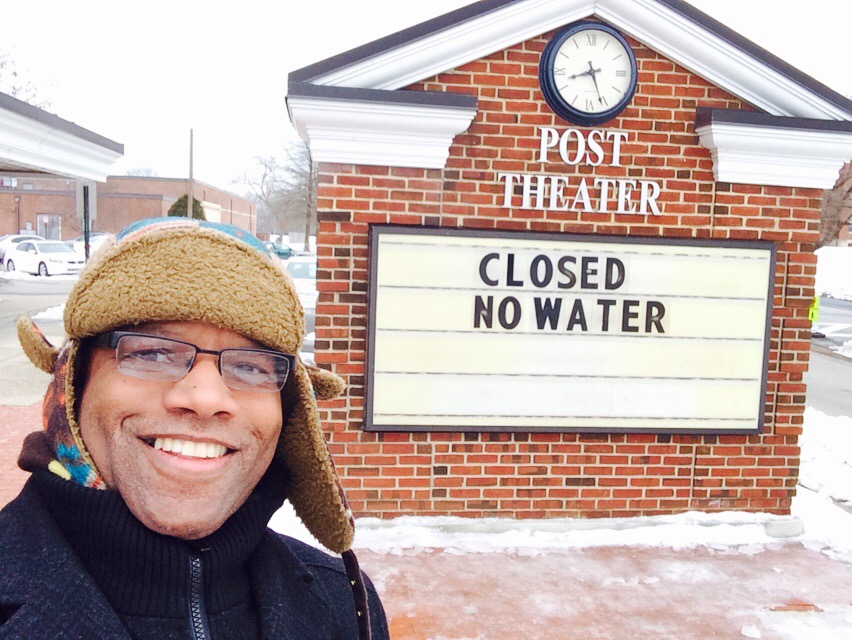
In front of the Post Theater at Ft. Meade.

In front of the Post Theater at Ft. Meade.

I am up early this Monday morning for my first visit this year back to Ft. Meade, Maryland to monitor Guantanamo Bay, Cuba hearings in the U.S. Military Commissions case against al Nashiri. He is the alleged mastermind of the U.S.S. Cole suicide bombing in 2000 that killed 17 U.S. sailors.

What, Guantanamo Bay proceedings in Maryland?

Yes. The Pentagon runs a secure videolink direct from the Guantanamo Bay courtroom to select viewing sites in the U.S. where press, NGO Observers, victims and their families, and others may view the proceedings. The only site in the U.S. at which NGO Observers and members of the public may see what’s happening in the courtroom is at Ft. Meade, Maryland, about 35 miles outside of Washington, DC.

It’s kind of like watching a Court TV show, except that the viewing venue at Ft. Meade is an actual live theater, where they screen first run movies on a huge commercial theater-sized screen, and host live plays, lectures and other activities on a stage. Its concession stand sells buttered popcorn, Milk Duds and Skittles, and fountain drinks. This week’s feature film is Selma, screened in the evenings after the Guantanamo courtroom goes dark.

Courtroom sketch of al Nashiri by artist Janet Hamlin. Today in court he was wearing a similar casual white short sleeve shirt. His hair appeared to be a little longer than in this sketch, but it appeared equally as kempt.

Sketch of al Nashiri from a previous court session. Today in court he wore a similar casual white short sleeve shirt. His hair appeared to be a little longer than in this sketch, but it appeared equally as kempt. (Sketch by Janet Hamlin)

Al Nashiri’s February 2015 hearings

The al Nashiri case is in the pre-trial hearing stage. Every month or two they schedule two weeks of court time in which defense and prosecution lawyers argue about logistical, substantive, or technical issues to be resolved before the actual trial begins. For the February 2015 hearings, the lawyers are arguing whether the prosecution must provide the defendant certain information, whether al Nashiri will face the death penalty, and the relevance of the U.S. Senate’s 2014 Torture Report.

But before they reach those issues, they are arguing over whether certain Pentagon officials are exercising “unlawful influence” over the al Nashiri judge, who like other Guantanamo Bay judges was ordered permanently to relocate to Guantanamo Bay and surrender all non-Guantanamo judicial responsibilities, as these changes purportedly would help speed up the trials. U.S. law clearly provides that judges are to be in control over their trials, including the speed at which their trial proceed, and outside U.S. government officials are not meant to intervene.

I won’t know what will happen in today’s hearings until 1:00 p.m., since the morning session, which was scheduled to begin at 9:00, is closed to NGO Observers. I have over four hours of out-of-court time to catch up on reading al Nashiri court documents, blog writing, and working on the Guantanamo Bay Fair Trial Manual.

Driving to Ft. Meade

Getting to Ft. Meade is not easy.

I woke up this morning before 6:00, and took a taxi from my downtown DC hotel to Washington National Airport, where I rented a car to drive to Ft. Meade. The taxi ride to the airport was historically scenic, passing the Watergate, the Washington Monument, and Arlington Cemetery.

Driving from the airport to Ft. Meade was slow, not because of rush hour, but because much of the 35 miles to the base is on narrow, two lane roads with many stop lights. I will try another route back to DC this afternoon. Perhaps it was a GPS problem?  It might be an advantage driving into DC when most of the traffic is driving out at the end of the day. All said, it was a pretty uneventful trip, which took about an hour from airport to the Ft. Meade Visitor’s Entrance.

Photo courtesy of CNN

Photo courtesy of CNN

Arriving at Ft. Meade

I remembered from last time I was here where the Ft. Meade Visitor’s Entrance is, off of Reese Road, and pulled up to the base security checkpoint. But I’d forgotten about the separate vehicle inspection line, just to the right before base security. So I had to make a quick U-turn, adding 30 seconds to my journey. The vehicle inspector asked me a few questions about my Indiana drivers license, my rental car  contract, and whether I was a member of the press. He was easily convinced that I was a credentialed NGO Observer, and very generously gave me a Ft. Meade color map, on which he traced lines to the Post Theater, where I am now.

I arrived here just before 8:30 a.m., took a couple of selfies in front of the Post Theater sign, and then bumped into Bev, who is a Department of Defense contractor who I believe supervises this viewing site. She announced to me that court was commencing at 9:00 a.m., but that the morning session would be closed to NGO Observers. They close the proceedings when they are discussing classified information that NGO Observers, victims and their families, press, and others are not permitted to hear. So, none of us can be in the courtroom or on a video-link, whether we are in Guantanamo Bay or Ft. Meade.

I wondered why those of us at Ft. Meade were not warned in advance that the unclassified, open proceedings would not commence until early afternoon. At the very least, none of us would have had to wake at the crack of dawn, only to hurry up and wait all day. (As it turns out, two people in the Observation room received notification last night at 10:00 that the open session would start at 1:00 p.m., and they arrived at the Post Theater at 12:45, well-rested after a good night’s sleep and a 50 mile drive.)

So, what do I do for the next four hours from 9:00 – 1:00 waiting for the open hearing? I could drive back to Washington, and come back this afternoon. But that would be a wasted time.

So, of course, I immediately thought that this would be a great time to catch up on Gitmo Observer blog writing, to review court documents in the al Nashiri case, and to brush up on the Guantanamo Bay Fair Trial Manual.

Drug sniffing dog Axa and her handler

Drug sniffing dog Axa and her handler at Post Theater today, after finding all the drugs planted by the MPs.

Canine Patrol

A little while after I entered the Post Theater, a group of Military Police (MP) Canine Patrol staff came in, asking whether the Guantanamo Bay hearings were on. I told them that the hearings were closed until 1:00 p.m., and that there would be no live broadcast until then. In fact the screen was showing the morning news, with stories about al Shabaab and threats to U.S. shopping malls and the weather.

The MPs said that they wanted to do some training with some of their dogs.

The next hour or so was extremely interesting, watching 5 different dogs successfully sniff out planted explosives and illegal drugs that the MPs planted in different parts of the theater.

The first dog, a black lab, was an explosives expert. She found three different satchels of explosive powder and other incendiary material, hidden inside a trash can, underneath a movie theater seat, and high above the arch of a doorway. All in record time. After each find the shiny, fine-coated lab received an award, a tug and tussle with a “kong”, which is a plastic toy attached to a colorful twisted heavy rope.

The next two explosive expert dogs performed equally as well, quickly finding all the planted explosives and receiving well-deserved treats.

Then came Axa, the first of two drug-sniffing dogs. She was a small dog, with a rugged black and grey fluffy coat. The

Fram - A drug sniffing dog and his handler.

Fram – A drug sniffing dog and his handler this morning, after the 9-year old canine gracefully located all of the drugs planted by the MPs.

MPs had hidden the drugs on the opposite side of the theatre from the explosives.  Axa’s handler gently waved her open palm towards the trash can next to the door leading from the lobby into the theater, and Axa did not react.  The handler repeated the hand gesture, called a presentation (the hand wave gesture), this time towards the door frame. Axa stood on her hind legs and leaned against the door frame, circled around beneath the frame, stood up again, and excitedly sat on her hind legs. Axa found the 5 grams of marijuana hidden in the frame above the door. She was rewarded with a yelp by the handler who tossed Axa a kong for finding the pot.

Axa then found cocaine in a trash can in front of the theater, and ecstasy underneath a seat in about row 8. Axa is only 2 years of age and has been working as a canine sniff dog only since October 2014. Well done.

Finally, Fram, the senior sniffer, was brought into the theater.

Fram was 9 years of age, lived his first 7 years in Germany, and arrived at Ft. Meade only 2 years ago. He was seasoned, he knew the drill, and he was very good at what he does.

Today Fram earned his kongs, and hugs from his handler who said “I’m going to adopt Fram when he retires”. Several other handlers chimed in “No you’re not! I’m going to adopt him”! So, we’ll see who ends of with a handsome, smart and talented dog who even at the ripe old age of nine did not look like he was anywhere near retirement.

Dog Handlers are gone — What Next?

The dog handlers have left, and I’m back to full concentration on my work (despite interruptions by a person stopping in to ask for directions to a base office, a guy coming in to turn on the bathrooms’ water which had been turned off over the weekend to prevent frozen pipes during the snow storm, and a guy changing lightbulbs above the concession stand.

My next post will have more substance and will report on my al Nashiri motion-review and my Guantanamo Bay Fair Trial Manual work.

(George Edwards, Ft. Meade, 23 February 2015)

Preparations to Attend Abd al-Rahim al Nashiri Hearings at Guantanamo Bay, 1 – 7 March 2015

al Nashiri

Abd al-Rahim al Nashiri

I am scheduled to travel to Guantanamo Bay, Cuba to monitor the Al Nashiri Hearings at U.S. Military Commissions from 2 – 7 March 2015.  This is the case against a man, al Nashiri, who is charged in these proceedings with having being a masterminded of the October 2000 attack on the U.S.S. Cole, docked off the coast of Yemen, killing 17 U.S. sailors and wounding dozens more.

At Guantanamo Bay, I will be representing Indiana University McKinney School of Law’s Program in International Human Rights Law, which has received NGO Observer status by the Pentagon. This human rights program created the Military Commission Observation Project, and the Project nominated me for this mission.

Background

I have a Bachelor of Law from Moi University based in Eldoret Kenya (’09). I also hold a Master of Laws (LL.M.) degree in International Human Rights Law (’11) from IU McKinney, which is how I primarily got involved with the Program in International Human Rights Law.  In 2010, I was an intern in this human rights program, working in Vienna Austria in. As an International Human Rights Law student in Prof. Edwards’s classes, I gained valuable gainful insight into international criminal law, and the Guantanamo Bay case of David Hicks, on which IU McKinney students worked and on which Professor Edwards served as an expert witness.

I am currently studying International Research Ethics, but have not lost my interest in international law.

Experiences

I have had an interest in international law for many years now, but certain events heightened my desire to understand international criminal law and international humanitarian law.

On August 7, 1998, the US Embassy in Nairobi, Kenya was bombed, killing over two hundred person, wounding countless people, and causing significant property damage. There was a similar terrorist attack in neighboring Tanzania. The blast rocked our notions of the relative peace and security we had experienced as a nation. Al Qaeda claimed responsibility, and terrorism was at doorstep of my East African home.

Al Nashiri was a suspected mastermind of those East African bombings, and one of the suicide bombers, the driver of the truck carrying explosives who attacked the Embassy, was his cousin, Azzam (pg. 152, 9-11 Commission Report). It was purely coincidental that I was approved for the Al Nashiri hearings. Although as a nation we lost family and friends, I naturally was inclined to seeing all those involved pay for their crime. At the same time, reading about the torture that alleged masterminds and perpetrators were subjected to left me conflicted as a human being, and a continued believer in the universality and inalienability of human rights.

With this background and my academic experience in international law, I am eager to attend the hearings and apply what I have learned to assess whether the accused are accorded fair trials, and whether the rights and interests of all other stakeholders are being fully afforded to them.

Reason for Applying to be an Observer

I admired the work of the IU McKinney PIHRL before I even joined McKinney School of Law. In 2009, I was fortunate to meet Prof. Edwards in Eldoret, Kenya, and had a chance to work with interns from PIHRL who did their internships in the legal office where I worked in Kenya just after I completed my law degree. As an affiliate of Professor Edwards’ program, I was very proud when it earned United Nations ECOSOC Special Consultative Status, and very proud when the Pentagon granted the PIHRL NGO Observer Status to the Military Commissions.

Courtroom sketch of al Nashiri by artist Janet Hamlin.

Courtroom sketch of al Nashiri by artist Janet Hamlin.

Al Nashiri

As mentioned, al Nashiri is charged with masterminding an attack on USS Cole in October 2000 and on. He faces charges in perfidy, murder in violation of the law of war, attempted murder in violation of the law of war, terrorism, conspiracy, intentionally causing serious bodily injury, attacking civilians, attacking civilian objects, and hazarding a vessel.

Personal Thoughts on the Hearings

I look forward to attending the hearings. I am however conflicted. The purpose of allowing observers is to ensure free and fair trials are conducted before the Military Court at Guantanamo, yet the process is riddled with torture and gross human rights abuses. I have received countless of emails from human rights based organizations, to sign petition for the closure of Guantanamo Bay. I cannot say that I have made any active advocacy efforts towards this end. I find it unsettling after claims and evidence of illegal detention and a flagrant violation of rights, there is an interest in the right to a fair trial. At the same time, terrorist continue to launch attacks against innocent human beings. I have witnessed this in Kenya, and continue to witness it with the constant threats from the militant group Al- Shabaab. I desire justice for the victims of terrorism, and respect for human rights for those accused.

Travel to Guantanamo Bay, Cuba

My journey to Guantanamo begins March 1, and will return to the country on March 7. I will be posting my observations on this blog as I continue to prepare, and updating on the hearings on a daily basis. I look forward to meeting other NGO Observers who will be there, attending the hearings and applying the Guantanamo Bay Fair Trial Manual to give an objective and personal view of the proceedings.

Avril RuaAvril Rua, Guantanamo Bay, Cuba, 21 February 2015

Three Indiana McKinney Law Professors Travel to Guantanamo Bay, Cuba

Professor Lemmer to return to Guantanamo Bay to monitor the 9/11 case against Khalid Shaik Mohammad and 4 co-defendants

IU McKinney Professor Lemmer to return to Guantanamo Bay to monitor the 9/11 case against Khalid Shaik Mohammad and 4 co-defendants

Indiana University McKinney School of Law will send three law professors to Guantanamo Bay, Cuba to monitor U.S. Military Commission hearings in February 2015. They represent the law school’s Military Commission Observation Project, also known as the Gitmo Observer, that was selected by the Pentagon to observe, analyze and report on war crimes trials at the Guantanamo Bay Naval Station.

Professors Edwards & Lemmer – The 9/11 case

Professors George Edwards and Professor Lemmer will monitor pre-trial hearings in the case against five alleged masterminds of the 9/11 airplane attacks on the World Trade Center and the Pentagon. The lead 9/11 case defendant is Khalid Shaik Mohammad (KSM).

Professor George Edwards on a US Military C-17 flight from Andrews Air Force Base to Guantanamo Bay, Cuba (June 2014)

Professor George Edwards on a US Military C-17 flight from Andrews Air Force Base to Guantanamo Bay, Cuba (June 2014)

Professors Edwards, who is founding director of Gitmo Observer, said “The IU McKinney School of Law is fortunate that we can help promote transparency at the Guantanamo Bay war crimes trials, and that we can observe, analyze and form conclusions about whether Guantanamo Bay stakeholders are being afforded all rights to which they are entitled. In the Guantanamo Bay Fair Trial Manual we are publishing, we examine rights of the defendants, as well as rights of victims and their families, rights of the prosecution, rights of witnesses, rights of the U.S. military personnel who provide Guantanamo Bay security, and rights and interests of all other stakeholders”.


Professor Edwards is scheduled to return to Guantanamo Bay from 14 – 21 February 2015. Professor Edwards’ first visit to Guantanamo Bay was in 2007, when he was an expert witness in the case against Australian David Hicks, who at Guantanamo Bay became the first person since World War II to be convicted by a U.S. Military Commission.

Professor Lemmer, who is a lawyer and international librarian, has played instrumental roles in the development of the Gitmo Observer. She is scheduled to travel to Guantanamo Bay for 9 -13 February hearings. She was at Guantanamo Bay in December 2014 for hearings in that same case. Professor Lemmer has been library liaison to the Gitmo Observer, and a key developer of the Gitmo Observer website, briefing materials, and project policies. She has also undertaken to help develop the NGO Observer Library, which will be a functioning resource center for NGO Observers to use while they are on missions to Guantanamo Bay to monitor hearings.

Professor Wilson — The USS Cole / al Nashiri case

Professor Wilson is scheduled for Guantanamo Bay travel to monitor the USS al Nashiri case.

Professor Wilson is scheduled for Guantanamo Bay travel to monitor the USS al Nashiri case.

Professor Wilson, is scheduled to travel to Guantanamo Bay during the week of 23 – 27 February 2015 to monitor the case against al Nashiri, who is alleged to have masterminded the 2000 suicide attack against the USS Cole, a U.S. Naval ship that was docked off the coast of Yemen, and that killed and wounded numerous U.S. sailors.

Professor Wilson, in preparing for his first mission, will be posting his preliminary observations on the Gitmo Observer blog very soon!

Are you interested in travel to Ft. Meade or Guantanamo Bay?

Indian McKinney School of Law students, faculty, staff and graduates are eligible to be considered for travel to Ft. Meade and Guantanamo Bay through the Gitmo Observer. Registration forms are available on our website.

Dean Andy Klein - in front of building

In 2014, Dean Andy Klein was scheduled to travel to Ft. Meade, Maryland to observe Guantanamo Bay courtroom proceedings simultaneously video-cast by secure link. The hearings were cancelled, and Dean Klein is expected to reschedule in the near future.

IU McKinney Law School Dean Andy Klein is expected to travel to Ft. Meade, Maryland to monitor military commission trials during the Spring 2015

(Post by by George Edwards)

Preparing for the 9-11 Guantanamo Bay Hearings

My work with the The Gitmo Observer

I have been involved with the U.S. Military Commission Observation Project (“MCOP”) (also known as The Gitmo Observer) since mid-spring 2014.  In my position as a law librarian at the Indiana University Robert H. McKinney School of Law I have worked on developing and maintaining The GITMO Observer site and providing research support for the Guantanamo Bay Fair Trial Observation Manual.  Thus I am honored and excited to have been selected to serve as an NGO observer at the upcoming military commission hearings on December 15 and 16 at Guantanamo Bay.

My work in South Africa

I begin assisting Professor George Edwards and the MCOP upon my return from South Africa in April 2014. I spent six months (September 2013 – April 2014) in Johannesburg as a Senior Fellow at the Legal Resources Centre of South Africa (LRC). The LRC is South Africa’s largest and oldest national public interest law organization. Established in 1979, the LRC lawyers challenged apartheid and played important roles in drafting the South African Constitution. In 1994, Nelson Mandela appointed LRC’s founder, Arthur Chaskalson, to serve as the first President of South Africa’s Constitutional Court. The LRC advances research and provides free legal services to the poor and vulnerable in the areas of land and housing rights, children’s rights and education, environmental justice, HIV/AIDS, health and social services, refugee matters, and women’s equality.

George Bizos 85th Birthday 010During my time with the LRC, I enjoyed many a brown bag lunch with George Bizos, an LRC lawyer. An internationally renowned South African human rights lawyer, George Bizos is credited with crafting the three words in Nelson Mandela’s statement during his 1964 treason trial which resulted in the imposition of life imprisonment rather than the death sentence. Upon learning that an American sat across the tea table from him the first time we met, George looked at me and said, “I have sympathy with his position but your President Obama has to shut down Guantanamo Bay.”  The topic of Guantanamo Bay would come up often during the six months I spent at the LRC and my knowledge of what was happening and why at Guantanamo Bay would prove woeful in comparison to that of George Bizos. The MCOP provided a fortuitous opportunity to learn more about the military commission process at Guantanamo Bay upon my return to the States.

The 9-11 case / Khalid Shaik Mohammed case that I will monitor next week

I will be observing hearings with respect to the five 9-11 defendants: Khalid Sheikh Mohammed, Walid Muhammad Salih Mubarak Bin ‘Attash, Ramzi Binalshibh, Ali Abdul Aziz Ali, and Mustafa Ahmed Adam al Hawsawi.

Earlier this week Professor Edwards was able to confirm that the hearings will involve matters of guard gender, the FBI probe/conflict of counsel, and the hearing schedule for 2015.

My preparation for the hearings

Even though I have been involved with the MCOP project, I had and still have lots of preparation to do. I’ve reread parts of the Guantanamo Bay Fair Trial Observation Manual to better understand my obligations to observe and analyze the proceedings. I am also reading the many documents related to this matter that are hosted on the U.S. Office of Military Commissions website. This is a complex case with five defendants and five separate defense teams.  As a result, I have also been reading biographical information on the Human Rights Watch and other sites to help me identify and keep separate each of the defendants. Later this week I am meeting with two other observers, Hattie Harmon and Chuck Dunlap, who have recently observed proceedings at Guantanamo Bay for advice and information.

Lecture by Gitmo Defense Counsel – Rick Kammen

I recently attended a lecture by Rick Kammen, the lead lawyer for al Nashiri  in the USS Cole case. His presentation focused on the many systemic problems of the Guantanamo Bay military commissions. What was readily apparent from his presentation is that Americans as a whole don’t pay much attention to the activities of the military commissions. In addition to its critically important work to ensure fair and transparent trials for all the stakeholders, MCOP is equally important in that it offers opportunities for many of us to become involved and expand awareness in others.

(Posted by Catherine Lemmer)

Wrapping up the week of al Nashiri GTMO hearings – Charles Dunlap

IMG_1436

Watching the press conference from the NGO lounge. Note the picture is of the GTMO courtroom that was used for the hearings.

Press Conference

After the hearings were over for the week in the al Nashiri case (4 – 7 November 2014), the prosecution and the defense teams held a brief press conference with the four media representatives who were with us at GTMO for the week.

Victims and Victims’ Families

During the press conference, the victims and their families had an opportunity to also speak to the media.  When the victims and their families spoke it was a reminder of what this trial is all about and the 17 people that died on the USS Cole and the 39 wounded.  During the hearings it is easy to get caught up in the “legal arguments” and the various details and tactics and lose sight of why we are here.  For me, hearing the victims and their families at the press conference really made me re-focus on them and their experiences.  In addition to the overall suffering that they have been through, the main point that they expressed was their frustration with the slowness of this process and their desire for there to be an end to this and to see justice done.

Last Days Events

IMG_1566

NGO’s gather for a farewell cookout and a chance to reflect on the weeks events.

On the last days of the trip, we had an opportunity to do several things.

Time with Defense Team – Rick Kammen and defense lawyers

The NGOs spent an hour and a half with Rick Kammen and the defense team.  They were extremely generous with their time and were able to answer many questions about the hearings we had observed.

Again, some of the overall themes from that meeting were similar to others; the incredibly difficult logistics and the high costs that result; the complicated issues associated with the case which are compounded with the issue of classified information; and also how politics at the highest levels impacts the trials.  Speaking specifically to this last point, Rick talked about a time when the former leader of Yemen was in the United States to receive medical care and the defense team tried to depose him.  The US State Department denied it due to their policy of not wanting to impose on foreign leaders in the US who are here for medical treatment.

Visit to Camp X-Ray

The NGOs also had an opportunity to visit Camp X-Ray, which is the outdoor detention facility where they held the detainees when they first arrived.  We were not able to take photos of the site but we were able to see it.  It is abandoned now but there is a federal court order in place to preserve it as evidence in some of these proceedings.  Camp X-Ray was only used to house the detainees for a few months when they first arrived on the base because they didn’t have any other facilities to house them in at the time.  Within a few months they were moved to more permanent structures indoors.

Radio GITMO

Another place NGOs were able to visit and tour was radio GTMO.  The base has a radio station that broadcasts 3 channels on the base.  They have an arrangement with Cuba so the signal is not broadcast into mainland Cuba.  The radio station has one of the largest collections of vinyl records in the world with many being extremely rare and limited editions.  The stations still plays the records on the air.  One unfortunate fact is that due to the licensing rights from the record companies, if the records are taken out of circulation they must be sent back to the record companies where they would be destroyed.  It’s crazy to think that some of these one of a kind records made especially for the military would be lost forever and destroyed but that is what is required due to the licensing rights.

Some of the one of a kind vinyl albums that Radio GITMO still plays

Some of the one of a kind vinyl albums that Radio GITMO still plays

IMG_1447

One of the last few stops was to the abandoned lighthouse on the edge of the base.  One of the interesting things was the collection of old boats that was in the area which were used by people who fled Cuba or other areas to try and immigrate to the United States.

The abandoned lighthouse with some of the old boats that people used to defect to the base.

The abandoned lighthouse with some of the old boats that people used to defect to the base.

Conclusion

I want to thank Professor George Edwards and the Indiana University McKinney School of Law for allowing me to participate in this incredible experience.  It is something I will remember forever and a trip that has given me so much information.  There are so many things that I was not able to include in this blog but that I will try and address in other forums since one of the goals of the NGO program is for those that witness the process to tell others.

Al-Nashiri GTMO Hearings – 5 – 6 November 2014 – Charles Dunlap

IMG_1584

Chuck Dunlap with Rick Kamman, Chief Defense Counsel for Al-Nashiri

Now that I have reliable internet access I wanted to post the remainder of my blog entries from my trip.  First about the hearings themselves.  The hearings took place Wed. & Thurs morning Nov. 5-6.  Rather than go into detail about all ten of the motions I will try to give an overview and summary of the proceedings.

Range of Motions

The hearings were scheduled for two days and actually ran for 1 1/2 days.  Of the ten issues, they can be summarized as follows;

  • dismissal of the death penalty since the defendant will not have access to classified evidence against him;
  • abatement of proceedings due to lack of adequate medical care for defendant
  • defense request to have access to an MRI machine to assess the defendant’s mental state
  • request for the defendant to have a Skype call with his parents
  • motion to withdraw the death penalty because it is no longer a military necessity
  • motion to suppress evidence due to lack of Miranda warning
  • motion to exclude hearsay evidence
  • other more procedural motions

Themes –Logistical Issues

Overall, the hearings were much like you would see in any court. However, one of the strong themes that came out of the hearing days was how the logistical challenges of being at Guantanamo Bay impacted everything and made things more challenging (and costly).  The logistics of having all of the court personnel travel to the base, combined with some of the limitations once at the base were very evident.

Another theme was the uncertainty on some of the procedures and trial logistics.  The parties often referred to the Military Commissions legislation but often there was no specific guidance on some of the more detailed points and issues so the parties had to look to other authority like federal courts.IMG_1429

Schedule Going Forward – 

The parties also worked with the judge to try and plan out the new schedule going forward.  The next big event will be pretrial hearings scheduled for February when the parties are set to begin arguments focused on the government’s efforts to introduce 72 hearsay statements which constitute the bulk of their case.  Since the standards for hearsay are different in Military Commissions, this will be one of the main pretrial events.

For those interested in looking at the specific pleadings, transcripts etc. you can find them at http://www.mc.mil/CASES.aspx).

Meeting with Chief Prosecutor – Part II – Wednesday

The NGO Lounge at GITMO where NGO's have a place to work (without Wi Fi though)

The “NGO Lounge” at GITMO where NGO’s have a place to work (without Wi Fi though)

More on the NGO meeting with the Chief Prosecutor General Martins

To conclude a summary of our meeting with General Martins, Chief Prosecutor for the Military Commissions, here are several other topics we discussed in our meeting:

No Miranda warnings required

• One of the primary differences with the Military Commissions and traditional Article III Courts are the different standards regarding Miranda Rights and the admission of hearsay evidence. Generally the standards for admission of hearsay evidence and evidence gathered without first issuing a Miranda warning is less strict. Gen. Martins stressed that due to the nature of the environment where the evidence is collected (often in a theatre of war) there are not always trained law enforcement personnel available and therefore the standard should be different than in a traditional civilian law enforcement/Court setting. That being said, he reiterated that even though the standards may be “lower” there is still a threshold that must be met and not just anything can be admitted. There is still a need for the prosecution to prove that the evidence being proffered is reliable through a “totally of the circumstances” analysis and the defense has an opportunity to counter that through cross examination etc. which is all set forth in the MCA of 2009.

Timetable for al Nashiri trial

• One specific question from the group was when he thought the actual trial would begin for Al-Nashiri. Gen. Martins indicated that he anticipated that at the current pace and posture of the case, the trial could begin in the fall of 2015.

Evidence generated from “enhanced interrogation”?

• In addition, he also noted that for the government’s case it will use no testimony generated from any enhanced interrogation procedures.

Declassifying information

• Gen. Martins also indicated that the government is under an obligation to declassify as much information as possible under the MCROE 505 and that they have been striving to meet that obligation. He also pointed to the volume of materials and direct resources and documents from the proceedings that are available for anyone to ready and review on the internet, and that they strive to make the entire process extremely open and public as the MCA requires.

Listening device disguised as smoke detector in attorney / client meeting room; FBI investigating defense team members

Some of the aL-Nashiri hearing NGO Observers at a table outside our tents.  They stopped letting NGOs have wifi access at this location.

Some of the aL-Nashiri hearing NGO Observers at a table outside our tents. They stopped letting NGOs have wifi access at this location.

• In response to a question from the group, Gen. Martins discussed some of the particularly troublesome issue that some observers of the process have mentioned concerning the revelations of a listening device concealed in a smoke detector in a room where attorneys met and conferred with their clients at GITMO, as well as the FBI interviewing members of the defense team and having nondisclosure statements about the interviews so other members of the defense team would not know of the interviews occurring. The FBI issue is currently being litigated in the 911 case and Gen. Martins has walled himself off from that case so he wasn’t able to comment very much on that other to say that it was a legitimate issue from both sides and the judge is currently hearing arguments on it. Regarding the smoke detector issue, he indicated that the facts presented showed that the room was a multi-purpose room used for other detainee procedures where surveillance was necessary and the listening devices were not operative during the attorney client meetings.

ISIS / ISIL — Captured taken to GTMO?

• An additional question raised by the group concerned the current conflict with ISIS/ISIL in the middle-east and whether or not in the event any of their members were captured, would they potentially be transferred to GITMO to face a military commission. The General responded that it is an open question (and theoretical at this point) on how that would be handled. There are several issues associated with that question that all have to do with the limited jurisdiction of the military commissions based on the MCA of 2009. You would need to explore if they are affiliated with Al Qaeda, are they foreign nationals, are they unlawful enemy belligerents etc.

Future Updates

I will also be posting future updates from the subsequent day’s activities of this trip.

Day 1 – Meeting with Gen. Martins, Chief Prosecutor Post 1 of 2 -Charles Dunlap

NGO Meeting with Chief Prosecutor General Martins

On the afternoon we arrived at GTMO for the al Nashiri hearings (Monday, 3 November 2014), the 10 NGOs met with Brigadier General Mark Martins, the Chief GTMO prosecutor. We met from 6:00 p.m. to 7:30 p.m.

We talked with him and his staff about what to expect in the Al-Nashiri hearings and about Military Commissions in general. Here is a summary of some our discussions, with more to come in future posts:

Criticisms of the Military Commissions

A main criticism of the Military Commissions is that many commentators believe that the Article III court system is better positioned to conduct these types of trials. Gen. Martins agreed that in most cases, Article III Courts can do an effective job.  However, he said that in some cases, the Military Commissions were the best forum for several reasons, including the complexity of the cases, rules of evidence in a combat situation, and others (to be discussed in additional posts to come).

One issue that he pushed back on concerned media reports that “hundreds” of “terrorism” cases have been tried in federal courts in the same time that only a few have been tried in Military Commissions. His issue with this statement is that it does not tell the entire picture.  His said that it is not an apples to apples comparison since only 15 of those cases were eligible for a Military Commission to begin with.  In many cases of concurrent jurisdiction, it may be appropriate for the federal courts to handle the cases but Military Commissions are set up for the particularly challenging cases which is why they take a great deal of time.  In addition, since federal legislation prohibits transferring detainees to the mainland, the Military Commissions are the only way forward with some of the cases based on the legislation creating the Military Commissions and providing them  sole jurisdiction.

International Law and the Military Commissions?

Another issue discussed was the international law requirement for Courts to be “Regularly Constituted.”  This presents a challenge since these Military Commissions were only created after 9-11 and while they are legislatively created and not Article II courts created under military / executive branch authority, some issues exist associated with their longevity and if they are in fact “regularly constituted.”  This is one area where having a federal court (Article III) trial would alleviate this concern.

Continuing this post..

I plan to continue this post tomorrow when I have additional time with the Wi Fi.

Today (Tuesday, 4 November) was pretty much devoted to boat tour of the Bay and associated areas.  Tomorrow (Wednesday, 5 November) we will be observing the first day of scheduled pre-trail hearings for Al-Nashiri.

More to come tomorrow….

Headed to Gitmo – Chuck Dunlap

Chuck Dunlap's Boarding Pass - Andrews Air Force Base to GTMO - 3 November 2014

Chuck Dunlap’s Boarding Pass for his flight from Andrews Air Force Base to GTMO – 3 November 2014

Chuck Dunlap arrived at Andrews Air Force Base around 6:00 on the morning of Monday, 3 November 2014 for his flight to Guantanamo Bay, Cuba to monitor the U.S. Military Commission hearings in the case of al Nashiri, an alleged mastermind of the 2000 suicide bombing of the U.S.S. Cole off the coast of Yemen.

Mr. Dunlap had difficulty posting a post this morning, so we are re-posting his Andrews’ photos. He will post again upon his arrival at GTMO later today.

Chuck Dunlap's Plane - AAFB to GTMO

At Andrews Air Force Base. This is the chartered plane that will take Chuck Dunlap from Andrews to GTMO today.

This morning, Mr. Dunlap reported “We had a brief delay waiting for VP Biden’s plane to leave.” So, they were expected to arrive at Guantanamo Bay later than expected.

Indiana Lawyer Lectures Before Guantanamo Bay Mission

Chuck Dunlap - Lecture - Indiana University McKinney School of Law - 31 October 2014

Chuck Dunlap lectures in Professor George Edwards’ International Criminal Law class. Students in the class have conducted research on fair trial rights to incorporate into the Guantanamo Bay Fair Trial Manual.

Days before his mission to the Guantanamo Bay Naval Station (GTMO), Charles (Chuck) Dunlap lectured about the Military Commission hearings he will monitor at the remote military outpost on behalf of the Military Commission Observation Project (MCOP) of the Indiana University McKinney School of Law. Mr. Dunlap is scheduled to observe pre-trial hearings in the case against Abd al-Rahim al Nashiri, who is alleged to be a mastermind of the 2000 suicide attack on the U.S.S. Cole off the coast of Yemen. The attack killed 17 U.S. sailors and wounded several dozen.

The Military Commission Observation Program has been sending Indiana McKinney School of Law to monitor hearings at Guantanamo Bay and at Ft. Meade, Maryland, where the GTMO hearings are simultaneously video-cast on secure lines. The MCOP mission is for IU McKinney students, faculty, staff and graduates to attend, observer, analyze, critique, and report on pre-trial hearings and trials.

Guantanamo Bay Fair Trial Manual

MCOP monitors are expected to use the Guantanamo Bay Fair Trial Manual as a tool to help them ascertain whether they believe that all Guantanamo Bay Stakeholders are receiving a fair trail. the Manual lists dozens of fair trial rights that are to be afforded to the prosecution, victims and victims families, the defendants, the press, security and other personnel who work with the prisoners and with the court, the U.S. public, and others.

Chuck Dunnlap & George Edwards - 31 October 2014 - With Guantanamo Bay Fair Trial Manual Draft - Stacks

Professor Edwards and Mr. Dunlap and stack of Guantanamo Bay Fair Trial Manuals Mr. Dunlap will carry to Guantanamo Bay for NGO Observers to use in assessing fair trial rights. Copies of the draft Manual can be downloaded from www.GitmoObserver.com.

IU McKinney Law Students Assist in Fair Trial Project

IU McKinney law students enrolled in Professor George Edwards’ International Criminal Law class have been conducting legal research that is being incorporated into the Guantanamo Bay Fair Trial Manuals. Mr. Duncan met with students in the class, lectured on issues to be raised during the al Nashiri hearings during his mission, and discussed with the students their research. Each student in the class has been assigned one or more specific fair trial rights to explore, and the students are examining the international law and domestic U.S. law that define the rights in the Guantanamo Bay context.

Mr. Dunlap traveled to Ft. Meade several months ago to monitor Guantanamo Bay hearings. The MCOP, which is also known as The Gitmo Observer, is part of the Indiana University McKinney School of Law Program in International Human Rights Law. Professor Edwards is the founder of the Program in International Human Rights Law, and the MCOP / Gitmo Observer.

Upcoming Trip to Guantanamo Bay for Al Nashiri hearings (Luke Purdy)

On the right, the hole in the side of the U.S.S. Cole that al Nashiri (left) is accused to have planned the bombing of. The U.S. ship was docked in a port in Yemen during the October 2000 attack that killed 17 U.S. sailors and wounded over 30.

On the right, the hole in the side of the U.S.S. Cole that al Nashiri (left) is accused to have planned the bombing of. The U.S. ship was docked in a port in Yemen during the October 2000 attack that killed 17 U.S. sailors and wounded over 30.

During the first week of October 2014, I plan to travel to Guantanamo Bay, Cuba as a representative of the U.S. Military Commission Observation Project (MCOP), which is also known as the Gitmo Observer. While at GTMO, I plan to observe military proceedings in a capital case against Abd al-Rahim al Nashiri, whom the United States Government has accused of planning the bombing of the USS Cole in October 2000, which resulted in the deaths of 17 U.S. sailors.

The U.S. Military Commission Observation Project (MCOP or Gitmo Observer) was established by the IU McKinney Program in International Human Rights Law. MCOP was granted “NGO Observer Status” by the Pentagon in 2014. This means that MCOP representatives may travel to Guantanamo Bay (or view a secure video link at Fort Meade in Maryland) to observe trial procedures at GTMO that are otherwise inaccessible to the public.

As an NGO Observer, MCOP seeks to ensure that fair trial rights are afforded to all stakeholders in the observed proceedings. These stakeholders include the defendant(s), victims and family members of, and the prosecution. Representatives of MCOP will observe, document, critique, and analyze these proceedings with the help of a Fair Trials Manual and Checklist, which can be accessed here.

Photo of me taken during the 2014 summer in Pago Pago, American Samoa, during my IU McKinney Law International Human Rights Law internsip.

Photo of me taken during the 2014 summer in Pago Pago, American Samoa, during my IU McKinney Law International Human Rights Law internsip.

My Interest in the Guantanamo Bay Military Commissions

My interest in MCOP emerged from a variety of sources, including an overseas international human rights internship, classes in law school, and a growing desire to get more international human rights work experience, specifically in the context of military tribunals. (more…)

CLOSING COMMENTS – Al Nashiri – 7 AUGUST 2014 – MARGARET BAUMGARTNER (FT. MEADE)

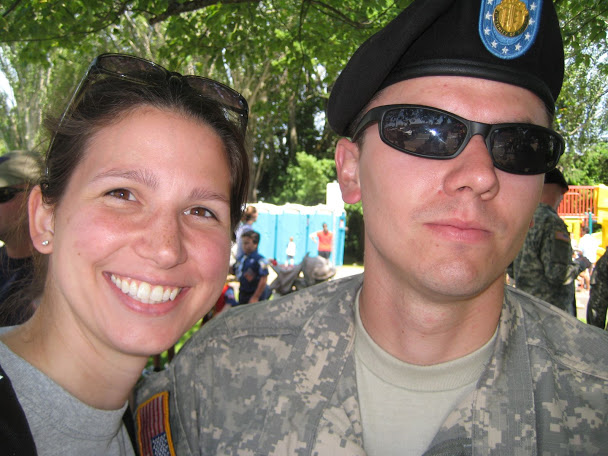
Me (Margaret Baumgartner) and one of my favorite members of our armed services.

Me (Margaret Baumgartner) and one of my favorite members of our armed services.

Who Am I & What Did I Experience at Ft. Meade?

To put a face behind the name, I thought I’d include a picture of myself.  That handsome man beside me is my brother, who is part of the reason I’ve become interested in this project.  My other brother is still active duty but I want to preserve some of his anonymity since he is deploying again.  Thus, I didn’t include a picture of him (I’m not slighting him!!!).

With everything I’ve seen this week, I’ve gone through a wide range of emotions.  I wasn’t expecting that to occur.  I would walk into the hearing in the morning, feeling that the process in place was a fair one (I do believe in justice) and then I would leave feeling conflicted.  Nothing is black and white in this process.  For example, I expected the government would be the party slowing the process down to avoid a verdict as they’ve taken this long to bring charges.  Instead, it was the defense filing motion after motion and going off on tangents during arguments.  I also wasn’t sure what I expected in Mr. Nashiri.  From what the contractors said and my observations, he was very respectful (I’ve heard some of the 9-11 defendants are prone to outbursts).  There were no outbursts and his responses to questions were polite.  I did find it easy to keep an open mind throughout the process and I hope that in my posts, I’ve appeared neutral towards all parties and issues.

I have no career experience with international human rights law or criminal procedure.  In fact, with my career, I’ve never seen the inside of a court room (patent cases rarely, if ever, go to trial).  The only exposure I have to criminal procedure are the courses I took in law school (IU-McKinney School of Law, J.D. ’10) with Professor William Marsh.  Professor Marsh would periodically go down to Guantanamo Bay to advise detainees of their rights.  He would come back and detail his experience to us in the classroom.  This mostly included a trip down and his clients refusing to see him.  My interest was piqued by his chronicles (enough that I took two semesters of Criminal Procedure with him!).

Website Resources

The materials provided on this website have been a valuable resource to me.  Having limited knowledge of this area of law, I found myself able to get quickly up to speed.  I specifically like having everything in one place to download.  We were also provided with binders containing everything on the website.  I liked having the motions, conventions, and histories to flip through as I needed reference during the hearings.  If I found anything that might have been lacking, it would be biographies or summaries of the parties on the prosecution and the defense.

Another helpful item was a checklist that serves as a guide on what to look for and comment on during our observations.  I love lists (I get such joy from checking things off or filling out forms….that’s probably why I’m a patent attorney) and the questions in the list helped acquaint me with the defendant in greater detail.  The checklist itself is lengthy and encompasses the entire process.  I found myself flipping around to find questions relevant to the pre-trial process, but it was a fantastic resource.

Thoughts on the Process

Did I witness human rights violations?  Is the process fair?  There is no definitive answer that can be formulated with three observation days and not having access to ALL (including classified) information.  I believe that the length of time that Mr. Nashiri has had to wait to have his day in court would not be stood for if this occurred in a U.S. civilian court.  There would be all kinds of uproar in the media.  Yet, you don’t see headlines drawing attention to this. I also understand that information that is critical to our national security cannot be revealed, but conversely, defense counsel needs to be able to build an informed case.  I feel that this lack of information has contributed to the onslaught of motions and arguments (which is in turn slowing the pace).  They are trying everything they can to get something to stick given their limited resources.

I’m given the appearance that Mr. Nashiri is being treated with dignity during his detainment.  He seemed in good physical health at the trial.  He did not appear to be starving or sleep-deprived.  He seemed to be accorded his rights to attend proceedings.  I was concerned about Mr. Kammen’s comments that they are monitored by video when they meet with Mr. Nashiri.  A comment was also made that they thought the room also had audio surveillance.  A client has a right to attorney-client privilege and it makes me question if Mr. Nashiri is being given this right.  I am satisfied that Mr. Kammen is learned counsel given his experience.  He honestly seems to be giving his client his best effort and he appears genuinely concerned for his client.

Closing Thoughts

I highly encourage anyone who is qualified to attend as a representative to apply.  This program is a necessity to bring awareness to what is going on in Guantanamo Bay.  We need to keep an eye on what happens because it will affect how we are viewed by the rest of the international community.  Around D.C., there are signs posted in the metro that say “If you see something, say something”.  They are for reporting suspicious activity.  I think this phrase is pretty apt here as well.  Get the word out.

Afternoon al Nashiri Hearing – 4 August 2014 – GITMO – Qifan Wang

Judge Spath is presiding over the al Nashiri USS Cole case.

Judge Spath presides over the al Nashiri USS Cole case.

Lunch 

After the NGO Observers had a quick lunch in the NGO Lounge, we returned to the courtroom for the continuation of the case against al Nashiri, an alleged mastermind of the USS Cole attack off the coast of Yemen that killed 17 U.S. Sailors and injured dozens more.

Judge fails to recuse himself.

Unsurprisingly, the first thing in the afternoon is Judge Spath’s denying the motion of recusal.

How many judges are on the case? Who is in charge?

The court move to motion AE305 dealing with another very strange situation.

Chief Judge Pohl presided over the al Nashiri case from its beginning, until last month when he detailed a successor, Judge Spath, to handle the case.

But Judge Pohl reserved his authority regarding some al Nashiri motions. The result is at this specific time, there are two military judges in charge.

The defense makes a textual interpretation of the Military Commission Act, which consistently use the singular form (‘a military judge’ and then ‘the military judge’). The defense wants Judge Spath to reconsider some prior motions Judge Pohl had ruled upon.

On the other side, the government does not have much trouble with that. The government is arguing that there is no actual overlap between the authority of Judge Pohl and Judge Spath.

Chief Judge Pohl originally presided over al Nashiri case.

Chief Judge Pohl originally presided over al Nashiri case.

Judge Spath asked whether he can issue order in contradiction with Judge Pohl’s former rulings. The answer would be yes. Then it just becomes more confusing since what would be the actual point for Judge Pohl to preserve this authority? The defense labels the potential impact on the court as ‘unlawful influence’, while the government rebuts as there is no prejudice shown.

It is somehow difficult for me to comment on this motion and these arguments. Just like lots of other motions or procedures, this is a unique situation and it’s foreseeably hard to find any reference or precedents. I agree that if any new fact or law occurred, a motion for reconsideration  (more…)

AL NASHIRI HEARINGS – 6 AUGUST 2014 – MARGARET BAUMGARTNER (FT. MEADE)

Quiet morning on at Ft. Meade. Sign in front of the Post Theater, the site of the secure video-link from GTMO

Today was a shortened day.  Hearings ran until the lunch recess.  The hearing after lunch was to be classified and then they would discuss scheduling for the next couple of months.  No more hearings are scheduled for this week.

The Hearings:  Appearance

Mr. Nashiri declined to be in attendance today.  He was present yesterday and on Monday.  The defense went through a procedure to demonstrate that Mr. Nashiri’s absence was voluntary, for the record.  This included having the staff judge advocate at Gitmo testify of the process whereby the accused was advised of his commissions for the day, advised of his rights, executed a voluntary waiver, used an interpreter, etc.  I think it was well established that Mr. Nashiri chose on his own accord to not attend and it was clear from the evidence presented by both parties that it was a voluntary choice.

The Hearings:  Decision on Funding for Defense Contractor

Judge Spath granted the request for 175 more hours of Mr. Assad’s time.  From the arguments made yesterday, I feel this is in line with what was presented by both parties (see yesterday’s post for the details and context).

The Hearings:  Tu Quoque

Tu Quoque (“you also”, in Latin), or as we sometimes say on the homestead “that’s the pot calling the kettle black”, means “a person is guilty of the very thing of which they accuse another”.  This doctrine was argued by the defense in trying to rationalize the alleged (more…)